




Pagosa Springs demonstrates the potential for Colorado’s ‘Heat Beneath Our Feet’ geothermal program
The town's 48-year-old geothermal heating system serves 33 customers
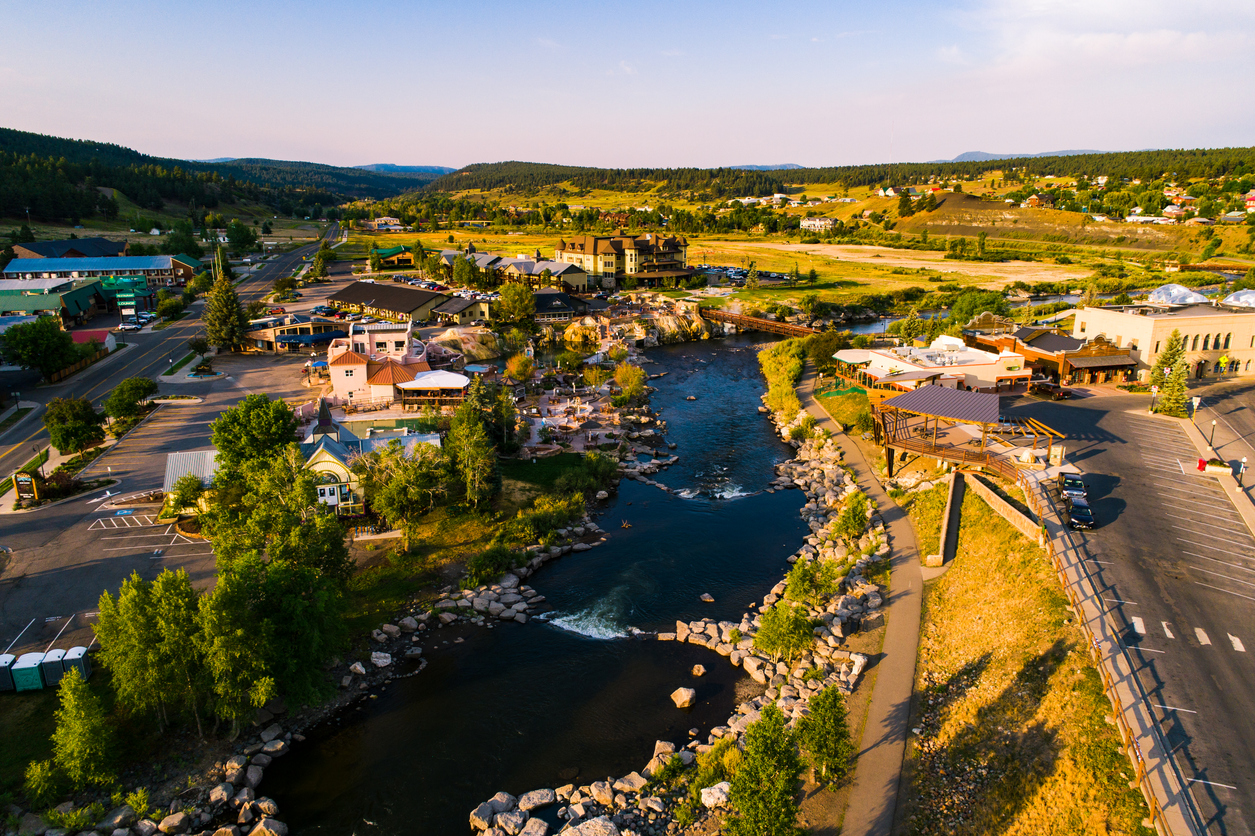
The nearly half-century history of Pagosa Springs’ geothermal heating network demonstrates the advantages and constraints on the use of subterranean heat to help achieve Gov. Jared Polis’ carbon-free aspirations for Colorado.
The town of Pagosa Springs in Archuleta County near the New Mexico state line is hardly the only user of geothermally heated water — hot springs pools, such as the Glenwood Hot Springs Resort, are among more than 30 developed hot springs resorts dispersed in 93 geothermal areas and 157 geothermal sites statewide, according to the Colorado Geological Survey.
Pagosa Springs’ municipal hot water system serves 33 private and commercial customers that use hot water for heating and sidewalk snow melting, including two Archuleta School District buildings. The system is small due to limitations on the city’s water withdrawal rights of 450 gallons per minute from the mother spring and is considered a low-temperature geothermal source at about 140 to 145 degrees.
State policymakers have begun to seriously consider geothermal energy — Pagosa’s heating network has existed for 48 years — in their pursuit of decarbonization goals. Geothermal energy is widely used across the globe. In absolute terms, the U.S. is among its biggest producers, though per capita, other countries, such as Iceland the Philippines, use more.
Only 0.4% of America’s electricity is generated by geothermal energy.
Under Democratic control of the state Capitol, Colorado is seeking to quickly transition away from fossil-fired energy. Supporters argued the transition — while acknowledging it might be painful in the short term — positions Colorado for a more sustainable and energy-efficient future. They said it would help wean the country from dependence on foreign oil. Ultimately, they added, the transition toward green energy is good for the environment and people’s health.
Critics maintained the quick transition is failing to protect American consumers, particularly low-income residents, who already contend with soaring inflation, and that the singular focus on alternative energy is short-sighted, given that America is rich in all forms of energy and that nuclear power can provide the state with a viable, sustainable and “green” baseline.
In the past few weeks, Colorado added nuclear to the list of “clean” sources, alongside wind, solar and geothermal, a move that signaled policymakers’ changing attitude toward this energy source and the realization — some said — that “renewable” sources are insufficient to provide sustainable and affordable energy and at the same time meet Democrats’ carbonization goals.
Pagosa is considering expanding its geothermal system by drilling wells and using thermal-transfer fluid, such as glycol, that would then be used to heat municipal water and could potentially be hot enough to produce high-temperature steam to turn an electric generator.
“There’s only so many BTUs that are coming towards us at 450 gallons a minute and we can add maybe a handful of more customers depending on the size of the structure that they want to heat,” said Johnson “But we’re almost to the point to where we’re maxed out under the current circumstance.”
Johnson said the town is considering expanding the heat loop but would need to change technologies because of the limitations of the hot spring.
“Now, if we are looking at potentially expanding with some newer technologies by, instead of taking the raw geothermal brine and heat exchanging it, we’re actually looking at potentially doing more of like a ground source, where the ground actually works as the heat exchanger, and we’re just pumping another fluid, like a glycol solution through a heat loop and pull the heat out the ground that way,” Johnson added.
One of the problems the town faces is that the hot brine directly from the “mother spring” must run through a heat exchanger before being distributed into the heat loop and then run through another heat exchanger at each customer’s property, which creates some efficiency losses.
“Our water quality is different than Steamboat Springs water quality — similar but different — and it tends to be more on the corrosive side,” said Karl Johnson, the public works director for the town. “So, incompatible materials like copper pipe as an example, it’s going to eat copper pipe, it’s going to eat regular steel.”
He added: “So, like our heat exchanger, anything that touches the brine is either going to be a type of PVC or HDPE pipe or stainless steel as opposed to any other material that would be subject to the corrosivity of the water.”
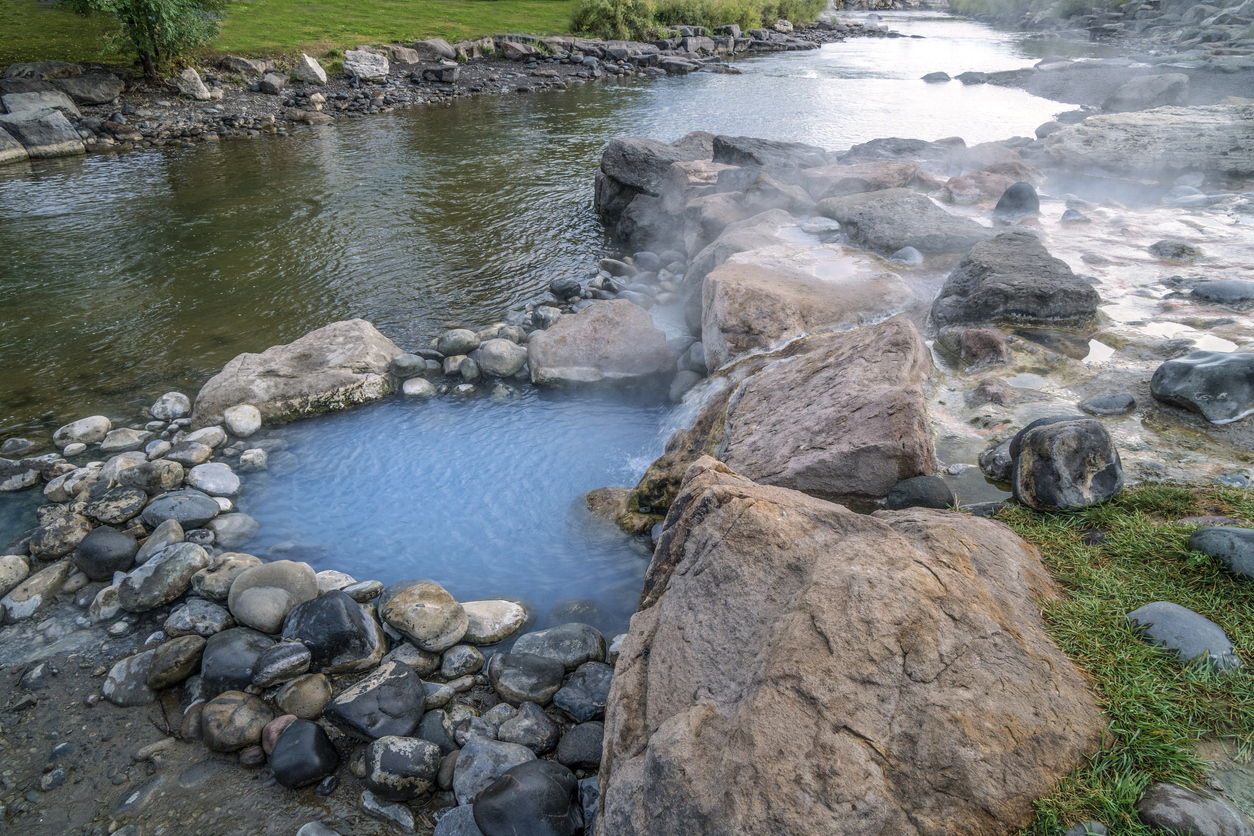
Johnson said the mother spring has been gushing hot water “since forever.” He said battles have been fought over access to the spring.
“There’s a plaque on the west end, going out of Pagosa Springs, (that) way back in the 1800s, roughly. There was a battle between two native tribes over who had the right to the geothermal water,” said Johnson. “So, they had a knife fight to decide whose it was. The Southern Ute Tribe won, I believe.”
“Geothermal energy is such an important part of our overall effort to transform our energy system because it provides a clean, firm energy source for both buildings and electricity generation,” Colorado Energy Office Executive Director Will Toor said in a release. “Geothermal heat pumps and thermal energy networks reduce greenhouse gas pollution, while improving indoor air quality and saving Coloradans energy and money on heating and cooling costs.”
Johnson said that the savings for their 33 customers is noteworthy.
“Currently, you can usually heat your house at anywhere from 50% to 70% less money than a carbon-based source like fuel oil or natural gas,” said Johnson. “And then unlike any other renewable, when the sun’s not out, a solar panel’s not working and when the wind’s not blowing, the turbine’s not spinning. So, it’s pretty much always there.”

Get OutThere
Signup today for free and be the first to get notified on new updates.