




Water destination poised for northern Colorado after years of controversy

Back in 2009, Zac Wiebe was hiking near the foothills of northern Colorado, where today a dam rises close to its final height of 350 feet.
“I recall a sign that actually stated the reservoir could be built as soon as 2009,” Wiebe said.
That would not be the case — not in the face of lengthy permitting and litigation against Chimney Hollow Reservoir, to be a smaller neighbor of Carter Lake and divert Colorado River water for the northern Front Range’s growing populations. In 2021, environmental groups and Northern Water settled a $15 million lawsuit.
Now, Chimney Hollow’s dam is close to complete outside Loveland. Northern Water expects to finish construction and begin filling the reservoir this summer.
And a recently published plan envisions a premier destination.
“Seeing this thing come to fruition is definitely very fulfilling,” said Wiebe, who oversaw the recreation plan for Larimer County’s Department of Natural Resources. “For our community, it’s going to be a great, great asset.”
But “at a great expense,” said Gary Wockner, with Colorado River advocacy group Save the Colorado.
“The lingering concerns are the same exact issues we sued against,” he said, referring to strains on the river and impacts to Grand County.
The result in Larimer County: a reservoir and surrounding 1,847-acre open space that is anticipated to be different from other nearby getaways, including Horsetooth Reservoir and Carter Lake. (The neighboring lake’s surface acres are about 1,100 acres, compared to Chimney Hollow’s expected 760.)
At Chimney Hollow, Wiebe foresees a quieter experience — without the camping and motorized boating allowed elsewhere.
The plan calls for wakeless boating only. Paddleboarders, kayaks and canoes will be served by a concrete ramp and floating dock.
Wiebe considered wakeless-only “filling a niche that we don’t have elsewhere in our region,” adding: “For a reservoir of its size, I think that will be a pretty unique opportunity.”
As would the opportunity for swimming, he said. “The wakeless nature of the reservoir will lend itself to doing that more safely than we might be able to at a lot of places.”
There will be fishing, too. But in accordance with an intergovernmental agreement with Northern Water, specifics for anglers and swimmers might not be known until after the reservoir fills. Northern Water has previously said that could take two or three years — “highly dependent on snowpack and water availability,” Wiebe said.
In the meantime, he said his department would get busy building trails around Chimney Hollow Open Space, in anticipation of opening in 2027.
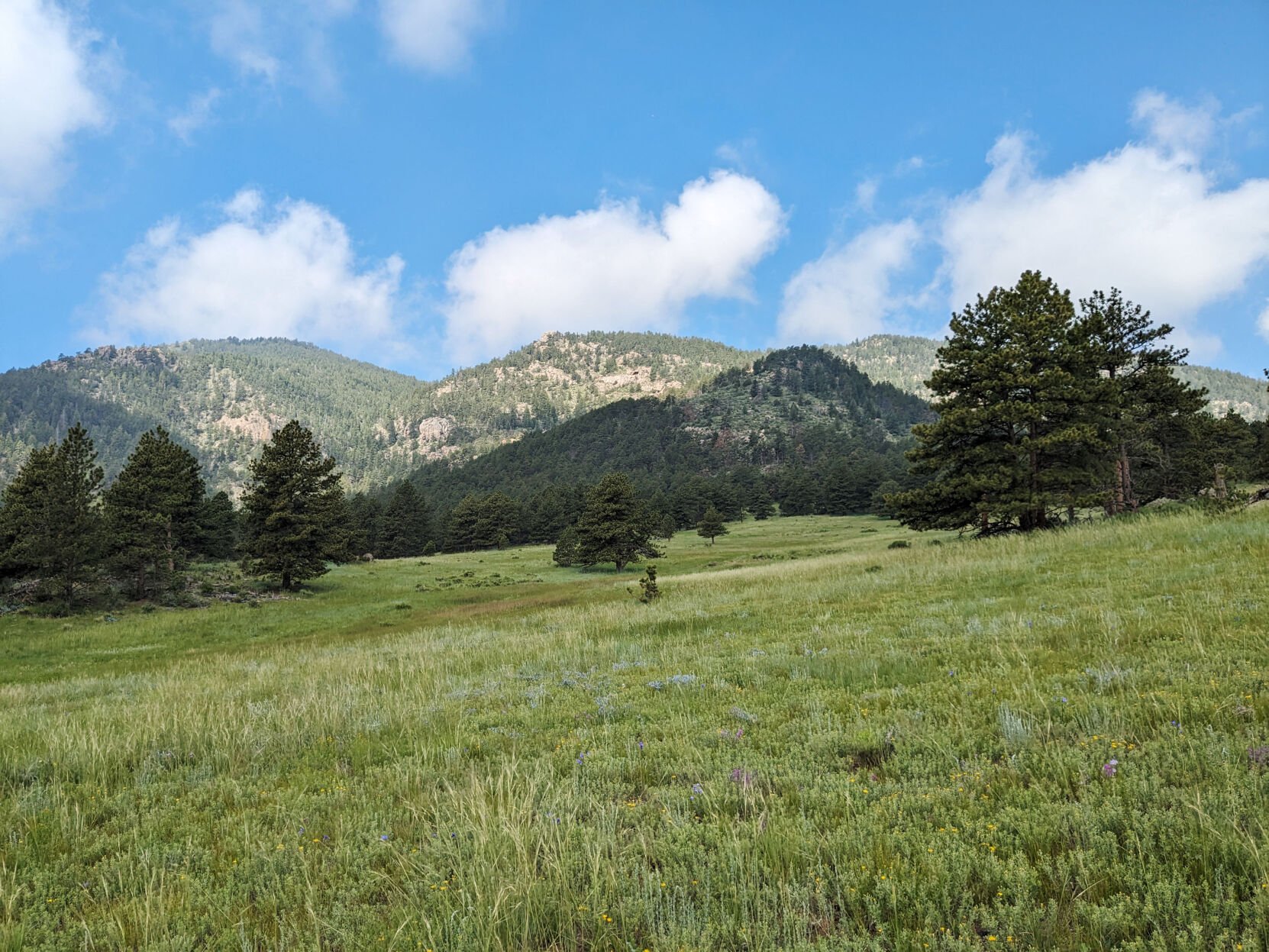
The plan maps 10-12 miles of trail touring forests and meadows with views of the enveloping foothills and rocky ridges.
“It’ll really have a kind of backcountry, more primitive experience feel to it, and in a place that’s 15 minutes from a major urban area in Loveland,” Wiebe said. “That’s an experience our community is yearning for, and that came through in the public feedback that we collected.”
A year of technical studying, surveying and meetings followed 20 years of waiting. Larimer County acquired the land in 2004 as the idea for the reservoir was shaping.
A former commissioner of the Bureau of Reclamation and Save the Colorado representative called it “a terrible idea.” In a statement following a joint lawsuit in 2017, Dan Beard said: “The water supply situation on the Colorado River is in bankruptcy right now, and this project is like going to the ATM for another deficit withdrawal.”
The Windy Gap Firming Project — so named for a dozen northern Colorado municipalities and irrigation companies “firming” their water rights — outlined a complicated diversion that ultimately draws from the Western Slope. Environmental groups would go on to reluctantly settle their lawsuit, seeing the $15 million as a way to mitigate impacts from the Colorado River’s reroute around Windy Gap Reservoir in Grand County.
The way Wockner sees it with Save the Colorado: “The watershed in Grand County and the people in Grand County are being negatively impacted so you can have a positive recreational experience in Larimer County.”
Along with “a high-quality trail system” and “meaningful access to the reservoir,” conservation is listed as a top priority in the Chimney Hollow Open Space plan. In response to feedback for “parking to minimize crowding,” the plan outlines tiered lots with up to 135 spaces.
The plan is structured to be “adaptive” — “to give us more flexibility into the future to make management decisions” based on visitation and ecological conditions, Wiebe said.
Like other Larimer County reservoirs and open spaces, a day-use fee will be charged at Chimney Hollow. That’s “to ensure long-term fiscal sustainability,” the plan reads.

Get OutThere
Signup today for free and be the first to get notified on new updates.
PREV
PREVIOUS

Denver weather: Clearing Monday afternoon after overnight snow
Winter storm warnings in effect for eastern Plains and Front Range mountains
Will the media’s libel protection last in the age of Trump?
Conservatives have long had their sights set on revisiting a Supreme Court case that set a high bar for public officials to prove the media defamed them, but President Donald Trump’s return to power has put a spotlight on this key press protection. The Right’s interest in changing the New York Times v. Sullivan precedent […]