




A century ago, ‘sin city’ Ramona rose on Colorado Springs’ west side
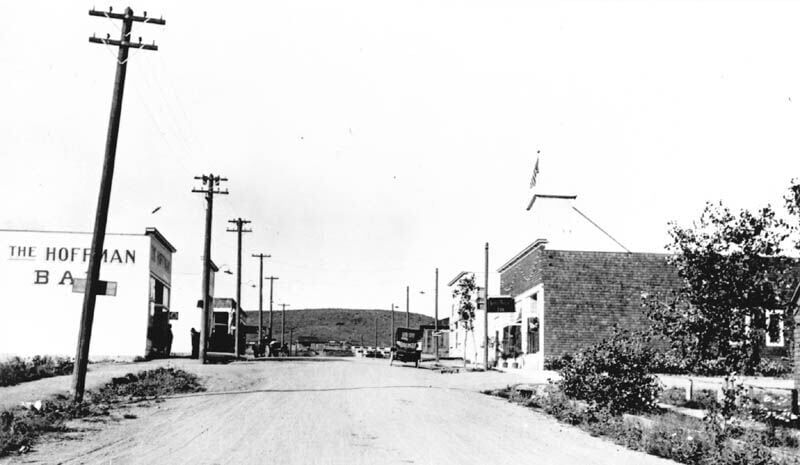
One day in the late 1990s, Colorado Springs history buff David Swint came across an old, dusty mug with a curious inscription.
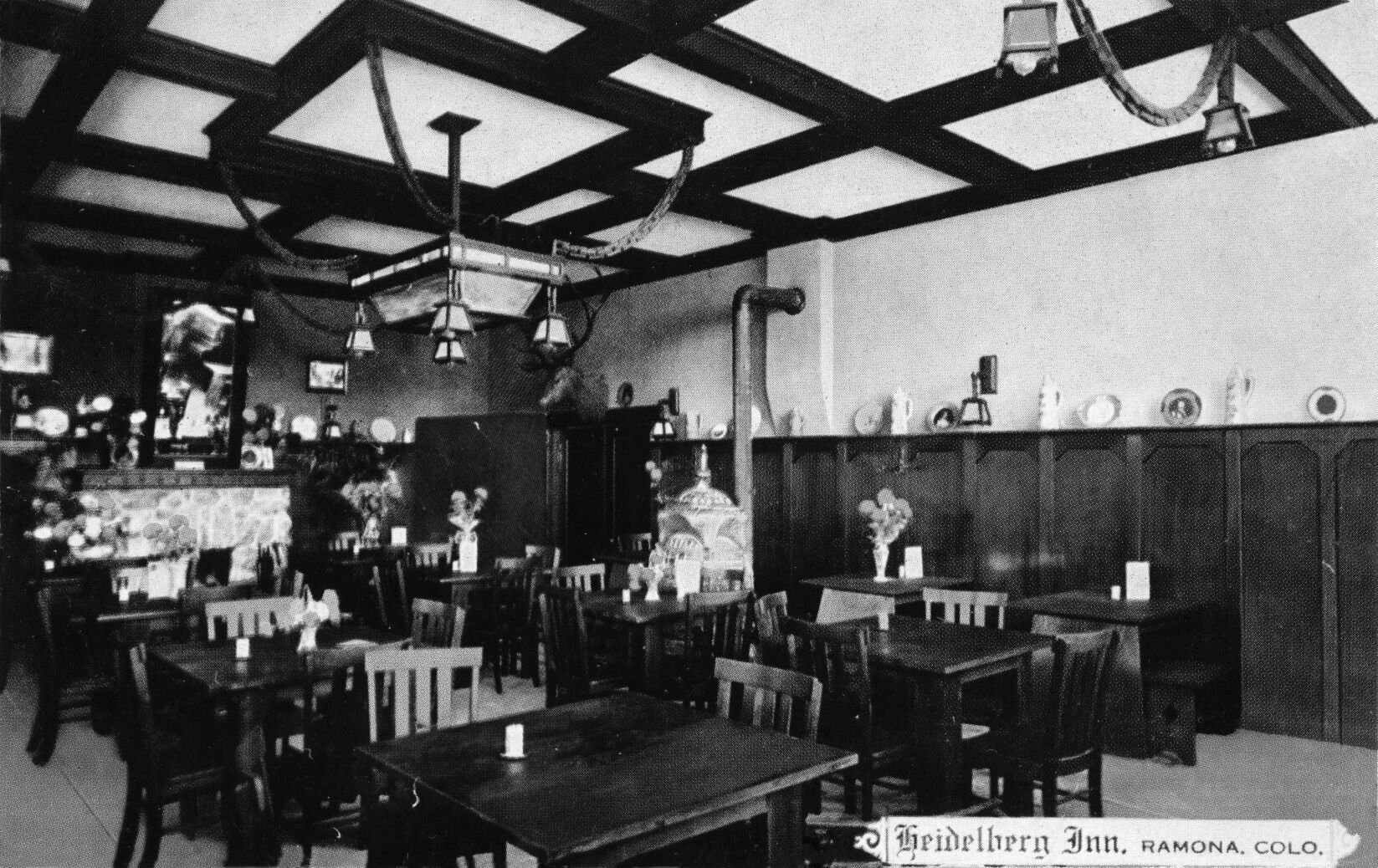
“Heidelberg Inn, Ramona, Colo.”
Where was Ramona, Swint wondered.
Ramona, it turns out, was a former town within his current town.
On Colorado Springs’ west side, around Thorndale Park and the neighborhood off Uintah and 24th streets, there was once a town built for one purpose, more or less: to keep the Wild West alive.
This was in 1913, as prohibition won in Colorado City. We know it now as Old Colorado City, this Victorian hub that was an epicenter of the Pikes Peak Gold Rush — complete with gambling, fighting, dancing and mingling with ladies of the night reached by underground tunnels.
And drinking. Lots of drinking.
Until 1913.
Ahead of statewide prohibition a few years later, Colorado City was the next city in the state to ban alcohol, joining its neighbor to the east. Gen. William Jackson Palmer had founded Colorado Springs on moral grounds that had no room for alcohol.
“He wanted a very sophisticated town. It had the name of ‘Little London,’” Swint said. “Colorado City was the polar opposite. That’s where all the prostitution was, where all the saloons were, where all the trouble was.”
Until 1913, that is, when the people of Colorado City voted to sober up. The move aligned with the nationwide temperance movement and symbolized the end of a rowdy, storied era.
Or almost the end.
Along came Ramona.
In Colorado City, “there was a small group of residents that were like, ‘No, we don’t want to go dry,’” Swint said.
Not that he knew any of this upon coming across that old mug. The mug prompted research that proved rather difficult. Ramona “was not documented real well,” Swint said.
He, like many Colorado Springs residents, had driven by Thorndale Park having no clue of a former town in the vicinity. Most of the homes today were built long after Ramona was razed.
“Nothing is left of it,” Swint said. “It’s a piece of Colorado history that very few people really know about.”
People can learn more from his book, “Bars and Brass Rails: The Story of Ramona, Colorado.” The title is a nod to a newspaper article at the time that referred to “bars and brass rails” in describing the town’s fast construction.
Read The Gazette: “Ramona, El Paso County’s new town and the latest addition to the map of Colorado, offers a spectacle similar to the pioneer mining camps of the west.”
Construction was indeed fast, continuing the swift pace of action following Colorado City’s prohibition vote.
Just blocks away to the north, a couple of well-to-do residents, Frank Wolff and Clarence Kinsman, had land for a town with its own rules. To justify incorporation, they had a petition signed by prospective residents. Swint found the list of 49 names, serving as the best guess at Ramona’s population. (As for the town’s name, his best guess is the novel of the same name by famed, local author Helen Hunt Jackson.)
Businesses sprouted in a matter of months: multiple saloons, a cigar parlor, a pool hall, a barbershop, a restaurant and a small grocery store. “Next door to the Ramona City Hall and Jail was a brothel,” Swint writes in “Bars and Brass Rails.”
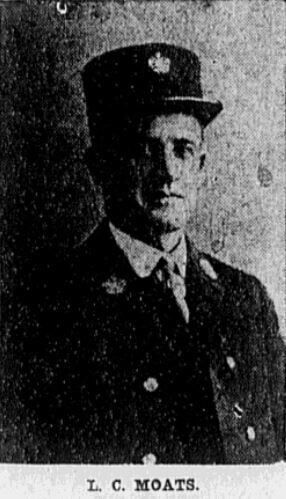
Civility and incivility were interwoven. There was a marshal, Leonard Moats. Swint found him to be a hard drinker who sometimes kept the peace with his bare fists. Moats also was tasked with fetching water in the absence of the city of Colorado Springs providing it.
The city of Colorado Springs wanted nothing to do with the place. Ramona was simply called “the whiskey town,” among worse names.
“Everybody looked at it as total trash,” Swint said. “It was referred to as a cesspool, sin city.”
It seems George Geiger wanted better for Ramona. He was picked as the town’s mayor, the owner of what Swint determined to be “the centerpiece” of town: the Heidelberg Inn, the establishment inscribed on that old mug Swint found.
Geiger also oversaw the Ramona Athletic Club, which hosted boxers near and far for prize fights. Most notable: Colorado’s own Jack Dempsey, who fought here in 1914 under the name Kid Blackie.
The fights were said to be well attended by people who looked down on Ramona. As much as they looked the other way, it seems they could not resist the Heidelberg.
“The aristocracy of Colorado Springs could be found at the Heidelberg most any evening,” reported the Colorado City Independent at the time.
Surely that had something to do with Geiger and his wife, Rose.
“They were really good, decent folks,” Swint said. “A lot of other players in town were not quite as … wholesome.”
There was Robert McReynolds, “the town pervert,” Swint said. He was also the town clerk and treasurer, following an adventurous life of “working riverboats, escorting wagon trains, working as a ranch hand, scouting, Indian fighting, mining and in later years authoring several books,” Swint writes in “Bars and Brass Rails.”
He found George Ziegler to be similarly colorful. Ziegler ran the cigar shop, his next stop as a traveling gambler. He made other stops in Cripple Creek and Denver, where he was tried for murder.
If anyone was more prominent than Geiger, it was N. Byron Hames. His saloon sat across from the Heidelberg.
Hames “was probably the kingpin of saloons back in Colorado City,” Swint said. “He was really the one that had some money.”
Most everyone else did not. And this is what drew Swint to the people of Ramona, their warts and all. Reads his book: “They were just everyday, typically poorly educated, unskilled laborers, farmers and fortune seekers with an entrepreneurial spirit.”
The spirit gave rise to a town. But Ramona was never meant to last.
“It was all about, ‘Let’s make as much money as we can as quickly as we can,’” Swint said, “because the writing was on the wall.”
Statewide prohibition was enacted Jan. 1, 1916. That evening, the Geigers hosted former employees and friends for a turkey dinner at the Heidelberg — a fond farewell.
Geiger went on to Wyoming, then to the oil fields of Oklahoma, later to California “where he worked odd jobs for an ice plant” before his death, Swint writes. Another saloon keeper died by suicide. Moats, the hard-drinking marshal, was institutionalized for a while.
It was an even steeper fall for “the king.” Hames ended up poor on the streets of Denver. A newspaper report suggested the man “died mostly of a broken heart.”
Their stories have been mostly lost, along with that of Ramona.
It is as the Colorado City Iris reported Jan. 6, 1916: “No more will the musician sit before the piano at Ramona and tickle the ivories, while men line up before the bar and keep time with the clink of glasses.”
But if you stand long enough around Thorndale Park, if you close your eyes and tune out the traffic along Uintah Street, you might just hear it.


Get OutThere
Signup today for free and be the first to get notified on new updates.
PREV
PREVIOUS
Trump stops short of calling for Powell resignation: ‘If I want him out, he’ll be out’
President Donald Trump stopped short of calling for Federal Reserve Chairman Jerome Powell‘s removal during a White House meeting in which the president called Powell “terrible.” “Oh, he’ll leave if I ask him to, he’ll be out of there,” Trump said at a press event with Italian Prime Minister Giorgia Meloni on Thursday afternoon. Hours earlier, Trump […]

The Corner Beet in Denver is a vegetarian's heaven
Back in the 17th and 18th centuries, Parisian women hosted salons — private get-togethers where conversations centered on literature, philosophy, music and other intellectual topics. Nikki Hazamy likely didn’t have those in mind when she opened The Corner Beet a decade ago on a quiet corner in Capitol Hill neighborhood. But the cozy, plant-filled café […]