




Lakewood warns hikers of potential artillery shells at park
William Frederick Hayden Park was used as an army training ground until 1939

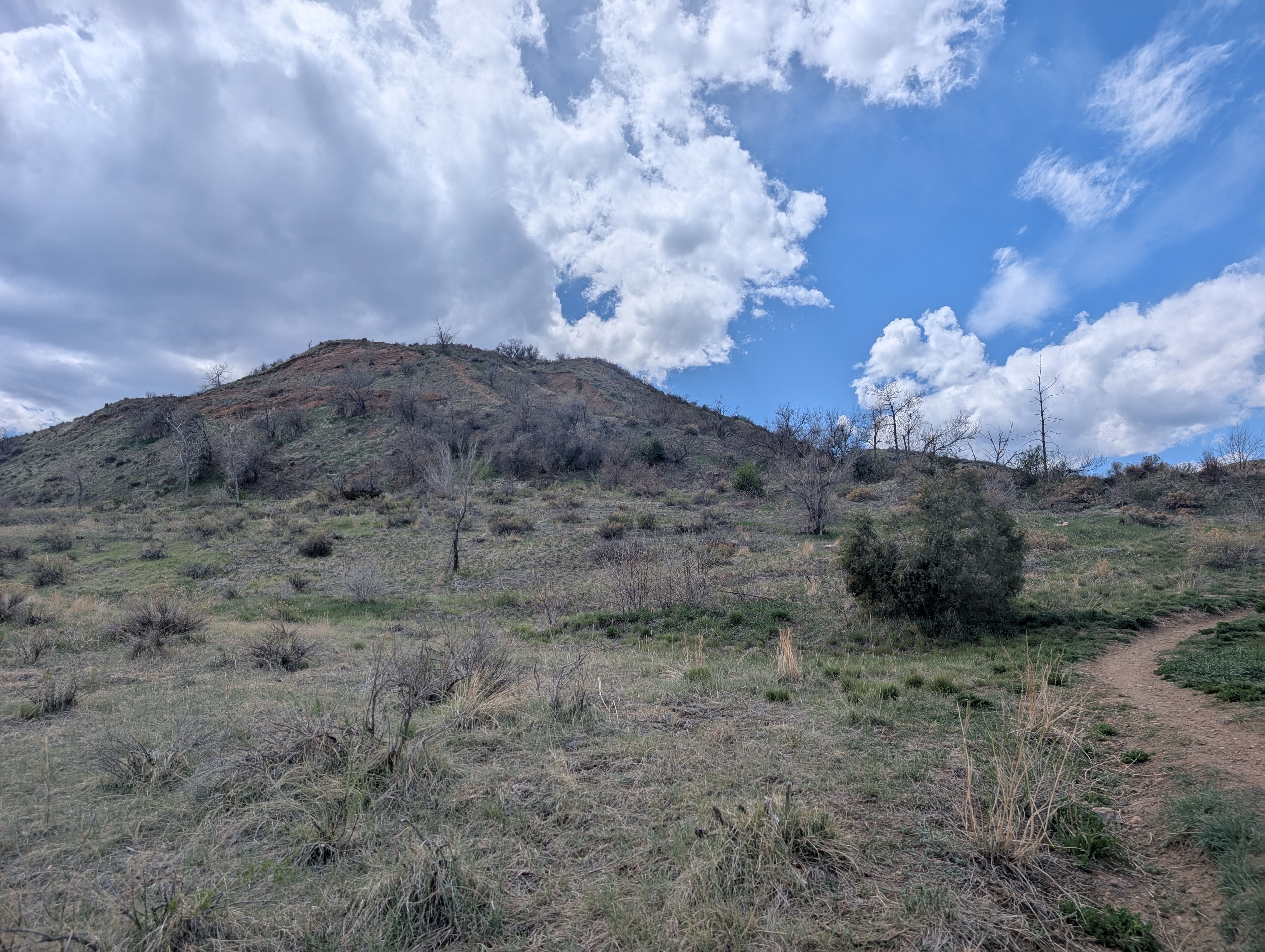
Artillery shells might still litter the rolling green hills of William F. Hayden Park, a popular hiking destination in Lakewood once used as a military training site.
Lakewood officials posted a social media message on April 3 warning spring hikers of the existence of the artillery shells on Green Mountain, just east of Interstate 470.
“As the weather warms up and you spend more time at William F. Hayden Park on Green Mountain, please remember that artillery shells from pre-WWII military training (from the former Camp George West Artillery Range) have been found in the park’s northern area,” the city said.
Though no munitions have been discovered recently, according to both city and state officials, the military history of the land still looms large, with cleanup efforts ongoing for nearly 100 years since munitions were fired near the recreational area.
A white and red sign stands crooked in front of one of the entrances to the Lakewood park, warning incomers of potential unexploded artillery from before World War II.
Years after Lakewood was established as a farming community in 1859, State Adjutant General for the Colorado Army National Guard George West set up a training facility near Green Mountain in 1903. The facility was located near the current junction of West Colfax Avenue and Interstate 70.
The National Guard used the northern part of Green Mountain as a rifle range and training facility, and between 1903 and 1939 — when the country was preparing for World War II — the National Guard leased the land on Green Mountain from the Hayden family to be a live fire artillery impact area, according to the Colorado Department of Public Health and Environment (CDPHE).
The type of artillery fired at Green Mountain were 75mm from “French 75″ field guns.
“Both 75mm shrapnel shells and high explosive (HE) projectiles were used, as evidenced by the type of munitions debris (MD) encountered during prior investigations. The precise locations of firing points are unknown,” the healthy agency said on its website.
The shrapnel has a depth of 2.7 feet below ground surface, according to an agency community relations plan in 2024.
In 2010, a nearby resident found a 75mm projectile at the park and reported it to the state health department, which quickly erected warning signs at the entrances to the park.
The department then began field work, combing through the area, and found five additional expended M48 75mm projectiles on the northern face of Green Mountain.
In 2012, a city of Lakewood employee found a 75mm shrapnel shell south of the 2010 investigation area.
As of last year, 13 munitions items have been found in the area. The latest, found on April 18, 2022, was deemed non-explosive, according to Branden Ingersoll, a spokesperson for the Hazardous Materials and Waste Management Division of the health department.
“Although site access is restricted to existing trails and roads, if park users ignore this restriction, there is a potential they could encounter munitions on the ground surface,” the department wrote in its 2024 community relation plan.
In September of 2016, the health agency began looking at the extent of munitions-related items remaining in the area, labeling it as “Priority 1.” At the time, the area consisted of 129 residential homes close to the northern and eastern borders of Green Mountain, including the aforementioned park.
More than 80 of the 129 households opted to participate in the 2016 campaign. Another smaller effort was conducted in June 2017 involving nine households.
In 2021, a detailed investigation was conducted at 40 properties within the Priority 1 Area using Advanced Geophysical Classification (AGC).
The Army National Guard signed a Record of Decision with the state to clean up a 466-acre area of the park, starting in 2020.
The project is still ongoing, with the National Guard, the state health department and local agencies currently developing a cleanup plan, which will include “a surface clearance and detailing the associated field work that will be required,” Ingersoll told The Denver Gazette.
First, the project will include the removal of munitions on the surface. This work will include removing vegetation, dividing the area into grids and sweeping the surface.
This work will be done with “highly advanced metal detectors to detect items below ground,” Ingersoll said.
The metal detectors will be able to find, classify and make pictures of subsurface objects to determine whether or not they require removal.
“Having this full picture allows for better decision-making, increased safety, reduced costs, less environmental impacts and less disruption to local communities,” Ingersoll said.
The state does not have an estimate of when the cleanup project would get completed. The Army National Guard did not respond to requests for comment.
While the state health department said there are likely no shells still on the trails, the City of Lakewood released safety steps for residents in its social media post. Hikers should stay on the designated trails while visiting the park.
In addition, if they see anything resembling a pipe, can, or metal object, they should assume it is dangerous, refrain from touching, moving or disturbing any suspicious object and immediately call 911, the city said.

Get OutThere
Signup today for free and be the first to get notified on new updates.