




Colorado observatory invites you to admire the sun at special times this summer
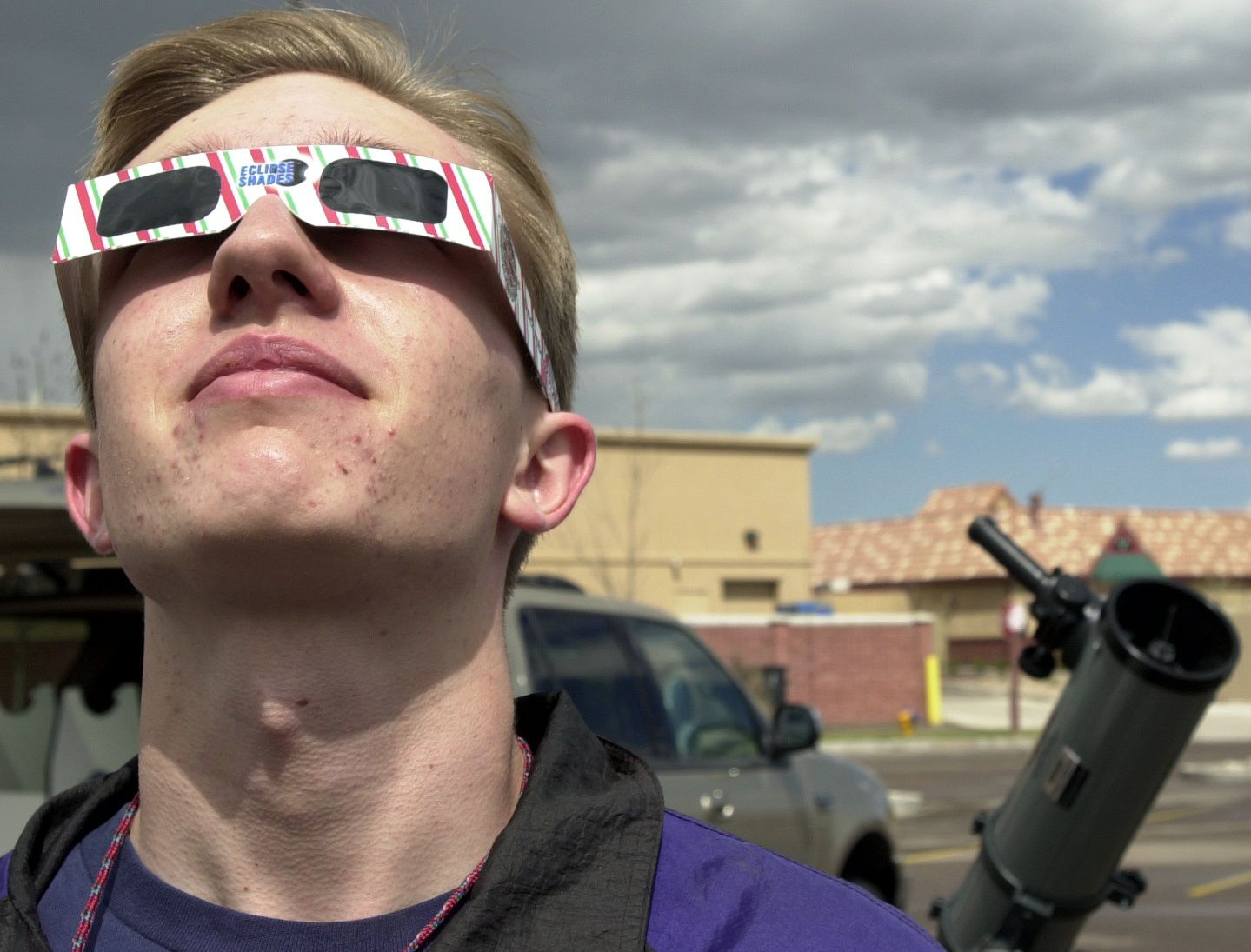
One should not stare at the sun, of course. But with the right equipment, staring is encouraged — especially at a certain, astronomically focused pocket of Colorado. And especially in the months ahead.
“The sun will reach solar maximum in 2025, meaning that solar flares and sunspots will be particularly impressive this year,” read a recent announcement from Dark Skies of the Wet Mountain Valley, a Westcliffe-based nonprofit.
Several free, sun-gazing sessions are planned for Saturdays through the summer at Bluff Park, home to the nonprofit’s Smokey Jack Observatory. Special telescopes and solar astronomers are scheduled to be on hand from 11 a.m. to noon May 17, 24 and 31, with Saturdays also scheduled in June, July, August and September.
More reason to go May 24 or May 31: After the daytime viewing, free nighttime events are set for the Smokey Jack Observatory.
The site has long been a go-to for stargazers, since Westcliffe and Silver Cliff became Colorado’s first Dark Skies Community, as designated by DarkSky International in 2015. (The list is now six, including Ridgway, Crestone and Paonia.)
While the Smokey Jack Observatory is popularly a place for viewing planets, nebulae and galaxies, the sun has been of increasing interest for stargazers the past couple of years.
Last year, NASA announced the sun had reached solar maximum — referring to a natural cycle that occurs every 11 years or so. It’s a period when the sun’s magnetic poles flip, “and the sun transitions from being calm to an active and stormy state,” explained a NASA press release last fall, which indicated solar maximum could continue in 2025
Last summer, solar flares and coronal mass ejections had created Earth’s strongest geomagnetic storm in decades, causing interruptions to GPS systems and power grids. The phenomenon also led to unusual, far-reaching views of the aurora borealis, including in Colorado.
Forecasters previously predicted solar maximum to occur this July, though it’s uncertain if the period has passed.
“Our sun is dynamic,” reminds Dark Skies of the Wet Mountain Valley, “and may display solar flares, solar prominences and sunspots at any time, or sometimes nothing special at all!”
That’s the word on the nonprofit’s website, which lists more dates and information on upcoming solar observations and dark sky sessions.
Along with May 24 and 31, day and night events also will coincide these Saturdays: June 21 and 28; July 26; Aug. 16, 23 and 30; and Sept. 13 and 20.
Get OutThere
Signup today for free and be the first to get notified on new updates.
PREV
PREVIOUS
Ivanka Trump has gone full ‘pura vida’
Exactly eight years after first daughter Ivanka Trump realized that Washington was a swamp of liberal criticism and hypocrisy, she appears to have completely cut ties to her past as the president’s all-around West Wing confidante. “Pura vida,” she said in a new social media post, referring to the Costa Rican vibe of wellbeing, positivity, […]
'Iconic' viewshed including 4,800-plus acres conserved in northern Colorado
Northern Colorado land managers are celebrating what they see as a major conservation victory. Larimer County’s Natural Resources Department recently announced finalizing conservation easements across three ranches totaling 4,800-plus acres in the Livermore Valley — legal agreements protecting the natural scene viewed along Red Feather Lakes Road. “The viewshed is such an iconic one,” said Meegan […]