







Turkey’s expansionist Middle East aspirations don’t bother the Trump administration
JERUSALEM — In December 2024, after Islamic-led rebels overthrew President Bashar Assad’s brutal regime, President-elect Donald Trump gave Israel a rhetorical green light to expand its military reach in Syria. Capitalizing on Syria’s leadership void, the Israel Defense Forces quickly decimated its neighbor’s military infrastructure and widened the buffer zone between the two countries.
Four months later, and well into his second, nonconsecutive term, Trump may be ready to give Turkey similar latitude to expand its buffer zone with Syria, and to establish air bases there. If Trump gives the go-ahead, it could put Israel and Turkey on a collision course that both would like to avoid.
“We’re seeing that Turkey is expanding its military presence in Syria. This is obviously not good for Israel and could lead to clashes,” said Noa Lazimi, a researcher at Israel’s Misgav Institute for National Security.
Trump appears to want Turkey to play a bigger role in the region, despite its poor human rights record toward the Kurds and President Recep Tayyip Erdogan’s long-standing antipathy toward Israel.
Erdogan, an outspoken supporter of Hamas, called for Israel’s destruction during a visit to a mosque at the end of Ramadan on March 31.
“We see what is happening in Palestine. May Allah destroy Zionist Israel in his holy name. We must see what is happening there, and therefore, we must unite, be strong, and be brothers here. May Allah always strengthen our unity,” he said.
That didn’t stop Trump from praising Turkey’s leader. On April 8, during a briefing with Israeli Prime Minister Benjamin Netanyahu, Trump fielded a reporter’s question about whether an expanded role by Turkey’s military in Syria could stabilize it.
After crediting Erdogan for ousting Assad “through surrogates,” Trump said he has “a very, very good relationship” with Turkey and its leader, whom he described as “a tough guy and very smart.”
To Netanyahu, Trump said, “Any problem that you have with Turkey, I think I can solve. I mean, as long as you’re reasonable, you have to be reasonable. We have to be reasonable.”
Khaled Hassan, an Egyptian-British national security and foreign policy adviser, said Turkey’s current push to expand its influence in Syria is driven by both “strategic opportunism” and “domestic imperatives.”
On a macro level, Hassan said, “Erdogan’s ambitions are deeply rooted in a neo-Ottoman Empire vision that seeks to reassert Ankara as a dominant power” across the region. Domestically, Erdogan’s “foreign adventurism” serves as a distraction from Turkey’s economic problems and rising public dissatisfaction.
“By framing these interventions as efforts to protect ‘national security,’ particularly against Kurdish groups labeled as terrorists, Erdogan bolsters his credentials ahead of critical elections,” Hassan said.
Limiting Israeli military action in Syria is just one of Turkey’s many goals, Hassan said. Counterbalancing Russian and Iranian dominance in northwest Syria, making Turkey an indispensable powerbroker in Syria’s reconstruction, and undermining Kurdish aspirations for self-rule, “which Ankara views as an existential threat,” are among its top priorities.
Sinan Ciddi, a nonresident senior fellow and expert on Turkey at the Foundation for Defense of Democracies in Washington, D.C., said Syria’s new president, Ahmed al Sharaa, welcomes a greater diplomatic and military role for Turkey in his country.
He said, “Ankara has gone to bat for the regime, asking that the international sanctions against Syria,” imposed by the international community during Assad’s reign of terror, “be lifted.”
At a time when Syria’s new regime “lacks the manpower to stabilize Syria,” Turkey is eager to assist with security, build military alliances, and offer military training, Ciddi added.
Eva J. Koulouriotis, a Greece-based political analyst specializing in the Middle East, said a stronger Syria-Turkey alliance would be a win-win for both countries.
“For the new Syrian government, the Turkish military position on Syrian territory could shield Syrian land against any Israeli expansionist plans and would also bolster Damascus’s negotiating position in any future rounds of negotiations between Israel and Syria,” Koulouriotis said.
Lazimi said Israel’s efforts to protect its border with Syria are motivated by legitimate security needs, not expansionism.
“It is a vital key interest for Israel to ensure that southern Syria remains demilitarized, so the Golan and Galilee aren’t endangered. And by having operational freedom over Syrian airspace, Israel can prevent weapons from falling into the wrong hands and thwart attempts by pro-Turkish militia groups from attacking Israel’s border,” Lazimi said.
“I am not saying that right now the Turks are transferring weapons or arming militants to harm Israel, but the scenario isn’t far-fetched,” she added.
At a time when Trump has promised to play mediator, Lazimi said, Israel “must set red lines” based on its vital security concerns.
“Israel wants to preserve its military edge over other countries in the region,” starting with preventing the sale of F-35s to Turkey, she said.
Despite the growing tensions between Turkey and Israel, military representatives from both countries recently met in Azerbaijan to create a channel to prevent unintended clashes in Syria.
SYRIAN GOVERNMENT SIGNS BREAKTHROUGH AGREEMENT TO REINTEGRATE US-ALIGNED KURDISH FORCES
“The deconfliction mechanism between Turkey and Israel is not a step toward normalization,” a Turkish ministry spokesperson said, according to the Turkish Minute media outlet. “It is a structure designed to ensure the safe and controlled execution of military activities in Syria and to avoid any direct confrontation between the two countries.”
Ultimately, Hassan said, neither country wants to fight the other. For this reason, he said, “a direct confrontation between Israel and Turkey remains highly improbable.”
Michele Chabin is a journalist whose work has appeared in Cosmopolitan, the Forward, Religion News Service, Science, USA Today, U.S. News & World Report, and the Washington Post.


Battle of the Badges connects cops, community and cancer
John Moore
john.moore@denvergazette.com
Updated 2 hours ago
For Aurora and Denver first responders, the gloves come on for a good time and a good cause Guns down, gloves up. That was the mantra last Saturday night for the 30 Denver and Aurora police officers, firefighters, corrections officers...

John Moore
Reporter
Europe faces gas trouble as war strains supplies and Russia weighs cut-off
Maydeen Merino, Washington Examiner
maydeen-merino-washington-examiner@import.placeholder
Updated 3 hours ago
Europe is facing major economic trouble due to constrained natural gas supplies as the war in Iran upends global energy flows, with further disruptions possible as Russia weighs suspending gas exports. In the days since the start of the war in Iran, Europe has seen a...

Maydeen Merino, Washington Examiner
Reporter

Hopes and fears: Colorado Iranians speak out on widening war
Mark Samuelson
mark.samuelson@denvergazette.com
Updated 3 hours ago
Groups talks about young people protesting against the Islamic Republic, and Reza Pahlavi and the monarchy When Denver area real estate agent Fara Novin dined out for her birthday Friday night, Feb. 27, she blew out a candle on a...

Mark Samuelson
Reporter
DOJ publishes more Epstein documents mentioning Trump after initial omission
Rena Rowe, Washington Examiner
rena.rowe.washington.examiner@gazetteedit.wpenginepowered.com
Updated 3 hours ago
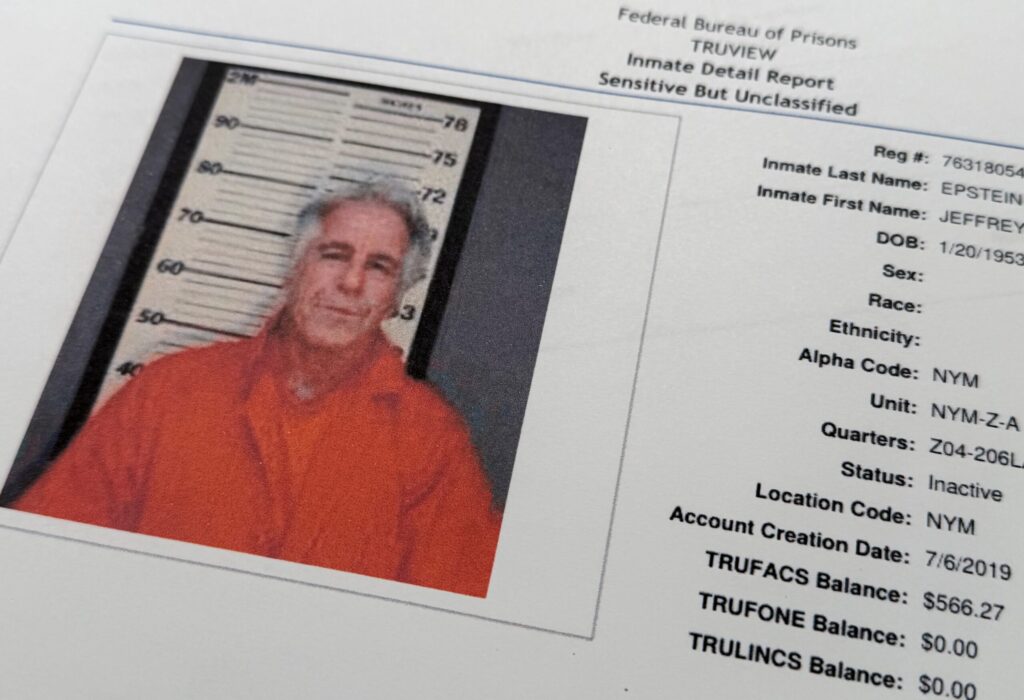
The Justice Department released additional Epstein files on Thursday, including uncorroborated accusations from a woman claiming she was sexually assaulted by President Donald Trump. Last week, Rep. Robert Garcia (D-CA), the top Democrat on the House Oversight and Government Reform...

Rena Rowe, Washington Examiner
Reporter

Truck driver hospitalized, United flight deplaned after Denver airport crash
Michael Braithwaite
michael.braithwaite@gazette.com
Updated 44 minutes ago
The driver of a de-icing truck was hospitalized and a United Airlines flight was deplaned after a crash at Denver International Airport Friday morning. Amid heavy snowfall, United Airlines flight 605 headed to Nashville hit the truck while leaving the...

Michael Braithwaite
Reporter
House GOP leaders begin push for reconciliation 2.0
Lauren Green, Washington Examiner
lauren.green.washington.examiner@gazetteedit.wpenginepowered.com
Updated 3 hours ago
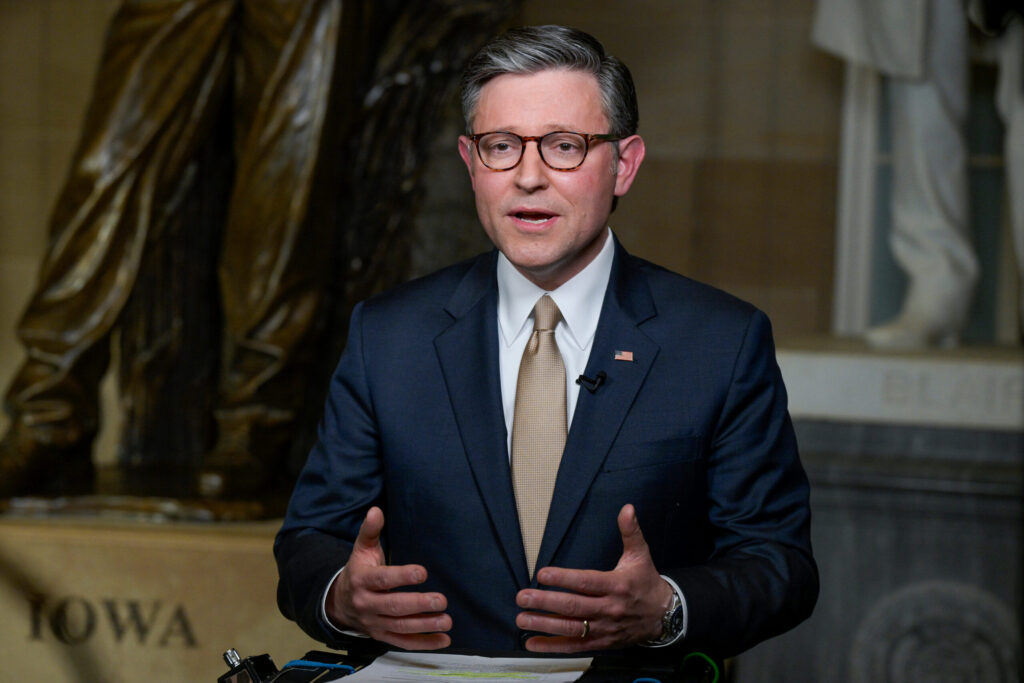
House Republican leaders are pushing for a second party-line reconciliation bill and plan to discuss it at their upcoming policy retreat in Doral, Florida, next week. Sources close to GOP leadership told the Washington Examiner that Speaker Mike Johnson (R-LA)...

Lauren Green, Washington Examiner
Reporter

Trump confirms frustration over Noem’s $220 million ad campaign: ‘Didn’t know about it’
Emily Hallas, Washington Examiner
emily.hallas.washington.examiner@gazetteedit.wpenginepowered.com
Updated 3 hours ago
President Donald Trump questioned former Homeland Security Secretary Kristi Noem’s approval of a costly ad campaign prominently featuring herself. Noem has repeatedly claimed, including during congressional testimony on Tuesday, that Trump personally asked her to craft the DHS ad campaign,...

Emily Hallas, Washington Examiner
Reporter
Khamenei’s secret bunker under Tehran destroyed by Israeli military jet bombardment
Brady Knox, Washington Examiner
brady.knox.washington.examiner@gazetteedit.wpenginepowered.com
Updated 3 hours ago
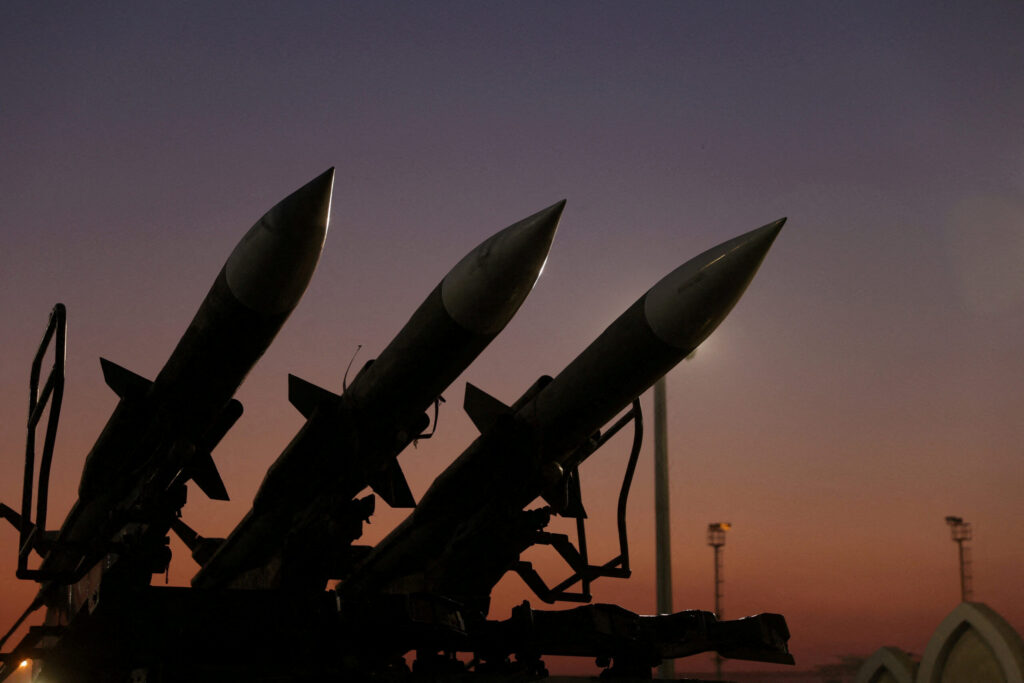
The bunker created for former Iranian Ayatollah Ali Khamenei was reportedly still in use by senior Iranian figures when it was obliterated in a bombardment from 50 Israeli Air Force jets Friday. Khamenei was assassinated in an Israeli airstrike in...

Brady Knox, Washington Examiner
Reporter
Trump says there will be no deal with Iran outside of ‘UNCONDITIONAL SURRENDER’
Brady Knox and Christian Datoc, Washington Examiner
brady-knox-and-christian-datoc-washington-examiner@import.placeholder
Updated 3 hours ago
President Donald Trump laid out his first clear terms for the end of the war with Iran on Friday morning, saying he would accept nothing short of capitulation. “There will be no deal with Iran except UNCONDITIONAL SURRENDER!” Trump said...

‘X is not real life’: Karoline Leavitt denies MAGA divisions over Iran war
Mabinty Quarshie, Washington Examiner
mabinty.quarshie.washington.examiner@gazetteedit.wpenginepowered.com
Updated 3 hours ago
White House press secretary Karoline Leavitt downplayed ongoing tensions within the MAGA movement over the Iran war during a gaggle with reporters on Friday. “I would just remind people X is not real life,” Leavitt said after being asked about...
