Dueling letters reveal rift over DPS superintendent’s contract
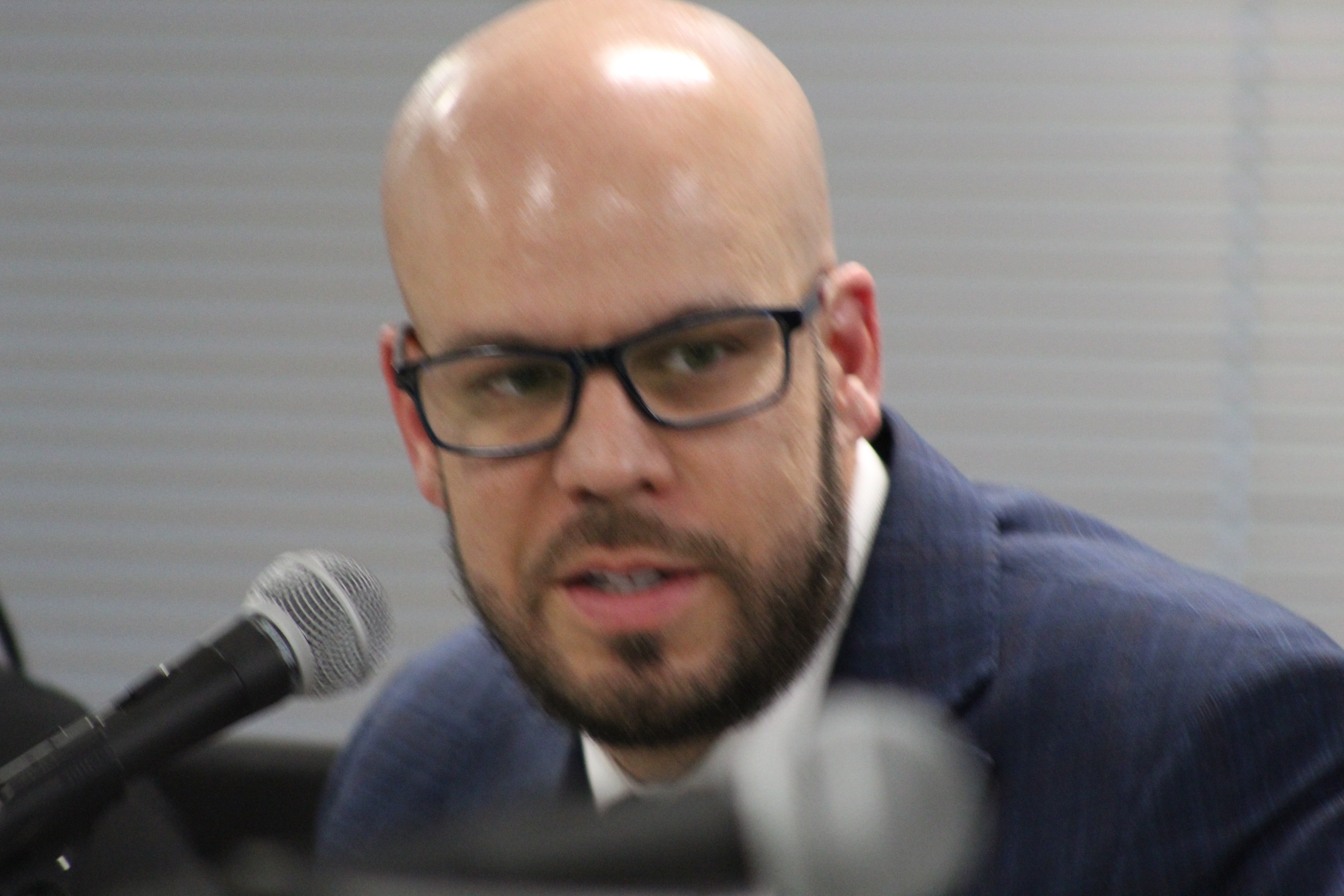
A diverse group of Latinos concerned about academic outcomes signed a letter urging the Denver Public Schools board to delay extending Superintendent Alex Marrero’s contract until after his performance review.
The Denver Public Schools (DPS) board of education is expected to weigh in on “proposed amendments” to Marrero’s contract when it meets Thursday. A public hearing is scheduled before the board enters executive session, which is closed to the public.
The board received the letter earlier this week, before receiving a second letter expressing unmitigated support for Marrero.
The two dueling letters — one supporting Marrero, the other urging a pause on renewing his contract 13 months early — underscore the community divide between those calling for a more deliberate review process and others who fear Marrero’s critics are sowing disruption.
Both letters highlighted several bright spots about the Marrero administration, among them:
• Hiring Patricia Hurrieta to lead the Latino Student Success team with the goal of developing a plan to improve Latino student achievement and family engagement.
• Setting performance goals for the superintendent to increase academic achievement and retention rates for Latinos.
• Seeking a temporary injunction against the U.S. Department of Homeland Security to prevent federal immigration officials from entering school buildings for the purpose of conducting enforcement actions.
Signed by a cross-section of Latino community leaders, DPS parents and education advocates, the first letter was sent to the board on Monday. The 40 signatories also included Denver City Council President Amanda P. Sandoval, state Sen. Julie Gonzales, Transform Education Now Executive Director Nicholas Hernandez, DPS school leader Alex Magaña and former DPS Board President Theresa Peña.
These leaders expressed concerns about Latino students lagging academically behind other ethnicities.
“Together, we are deeply invested in the success of Denver Public Schools and its leaders because we know the vital role you and the superintendent have in student academic success and overall well-being,” the letter said. “Latino children are the majority of the students you serve — and they are the future of Denver, poised to lead our city’s growth, innovation, and community life.”
The second letter, sent Tuesday, was signed by a swath of more than 50 community leaders, lawmakers and educators who expressed concerns that politics would reverse the progress the district has made under Marrero’s leadership.
“All of this progress — the academic recovery, the equity advances, the fiscal stability, the national leadership — is not guaranteed to continue if Denver once again chooses disruption over courage,” the second letter said. “Those now calling for upheaval are too often the same forces who led DPS into instability, division, and broken promises in the past. This is not the time to gamble with political opportunists.”
Darlene LeDoux — chair of the La Raza Advisory Council and one of 50 signatories of the second letter — echoed concerns raised in the first about lagging academic outcomes for Latino students.
“I, too, share the same concern,” LeDoux said. “On the other hand, there are very few districts nationally that have done this (raised academic achievement).”
LeDoux declined to say what the purpose of the second letter was and whether the board should renew Marrero’s contract early.
Released last year, the La Raza report was designed to capture the experiences of the Latino community in Denver. Conducted by The Multicultural Leadership Center, the report touched on many of the same themes Chicano students at West High School identified five decades ago when they walked out of class in protest over racism on their campus. At the time, students had demanded more bilingual classes and Chicano history and literature to be integrated in the curriculum, among other things.
The Denver Gazette reached out to all members of the board for comment. Only Board President Carrie Olson responded and she declined to comment.
“I am encouraged to see that critics, who voiced opposition to my appointment even before I even arrived in Denver, have moved on from personal attacks to highlighting our successes,” Marrero said in a statement.
Last month, the board faced a public backlash over its plans to extend Marrero’s contract ahead of the fall election. The school board dropped its plans for a closed-door meeting when no one made a motion to enter into executive session, effectively nixing the meeting without discussion.
Olson was unable to find a member willing to make a motion on the matter, effectively ending the meeting, which drew snap claps from those in attendance.
Nine parents and former educators spoke during public comment on the early extension — none in favor.
Lynn Ly, co-founder of Resign DPS, promised to revive her group’s effort to unseat the remaining members — Directors Scott Esserman, Michelle Quattlebaum and Xóchitl Gaytán — and continue their work to “flip the board.”
Resign DPS was a movement that advocated for member resignations over the board’s perceived dysfunction and concerns about student safety.
DPS school leaders have struggled to overcome student learning losses during the COVID-19 pandemic.
Just 31.2% of DPS students meet or exceed expectations in math, a 0.9% gain over last year, while 40.7% of students did so in English, a 0.4% increase.
As the state’s largest district, DPS serves a large population of English language learners.
The letter noted that before the pandemic, Latino students had a proficiency in English of 29% and 20% in math in the 2018-2019 academic year.
“Since then, these same outcomes have dropped to 24% and 15% in SY23-24,” the first letter said. “During that same time, we saw our White students return to similar performance levels from SY18-19.”
The way Karolina Villagrana, a former DPS educator, sees it, the superintendent’s only job is making sure students succeed.
“The big thing is having higher academic outcomes for our students, particularly for the Latino community,” Villagrana said. “That in itself is not acceptable. We need to have higher outcomes for the future of our kids.”
In January, the board reduced the number of goals used to evaluate Marrero — cutting them from more than 200 metrics to roughly two dozen. While he now has fewer benchmarks to hit, the expectations are more ambitious.
For example, the board increased Marrero’s literacy goal from 40% to 42% for students in grades third through eighth. The district’s 2022 strategic plan had called for 49% of third-through eighth-graders to meet or exceed expectations on the state literacy test by the next academic year.
Marrero’s contract doesn’t expire until June 2026. If the DPS board doesn’t notify him whether they intend to extend or end his contract by January, it automatically extends for a year, spokesperson Scott Pribble has said.
Two years ago, the board voted 4-3 to raise Marrero’s salary base 10% — making him at the time among the highest paid in the state — in a new contract that included up to 12.5% in performance pay, if he achieves all his goals.
Some members of the public criticized the move as lacking transparency.
Theresa Peña — who served eight years on the DPS school board, four as president — said she doesn’t understand what the urgency is now.
“They just put in place the metrics four months ago,” Peña said. “It’s premature to open up the contract.”
Peña added: “If he has success with students, which we all hope he does, because at the end of the day it’s not about Alex. It’s about the students.”
Marrero took the helm in July 2021.
Marrero has a string of questionable decisions under his belt, beginning with criticism over his handling of the shooting of two administrators at East High School two years ago to the annual cost of living increases he received while denying it to teachers to a roughly $100,000 corner office upgrade and school closures.
Before coming to Denver, Marrero served as interim superintendent for the City School District of New Rochelle, which is outside New York City and serves fewer than 10,000 students, according to the district’s website.
Editor’s note: This story has been updated to clarify that Darlene LeDoux did not take a position on whether to extend Superintendent Alex Marrero’s contract. A previous version may have suggested otherwise.