







NASA’s Orion designed in Littleton is ready for Artemis 2026 launch
Nearly 100 companies in Colorado are supporting the Artemis missions, as the state is one of the top contributors to the nation's lunar campaign.
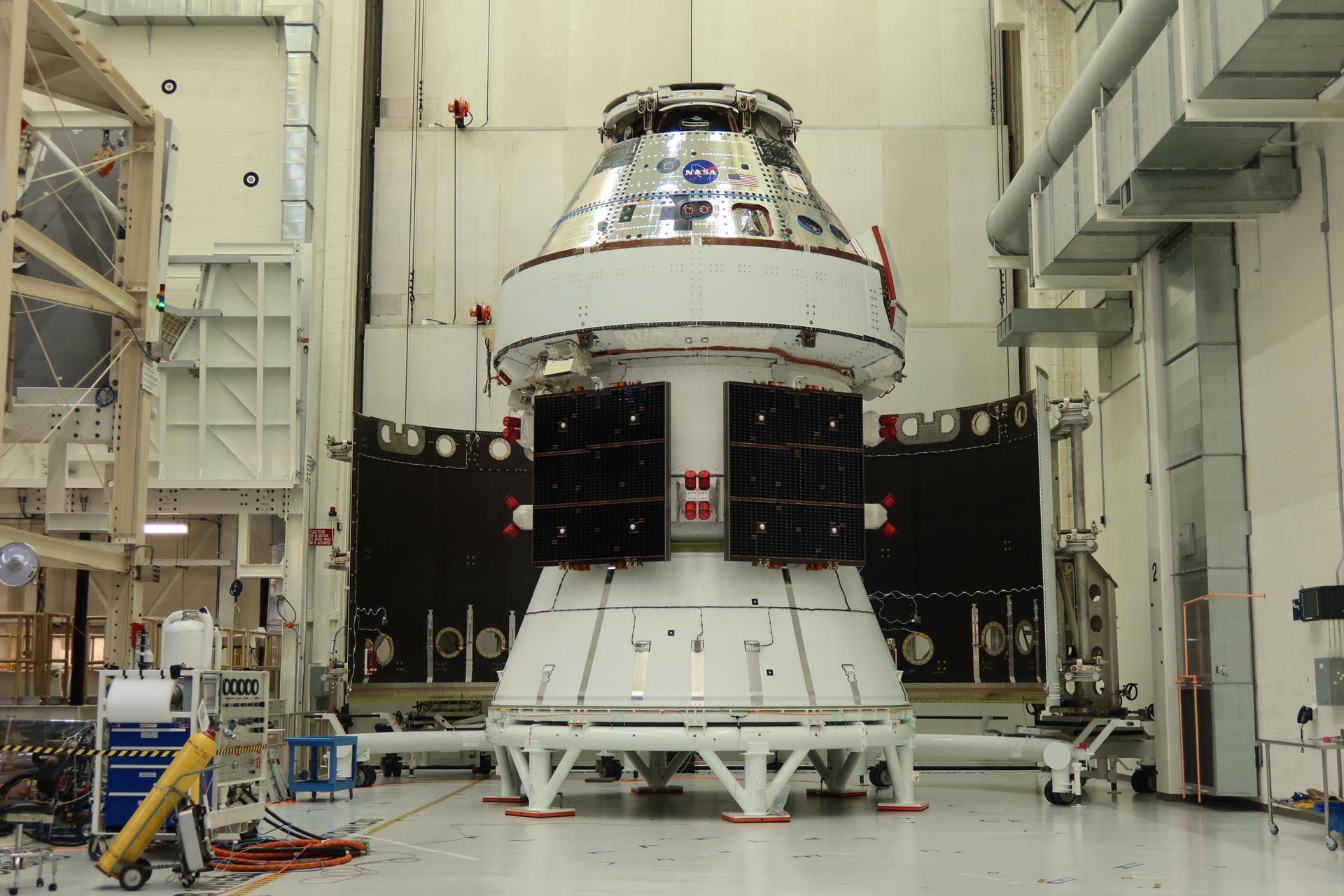
The Orion spacecraft set to carry astronauts for NASA’s practice run to bring humans back to the moon is fully assembled, Lockheed Martin announced Thursday.
The spacecraft built for the Artemis II mission scheduled to launch in 2026 was designed by Lockheed Martin engineers, a company spokesperson said, many of which are based in the defense and space contractor’s Littleton campus near Waterton Canyon.
Lockheed Martin built the crew module, crew module adapter and the launch abort system on Orion, which is set to carry four astronauts.
The spacecraft was assembled and tested in Florida’s Kennedy Space Center, though some parts were tested in Littleton as well.
With the completion, Lockheed Martin has given the reins of the spacecraft to NASA’s Exploration Ground Systems this week.
“This achievement is a testament to our employees and suppliers who have worked tirelessly to get us to this important milestone,” said Kirk Shireman, vice president of human space exploration and Orion program manager at Lockheed Martin, in a news release. “The Orion spacecraft completion for Artemis II is a major step forward in our nation’s efforts to develop a long-term lunar presence.”
NASA contracted with Lockheed Martin to build Orion spacecraft up to the eighth Artemis mission.
Nearly 100 companies in Colorado are supporting the Artemis missions, as the state is one of the top contributors to the nation’s lunar campaign.
NASA contracted with more than 90 Colorado companies for the Moon to Mars missions and it’s expected to generate 14,600 jobs statewide and $3 billion in economic output, according to a 2022 report from the space agency.
Since the unmanned Artemis I mission, Orion had several new systems installed such as life support displays and controls for air, water, temperature and waste management, audio communications, an exercise machine and a Launch Abort System.
The second Artemis mission will be a 10-day journey flying past the moon and back to Earth as astronauts test Orion’s communication and navigation systems and conduct science experiments.
They’ll also practice docking that will be required for Artemis III, the mission where astronauts will go to the moon for the first time since 1972.
Last October, NASA astronauts Victor Glover, Christina Koch, Reid Wiseman and Canadian astronaut Jeremy Hansen visited Lockheed Martin’s Colorado facility to practice opening and closing an Orion model’s hatch.