




More than 10,000 people were forcibly moved to Colorado incarceration site during WW2
milehightraveler
Located in southeastern Colorado, Camp Amache, also known as the Granada Relocation Center, once housed 7,310 Japanese Americans forcibly removed from their communities on the West Coast during World War II.
According to the National Park Service (NPS), Amache was one of ten incarceration sites that were established during World War II by the War Relocation Authority. Between 1942 and 1945, over 10,000 people of Japanese ancestry, most of whom were American citizens, passed through Amache with the camp reaching its peak population in 1943 when it housed 7,310 people. This made it the tenth-largest population center in Colorado at the time.
Although it was the camp with the smallest overall population among the ten War Relocation Authority (WRA) camps, Amache was the only relocation center established on private land and had other unique construction features, according to Amache.org. The entire camp spanned over 10,000 acres (about 15.5 square miles), but only one square mile comprised the central camp. This means the camp had a population density at about one-tenth of the current day Manhattan (73,000 residents per square mile) – but keep in mind that these residents weren’t living in skyscrapers.
Internees engaged in popular American and Japanese activities. According to Amache.org, the camp operated a silkscreen shop and cooperative store, published a newspaper, and engaged in agricultural enterprises both within and outside the camp. There was also other infrastructure, including a hospital, schools, and recreational buildings. Additionally, 953 men and women volunteered or were drafted for military service during WWII, giving Amache the highest rate of military volunteerism of all the WRA camps. Of those service-people, 105 were wounded and 31 were killed in action.
Camp Amache officially closed on January 27, 1946. According to the NPS, most of the original buildings at Amache were removed or demolished. That said, the site still represents one the most intact examples of a WWII incarceration site. NPS says that the area’s original buildings’ foundations and the historic road network are still visible on the landscape today. Camp Amache also includes a historic cemetery, a monument, and some reconstructed and restored structures from the camp era.
Amache was listed on the National Register of Historic Places on May 18, 1994. It was designated as a National Historic Landmark on February 10, 2005.
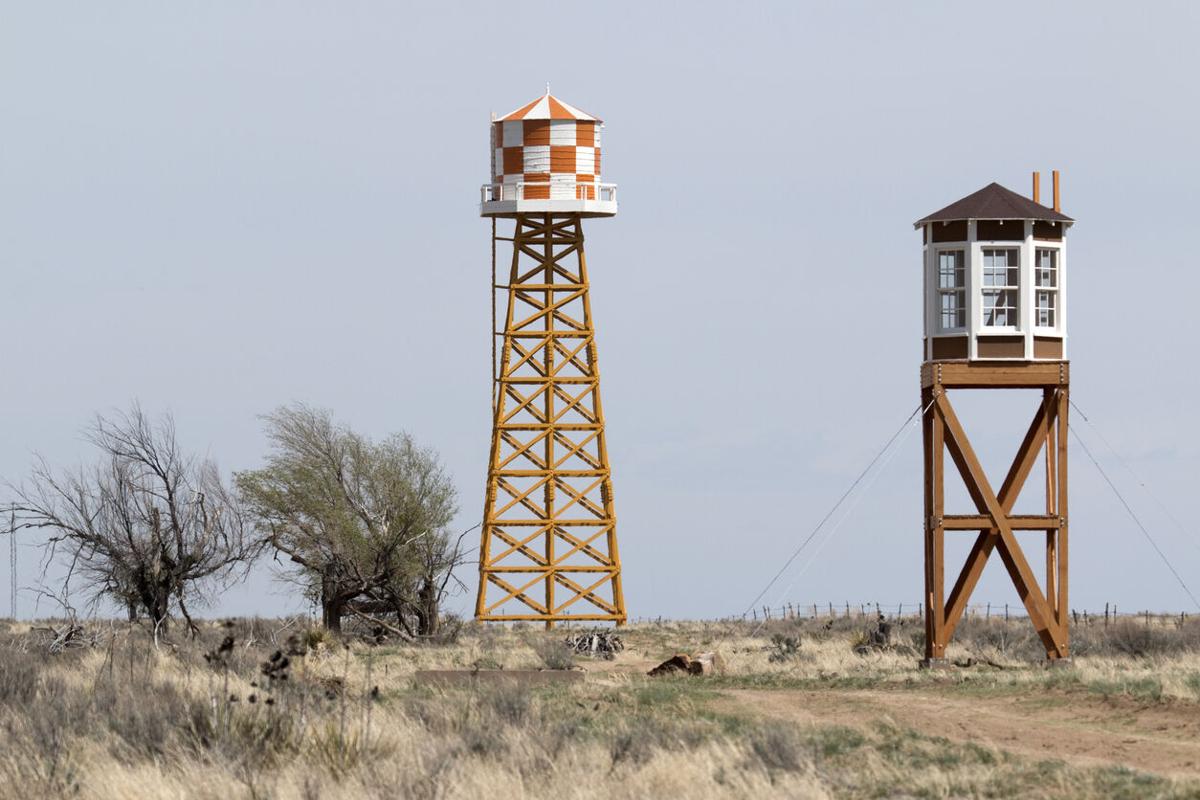
Today, Amache includes a reconstructed barrack, a historic recreation hall, a historical water tower, and a reconstructed guard tower. Visitors can also check out a cemetery and memorial to honor those who died while incarcerated at Amache and the soldiers from Amache who were killed while serving in World War II.
The Amache Preservation Society also has student volunteers who operate a museum in Granada. The museum features exhibits and collections of items that are culturally significant to Amache. Find more information about the museum here.
The Amache National Historic Site will also be offering ranger-led tours and talks on-site starting in the summer of 2025.
Learn more about the Amache National Historic Site here.
STAY INFORMED: Get free Colorado news with our daily newsletter (Click here)
Get OutThere
Signup today for free and be the first to get notified on new updates.
PREV
PREVIOUS
Colorado's 'railroad war' had workers donning guns in addition to shovels and picks
Facebook Twitter WhatsApp SMS Email Print Copy article link Save Facebook Twitter WhatsApp SMS Email Print Copy article link Save As miners raced to Colorado’s upper Arkansas Valley in the late 1870s searching for lead and silver, a ‘war’ between two railroads began. Miners had recently found rich deposits of lead and silver near Leadville, […]

Hand-crafted Colorado teahouse part of exchange involving Internet cafe sent to foreign lands
Facebook Twitter WhatsApp SMS Email Print Copy article link Save Facebook Twitter WhatsApp SMS Email Print Copy article link Save The beautifully crafted Boulder Dushanbe Teahouse was gifted to the city from Tajikistan in exchange where the City of Boulder sent a building of its own choosing to a home found half-way around the globe. […]