







EDITORIAL: Colorado cyclists ride a thin line
the Gazette file
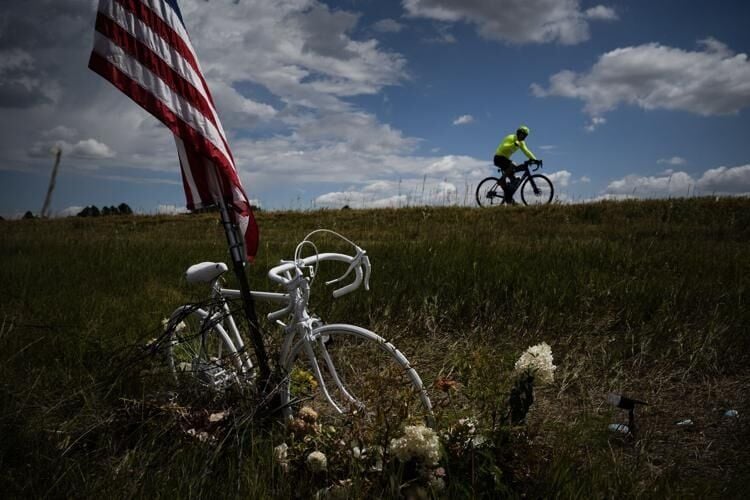
The latest tragic death of a Colorado bicyclist hit by a motorist reminds us all to be keenly aware of those on two wheels who share the roads with the motoring public.
Plenty of Coloradans do both — driving a motor vehicle to work, school or the kids’ soccer practice, and then putting in some cardio on a road bike over a lunch hour or after hours. Some even use pedal power to commute or run errands during the warmer months.
So it should be all the more obvious when piloting a two- or three-ton vehicle that it represents a potentially lethal force to someone riding a 25-pound bike. The motorist owes the bicyclist utmost caution even as the bicyclist, too, must respect the rules of the road.
The death earlier this month of 41-year-old cyclist John Wilkinson, of Broomfield, also reminds us of the limits of public policy in ensuring cycling safety. Like driving, bicycling has inherent risks.
Colorado policymakers must be proactive yet realistic. They must balance the needs of bicycles — a vulnerable yet very small minority on our roadways — with the necessities of motor-vehicle traffic. No policy to protect bicyclists can guarantee their safety; nor are all attempts to protect them effective.
A Gazette news report this week recounted the details of Wilkinson’s death in the light of an alarming, statewide spike in bicycle and pedestrian deaths caused by motor vehicles. Pedestrian and bicyclist fatalities in Colorado have increased 78% since 2015, according to Colorado State Patrol statistics.
Some of the proposed and pending responses to those grim statistics — including the 2023 traffic death of 17-year old Boulder cycling standout Magnus White — make sense. In particular, stiffer penalties are in order when reckless motoring causes a collision with a cyclist.
Senate Bill 25-281, passed by the Legislature this spring, would change the charge of Careless Driving Resulting in Death from a class one misdemeanor to a class 6 felony. It also would require mandatory chemical testing if a person was driving carelessly and it was a proximate cause of the death of another person. The bill awaits Gov. Jared Polis’ signature.
On a related noted, the motorist in Wilkinson’s case fled the scene; a suspect was arrested later. As The Gazette reported, the suspect had lost his license to drive several times in the past five years and had been arrested for numerous traffic offenses, according to court records.
However, any calls for changes to transportation infrastructure to accommodate bicyclists must be weighed objectively. In particular, bike lanes on busier traffic corridors arguably do more harm than good.
In a Sunday Perspective published in The Gazette last December, Fort Collins bicyclist and bicycling advocate Frank Lehnerz challenged conventional thinking on bike lanes. Lehnerz contended, “they create significant trade-offs, often compromising cyclist safety, marginalizing riders, perpetuating dangerous misconceptions about road use and hindering urban mobility for everyone.”
“In my riding experience and in my years of independent research on crashes, I’ve seen how bike lanes can lead to collisions — referred to among cycling-safety enthusiasts as right hooks, left hooks, drive outs, pullouts and doorings,” Lehnerz wrote. “Many of these collisions are fatal, and surprisingly many bike lane advocates either don’t know what they are, downplay them or outright ignore them.”
Meanwhile, the notoriously underutilized lanes also rob space needed by congested motor-vehicle traffic, creating even more of a bottleneck.
Ultimately, it is up to each of us to be mindful of others on the road and to watch out for their safety. Our heartfelt condolences go to the grieving family and friends of John Wilkinson. Let’s honor his memory by respecting cyclists’ right to ride — and their right to life.
The GAZETTE EDITORIAL BOARD