







Denver Public Schools drops lawsuit against ICE
Stephen Swofford/ Denver Gazette
Denver Public Schools dropped its lawsuit against the U.S. Department of Homeland Security for a policy change that allows federal authorities to conduct immigration enforcement actions in so-called sensitive locations such as schools, hospitals and places of worship.
Colorado’s largest school district filed the lawsuit in February, requesting a temporary injunction and restraining order that would have prevented U.S. Immigration and Customs Enforcement (ICE) from conducting arresting unauthorized immigrants on campuses.
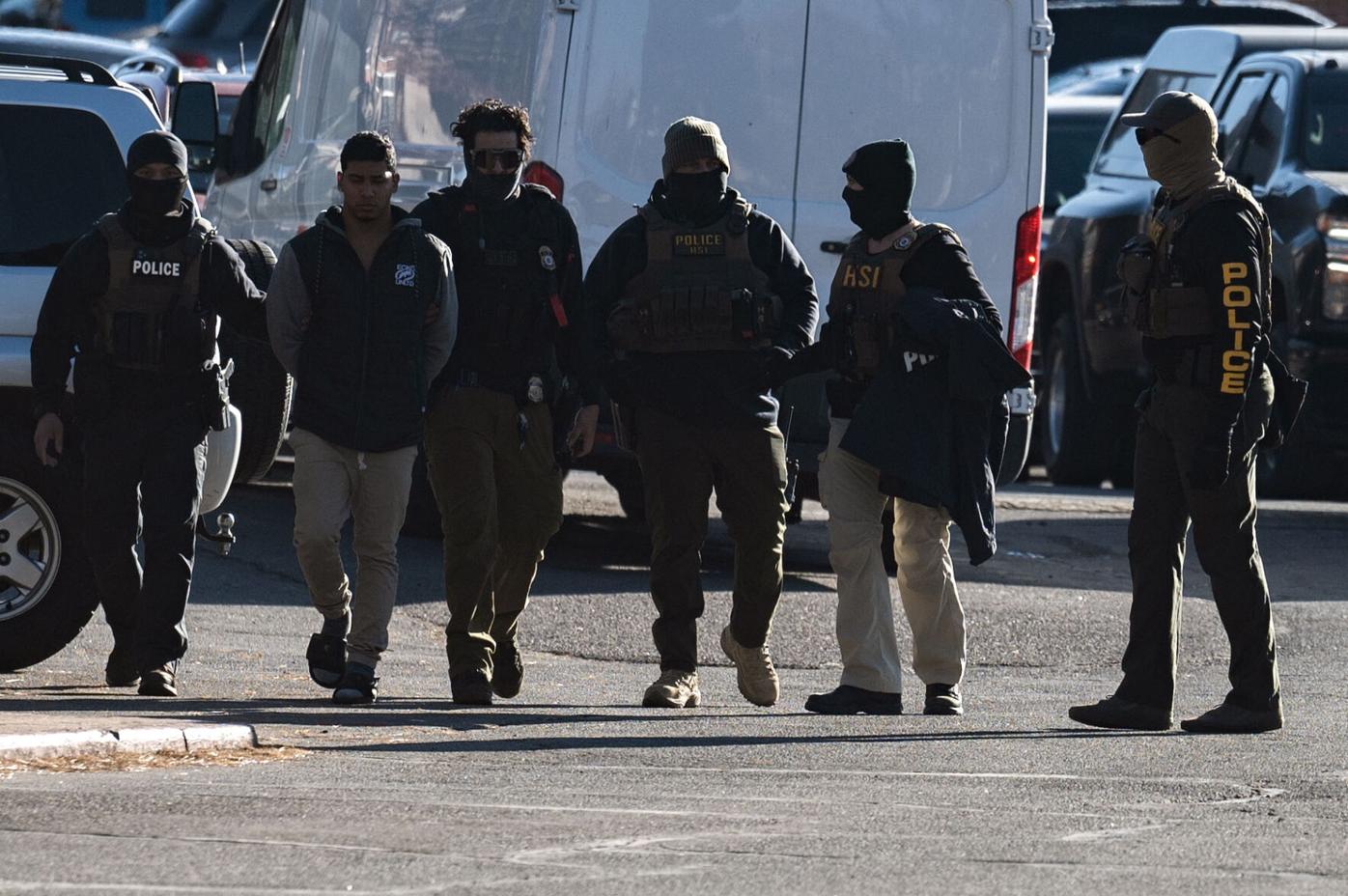
Believed to have been the first in the country, the lawsuit was filed after ICE agents conducted multiple raids in the metro Denver area last month — one within a mile of two schools.
In March, U.S. District Court Judge Daniel Domenico denied the injunction motion, indicating the lawsuit would not likely prevail in federal court.
“I do think the public interest would be harmed by a federal court overturning immigration policy in this way,” Domenico said in the ruling, noting if schools and bus stops were included in a protected area that “the entire city would be covered.”
A memo issued by Department of Homeland Security Sec. Alejandro N. Mayorkas, under the Biden administration, said that, while enforcement actions in sensitive locations is discouraged, the agency still maintained the ability to conduct such actions.
DPS officials in a written statement described the lawsuit as a success.
“This was another significant victory for DPS and school districts nationwide, as the Department of Homeland Security admitted in federal court that the policy had not been changed in a meaningful way and that schools remained protected as sensitive locations,” district officials said in a statement. “This fact was not previously known.”
The memo also stated that the guidance is “not intended to, does not, and may not be relied upon to create any right or benefit, substantive or procedural, enforceable at law by any party in any administrative, civil, or criminal matter.”
Within hours of assuming office, President Donald Trump rescinded the long-standing practice. His acting homeland security secretary at the time said the move would ensure law enforcers’ hands will no longer be tied. The Trump administration “instead trusts them to use common sense,” the official said.
Appointed by Trump in 2017, Domenico said that, to his thinking, there was little difference between the previous and current policy.
Superintendent Alex Marrero stopped short of calling the lawsuit — for which he was praised in many circles — as a win for district students. But on social media said he was “proud” of settling the matter with ICE.
“Let me be clear: This was never just about a court case,” Marrero wrote on his LinkedIn account. “This was about defending our students’ right to learn without fear. When ICE activity in our communities caused panic and disrupted classrooms, we took bold action—because silence was not an option.”
ICE officials declined comment.
In the days leading up to Trump’s inauguration, Marrero reiterated a district policy that does not permit ICE officials on campus.
“No individual should be permitted to enter the building without ascertaining whether the individual has a legitimate business or educational purpose,” Marrero wrote in a memo on Jan. 14, 2025.
“Per DPS Administrative Policy JIH (Student interviews, interrogations, searches and arrest), federal immigration law enforcement activities would not be permitted at our schools on transportation routes on DPS property or during school activities,” Marrero wrote.
The student policy was first adopted in 1971 and revised in 2019.
As part of the lawsuit, Marrero claimed that the raids in February negatively affected attendance.
“Since the rescission, there has been a noticeable decrease in school attendance across all schools, but particularly those schools that are in an area where there is a large population of new-to-country families and where ICE raids have already been occurring,” Marrero said in his declaration to the court.
“New-to-country” is the language used by school officials to refer to immigrants who arrived in Denver in the past two years after illegally crossing the U.S. border.
One of the raids happened near a school bus stop, and a raid that targeted residents at the Cedar Run Apartments in Denver occurred within a mile of two schools.