







Amid complaints of rats, leaks and asbestos, Salvation Army says city is responsible for maintenance of homeless shelters
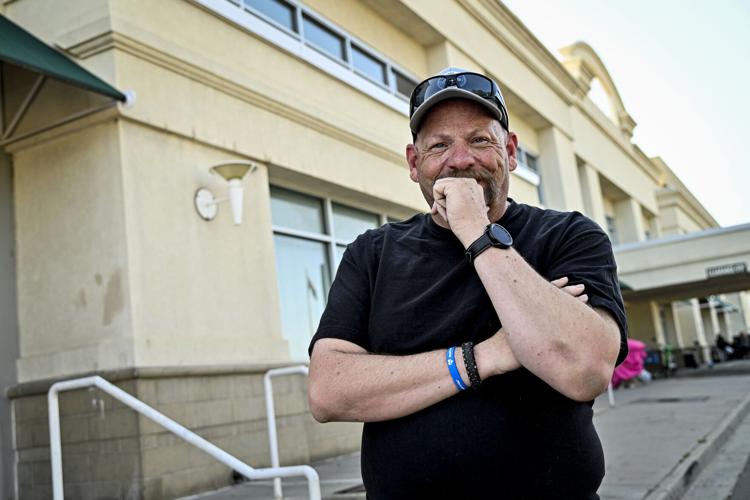
David Walsh, who worked at The Aspen for approximately 10 months, said much of the physical damage he saw there actually came from residents themselves who “literally trash the place.” Walsh told The Denver Gazette that repair teams found towels, bed linens, shirts, and adult toys that had been flushed down toilets and were causing water damage in the 289-bed city-run homeless shelter.
Deborah Grigsby


Residents of The Aspen, one of Denver’s largest city-run homeless shelters, have criticized The Salvation Army over recurring rodent infestations, asbestos exposure, black mold, shuttered bathrooms, accessibility problems and more.
However, officials of the nonprofit said there is little they can do as the shelter’s operator — other than report those concerns to the city.
The City and County of Denver acquired The Aspen, a former DoubleTree hotel at 4040 Quebec St., for $43 million in 2024, as part of Mayor Mike Johnston’s campaign to move more people off the streets and into shelters.
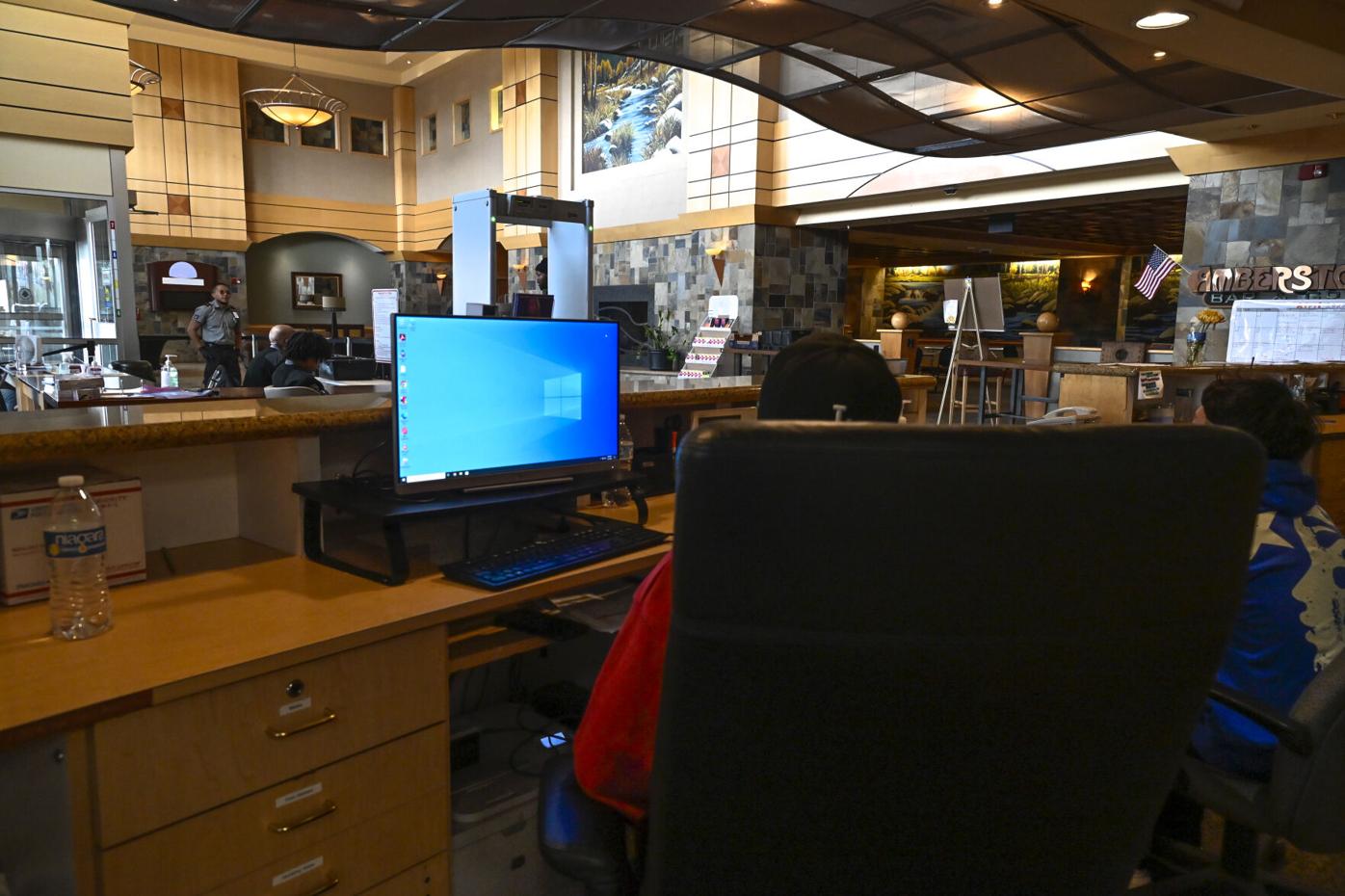
Inside The Aspen, one of Denver's largest city-run homeless shelters, security systems and a metal detector are part of the day-to-day efforts to keep shelter residents safe.
Deborah Grigsby


Inside The Aspen, one of Denver’s largest city-run homeless shelters, security systems and a metal detector are part of the day-to-day efforts to keep shelter residents safe.
David Walsh, who worked at The Aspen for approximately 10 months, said much of the physical damage he saw there actually came from residents themselves who “literally trash the place.”
“We had black mold on a pretty regular occurrence just because of the amount of leaking in the building, because of the plumbing,” he said.

Louisiana native Kevin Campbell has been a resident of The Aspen for just over a year. He said the facility has provided him with "the most stability I've ever had in my life." But some residents of the city-run homeless shelter say rodent infestations and concerns over asbestos have not been adequately addressed.
Deborah Grigsby
Louisiana native Kevin Campbell has been a resident of The Aspen for just over a year. He said the facility has provided him with "the most stability I've ever had in my life." But some residents of the city-run homeless shelter say rodent infestations and concerns over asbestos have not been adequately addressed.
Deborah Grigsby


Louisiana native Kevin Campbell has been a resident of The Aspen for just over a year. He said the facility has provided him with “the most stability I’ve ever had in my life.” But some residents of the city-run homeless shelter say rodent infestations and concerns over asbestos have not been adequately addressed.
Repair experts brought in to mitigate mold and remedy plumbing leaks found a surprising “laundry list” of items to be extracted from numerous toilets.
“They found towels, bed linens, shirts and adult toys that had been flushed down the toilets and were clogging the system — needles, drug paraphernalia, too,” Walsh said.
Water from overflowing toilets easily seeps through floors and into the ceilings of the rooms directly below, sometimes separating the “popcorn” ceiling from its substrate, raising health concerns over black mold and asbestos exposure.
Senescent hotel structures — such as The Aspen, which is more than 50 years old — were never designed to support round-the-clock operations at 100% capacity, experts said, and costs to extend the structure’s usable life are likely to continue growing.
Denver’s Department of General Services oversees and provides management and routine repairs across 134 city-maintained facilities and structures.
Maintenance for the city’s congregate and non-congregate facilities, including The Aspen, is primarily handled by a designated facilities management “shelters team,” which consists of 11 full-time maintenance staff.
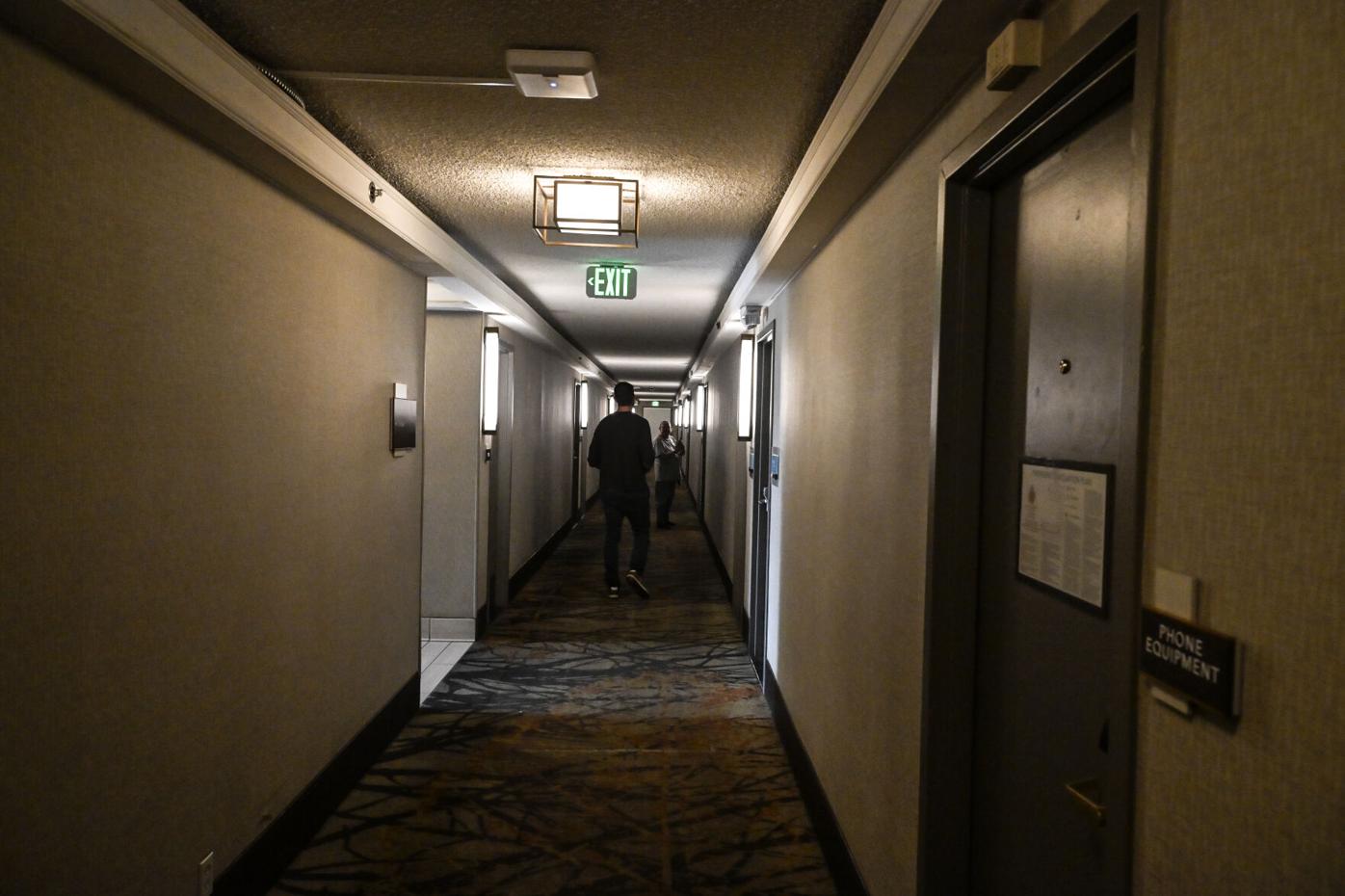
Inside The Aspen, a former DoubleTree hotel turned homeless shelter, residents of the 289-bed facility have complained of rodent infestations, leaks and asbestos. The Salvation Army, which operates the shelter, says there is little they can do beyond filing work orders with the city's general service department.
Deborah Grigsby


Inside The Aspen, a former DoubleTree hotel turned homeless shelter, residents of the 289-bed facility have complained of rodent infestations, leaks and asbestos. The Salvation Army, which operates the shelter, says there is little they can do beyond filing work orders with the city’s general service department.
The Salvation Army provides a small, on-site staff that handles minor, day-to-day maintenance issues.
In 2025, city officials said, maintenance expenditures at The Aspen have totaled $281,995.
“That (number) includes HVAC, asbestos abatement, floor replacement, garbage, elevator, and other miscellaneous maintenance costs,” Denver General Services spokesperson Craig Wells told The Denver Gazette.

Amid concerns about asbestos, the Salvation Army keeps approximately 5% of its room inventory, such as this one, open to accommodate residents who may need to be relocated in the event of asbestos abatement or other major repair activities.
Deborah Grigsby


Amid concerns about asbestos, the Salvation Army keeps approximately 5% of its room inventory, such as this one, open to accommodate residents who may need to be relocated in the event of asbestos abatement or other major repair activities.
Maintenance costs for 2024 stood at $1,005,345.
Shelter repairs
“While there is not a facility-specific budget allocated just for The Aspen, General Services budgets about $800 per room for repairs and upkeep of shelter sites,” Wells added.
Salvation Army Non-congregate Shelter Director Tyler Burwell told The Denver Gazette that, while The Salvation Army takes criticism from its residents and others seriously, when issues arise, “we will bring in the city very quickly” to determine a proper course of action.
Some shelter residents said the repairs often don’t come fast enough, and when they do, it’s “more like putting a Band-Aid on to hide a much bigger problem.”
During an interview, Salvation Army Communications Director Jennifer Forker told The Denver Gazette that one of the biggest challenges has been “just the sheer volume” of Denver’s sheltering needs.
“Turning a very large hotel into a sheltering site is new for Denver; it’s new for The Salvation Army,” Forker told The Denver Gazette. “The Salvation Army took on the All In Mile High initiative to serve the city, as well as some of its most challenging people, with the greatest of needs — and we do that with a glad heart.”
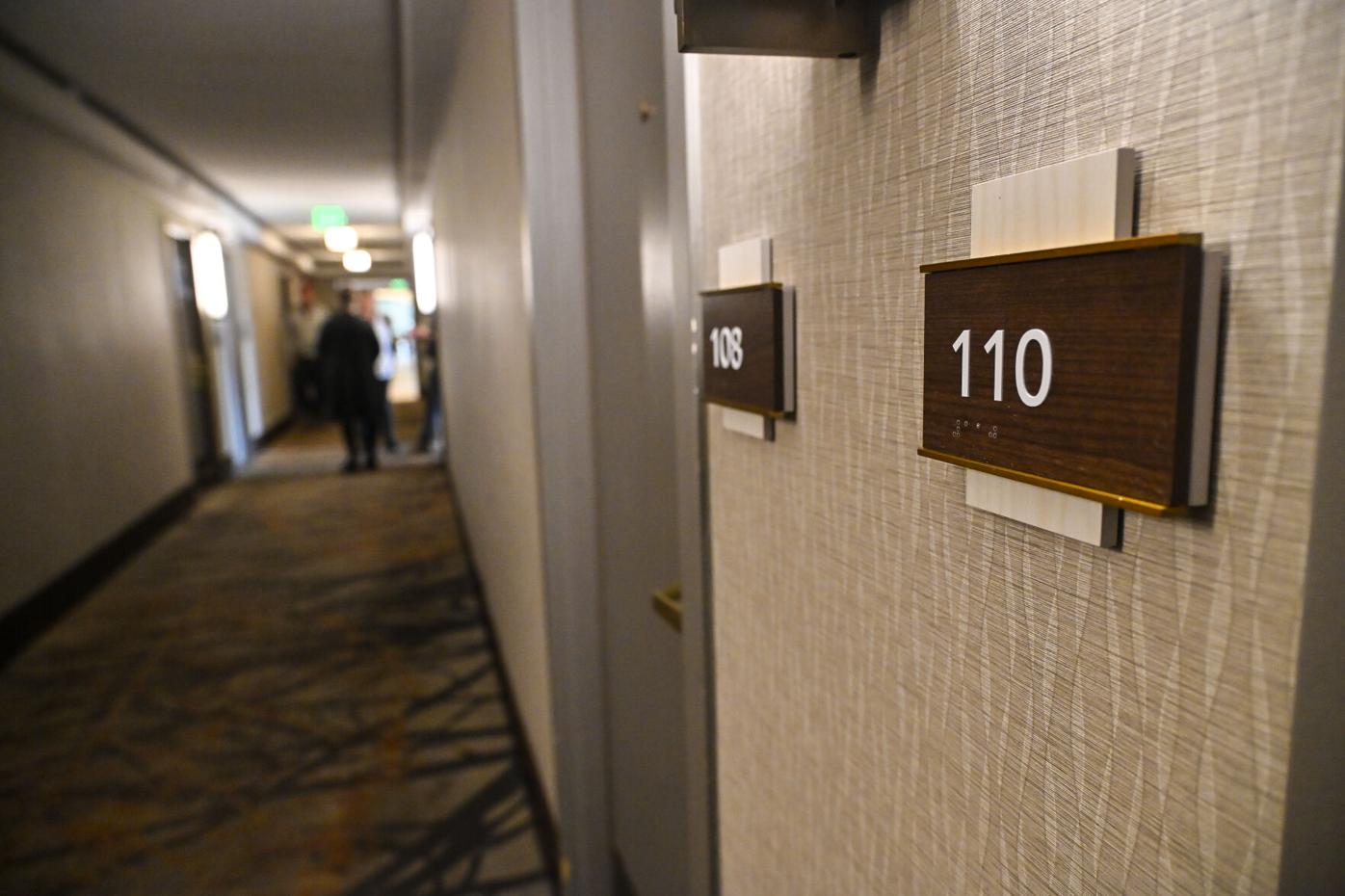
Residents make their way down a hall in The Aspen, one of Denver's largest city-owned homeless shelters. The shelter, located at 4040 Quebec St., has come under scrutiny from residents, who have cited instances of rodent infestation and concerns over asbestos exposure.
Deborah Grigsby


Residents make their way down a hall in The Aspen, one of Denver’s largest city-owned homeless shelters. The shelter, located at 4040 Quebec St., has come under scrutiny from residents, who have cited instances of rodent infestation and concerns over asbestos exposure.
Across the city, Forker said, The Salvation Army houses up to 1,800 people every night and prepares and delivers 3,500 meals per day.
Burwell said that many of the ongoing facility issues reported by residents have emerged from the city’s efforts to transform the guest rooms in the 1970s hotel into small, functioning “apartment units.”
“These (buildings) were hotels that were meant to be at 60% capacity,” Burwell said, “and so we do see stresses on the (facilities) system that need to be fixed.”
But Salvation Army officials argued they are neither under contract nor have the expertise to conduct many of the necessary repairs reported by residents.
That’s a job for the city’s general services department, officials said.
“Building maintenance is performed at The Aspen as dictated by work orders submitted by the on-site operator (Salvation Army),” Wells said. “The city’s facilities team also coordinates any life/safety inspections (e.g., fire, elevator) that are required by state and local government.”
The most common issues that result in work orders are those related to plumbing, in-room heating and cooling systems and elevator repair, according to Wells.
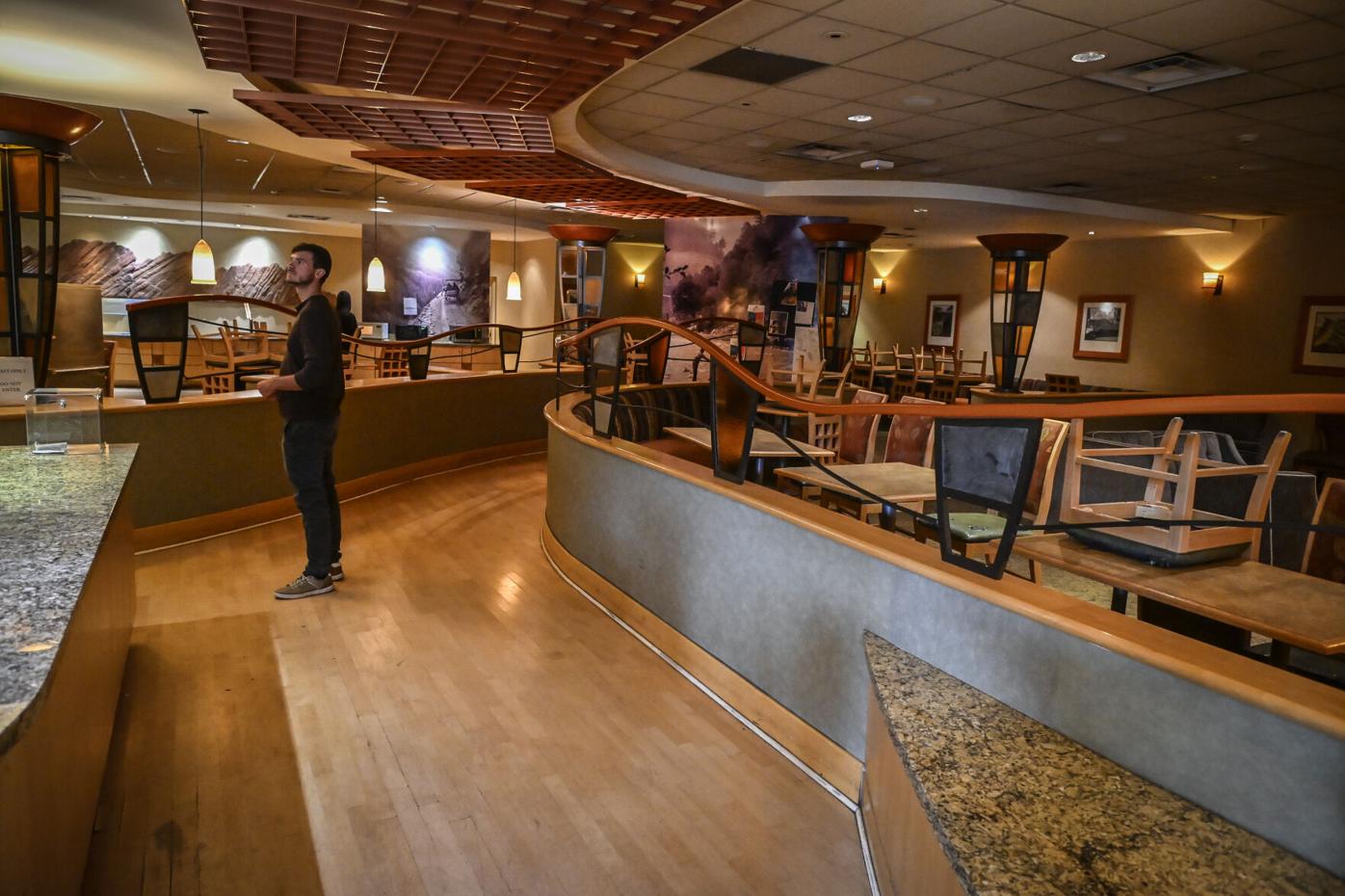
Nathan Parrot, assistant director at The Aspen, stands in the dining facility where the Salvation Army serves its residents daily hot meals as well as other supportive services.
Deborah Grigsby


Nathan Parrot, assistant director at The Aspen, stands in the dining facility where the Salvation Army serves its residents daily hot meals as well as other supportive services.
Response times for repairs vary, depending on the severity and impact of the issue.
For example, emergency requests are handled as soon as possible, with less urgent work orders completed within 30 days.
“Our recent focus has been on providing timely responses to urgent issues, as well as rectifying damage done by vandalism and misuse,” Wells added. “However, we are in the process of developing a preventative maintenance plan for this property and expect to have that mapped out by the end of 2025.”
As for the rodent infestations, Burwell said it is just something that comes with the territory.
“If we do have pest issues, we have contracts with companies like Terminix and other folks, who regularly come in and assist us with those problems because it’s kind of part of doing business in the shelter,” Burwell said. “Some of our folks have tendencies to hoard food, things of this nature, and so this is a regular issue. You’ll see it at almost any shelter that is operating, congregate or non-congregate.”
Rodent infestations are handled through contract exterminators as needed.
When it comes to asbestos, though, Burwell said that issue is beyond The Salvation Army’s control.
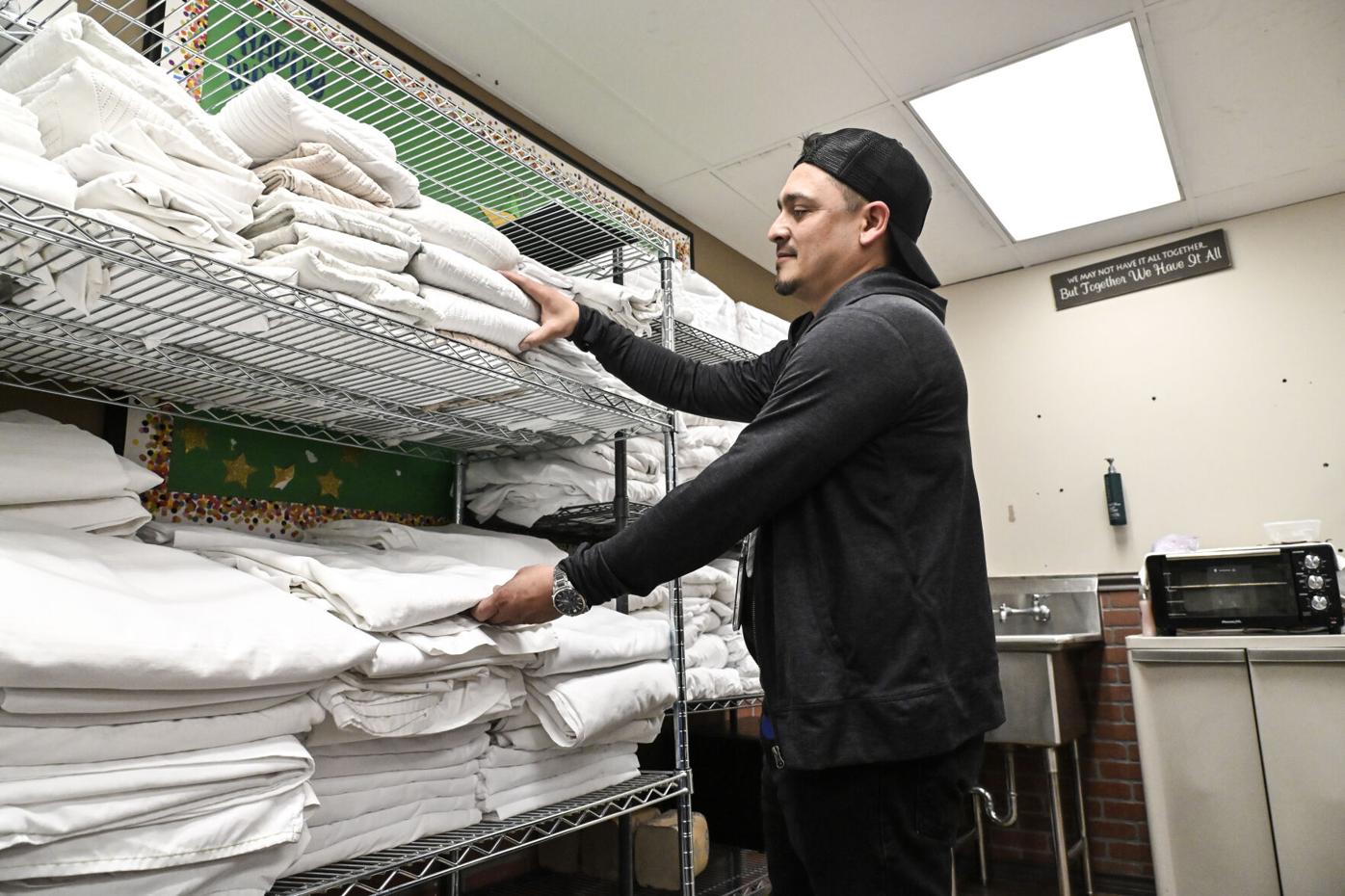
Salvation Army staff member Noryi Maestre sorts through clean linens in the laundry facility at The Aspen, one of Denver's largest city-run homeless shelters. Among the support services provided by the faith-based charity are meals and laundry service.
Deborah Grigsby


Salvation Army staff member Noryi Maestre sorts through clean linens in the laundry facility at The Aspen, one of Denver’s largest city-run homeless shelters. Among the support services provided by the faith-based charity are meals and laundry service.
That’s because agreements between the City and County of Denver and The Salvation Army are for operations only — meaning that The Salvation Army provides people and the programmatic services for the shelter, such as administration, meals, limited financial assistance, some vocational training and access to support services.
The City and County of Denver, as the property owner, is responsible for maintaining the physical building and its infrastructure, as well as for addressing any necessary repairs.
“The city runs these buildings and inspects them before we ever get in,” Burwell said. “And there is that (asbestos exposure) concern when you’re cutting into a wall here, but the city has been highly cautious any time that there’s anything that needs to be done in that fashion — we’re not touching any of it.”
Asbestos exposure
Of the list of complaints from shelter residents, concerns about asbestos exposure seem to be a recurring theme.
“As a resident of the DoubleTree (The Aspen), I can tell you that I’m there with people who have been there since it opened,” shelter resident H. Gigi told members of the Denver City Council during a June 9 general public comment period. “For lack of better words, it’s a s*** show. The ice machines don’t work, the parking lot is terrible when it rains … There’s asbestos and plumbing problems.”
Since early 2024, city officials have confirmed that more than 70 asbestos abatement response actions have been conducted at The Aspen by certified contractors and consultants.
A regulated building material survey, also known as a hazardous building materials survey, was initiated at the shelter on Nov. 28, 2023, and was completed Jan. 4, 2024, according to Emily Williams, director of communications and marketing for the Denver Department of Public Health and Environment.
The results indicated the presence of asbestos in The Aspen’s “floor tiles, certain adhesives and mastics, popcorn ceiling texture, orange peel texture, drywall joint compound, cove base, and block filler.”
“Asbestos-containing materials, often found in drywall joint compounds and wall/ceiling textures, have been identified (in The Aspen) and are not uncommon due to the age of the building,” Williams said in an email to The Denver Gazette. “These materials are generally low-risk when intact and undisturbed.”
Williams added that the city is “aware” of the presence of asbestos and “keeps an eye out” for events, like water leaks, that could contribute to the deterioration of the asbestos-containing materials.
Williams said all asbestos-related work is performed in accordance with state and federal regulations governing asbestos — including containment, removal, and waste handling — by trained and certified workers.
The Denver Department of Public Health and Environment coordinates with General Services, the Department of Housing Stability and the building operators, such as The Salvation Army, to notify residents and staff of abatement activities and to ensure contractors performing such work display proper signage outside of work areas.
“Seeing containment areas may seem concerning, but it means the asbestos is being properly managed and removed with care,” said Julia Marvin, director of Denver’s Department of Housing Stability (HOST). “Thanks to these strict safety measures, the risk of exposure to residents and staff remains very low.”
Approximately 5% — or 14 rooms — are kept vacant at any given time to ensure residents who may encounter issues can be moved to a new room until repairs can be made, Salvation Army officials said.
A shift to shelter ‘throughput’
Earlier this month, Denver released its annual point-in-time count — a nationwide, yearly, unduplicated count of the homeless population conducted on a single night in January.
The city’s homeless population grew to 7,327 last year, while the number of individuals who sleep on the street fell from 1,273 in 2024 to 785 in 2025.
“So, we’ve seen another rise in overall homelessness, but there are two really strong indicators that suggest it (homelessness) could be plateauing, and we could start to see a decrease in future years,” Denver Senior Advisor for Homelessness Resolution Cole Chandler told reporters at a recent media roundtable, noting the decline in the number of newly homeless individuals.
Chandler added that the city is “not planning” to add additional beds in 2025 but instead will focus resources on “throughput,” and moving those in shelters toward more permanent housing.
Louisiana native Kevin Campbell has been a resident of The Aspen for just over a year. He said the facility has provided him with “the most stability I’ve ever had in my life.” But some residents of the city-run homeless shelter say rodent infestations and concerns over asbestos have not been adequately addressed.
In order to do that, the city will still need to rely on city–run shelters like The Aspen.
Wells said his department is currently developing a preventative maintenance plan, which will “address and make recommendations for the sustainability of The Aspen as a viable shelter facility going forward, and we aim to include those recommendations as part of the city’s capital improvement plan.”
In the meantime, Wells said, the city will continue to intentionally hold shelter rooms in reserve to ensure that building systems are less taxed than they would be if operating at 100% occupancy.
“This, combined with the natural influx and exit of residents, also allows us time to prepare vacant rooms and perform necessary repairs before a room is brought back online,” he said.
Denver’s mayor has allocated approximately $57.5 million for his homelessness initiative.
“That ($57.5 million) is intended to serve 2,000 people a year, which comes out to about $27,000 to $28,000 — something in that range per person served,” Chandler said. “Over time, we’ll keep refining that budget, but our operating costs are targeting $57.5 million and under $30,000 per person served.”
As the city scrambles to fill a $250 million budget deficit over the next 18 months, contracts for Salvation Army services have been called out by city councilmembers for performance issues.
In March, councilmembers voted, 10-1, to sink a proposed three-year agreement between the city and The Salvation Army — worth more than $2.9 million — to provide rapid rehousing services for the city’s homeless.
District 8 Councilmember Shontel Lewis has frequently criticized the city’s ongoing “lack of a long-term plan” for the shelters, many of which are located in her district.
“I have said many, many, many, many times that I have deep, deep concerns regarding The Salvation Army and their ability to keep folks safe within their care,” Lewis said. “And we have seen it in the number of times the Denver Police Department has to respond to sites that are managed by The Salvation Army.”
A total of 13 people have died at The Aspen location since 2023, two from gunshot wounds.
More recently, a shelter staff member was arrested for sexual assault after reportedly dragging a woman staying at the shelter into a vacant room, according to Denver Gazette news partner 9News.
“There’s no reason to approve additional dollars when they have shown that they are not able to keep our communities safe and that they’re not willing to be accountable to the safety of our communities,” Lewis said of The Salvation Army.
“The Salvation Army performs an incredibly difficult job at a high level, and there are very few service providers who can do this kind of work on this scale,” Marvin of HOST told The Denver Gazette. “We contract with many groups and many providers for various services. But for something of this magnitude, a high level of existing infrastructure is required.”
On Monday, the Denver City Council voted 9-4 to approve another proposed contract with the city. This contract adds $4.5 million and 12 months to an existing agreement between the city and The Salvation Army to operate and provide services at Crossroads, a 24/7 emergency shelter located in Council District 9.
The additional funds bring the total of the new contract to $19.3 million and establish a new end date of Dec. 31, 2025.
The resolution was previously deferred from the June 9 council meeting due to its late addition to the agenda, a move that concerned Lewis. It was again deferred on June 16.
Lewis, who has, at times, been critical of the city services provided by The Salvation Army, said that when both a contract closeout and an extension approval are packaged in the same vote, council members lose the ability to scrutinize the contract on its own merits and assess its long-term effectiveness.
The $4.5 million will come from the city’s general fund, according to a May 21 presentation to the council’s Safety, Housing, Education and Homelessness Committee.