







Denver police refuse to release crowd control data promised after 2020 protests
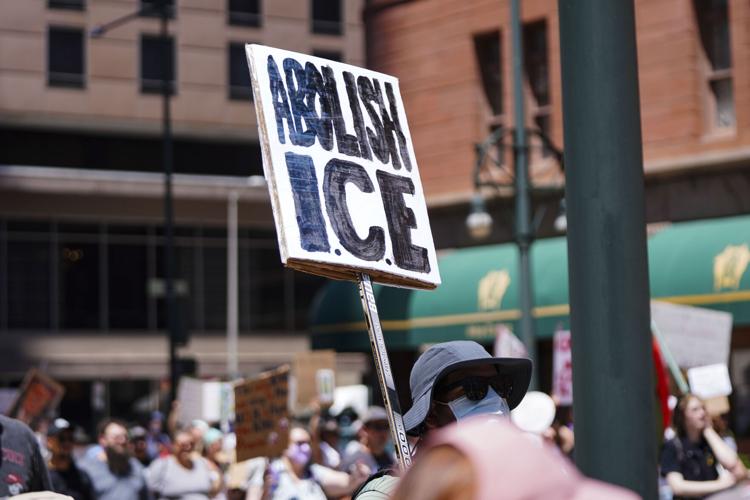
FILE PHOTO: A sign reads “abolish ICE” as hundreds of people march as a part of the No Kings protest, Saturday, June 14, 2025, in Denver. People around the nation participated in the No Kings protest. Nearly 50 cities across the state of Colorado had scheduled protests. (Rebecca Slezak/Special to The Denver Gazette)
Rebecca Slezak/Special to The Denver Gazette
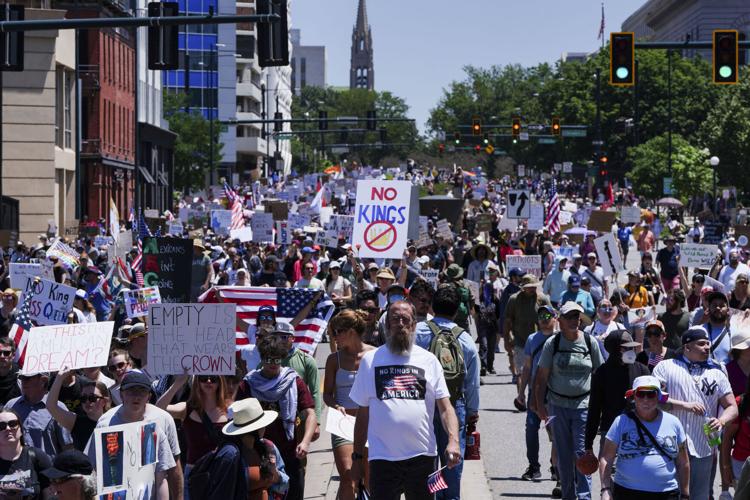


In response to outrage from some quarters and more than $15 million in settlements following the George Floyd protests five years ago, the Denver Police Department pledged to track its use of less-lethal munitions for crowd control.
But when The Denver Gazette requested this data following last month’s protests, the department refused, saying the public has no right to know how much was used.
In her denial, Andrea Webber, the department’s records administrator, cited officer safety and future operations.
“This Department’s interest in maintaining the confidentiality of these materials outweighs any public purpose to be served by release of the responsive records at this time,” Webber wrote in an email to The Denver Gazette.
An attorney who represented those injured by police said the refusal to release data risks further eroding confidence.
“I’m not sure how their operations would be affected by this in any way,” said Andy McNulty, a Denver attorney who has represented plaintiffs suing the city. “I don’t know how talking about munitions spent in the past have anything to do with officer safety in the present and future.”
Denver Police Chief Ron Thomas did not respond to an inquiry seeking comment on the department’s decision to withhold this information from the public.
The death of George Floyd, a Black man, in the hands of Minneapolis police officers sparked protests and calls to defund the police.
In the aftermath, city officials tasked the Office of the Independent Monitor with evaluating the police department’s response.
The report identified “significant gaps” in internal controls that undermined both accountability and adherence to policy — including delays in reporting use-of-force, lapses in body-worn camera activation, and poor munitions tracking.
DPD confirmed someone is responsible for that duty. The department refused to release the information publicly.
During the 2020 protests, roughly 500 officers were dispatched for crowd control. Dozens were injured by protesters, who hurled rocks, water bottles and cans of food, according media reports at the time.
The Denver Fire Department responded to more than 200 calls. A report by Denver’s independent monitor’s noted the damage to the state Capitol building and city property was estimated at about $2.1 million, while DPD reported more than $75,000 in damages, mostly to police vehicles. Local businesses, too, reported roughly $2 million in damages, the result of broken windows, stolen goods and graffiti.
Protesters who sued the department were shot at with non-lethal munitions, being hit by everything from pepper balls to a Kevlar-bag filled with lead shot fired from a shotgun. One protester hit in the head by a shotgun blast ended up in intensive care.
Protesters argued that police actions violated their free speech and protection from excessive force. “Use of force” refers to the level of physical coercion officers can deploy to gain control of a situation, which ranges from physical restraint and less-lethal tools and in some cases, deadly force.
More than 100 complaints were filed alleging police misconduct.
Five officers were disciplined for their actions.
Numerous judges in the past five years have found Denver or its officers may be held liable for excessive force or First Amendment violations in a series of lawsuits. Notably, in 2022, U.S. District Court Senior Judge R. Brooke Jackson presided over a jury trial that culminated in a $14 million award to plaintiffs.
In addition, U.S. District Court Judge Nina Y. Wang green-lit a jury trial for 13 more plaintiffs and U.S. Magistrate Judge Kathryn A. Starnella followed suit with a freelance photographer who was arrested during the city’s curfew. Also, U.S. District Court Judge Daniel D. Domenico agreed a jury would decide whether Denver’s policies or customs were behind the alleged violations of eight more protesters’ rights.
Former Denver Police Chief Paul Pazen, who led the department through the response, has defended the response, saying settlements — which often are cheaper than going to court — are not an admission of wrong doing.
Last month, police arrested more than 50 protesters at separate anti-ICE and “No Kings” rallies.
The Denver Gazette requested — multiple times — data showing the amount of non-lethal munitions used for crowd control, as well as the number of officers involved. Both requests were denied.