





EDITORIAL: Colorado’s revolving-door justice

Most criminals doing time have to regain their freedom at some point and — hope against hope — become productive members of society. Clearly, though, Colorado is not keeping some of them behind bars long enough or helping them mend their ways while they’re there.
After all, the highest priority of our justice system must be to keep the law-abiding majority safe. Even our offender-friendly Legislature — which has gone out of its way to slash our state’s prison population at a breakneck pace — must realize that.
But evidence to the contrary keeps cropping up. Consider a couple of recent sensational crimes — both terrifying, both tragic — about which The Gazette updated readers last week.
Last January, 24-year-old Elijah David Caudill allegedly went on a knifing rampage in downtown Denver, stabbing four random victims, two of whom died. Not only should he have been in jail at the time — he was on probation with a lengthy, violent criminal record — but it turns out he had been released on his recognizance with a vague understanding he would get help for mental illness.
Caudill previously had been arrested no less than 15 times since 2018 on charges that included criminal mischief, disturbing the peace, robbery, menacing, theft and — twice since just last year — sexual assault. His alleged victims in the January killing spree included a 71-year-old flight attendant who had been on a layover in Denver at the time of her murder.
As The Gazette reported this year, Caudill had been released from custody on other charges — only months before the January stabbings — to participate in a state program called Bridges of Colorado. It coordinates services for defendants with mental health disorders.
Problem is, Bridges had no legal authority to take custody of, or even supervise, criminal defendants. Evidently, Caudill was able to walk away and disappear onto Denver’s streets.
The latest development in that case, as Gazette readers learned last week, was that a court-ordered evaluation recently found Caudill competent to stand trial, but his lawyers are contesting the finding.
Meanwhile, Gazette readers also learned last week that the 17th Judicial District Attorney’s Office has filed first-degree murder charges against Rick Roybal-Smith, 38, for fatally stabbing two homeless men on the street in Aurora within a few hours of each other on June 29.
Roybal-Smith was arrested later that day and booked into Denver’s jail after he allegedly hit two pedestrians with his car while under the influence of drugs, according to police. He had fled the scene, only to be tracked down later and arrested.
Just after 2:45 a.m. the next morning, Roybal-Smith’s cellmate in the center was found unresponsive by deputies with marks around his neck consistent with strangulation.
Like Caudill, Roybal-Smith is a familiar face to the justice system. He has a lengthy criminal history dating to at least 2016, when he pled guilty to a vehicular assault-DUI charge and was sentenced to 12 years in prison. After being released on parole, Roybal-Smith was arrested again on a weapons violation in June 2022 after threatening a man with a footlong knife at a Walmart in Englewood.
If you haven’t asked by now, you should: Why weren’t these two still in confinement, in one way or another, at the time of their latest alleged crimes? At least four Coloradans still would be alive today were it not for the acts of which Caudill and Roybal-Smith stand accused.
Caudill clearly wasn’t supposed to be out on the streets, and it’s a wonder how, after the 2022 incident, Roybal-Smith could have been. If mental illness should prevent Caudill from answering for his alleged crimes, as his lawyers contend, or if substance abuse played a role in Roybal-Smith’s actions, the justice system can address their pathologies.
But freeing them shouldn’t have been an option.


EDITORIAL: Another sign wolf reintroduction needs to halt
The Gazette Editorial Board
thegazette-editorial-board@gazette.com
Updated 3 days ago
Five years after Coloradans voted by a razor-thin margin to reintroduce wolves to Colorado, they are right to look at the job state officials and agencies have done and ponder whether this a dog that just doesn’t hunt. Amid criticism...

The Gazette Editorial Board
Reporter

EDITORIAL: Misplaced blame for Colorado’s ozone woes
The Gazette Editorial Board
thegazette-editorial-board@gazette.com
Updated 3 days ago
Colorado’s Front Range air quality problem is real. The smog often obstructs our view of the state’s natural beauty while impacting health conditions. Yet even as regulators target oil and gas development as the presumed source, the real ozone culprits...
The Gazette Editorial Board
Reporter
EDITORIAL: Jared Polis a ‘sleazebag’? No. Cagey, yes.
The Gazette Editorial Board
thegazette-editorial-board@gazette.com
Updated 4 days ago
It’s a good thing for Gov. Jared Polis that history or, at least, Wikipedia will have the last word on his political legacy. Because if it were up to President Trump, that last word — blasted out to millions via...
The Gazette Editorial Board
Reporter
EDITORIAL: Handouts won’t help Springs homeless
The Gazette Editorial Board
thegazette-editorial-board@gazette.com
Updated 5 days ago
The Colorado Springs Homeless Union is at a crossroads. Not a labor union, the volunteer initiative endeavors to “present a unified voice” and “call for fair treatment” for our city’s homeless, as noted in a Gazette report last week. As...
The Gazette Editorial Board
Reporter

EDITORIAL: DPS’ fiscal affairs amount to fuzzy math
The Gazette Editorial Board
thegazette-editorial-board@gazette.com
Updated 4 days ago
A fresh audit of Denver Public Schools revealed a startling reality: Colorado’s largest school district owes more in long-term debt than it owns in assets. As The Denver Gazette reported last month, the 2024-25 fiscal year audit revealed DPS carries...
The Gazette Editorial Board
Reporter
EDITORIAL: A get-out-of-jail pass for Colorado’s illegal immigrants
The Gazette Editorial Board
thegazette-editorial-board@gazette.com
Updated 5 days ago
Leave it to the ACLU and a sympathetic federal judge to fret over the arrests of illegal immigrants in Colorado — because the agents who made the busts didn’t show evidence in advance that the suspects posed a flight risk....
The Gazette Editorial Board
Reporter

EDITORIAL: Food stamps a ‘SNAP’ for Colorado’s illegal immigrants
The Gazette Editorial Board
thegazette-editorial-board@gazette.com
Updated 1 week ago
There’s no telling if the the latest lawsuit against the Trump administration by Democrat-leaning states — this time, challenging restrictions on food stamps for illegal immigrants — will find a sympathetic ear on the federal bench. Colorado’s Attorney General Phil...
The Gazette Editorial Board
Reporter

EDITORIAL: Retail theft robs all Coloradans
The Gazette Editorial Board
thegazette-editorial-board@gazette.com
Updated 1 week ago
Colorado shoppers are accustomed to it: You’re checking out as another “customer” walks by. With stolen items, they sidestep security personnel and cameras. Business carries on as usual; like a breeze, the shoplifters slip out the automatic sliding doors as...
The Gazette Editorial Board
Reporter
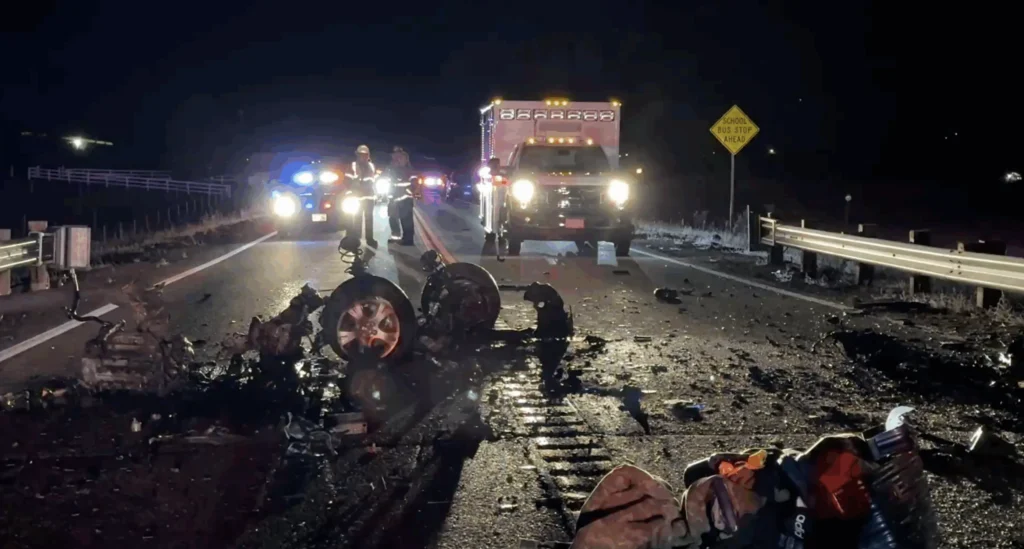
EDITORIAL: Another failure of justice, another Colorado tragedy
The Gazette Editorial Board
thegazette-editorial-board@gazette.com
Updated 2 weeks ago
Just what does it take to keep a violent career criminal behind bars — and the public out of harm’s way — in the state of Colorado? Apparently, Walter Huling’s dozen-year record of violent and other serious crimes, including parole...
The Gazette Editorial Board
Reporter
EDITORIAL: Unleashing Colorado’s nuclear potential
The Gazette Editorial Board
thegazette-editorial-board@gazette.com
Updated 2 weeks ago
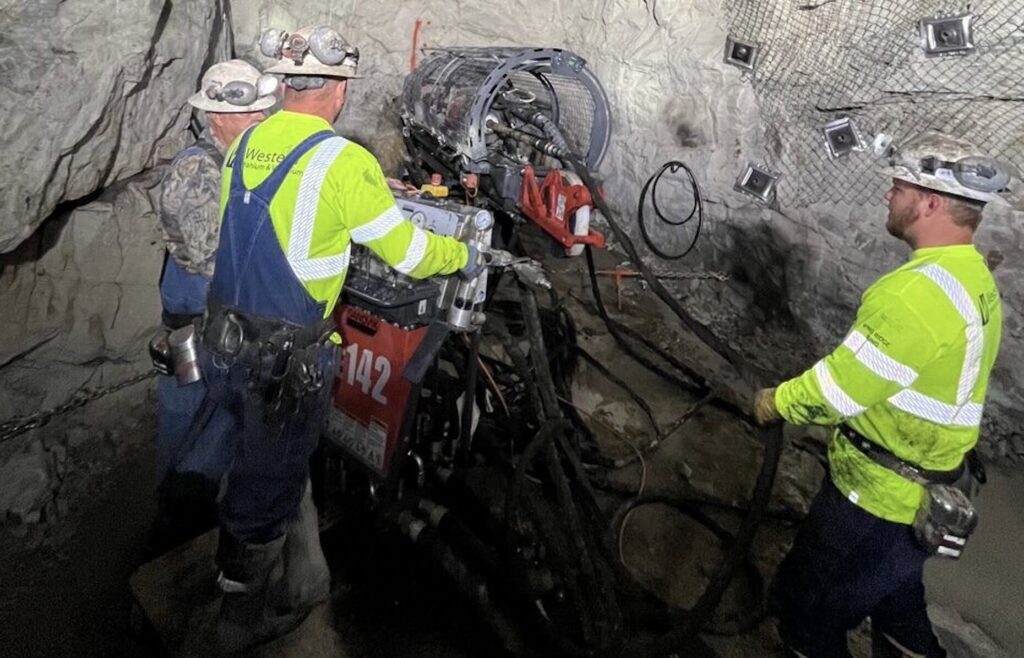
The energy revolution is here. Never before has Colorado been better positioned to embrace an all-of-the-above approach to powering homes, businesses and data centers — the kind championed by Energy Secretary Chris Wright, a Coloradan through and through. Oil remains...
The Gazette Editorial Board
Reporter
PREV
PREVIOUS
EDITORIAL: The left sees 'The Colorado Way' as the Democratic Party's future
A Politico article touting “The Colorado Way” as a Democratic blueprint for winning elections — by promising to save people money — is a master class in political spin divorced from reality. The Politico article, published this week and generating buzz, was inspired by an international meeting of the left-leaning Progressive Policy Institute held recently […]
EDITORIAL: The left knows how to control population
Colorado’s one-party Democratic rulers have found the trick to controlling the state’s population growth: make Colorado unlivable. High crime + high inflation + declining household incomes + housing and homelessness crises + drug nightmare + neglected infrastructure + failing K-12 schools = move somewhere else, despite the state’s unmatched climate and natural amenities. A Common […]