








Colorado attorney general sues Mesa County sheriff’s deputy over assisting ICE

A Mesa County Sheriff's Office deputy released Utah college student Caroline Dias Goncalves with a warming June 5, 2025, when he pulled her over for following too closely. Then ICE agents arrested her after she exited I-70. She spent two weeks in an ICE facility in Aurora, before being released on bond.
Courtesy photo, GoFundMe via 9NEWS

Colorado Attorney General Phil Weiser filed a civil lawsuit against a Mesa County Sheriff’s Office deputy who tipped ICE off — via a routinely used multi-agency communications channel — to a college student who has overstayed her visa.
Weiser filed the case before the county’s sheriff has completed its investigation into the incident last month on Interstate 70.
In announcing the lawsuit on Tuesday, Weiser said it aims to require the deputy to “follow state laws that bar state agency and local government employees from cooperating with federal officials on immigration civil enforcement actions.”
On June 5, a University of Utah student was pulled over by Alexander Zwinck, a K9 officer assigned to the county’s drug interdiction team, for following a semitrailer too closely.
Zwinck asked Caroline Dias Goncalves where she was born and was released with a warning.
Here’s what happened next, according to Weiser’s lawsuit.
The officer “immediately uploaded the driver’s personal identifying information to a Signal chat that Deputy Zwinck knew included federal immigration officers.”
The Signal chat is also used by federal Drug Enforcement Agency officers.
Federal immigration officers then ran the driver’s information through their databases and told Zwinck that, although Dias Goncalves, a Brazilian national, had no criminal history, her visa visa has expired, the lawsuit said.
“Instead of ending the traffic stop, as there was no further criminal law enforcement purpose to effectuate, Deputy Zwinck then took affirmative steps to assist the federal immigration officers in ultimately detaining the Driver for the purpose of enforcing federal civil immigration,” the lawsuit claimed.
A short while later, after exiting Interstate 70 at Loma, U.S. Immigration and Customs Enforcement agents stopped, arrested and took her to a detention center in Aurora.
Dias Goncalves, who was born in Brazil and came to the U.S. under a tourist visa when she was 7, has been living in Utah for 12 years. She overstayed her visa about a decade ago and has a pending asylum case.
Dias Goncalves’ lawyer now claims that the sharing of information was improper in a case that puts yet another spotlight on Colorado’s policy, which bars local law enforcement from cooperating with federal agents on immigration enforcement. This year, Colorado legislators expanded the law’s prohibition on information sharing to all political subdivisions of the state.
The law’s backers have argued that Colorado policies aim to keep the federal government from “commandeering limited state public safety capacity” for their own purposes, and the statutes seek to preserve the trust that has built up over decades between the police and the community by preventing this federal entanglement.
Critics, on the other hand, have sought to repeal this and other “sanctuary” laws. They also blamed the policies for drawing into metro Denver some 40,000 people who illegally crossed America’s southern border.
During a hearing at the state Capitol on a proposal to undo the “sanctuary” laws, Douglas County Undersheriff David Walcher said ICE officers are only trying to do their job.
“Why is the state of Colorado getting in their way?” he asked. “We want to help our federal partners and do what we do — keep us safe in our respective jurisdictions. We don’t enforce immigration law, but we can certainly assist them to accomplish their mission.”
In his testimony, Walcher said the state needs to take its “handcuffs” off local and state law enforcement agencies so they can work with federal immigration enforcers in the same way they do with other federal agencies.
Weiser said state law specifically says that Colorado’s law enforcement officers are “dedicated to enforcing Colorado law and do not do the work of the federal government to enforce immigration law.”
“In this case, the driver was detained by immigration authorities because of actions by Colorado law enforcement despite the absence of any criminal activity on her part,” he said.
During a press briefing on Tuesday, the attorney general said the lawsuit is against Zwinck in his personal capacity and it doesn’t seek fines.
The lawsuit seeks two declarations from the courts — that Zwinck’s actions ran afoul of the state law barring cooperation with federal immigration officers and that he should be enjoined from violating any of its provisions.
Investigators are also exploring if any other laws were violated that the Attorney General’s Office has the authority to enforce, he said.
On June 19, the sheriff’s office announced that Zwinck had been placed on administrative leave pending the outcome of an internal administrative investigation into whether or not Dias Goncalves’ information was shared improperly.
This investigation, according to the Mesa County Sheriff’s Office, seeks to understand “if and when MSCO’s employees were made aware that the information shared for drug interdiction efforts was being utilized for immigration enforcement.”
On Tuesday, a county spokesperson said the sheriff’s office is “within one week of completing the administrative investigation into the June 5, 2025, incident involving Ms. Diaz Goncalves.”
“We are committed to transparency in this process and, as such, once the administrative investigation is complete we will provide a formal statement,” the spokesperson said.
Dias Goncalves, a recipient of the TheDream.US national scholarship, which helps students unlawfully staying in the U.S. go to college, spent 15 days in the ICE detention center, which she described as “the hardest days of my life.” She was released on bond and has returned to her family.
Colorado Politics reporter Marissa Ventrelli and Denver Gazette freelance writer Rachael Wright contributed to this story.

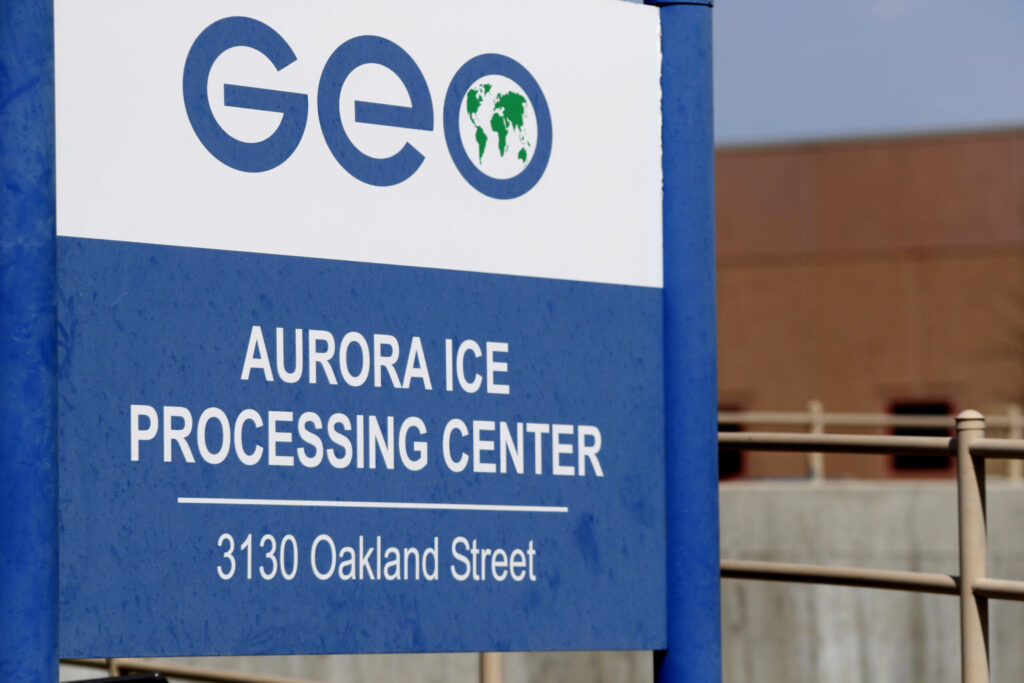
Court bars Trump administration from blocking congressional oversight visits to ICE facilities
Nico Brambila
nico-brambila@denvergazette.com
Updated 17 hours ago
A federal court has temporarily blocked the Trump administration policy that has impeded lawmakers from conducting unannounced visits to federal immigration detention facilities. “Today’s decision is a critical victory toward restoring our ability to conduct essential congressional oversight on behalf...

Nico Brambila
Reporter
Court bars Trump administration from blocking congressional oversight visits to ICE facilities
Nico Brambila
nico-brambila@denvergazette.com
Updated 15 hours ago
A federal court has temporarily blocked the Trump administration policy that has impeded lawmakers from conducting unannounced visits to federal immigration detention facilities. “Today’s decision is a critical victory toward restoring our ability to conduct essential congressional oversight on behalf...
Nico Brambila
Reporter
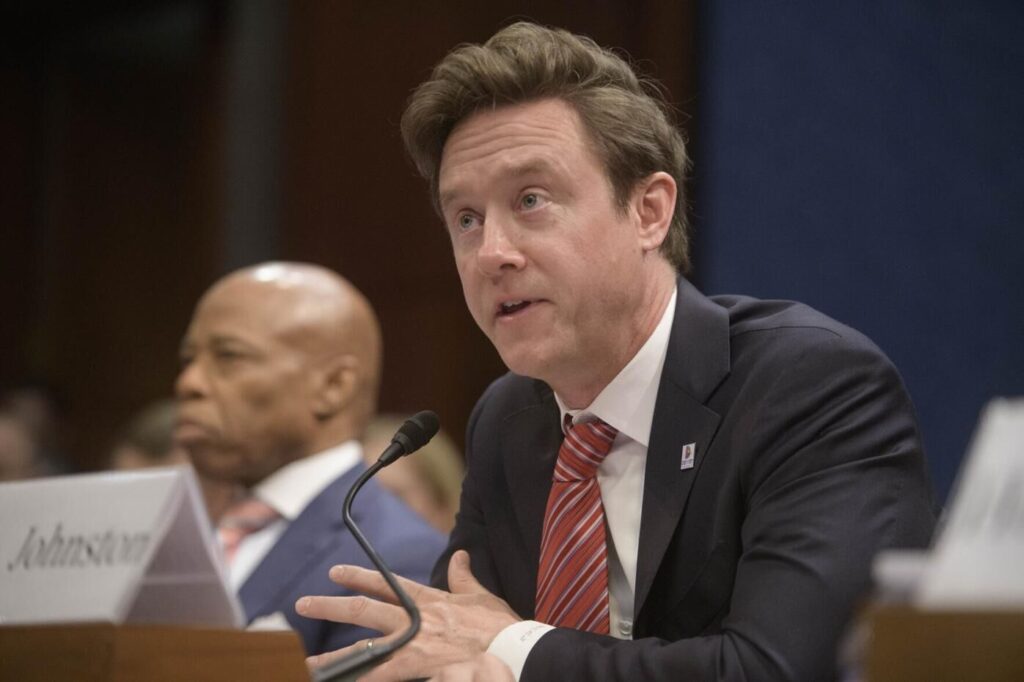
Denver mayor’s legal bill for sanctuary city hearing tops $1 million
Deborah Grigsby
deborah.smith@denvergazette.com
Updated 1 week ago
The bill for Denver Mayor Mike Johnston’s legal defense for a March 5 hearing before the U.S. House Oversight and Government Reform Committee on “sanctuary” cities just crossed the $1 million mark. City financial records show that a fourth payment...

Deborah Grigsby
Reporter

Judge denies motion from Gov. Jared Polis to dismiss ICE lawsuit from former state employee
Marianne Goodland
marianne-goodland@denvergazette.com
Updated 2 weeks ago
A Denver District Court judge has denied a request by Gov. Jared Polis to dismiss a lawsuit filed by a former state employee over disclosure of information to federal immigration authorities. The lawsuit filed against the governor by Scott Moss,...

Marianne Goodland
Reporter

Colorado fights federal campaign to stop SNAP from going to illegal aliens, certain noncitizens
Marissa Ventrelli
marissa-ventrelli@denvergazette.com
Updated 3 weeks ago
Colorado joined 21 other states in a lawsuit seeking to undo the Trump administration’s campaign to stop taxpayer-funded food aid from going to individuals illegally staying in the U.S., arguing the move also implicated a group of noncitizens who should...

Marissa Ventrelli
Reporter

Charges against legal observer detained at Denver immigration court dropped
Nico Brambila
nico-brambila@denvergazette.com
Updated 3 weeks ago
The charges against the legal observer detained at Denver Immigration Court have been dropped, the ACLU of Colorado announced. “We are pleased to see that these baseless and ludicrous charges have been dismissed,” Tim Macdonald, legal director for the ACLU...
Nico Brambila
Reporter

Federal judge blocks ICE’s warrantless arrests in Colorado
Nico Brambila
nico-brambila@denvergazette.com
Updated 3 weeks ago
A federal judge granted a preliminary injunction in an ACLU lawsuit challenging the federal immigration agents’ practice of warrantless arrests in Colorado. The judge also granted provisional class certification that extends the injunction statewide. “The court has confirmed what has...
Nico Brambila
Reporter
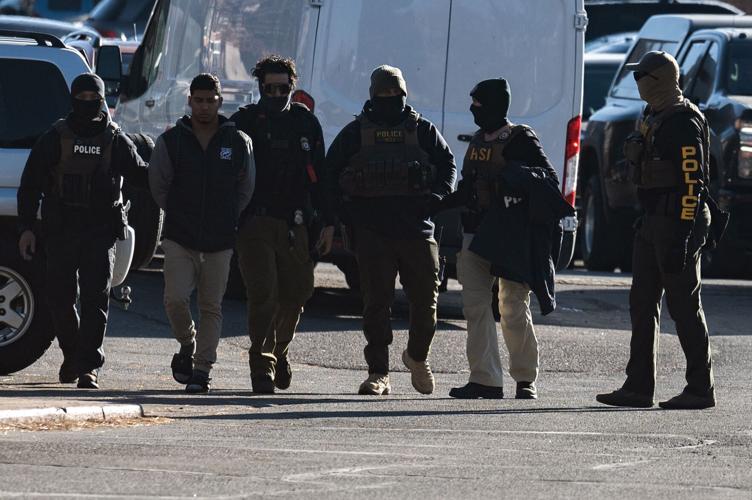
Federal judge orders immigration agents to follow law on warrantless arrests, imposes requirements on ICE
Michael Karlik
michael-karlik@denvergazette.com
Updated 3 weeks ago
A federal judge on Tuesday ordered the government to follow the legal requirements for warrantless immigration arrests, finding a practice of agents in Colorado taking noncitizens into custody without evaluating the likelihood they are a flight risk. In a Nov....

Michael Karlik
Reporter
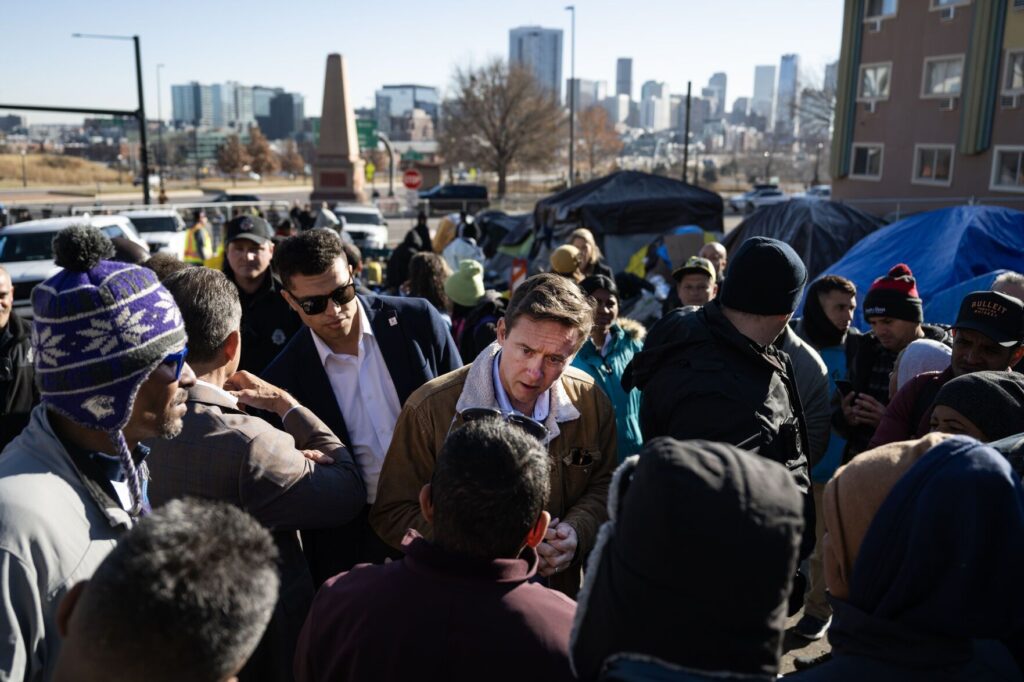
Mayor Johnston’s legal fees for sanctuary city hearing hit $800,000
Deborah Grigsby
deborah.smith@denvergazette.com
Updated 3 weeks ago
The legal bill for Denver Mayor Mike Johnston’s March 5 appearance before a Congressional hearing on “sanctuary” jurisdictions has now ballooned to $800,000, according to invoices obtained by The Denver Gazette. City financial documents show that on Nov. 5, 2025,...
Deborah Grigsby
Reporter
Federal judge believes government would follow her orders on immigration detention ‘under normal circumstances’
Michael Karlik
michael-karlik@denvergazette.com
Updated 3 weeks ago
A federal judge agreed on Thursday that she would allow a class of approximately 500 people in Colorado’s immigration detention to challenge the government’s refusal to set their bond, which she already found to be a likely violation of the...
Michael Karlik
Reporter
PREV
PREVIOUS

FBI offers $3M for capture of TdA gang leader on 10 Most Wanted List
Facebook Twitter WhatsApp SMS Email Print Copy article link Save Federal authorities have added a man alleged to be a leader of the notorious Tren de Aragua gang to the FBI’s 10 most wanted list, offering a $3 million award for the fugitive’s capture. Officials believe TdA gang leader Giovanni Vicente “El Viejo” Mosquera Serrano, […]
ICE arrests more than 200 immigrants over weeklong sweep in metro Denver
Facebook Twitter WhatsApp SMS Email Print Copy article link Save During a weeklong operation earlier this month, U.S. Immigration and Customs Enforcement arrested 243 immigrants in the metro Denver area, part of the Trump administration’s intensified enforcement on the illegal immigration front. The agency confirmed the arrests occurred between July 12 and July 20. ICE […]