







Nuclear power to fuel Denver International Airport?

FILE PHOTO: Denver International Airport. Photo Credit: arinahabich (iStock).
arinahabich




Denver International Airport officials announced on Wednesday that they are soliciting a study on the feasibility of building a nuclear power plant to take the airport to energy independence using a small modular reactor on its 34,000-acre facility.
The study will examine questions about nuclear power, including the various types of small modular reactors available, potential cost and funding options, the risks involved and government regulations on nuclear power plants, officials said.
The announcement comes amid a shift in policymakers’ attitude toward nuclear power, which advocates argue is necessary to meet Colorado’s — and the country’s — energy needs, particularly amid the push for more data centers. Opponents of nuclear power, meanwhile, insist that better, cheaper, and safer options exist on the horizon — including utility-scale batteries and clean hydrogen as a fuel for power plants — and that nuclear energy is unnecessary and hazardous.
DIA is planning for a future when more than 120 million passengers will use the airport every year. That future, airport authorities said, could happen as early as 2045.
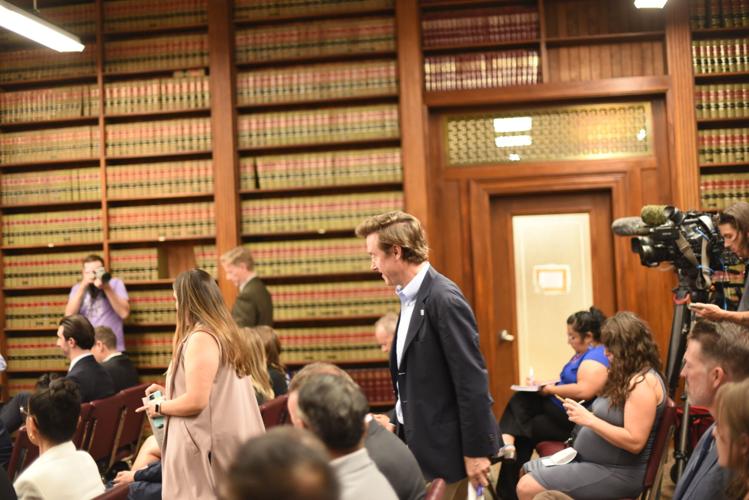
In a news conference following the announcement on Wednesday afternoon, Denver Mayor Mike Johnston said the proposal could give the airport a viable pathway to become the “greenest” in the world.
“That means not just because we have an airport that is supported entirely by clean energy that is generated onsite, it also provides a economic opportunities in the airport region,” Johnston said. “This provides opportunity for the airport to be a national magnet for folks who are looking to open either data centers or centers for high energy utilization data technology purposes.”
By calling nuclear power “clean,” Johnston is echoing the view by several Democrats who have embraced nuclear power as a necessary source to achieve Colorado’s carbon-reduction goals.
In 2024, DIA saw a record-breaking 82.4 million passengers, making it the nation’s third — and the world’s sixth — busiest airport.
DIA is a significant economic engine for Colorado and the region, generating more than $47 billion annually.
Advocates said small modular reactors can provide carbon-free, base-load energy to compensate for the variability and unpredictability of solar or wind energy, offering a safe, more scalable, and potentially cost-effective approach to generating power.
This could help meet growing energy demand, while reducing carbon emissions, according to a news release from the airport.
If the plan materializes and a reactor is built, it would be the first nuclear power plant in Colorado since the shutdown of the Fort St. Vrain facility in 1989. The plant was decommissioned and converted to natural gas; fuel rods from the reactor are still stored on site.
During the news briefing, Phil Washington, the airport’s CEO, highlighted how small modular reactors are an adjustable energy source that could be increased in tandem with the airport’s goals for expansion.
“They would be stackable, they would be scalable,” Washington said. “Based on our demand over time, we could add additional SMRs as we go. This allows us to be the masters of our own energy fate, if you will.”
Washington and Johnston conceded that many questions remain unanswered when pressed about how proven the technology is and whether it is safe for travelers and others in its vicinity.
“We’re coming to you at the beginning of an investigation into what the opportunities are, what the risks are, what the mitigation strategies to meet those risks, how we’d answer those questions,” Johnston said.
Washington noted that safety and security are a significant piece of the proposal that have yet to be addressed.
“The security piece, the safety piece are questions we must answer, and we will answer those questions,” Washington said. “I imagine there were critics during the Industrial Revolution that said ‘automobiles ain’t gonna work, we’re sticking with this horse and buggy.’ We’re not discouraged by that. We want to go down this path, which we think will be the norm for power in the next few years.”
The study will cost up to $1.25 million, funded by the airport enterprise, and is expected to take between six to 12 months to complete.