







What you need to know about Colorado’s hiring freeze, upcoming special session
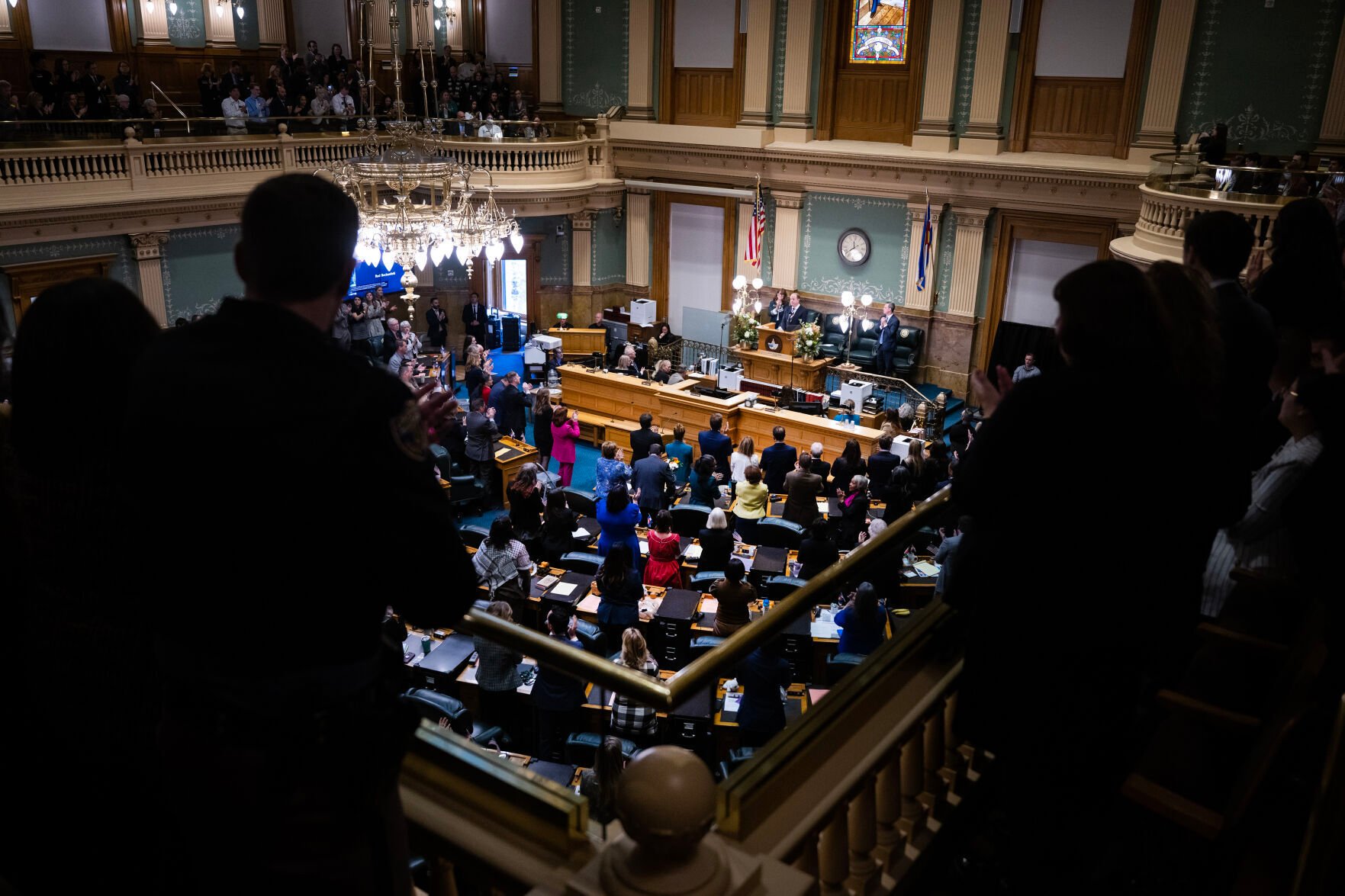
The Polis administration is imposing a hiring freeze, part of the efforts to address a $1 billion deficit that the Colorado state government is facing.
Here’s what we know so far.
When is the hiring freeze?
The hiring freeze starts on Aug. 27. It applies to all statewide agencies and continues until Dec. 31, 2025. The state expects to save between $3 million and $7 million from the freeze. It does not, however, affect employees who work in 24/7 facilities — state hospitals, for example, corrections, firefighters or anyone who is paid from Taxpayer’s Bill of Rights-exempt resources.
When is the special session?
Gov. Jared Polis called the General Assembly back to Denver on Aug. 21. Picking Thursday for the start is at least likely due in part to other obligations by lawmakers, most notably appearances by the House Speaker and rural lawmakers at Colorado Water Congress, which takes place in Steamboat Springs on Tuesday and Wednesday that week.
How long will the special session last?
Any legislative proposal typically needs three days to pass. That’s the minimum for a special session, although in the 2017 special session, lawmakers adjourned after just two days because of a lack of agreement between Senate Republicans and then-Gov. John Hickenlooper over a fix to an omnibus bill on rural Colorado. Both special sessions in 2023 and 2024 lasted four days.
What do lawmakers need to do?
Policymakers’ main challenge will be cuts totaling $783 million in general funds, the result, according to Democrats, of federal tax policy changes that came out the budget adopted by Congress and signed by President Donald Trump on July 4 but which Republicans argued is a problem of the state’s own making.
Are there areas that won’t see funding reductions?
Yes. The governor and legislative leaders said education will be spared from any cuts. So will public safety — at least not in this special session.
What about AI regulation?
The special session will include a request to fix Senate Bill 24-205, the artificial intelligence regulation that is set to go into effect Feb. 1, 2026. SB 205 established rules around the use of artificial intelligence, primarily in employment, health care, education, and government practices, where, backers said, the risk of bias or discrimination exists. Businesses have argued that the new law is problematic, potentially penalizing mom-and-pop end users of the technology, instead of the big companies that created the AI software.
Polis said he is open to several ideas around a fix to SB 205. At least two bills are being proposed; one is expected from Senate Majority Leader Robert Rodriguez, D-Denver, the sponsor of SB 205. Rodriguez pushed a bill in the 2025 session but its late introduction, just a week before the end of the session, and a lack of agreement with opponents, caused the measure’s demise, which was requested by Rodriguez.
The proposed solutions range from a delay on the implementation date to a repeal or substantial rewrite of the measure. Polis said he is open to both during an Aug. 6 news conference. Without a change, the state will have to come up with about $5 million during next February’s budget trueing up process to pay for the costs for state agencies to implement the law.
What are some of the proposed solutions to the deficit?
Both lawmakers and the governor have said they are considering all options. Some legislators also believe the shortfall would be covered by a combination of tapping the state’s general fund reserve and spending cuts. JBC Chair Sen. Jeff Bridges, D-Greenwood Village, said the budget staffers had put together a list of cuts that JBC relied on to cover the $1.2 billion shortfall in the 2025-26 budget. The JBC didn’t tap all of those cuts, he said.
Most of the proposed fiscal changes suggested for the special session deal with technical tax policy.
The state general fund reserve had more than $2 billion at the beginning of the 2025-26 fiscal year. In its June forecast, however, the Office of State Planning and Budgeting estimated that the reserve would fall $40.9 million below the 15% requirement in 2025-26.
Covering the $783 million shortfall with the reserve is not anticipated. OSPB Director Mark Ferrandino told the Joint Budget Committee on Tuesday that using the reserve would drop it to 10 — and that’s not advisable, given a moderate risk of recession, which his economists estimated at a 50% chance in the next year. In addition, if the reserve were used, it would have to be replenished in the following budget year, as required by state law.
Polis said Wednesday the reserve is for recessions and downturns in the economy, not to deal with H.R. 1, the federal budget. He also was adamant that any budget cuts would not touch K-12 education funding.
So, what else is planned?
The tax policy changes that came from H.R. 1 — and which Democrats claim resulted in the shortfall — come in several areas, but other fiscal tax policies are also getting a look.
Deferred tax credits: H.R. 1 allows for large taxpayers, such as insurance companies, to pay future tax liabilities at a slight discount. According to a fact sheet from the Polis administration, this toll allows the state to bring future revenues into the current state fiscal year, which will help weather the impact of H.R. 1.
The General Assembly in 2020 and 2021 partly decoupled a “pass through” deduction available to high-income earners and tied to business income. That pass-through expires in tax year 2025, so the legislature will be asked to extend that tax policy.
Eliminating the regional home office rate reduction: According to the governor’s fact sheet, this is a loophole that cuts the tax bill of certain insurance companies in half and reduces state revenue by about $80 million per year. The Polis administration called it the second most generous tax credit in the country, one that only about 11 states offer. An analysis by the state auditor of the tax credit last year said 15 of the 18 insurance groups that claimed the credit cut about 4,300 jobs in Colorado.
Updating the list of foreign jurisdiction tax havens: A 2021 law was intended to reduce corporate tax dodging. The list is not exhaustive. With old havens waning and new ones on the horizon, an update would add jurisdictions to the list.
Eliminate the sales tax vendor fee: The state has already twice reduced those vendor fees, but the Polis administration will ask that it be eliminated in its entirety.
De-coupling the foreign-derived intangible income deduction: Created through the 2017 Tax Cuts and Jobs Act, which H.R. 1 extended, this deduction offers up to 37% of income earned from selling US-based property or providing US-based services outside the United States for 37% of income by multinational corporations. Because of how Colorado is coupled with the federal tax code, the fact sheet said, it has meant that the vast majority of claims in Colorado are coming from corporations whose intangible assts aren’t located in Colorado, in effect giving those corporations a state tax break for investments in other states.
Are there other proposals to be tackled in the special session?
The answer is yes. One issue deals with health insurance. H.R. 1 eliminates the tax credit for health insurance covered under the Affordable Care Act and purchased in Colorado through the state exchange, Connect for Health Colorado.
As a result, the statewide average for health insurance premium increases are forecast at 28% on average, with Western Colorado estimated to see a 38% increase. That could leaves 100,000 Coloradans unable to afford health insurance, and result in more uncompensated care costs covered by hospitals, officials have said.
Another issue is the loss of funding from the federal government for reinsurance. Under state law, hospitals pay a provider fee, which is bundled and then matched with federal dollars, and then redistributed to hospitals to cover uncompensated care and Medicaid. Over the past several years, the reinsurance program has helped lower health insurance premium increases, particularly in Western Colorado.
According to the Department of Health Care Policy and Financing and as cited by the Colorado Medical Society, the provider fees fund coverage for some 427,000 Coloradans, including 367,000 low-income adults, 34,000 kids in Children’s Health Insurance Program, 25,000 adults and children with disabilities via the Medicaid buy-in program and some 1,000 pregnant women in CHIP.
The loss of those federal subsidies means reinsurance savings would drop, which, in turn, would cut pass-through funding by about $100 million per year, the medical society said.
What about Planned Parenthood?
The federal budget seeks to end payments for one year to clinics that provide abortion services and received more than $800,000 in Medicaid reimbursements in 2023. Those clinics get federal funds for non-abortion services, such as contraception and testing for sexually transmitted diseases. The special session includes a request to allow for the use of state-funded Medicaid dollars to pay for those services, such as cancer screenings for men and women and other non-abortion services.
Will lawmakers tackle food stamps?
H.R. 1 makes major changes to the Supplemental Nutrition Assistance Program (SNAP), which analysts said will cost Colorado about $150 million, beginning in 2026-27. The special session will look at a change to a November 2025 ballot measure dealing with the state’s Healthy Meals for All program, a tax increase on households with incomes above $300,00 per year and approved in 2022 by voters as Proposition FF.
The program has run in the red almost from the beginning, with more demand than revenue, as initially estimated by the General Assembly’s Blue Book. Lawmakers in the 2025 session approved two ballot measures under House Bill 25-1274, which would ask voters to allow the state to retain all revenues collected under the ballot initiative, which in May was estimated at an additional $105 million, beginning in 2026-27.
The special session will look at extending some of those Proposition FF monies to SNAP.
Ferrandino, the budget director, estimated Proposition FF would receive more money as a result of H.R. 1’s tax benefits to Coloradans with more income. Once the program is funded, the state would direct what’s leftover to the state’s SNAP match. It won’t cover the $150 million that the state will lose from the federal match, but it could cover $40 million to $80 million, analysts said.
What can the governor do without legislative approval?
The answer, as it turns out, is quite a bit. State statutes — and the JBC indicated Tuesday it might want to have a conversation about changing them — allow the governor to act without legislative approval. There are three statutes available, but only one applies to the situation the administration and legislature have at hand.
The first allows the governor to develop a plan if the shortfall takes up half of the statutory reserve or the reserve drops below $1 billion. The governor would be required to bring that plan to the legislature “promptly.”
But the trigger for using that statute requires four consecutive revenue forecasts showing those shortfalls, and that wouldn’t happen, at the earliest, until the September forecast, according to attorneys with the Office of Legislative Legal Services.
A second statute would require the governor and legislature to approve a fiscal emergency resolution. That’s never been done, although it was discussed in the wake of the Great Recession of 2008. That would also trigger the ability to impose layoffs.
The statute at play, C.R.S. 24-2-102, has been used twice, in 2002 and 2009.
The governor can determine that the state has insufficient revenue to carry on the functions of state government, and by executive order can suspend or discontinue functions or services of any department, board, bureau or agency.
That declaration would go into effect on the first day of the following calendar month and can be extended for up to three months. The statute does not spell out how the governor would make that determination.


Special Session Day 1 recap: A high-profile resignation, heated debates and fast-tracked bills
Marianne Goodland
marianne.goodland@coloradopolitics.com
Updated 6 months ago
Day 1 recap The Colorado General Assembly started Thursday with 33 bills and two concurrent resolutions that would go to voters. The first day ended with just 13 bills left, five in the Senate and eight in the House. The...
Marianne Goodland
Reporter

Rural Reckoning | Polis, lawmakers say housing, health policies benefit rural Colorado
Marissa Ventrelli
marissa.ventrelli@coloradopolitics.com
Updated 7 months ago
Amid the tension between rural and urban leaders at the state Capitol, the governor and lawmakers have tackled housing, healthcare, food security and mental health access across Colorado’s rural communities, advocates from both sides of that divide said. They pointed...

Marissa Ventrelli
Reporter

Decarbonization report: Zero-carbon power goal achievable — for a price
Scott Weiser
scott.weiser@gazette.com
Updated 7 months ago
Trying to eliminate the last few percent of carbon emissions costs billions

Scott Weiser
Reporter
Polis VS SB 25-005
Marianne Goodland
marianne.goodland@coloradopolitics.com
Updated 10 months ago
Marianne Goodland
Reporter

Public scandals compel Colorado lawmakers to intervene | ANALYSIS
Thelma Grimes
thelma.grimes@coloradopolitics.com
Updated 6 months ago
For the second year in a row, the Colorado legislature intervened to tackle scandals that many said have shaken the public’s faith in state institutions and industries. In 2025, lawmakers passed three new laws aimed squarely at controversies surrounding the...

Thelma Grimes
Reporter

Gov. Jared Polis signs law to allow state treasurer to invest $50M in bonds for affordable housing
Marissa Ventrelli
marissa.ventrelli@coloradopolitics.com
Updated 10 months ago
Gov. Jared Polis has signed a measure into law supporters hope will bring more affordable housing to Colorado by directing the State Treasurer to invest in bonds to buy down construction and mortgage costs of for-sale housing that otherwise would...
Marissa Ventrelli
Reporter

Labor urges Gov. Jared Polis to sign bill on choosing doctors for injuries sustained at work
Marissa Ventrelli
marissa.ventrelli@coloradopolitics.com
Updated 10 months ago
Labor groups and a nonprofit organization focused on workers’ compensation reform are urging Gov. Jared Polis to sign a bill allowing individuals injured at work to choose the doctor to treat them for their injuries without restrictions. House Bill 1300,...
Marissa Ventrelli
Reporter
Colorado joins 19-state coalition to challenge federal funding amid ‘sanctuary city’ battle
Thelma Grimes
thelma.grimes@coloradopolitics.com
Updated 9 months ago
Colorado joined a coalition of 19 states this week to sue the Trump administration over proposals to withhold federal funding from states that the White House insists are not complying with federal immigration policy. Led by California, two separate lawsuits...
Thelma Grimes
Reporter

Lyft urges Colorado Gov. Jared Polis to veto rideshare bill
Marissa Ventrelli
marissa.ventrelli@coloradopolitics.com
Updated 10 months ago
Lyft is urging Gov. Jared Polis to veto a measure establishing further safety regulations on rideshare companies. Passed by the legislature, House Bill 1291 would require rideshare companies to conduct criminal background checks on drivers at least once every six months and...
Marissa Ventrelli
Reporter
Denver Chamber of Commerce urges change as Colorado falls in business rankings
Thelma Grimes
thelma.grimes@coloradopolitics.com
Updated 10 months ago
As Colorado continues to trend downward on the national economic scale, the Denver Chamber of Commerce is critical of the direction the state’s Democratic-led legislature took in 2025 and in recent years. The main message at Tuesday’s annual post-legislative State...
Thelma Grimes
Reporter
PREV
PREVIOUS

Woodland Park EF-1 tornado confirmed by National Weather Service
Facebook Twitter WhatsApp SMS Email Print Copy article link Save Facebook Twitter WhatsApp SMS Email Print Copy article link Save An EF-1 tornado with peak wind speeds of 110 mph hit the north side of Woodland Park on July 30, the National Weather Service in Pueblo confirmed in a damage assessment conducted Aug. 4 after […]

Humane Colorado rescues over 70 horses that reportedly faced severe neglect
Facebook Twitter WhatsApp SMS Email Print Copy article link Save Facebook Twitter WhatsApp SMS Email Print Copy article link Save Humane Colorado is asking for help after the rescue of more than 70 horses and foals from a property in rural Colorado, with the reason for the rescue appearing to be severe neglect. According to […]