







High-minded mountaineer artist photographs Colorado’s retreating glaciers

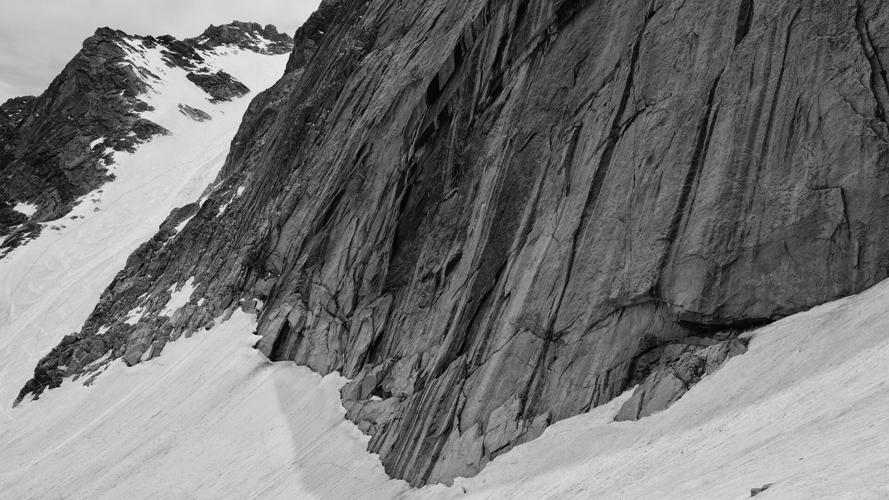
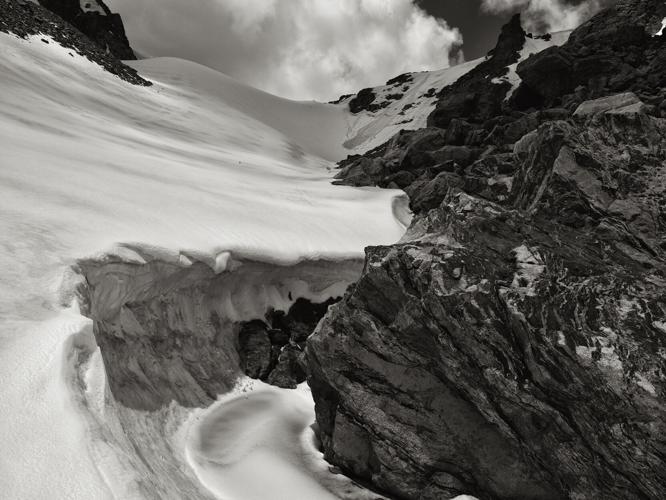
Andrew Beckham, who is starting his 26th year as the chair of St. Mary's Academy visual arts department, is photographing Colorado's shrinking glaciers.
Courtesy photo, Andrew Beckham

For Andrew Beckham, it’s back-to-school time as he begins his 26th year at St. Mary’s Academy in Englewood, Colorado, where he chairs the visual arts department.
If Beckham were to write the often-assigned back-to-school essay on “What I Did Over My Summer Vacation,” he might emphasize that during the month of July he ascended the vertical equivalent of Mt. Everest’s summit to shoot thousands of images for his fine-art photography project focusing on Colorado’s glaciers. Or what’s left of them.
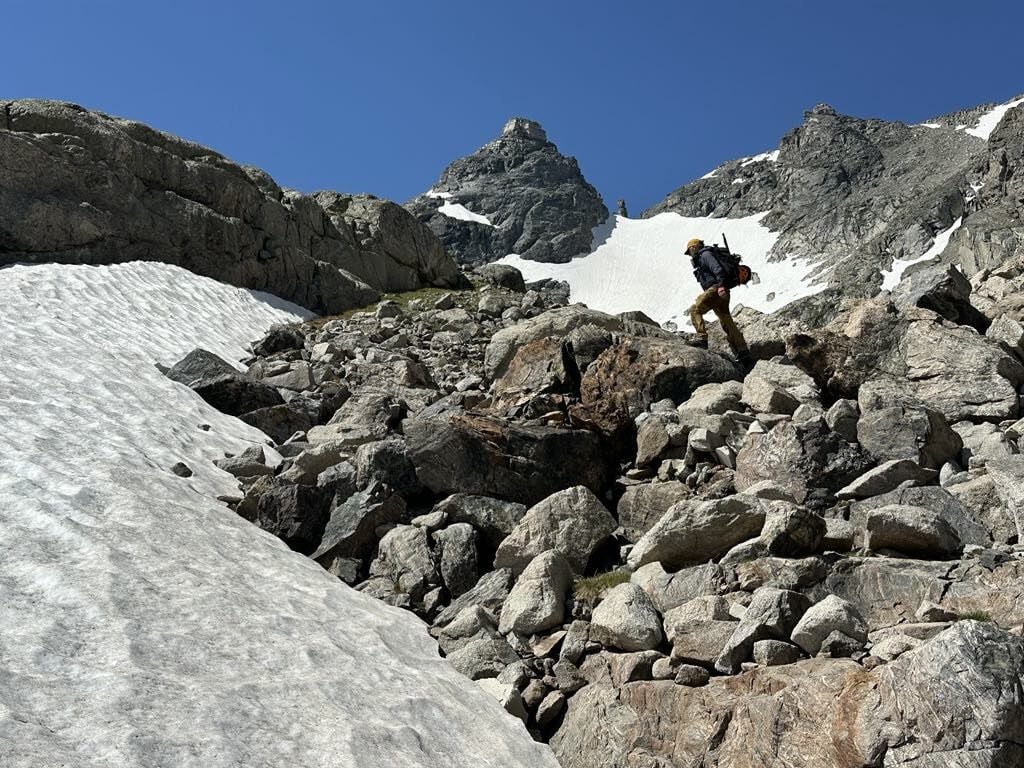
Andrew Beckham, who is starting his 26th year as the chair of St. Mary's Academy visual arts department, is photographing Colorado's shrinking glaciers. He's seen climbing one here.
Courtesy photo, Andrew Beckham


Andrew Beckham, who is starting his 26th year as the chair of St. Mary’s Academy visual arts department, is photographing Colorado’s shrinking glaciers. He’s seen climbing one here.
Beckham’s inspiration for his elegiac glacier project flows, in part, from the United Nations designation of 2025 as the International Year of Glaciers’ Preservation.
“Glaciers are life-giving, quite literally” said Beckham, who describes himself as a professional artist and an amateur mountaineer. “Glaciers feed high mountain streams that, in turn, braid into rivers in Colorado all the way from the talus of the glacial cirques. When water starts running, it creates unbelievable green oases in otherwise seemingly barren landscapes. You can see the path of glacial water with the way the green explodes around rivulets and moves into creeks, and creeks into rivers.”
Colorado’s life-giving glaciers “are dying”
As an artist and as a mountaineer, Beckham said two themes emerge: beauty and loss.
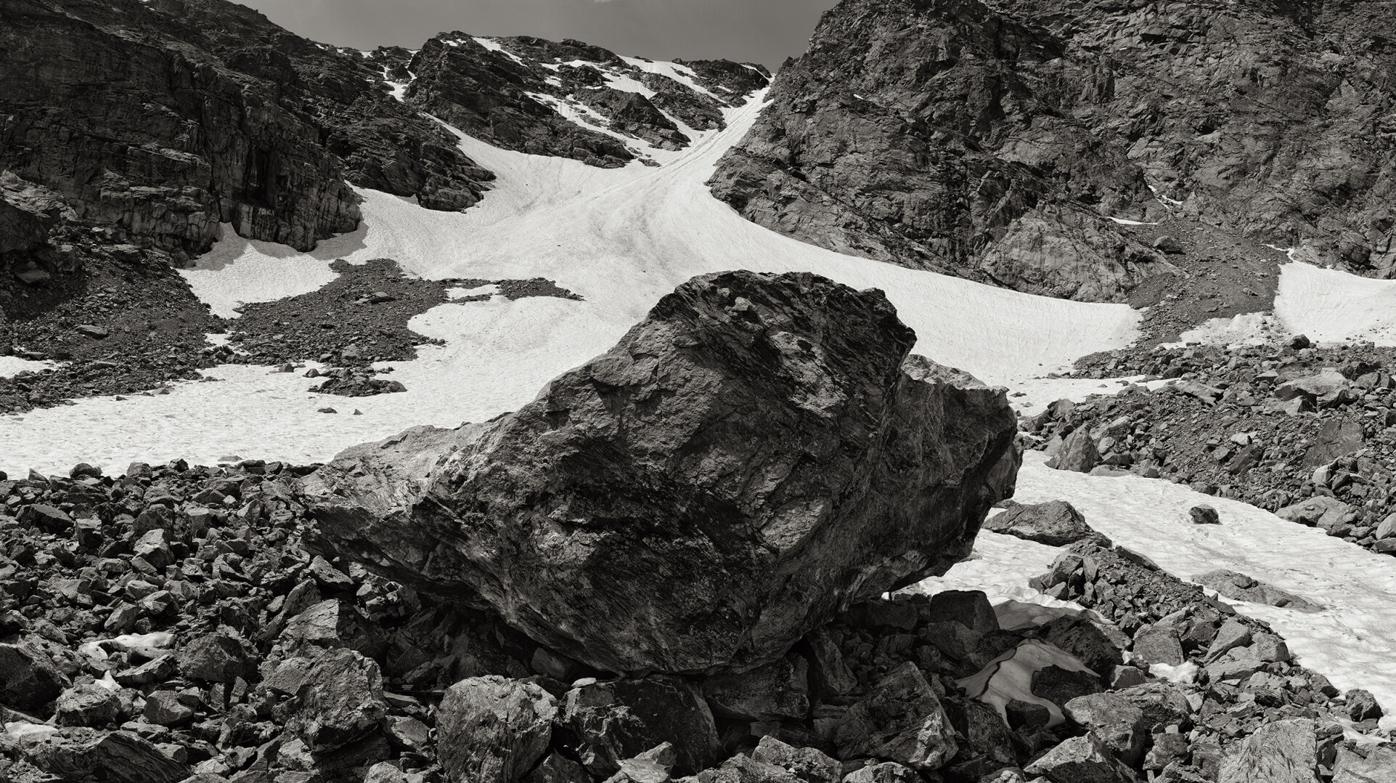
Andrew Beckham, who is starting his 26th year as the chair of St. Mary's Academy visual arts department, is photographing Colorado's shrinking glaciers. This is Taylor Glacier, or what's left of it.
Courtesy photo, Andrew Beckham


Andrew Beckham, who is starting his 26th year as the chair of St. Mary’s Academy visual arts department, is photographing Colorado’s shrinking glaciers. This is Taylor Glacier, or what’s left of it.
“The glaciers in Colorado are dying. Most technically are not glaciers anymore. They carry that name, but most are permanent snowfields that never entirely disappear but do not have that mass of ice that becomes movement that defines a glacier,” Beckham said. “The question is: Are any of our glaciers truly active anymore?”
Beckham must remain super-heroically active on his rugged quest to photograph the lofty Front Range glaciers. While many mere mortals strive for 10,000 steps per day — four-to-five miles — Beckham often logs 16 or 18 miles. And not on walks in the park, but rather on demanding ascents up steep and craggy slopes and across formidable precipices mostly traversed by mountain goats. He endures knee-punishing descents into remote valleys and laborious treks across sometimes perilously unstable scree fields. And all in the thin, rarified air of alpine elevations with the attendant dicey, unpredictably moody weather.
As far as people suffering for the sake of art, Beckham’s devotion to his alpine photography is up there.
“The only way to get in shape for this is to do this. Cross-training is helpful but gaining a couple thousand vertical feet in a couple of miles and being at 12-, 13-, 14-thousand feet — the only way to do it is to do it regularly,” said Beckham. “It’s addictive because of the combination of endorphins and the environment, but to be an effective mountaineer you have to be comfortable with being miserable.”
And, one might add, endangered. One of Beckham’s climbing partners — another Denver artist, Mark Howell — shared an anecdote from one of their precipitous backcountry adventures, a shocking experience when a deadly electrical storm formed while they were on a ridge above 14,000 feet.
In the lightning zone at 14,000 feet
“We were climbing with another friend when the weather turned quickly from snow flurries to thunderstorm. Neither had been in the forecast. A lightning strike nearby sent us scrambling to get off the ridge as quick as possible,” Howell said. “Soon our metal hiking poles began making hissing sounds and our hair stood on end. We were in the lightning zone, and I’d never been so freaked out.”
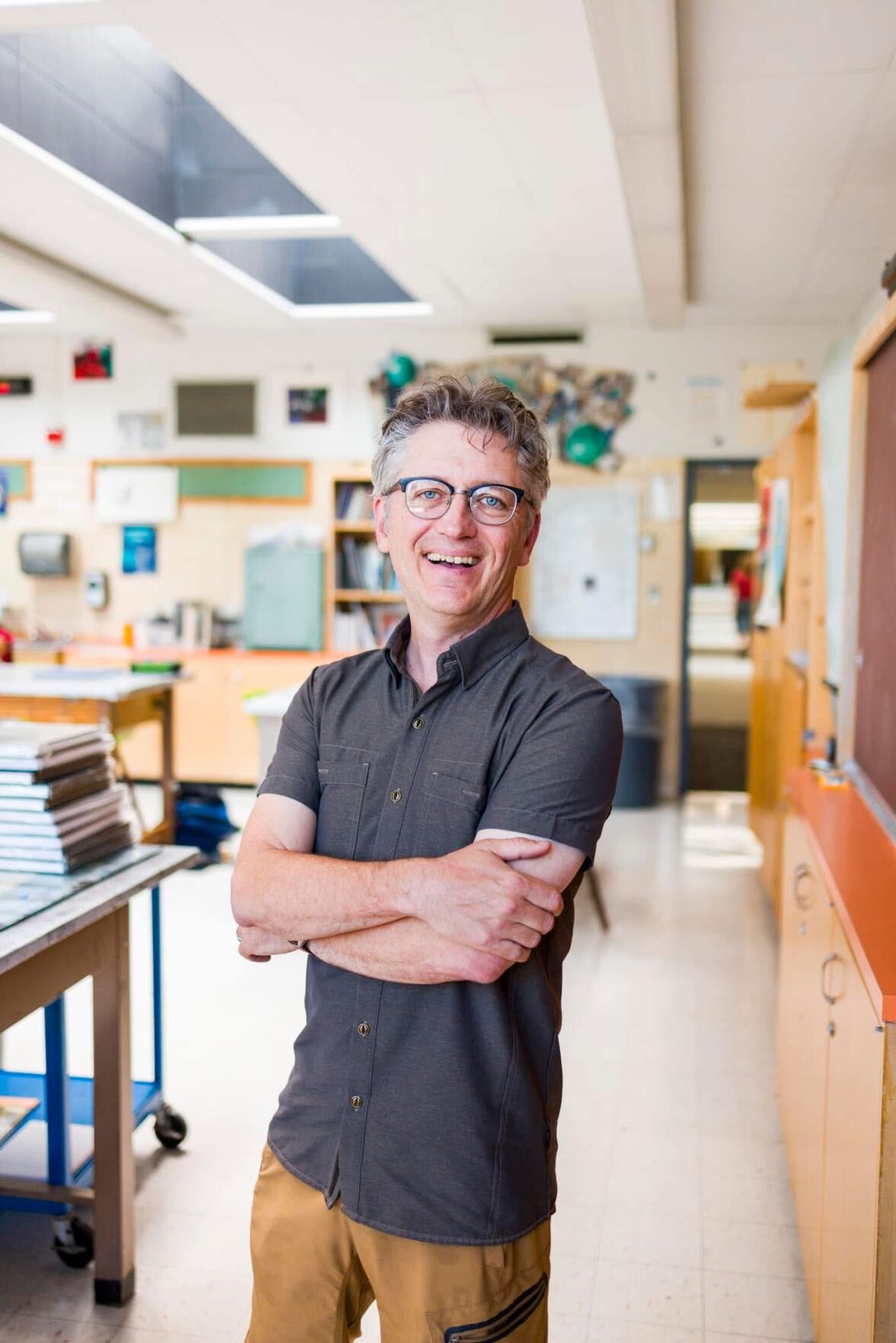
Andrew Beckham, who is starting his 26th year as the chair of St. Mary's Academy visual arts department, is photographing Colorado's shrinking glaciers.
Courtesy photo, St. Mary's Academy


Andrew Beckham, who is starting his 26th year as the chair of St. Mary’s Academy visual arts department, is photographing Colorado’s shrinking glaciers.
What freaks out Beckham is the reality of landscape changes: rocks revealed on formerly glaciated terrain.
“We are on the brink of pretty profound losses, to be sure, and to lose glaciers is one iteration of that,” Beckham said. “We get a handful of decades to be aware of the fact that we are connected to all of this. That’s what I want this work to be about and not shy away from the heartbreaking and difficult reality of climate crisis, but also celebrate extraordinary beauty and wonder.”
Beckham’s sense of wonder and his sense of responsibility drive him to do the nearly impossible.
“When in the field, I try to be present and bear witness, to make sense of the glaciers aesthetically and poetically. With intentionality, I want to be in the presence of our life-giving glaciers and bear witness at this time in the life of our planet while they’re still here. The prognostication is that they might all be gone by the end of this century.”
Project merges documentary and fine-art photography
On each climb, Beckham shoots hundreds of images often edited to a single photo.
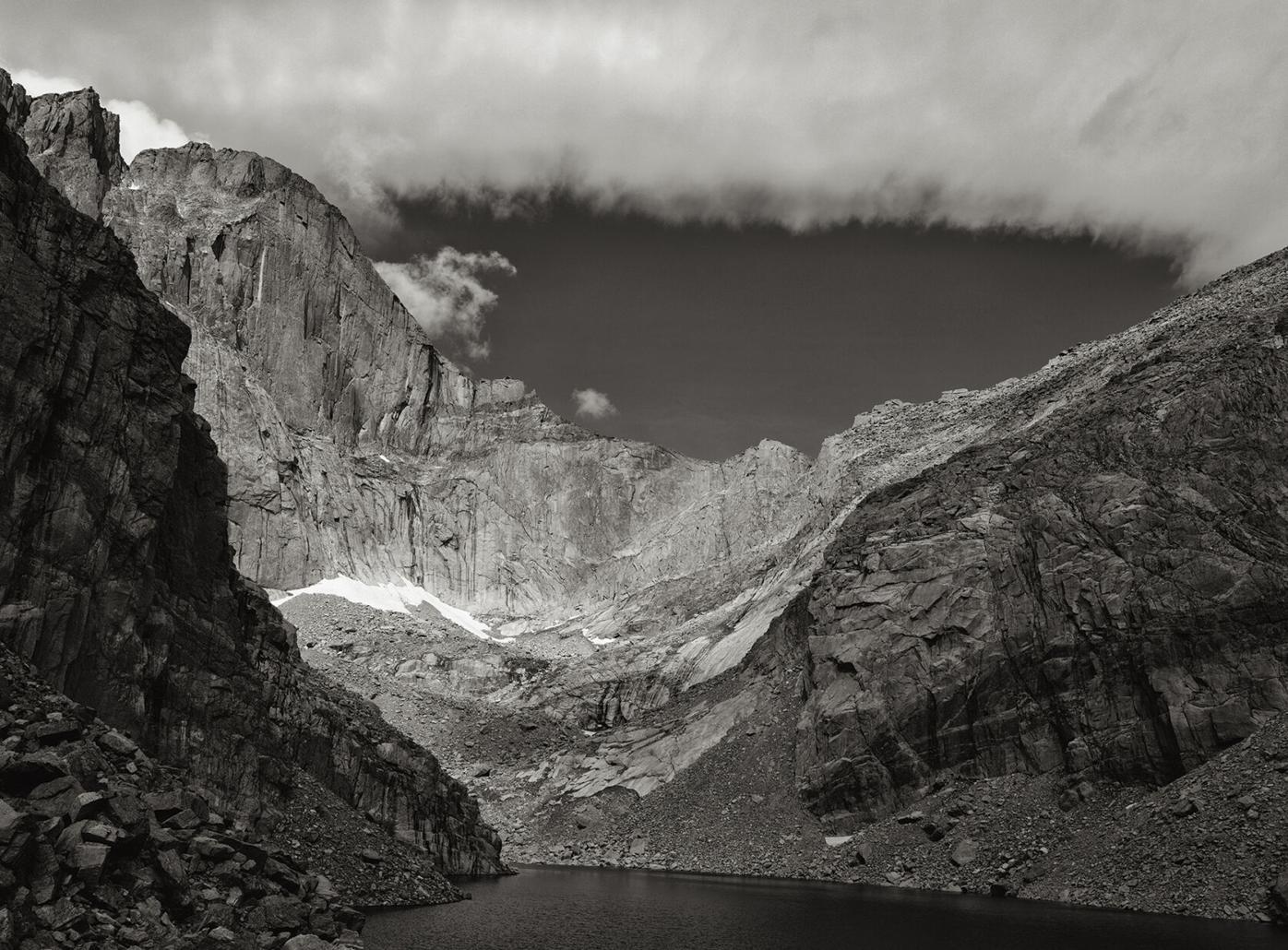
Andrew Beckham, who is starting his 26th year as the chair of St. Mary's Academy visual arts department, is photographing Colorado's shrinking glaciers. This is Mills Glacier.
Courtesy photo, Andrew Beckham


Andrew Beckham, who is starting his 26th year as the chair of St. Mary’s Academy visual arts department, is photographing Colorado’s shrinking glaciers. This is Mills Glacier.
“This particular project is a really interesting, very blurred line between documentary photography and fine art photography,” Beckham said. “Ultimately, I’m trying to tell a story, and I’m doing it visually. I want the work at the end of the day to be immersive and impactful and affecting, allowing someone viewing the work a connection with the place and larger concerns and ideas. I want the work to have an emotive quality to it.”
That it does. The images are breathtakingly beautiful with a celestial serenity, a peek at the privacy of places few humans have left footprints, parts of the planet so remote they remain pure, tranquil, transcendent. Towering, cloud-capped mountains. Soaring peaks. This is our world, Beckham shows us, and yet what he shows us appears otherworldly.
“There is a strong contemplative aspect, being out in the field. These high alpine places can be transformative in a lot of different ways,” Beckham said. “The contemplative aspect is a through line with everything.”
“Rocky Mountain National Park (RMNP) is my spiritual home,” he added. “Some places are holy, and I say that as an agnostic. There is a sacred quality for me on certain mountains and high cirques for reasons I could never fully articulate. It’s deeply powerful. In my agnostic way, I have a practice of thanking those places, and this element of gratitude is very real for me.”
Beckham finds the heavenly in the quotidian
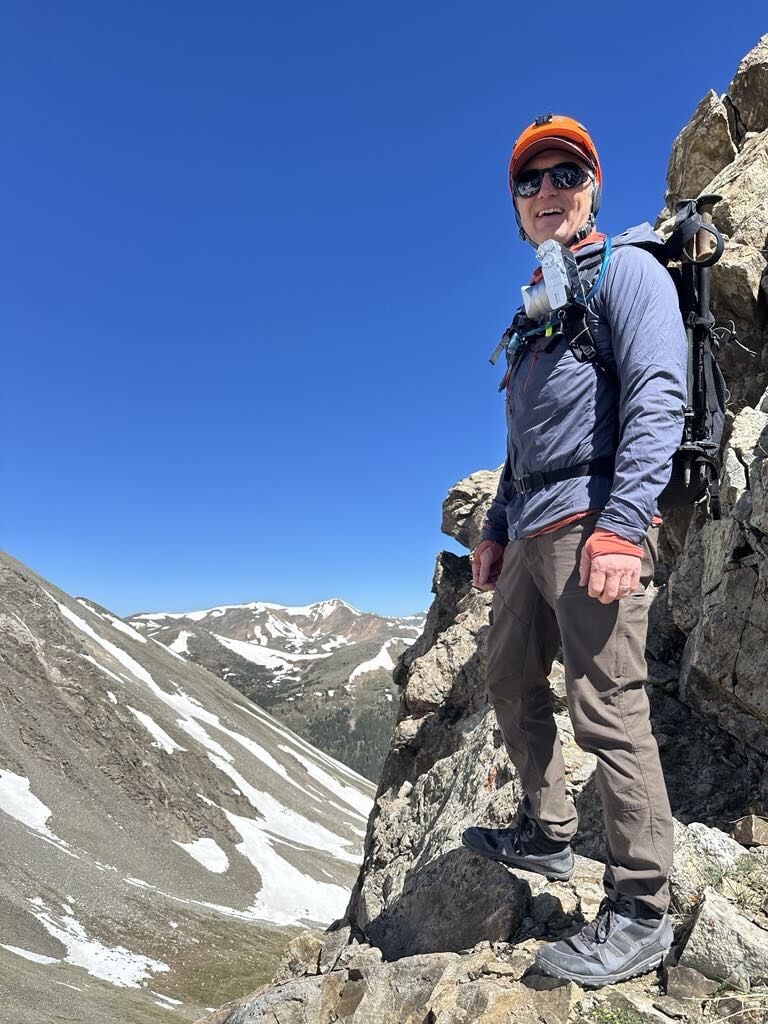
Andrew Beckham, who is starting his 26th year as the chair of St. Mary's Academy visual arts department, is photographing Colorado's shrinking glaciers.
Courtesy photo, Andrew Beckham


Andrew Beckham, who is starting his 26th year as the chair of St. Mary’s Academy visual arts department, is photographing Colorado’s shrinking glaciers.
Beckham’s reverence translates to his sublime photography. In Denver, Michael Warren Contemporary represents Beckham’s work.
“It’s the contrast of finding the heavenly in the quotidian every day. The light and dark, his observations of the way light is cast or the way the rock faces shimmer or the clouds come in. There’s a bit of a heavenly quality to that,” said Mike McClung, who opened the gallery with his husband, Warren Campbell, almost 12 years ago.
“But it’s not just his visual intuition,” McClung added. “He is very concerned about technical aspects of his printing and very concerned with ink. He is an artist and a technician.”
Michael Warren Contemporary recruited Beckham after seeing his photographs at Beckham’s previous gallery, Goodwin Fine Art, and also at the Denver Art Museum (DAM). The DAM purchased numerous works for its permanent collection.
The DAMS’s curator of photography, Eric Paddock, said: “Andrew Beckham has taken a variety of theoretical approaches to his work as a photographer, yet he always remains firmly centered on the spiritual or psychological dimensions of his encounters with nature.”
“The Denver Art Museum holds a good cross-section of his work that explores the sense of mystery and freedom he finds in empty places,” Paddock said. “Some of the photographs are rather traditional in their use of the camera and their darkroom technique. In others Beckham seeks to create visual poems, or metaphors for the philosophical musings he indulges as he looks into the depths of mountain gorges or the infinity of stars on clear nights. Beckham’s work reflects his deep connection with the environment and sings to people who understand the vast silence of wilderness.”
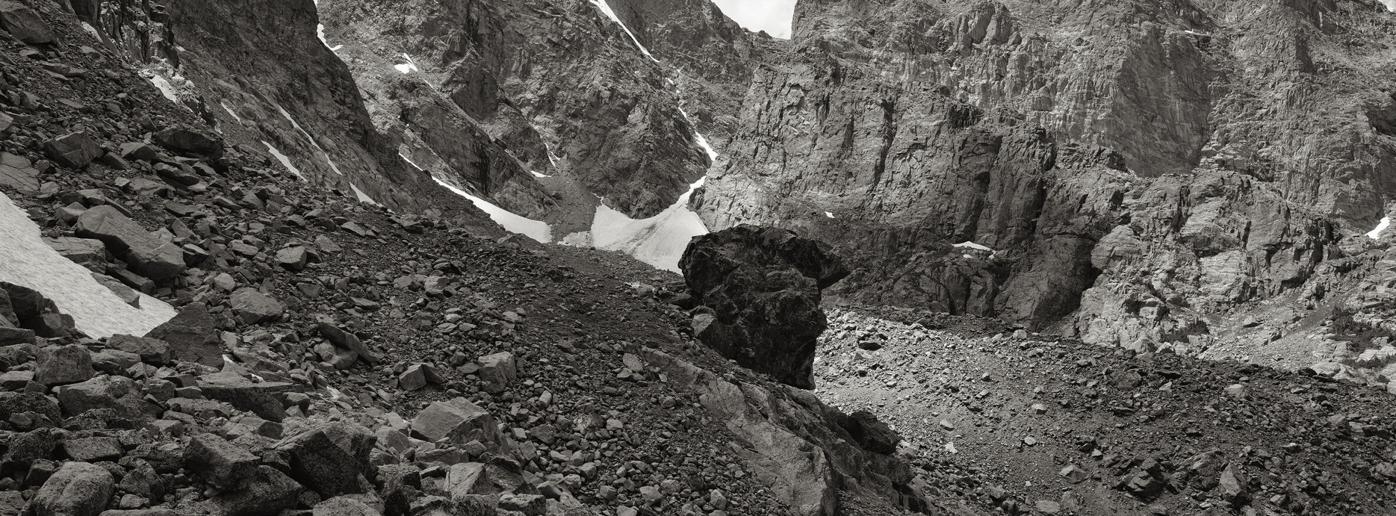
Andrew Beckham, who is starting his 26th year as the chair of St. Mary's Academy visual arts department, is photographing Colorado's shrinking glaciers. This is Taylor Glacier.
Courtesy photo, Andrew Beckham


Andrew Beckham, who is starting his 26th year as the chair of St. Mary’s Academy visual arts department, is photographing Colorado’s shrinking glaciers. This is Taylor Glacier.
Howell noted that Beckham’s black-and-white works invite a comparison to the revered fine art photographer Ansel Adams.
“Both are part of a tradition that celebrates the grandiosity of wilderness,” said Howell. “Andrew’s recent photos are very much about capturing specific moments in austere places. The angle of light at a given time of day, the movement of clouds and shifting shadows, the ephemeral patterns in windblown snow: Each are distillations of the dynamic forces at work in those places. Andrew’s photos succeed at celebrating both the rare and the enduring in the same image.”
Finding his spiritual home in Rocky Mountain National Park
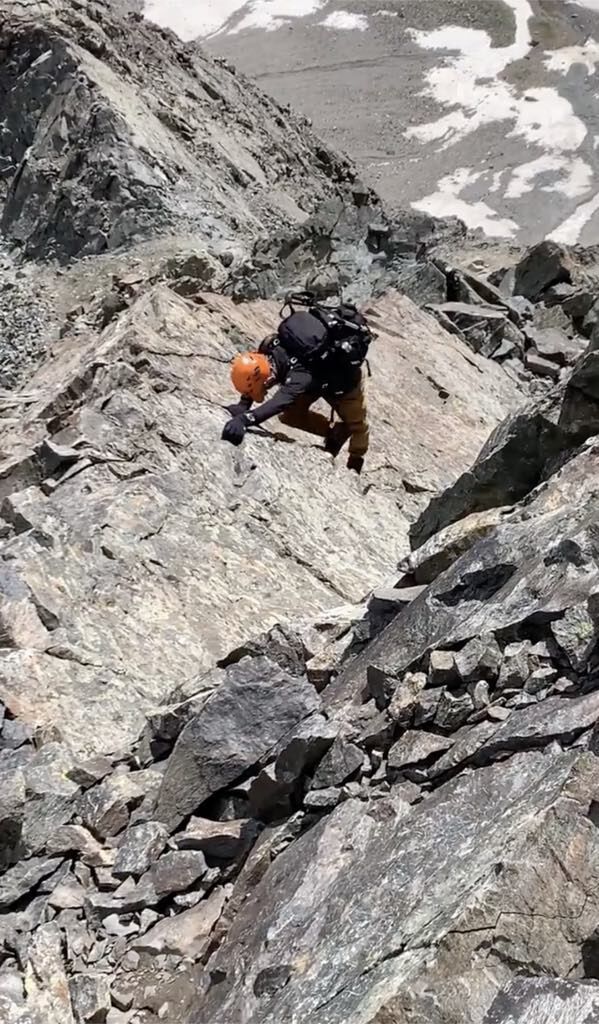
Andrew Beckham, who is starting his 26th year as the chair of St. Mary's Academy visual arts department, is photographing Colorado's shrinking glaciers.
Courtesy photo, Andrew Beckham


Andrew Beckham, who is starting his 26th year as the chair of St. Mary’s Academy visual arts department, is photographing Colorado’s shrinking glaciers.
For Beckham, one enduring aspect is his high opinion of the high country.
“I have a love for the mountains,” said Beckham, who lives in the Mile High City with his wife, Carol, and their son, Alden.
But Beckham’s roots are at sea level in Houston, where his parents — transplants from St. Louis — settled. When his family vacationed in Rocky Mountain National Park, he recognized his affinity for the mountains even as a middle-schooler.
“I said, ‘This is it!’ And it took me another decade to get out here permanently, but I felt a connection I don’t have words for,” said Beckham, who trained as a Hike Master at YMCA Camp of the Rockies and continued his backcountry explorations through his 20s.
He went on to win a Fulbright Scholarship, work in Jerusalem, author two books and teach art. Eventually, Beckham found himself living a somewhat sedentary life and needing, for health reasons, to lose weight and get more exercise. Then came the 2020 COVID lockdown.
“I thought, ‘What can I do that’s safe?’ And I started hiking again,” said Beckham. “I started climbing mountains I hadn’t climbed in decades. If this is a midlife crisis, it’s a healthy one.”
Beckham, 56, knows he may be at the height of his mountain climbing career, and he’s making the most of this pinnacle. His photographs capturing dreamy glacial lakes known as tarns, awe-inspiring vistas across jagged peaks and perilous angles on the Rocky Mountain range that few will ever see in person may well wind up in an exhibition or a book. Yet for now, he’s focused only on gathering images.
His cameras have taught him to see
In his spacious St. Mary’s Academy classroom with a wall of windows, a table holds a group of 35MM cameras.
“That’s my fleet for my students,” said Beckham, who now works with digital cameras.
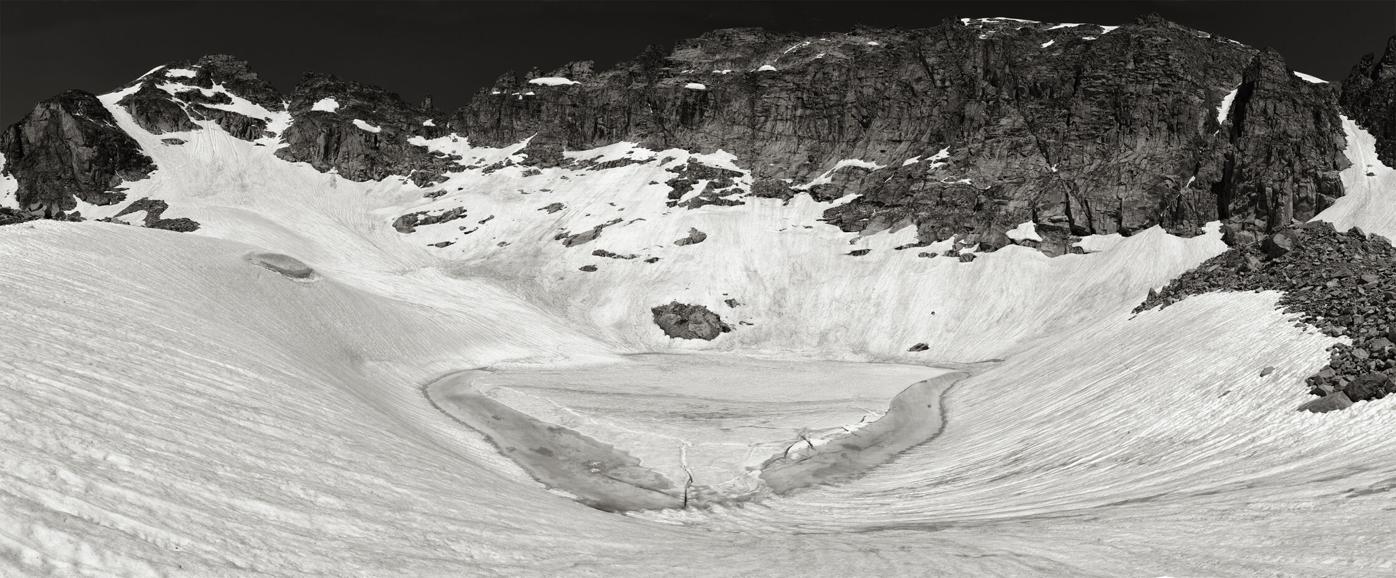
Andrew Beckham, who is starting his 26th year as the chair of St. Mary's Academy visual arts department, is photographing Colorado's shrinking glaciers.
Courtesy photo, Andrew Beckham


Andrew Beckham, who is starting his 26th year as the chair of St. Mary’s Academy visual arts department, is photographing Colorado’s shrinking glaciers.
Beckham is a teacher, and his glacier project will educate people because, perhaps most significantly, his alpine achievements have formed him as a conservationist with a perspective very few possess. He is a writer whose thoughts run deep as mountain crevasses. He’s willing to take up lofty topics such as ontology — the nature of being.
“I say often that beauty and loss sit side-by-side in the glacial landscapes of my home, Colorado. It is also true that the sublime and the catastrophic sit side-by-side, sometimes indistinguishable from one another,” he said.
“Looking through the lens of a human lifetime, the reality of climate catastrophe seems insurmountable. Looking through the lens of geologic time, there is some hope that the Earth may well adapt and repair itself from the human folly of our present moment. But that is not an excuse for us to dismiss the present crisis.”
Beckham said his glacier project ultimately will fit in with his larger concerns over many years as an artist considering the human experience in various timeframes ranging from historical time juxtaposed with the geological time of the ancient glaciers and, in turn, cosmological time.
“I zoom in and out on these vastly different scales that are all poignant. My work as an artist attempts to look unflinchingly at the sublime and the catastrophic, so that we can draw courage from the astonishing, fragile beauty that is still present in the world, even as we mourn the loss of so much. We must use that courage, combined with a renewed sense of wonder and awe, to address and combat the climate crisis before us,” he said.
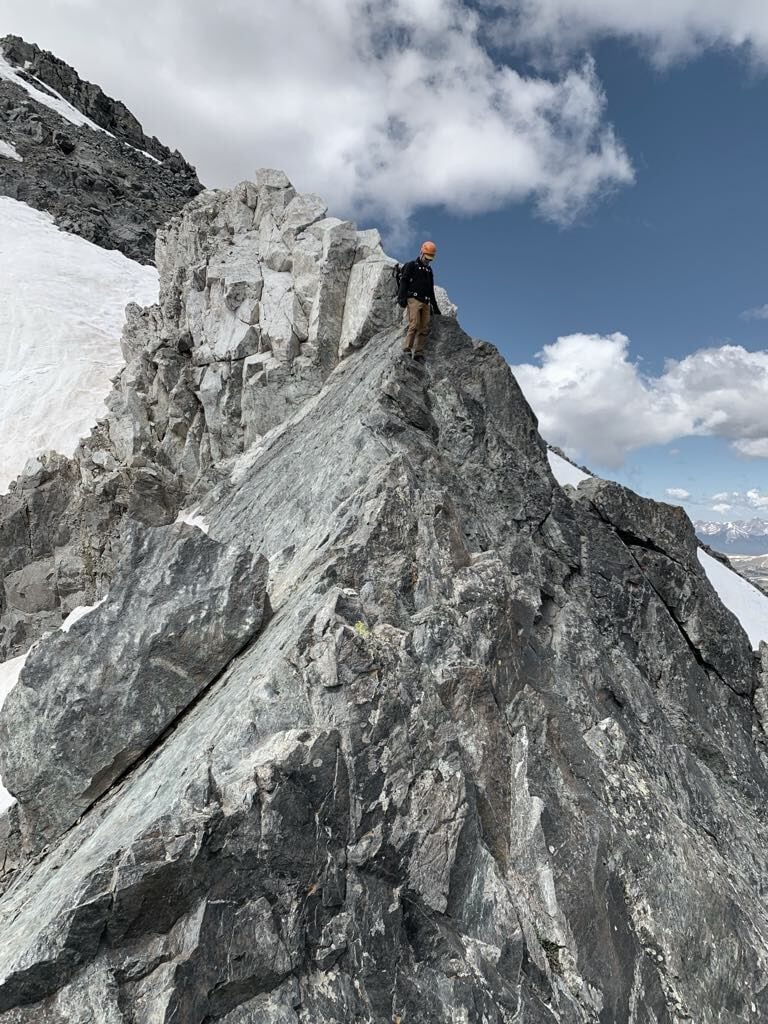
Andrew Beckham, who is starting his 26th year as the chair of St. Mary's Academy visual arts department, is photographing Colorado's shrinking glaciers.
Courtesy photo, Andrew Beckham


Andrew Beckham, who is starting his 26th year as the chair of St. Mary’s Academy visual arts department, is photographing Colorado’s shrinking glaciers.
“It may well be that in 100,000 years, or a million years, the world will have healed itself, with or without us. But that cannot be our only hope today,” Beckham said. “Today we must act.”