







New report finds Colorado 14er hiking ticking up from previous low

Parker Seibold, Gazette file
Colorado’s tallest peaks continue to see far fewer people compared with record waves from five years ago.
That’s according to the latest hiking estimates from Colorado Fourteeners Initiative (CFI), the nonprofit that annually tracks numbers.
The count was around 415,000 during the COVID-19 pandemic, a time that saw unprecedented surges across the outdoors with the loss of indoor entertainment. The number was closer to 260,000 in 2023 — the lowest CFI reported since launching the yearly review in 2015.
Built to last: The Estes Park Aerial Tram, a generationally beloved phenomenon, marks 70 years
Fourteener hiking “has steadily returned to the mean,” CFI concluded in its new report, while announcing a slight year-to-year increase.
For 2024, the estimate was 265,000 “hiker use days.” That’s a figure meant to represent one person on one peak a day. (“Anecdotally we know that individual enthusiasts may hike multiple fourteeners over the course of a given year, including climbing the same peak multiple times,” CFI has explained.)
CFI credited the bump in 2024 to the reopening of a popular route around a cluster of peaks.
A scenic site is restored in Colorado — but tensions linger
“With Mount Democrat becoming public land in 2024 and an electronic waiver system also in place by the landowner of Mount Lincoln, hiking use levels on the Decalibron Loop effectively doubled last year compared to 2023 when the loop was closed for half the season,” CFI Executive Director Lloyd Athearn said in the report.
But overall estimates were offset, he explained, by decreased hiking suspected at “perennial top-tier peaks.” Those included Mount Elbert and Grays and Torreys peaks. Athearn added “tweaks to the modeling code” that resulted in a boost at Mount Blue Sky.
The annual report continued to show Mount Bierstadt and Quandary Peak as the state’s most popular fourteeners. CFI lists both within an estimated range of 25,000-30,000 hiker use days.
Mount Blue Sky rose to a range of 20,000-25,000. CFI previously placed estimates between 10,000-15,000. This was a change from “assuming most people climbed the 5.5 round-trip miles from Summit Lake rather than the 17 miles from Echo Lake,” the report explained.
Elbert, Grays, Torreys and the Decalibron mountains were estimated in the 15,000-20,000 range. Elbert, Grays and Torreys were previously placed in the 20,000-25,000 rage.
CFI lists Pikes Peak as the next most-hiked — between 10,000-15,000 — with Longs Peak, Mount Sherman and Huron Peak falling in an estimated range of 7,000-10,000.
In continuing a predictable trend, CFI reported 54% of the state’s fourteener hiking occurred on the 12 peaks closest to Denver, comprising the Front, Tenmile and Mosquito ranges. Including Mount Elbert and the Collegiate Peaks, the Sawatch Range sees another bulk of hiking. Numbers are much thinner in the more technical and remote Sangre de Cristo, San Juan and Elk ranges.
Among other data, CFI’s annual report draws from infrared counters installed at trails across 22 peaks and tens of thousands of “checklists” submitted to 14ers.com.
“Several factors could be influencing CFI’s estimated hiking levels,” the latest report stated.
Also mentioned: Colorado’s slower population growth compared with past decades and a recent report from the Colorado Tourism Office that found a decrease in overnight visitors to the mountains last summer.
CFI has also aimed to capture the economic impact of fourteener hiking, using an old study out Colorado State University that tracked Quandary climbers’ spending on gas, food, lodging and more.
For 2024, CFI estimated an impact of $71.9 million. That’s down from $112.5 million estimated from the record hiking year of 2020.
From the 415,000 hiker use days tallied that year, CFI estimated 303,000 the next year as COVID-19 restrictions eased for city dining and entertainment. The 2022 report determined 279,000 hiker use days, before falling to levels of the past two years on par with CFI’s estimates from 2015.


Battle of the Badges connects cops, community and cancer
John Moore
john.moore@denvergazette.com
Updated 2 hours ago
For Aurora and Denver first responders, the gloves come on for a good time and a good cause Guns down, gloves up. That was the mantra last Saturday night for the 30 Denver and Aurora police officers, firefighters, corrections officers...

John Moore
Reporter

Europe faces gas trouble as war strains supplies and Russia weighs cut-off
Maydeen Merino, Washington Examiner
maydeen-merino-washington-examiner@import.placeholder
Updated 3 hours ago
Europe is facing major economic trouble due to constrained natural gas supplies as the war in Iran upends global energy flows, with further disruptions possible as Russia weighs suspending gas exports. In the days since the start of the war in Iran, Europe has seen a...

Maydeen Merino, Washington Examiner
Reporter

Hopes and fears: Colorado Iranians speak out on widening war
Mark Samuelson
mark.samuelson@denvergazette.com
Updated 3 hours ago
Groups talks about young people protesting against the Islamic Republic, and Reza Pahlavi and the monarchy When Denver area real estate agent Fara Novin dined out for her birthday Friday night, Feb. 27, she blew out a candle on a...

Mark Samuelson
Reporter
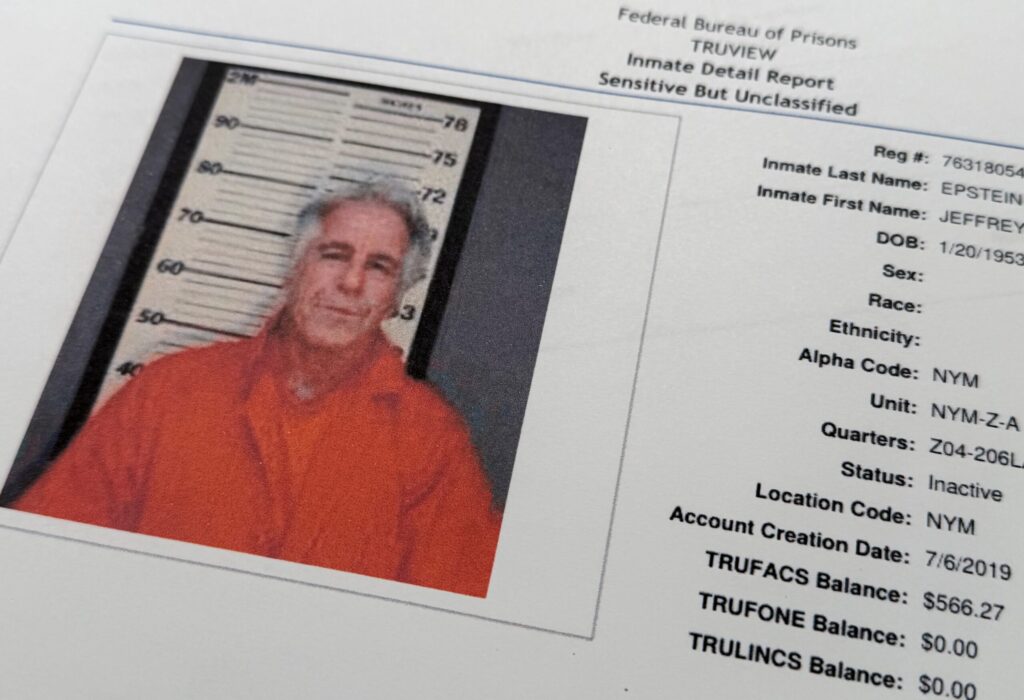
DOJ publishes more Epstein documents mentioning Trump after initial omission
Rena Rowe, Washington Examiner
rena.rowe.washington.examiner@gazetteedit.wpenginepowered.com
Updated 3 hours ago
The Justice Department released additional Epstein files on Thursday, including uncorroborated accusations from a woman claiming she was sexually assaulted by President Donald Trump. Last week, Rep. Robert Garcia (D-CA), the top Democrat on the House Oversight and Government Reform...

Rena Rowe, Washington Examiner
Reporter

Truck driver hospitalized, United flight deplaned after Denver airport crash
Michael Braithwaite
michael.braithwaite@gazette.com
Updated 1 hour ago
The driver of a de-icing truck was hospitalized and a United Airlines flight was deplaned after a crash at Denver International Airport Friday morning. Amid heavy snowfall, United Airlines flight 605 headed to Nashville hit the truck while leaving the...

Michael Braithwaite
Reporter

House GOP leaders begin push for reconciliation 2.0
Lauren Green, Washington Examiner
lauren.green.washington.examiner@gazetteedit.wpenginepowered.com
Updated 3 hours ago
House Republican leaders are pushing for a second party-line reconciliation bill and plan to discuss it at their upcoming policy retreat in Doral, Florida, next week. Sources close to GOP leadership told the Washington Examiner that Speaker Mike Johnson (R-LA)...

Lauren Green, Washington Examiner
Reporter

Trump confirms frustration over Noem’s $220 million ad campaign: ‘Didn’t know about it’
Emily Hallas, Washington Examiner
emily.hallas.washington.examiner@gazetteedit.wpenginepowered.com
Updated 3 hours ago
President Donald Trump questioned former Homeland Security Secretary Kristi Noem’s approval of a costly ad campaign prominently featuring herself. Noem has repeatedly claimed, including during congressional testimony on Tuesday, that Trump personally asked her to craft the DHS ad campaign,...

Emily Hallas, Washington Examiner
Reporter
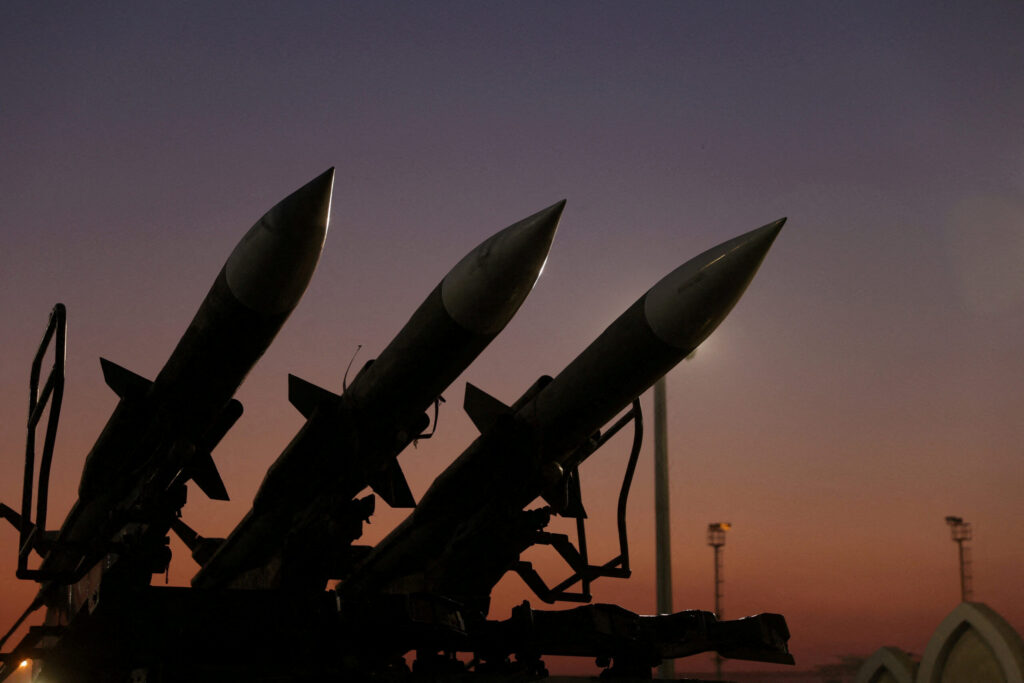
Khamenei’s secret bunker under Tehran destroyed by Israeli military jet bombardment
Brady Knox, Washington Examiner
brady.knox.washington.examiner@gazetteedit.wpenginepowered.com
Updated 3 hours ago
The bunker created for former Iranian Ayatollah Ali Khamenei was reportedly still in use by senior Iranian figures when it was obliterated in a bombardment from 50 Israeli Air Force jets Friday. Khamenei was assassinated in an Israeli airstrike in...

Brady Knox, Washington Examiner
Reporter

Trump says there will be no deal with Iran outside of ‘UNCONDITIONAL SURRENDER’
Brady Knox and Christian Datoc, Washington Examiner
brady-knox-and-christian-datoc-washington-examiner@import.placeholder
Updated 3 hours ago
President Donald Trump laid out his first clear terms for the end of the war with Iran on Friday morning, saying he would accept nothing short of capitulation. “There will be no deal with Iran except UNCONDITIONAL SURRENDER!” Trump said...


‘X is not real life’: Karoline Leavitt denies MAGA divisions over Iran war
Mabinty Quarshie, Washington Examiner
mabinty.quarshie.washington.examiner@gazetteedit.wpenginepowered.com
Updated 3 hours ago
White House press secretary Karoline Leavitt downplayed ongoing tensions within the MAGA movement over the Iran war during a gaggle with reporters on Friday. “I would just remind people X is not real life,” Leavitt said after being asked about...

PREV
PREVIOUS
2024 Colorado 14er Hiking Use Days Estimate--8.11.2025.pdf

Browns WR Jerry Jeudy on Shedeur Sanders: 'Great arm, very accurate'
BEREA, Ohio — Kevin Stefanski has committed to one thing when it comes to selecting the Cleveland Browns starting quarterback. Stefanski didn’t say that he would announce a starter for the Sept. 7 opener against the Cincinnati Bengals next week, but did say there would be more clarity after Saturday’s game against the Philadelphia Eagles […]