







EDITORIAL: Laws aid, abet illegal immigration — cuff law enforcement
Colorado’s law officers are sworn to protect the public. Our state’s top elected officials have been doing their level best to undermine that oath.
Which explains a series of laws passed by ruling Democrats at the legislature over the past few years, and signed into law by Gov. Jared Polis, prohibiting cooperation between Colorado’s law enforcement agencies and federal immigration authorities.
It has tied law officers’ hands. Regardless of the immigration status of a criminal suspect — or the seriousness of the crime — Colorado cops, deputies or troopers dare not breathe a word of it to federal authorities or assist in detaining those suspects on behalf of the feds.
Never mind how far out of step the laws are from popular sentiment; they are seriously hampering public safety. And they are doing so not only by slapping the cuffs on cops, but also by leaving them uncertain as to where their authority to enforce the law begins and ends.
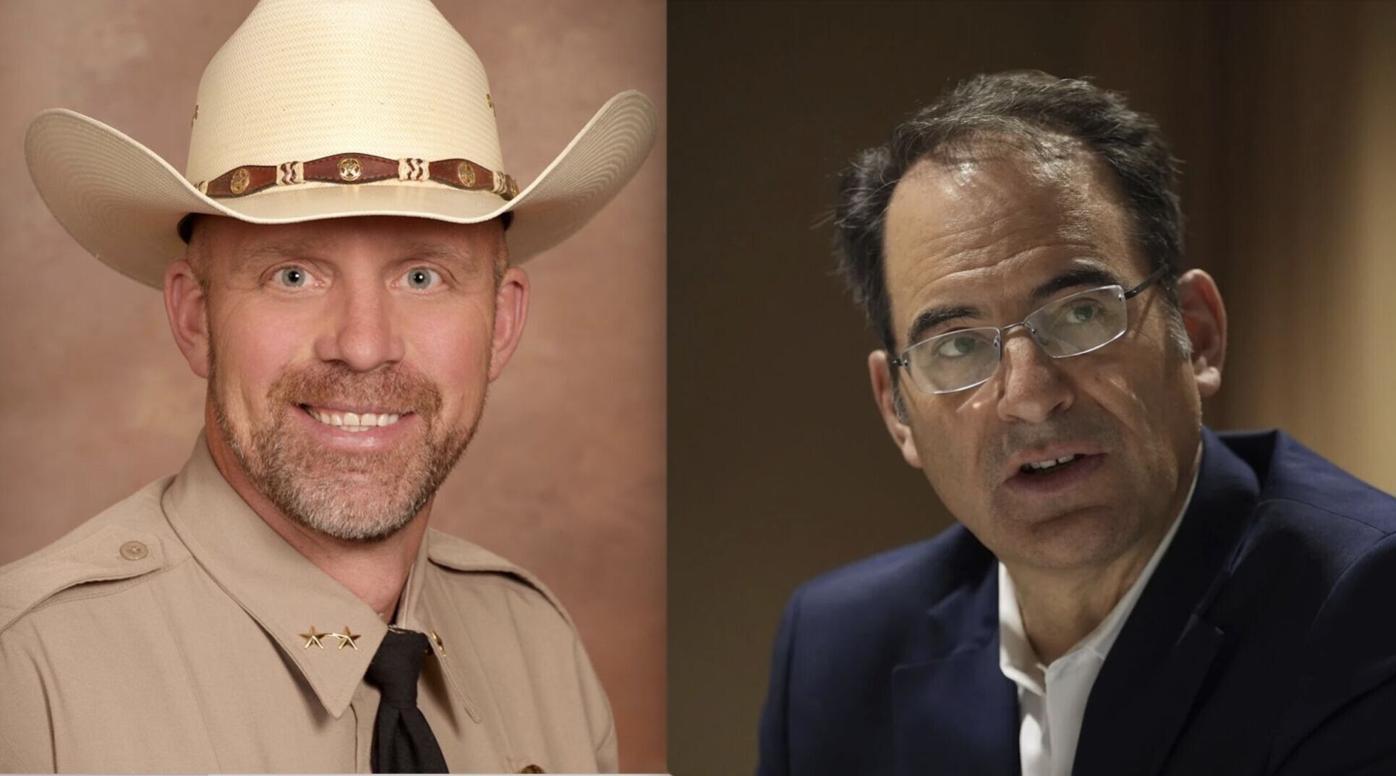
That’s the upshot of a lawsuit by the Mesa County Sheriff’s Office against Polis and fellow Democratic Attorney General Phil Weiser. And we welcome it.
As reported this week in The Gazette, Mesa County Sheriff Todd Rowell and two of his top brass filed the complaint in U.S. District Court against Polis and Weiser, claiming that state laws barring state and local government employees from cooperating with U.S. Immigration and Customs Enforcement are “unconstitutionally vague.”
Rowell’s legal action represents a lot more than just another volley in an ongoing faceoff between the Western Slope law enforcement agency and Colorado’s state government. It’s a demand for clarity so that our law enforcement agencies can uphold the law — in a state slammed by a crime wave in recent years.
Last month, Weiser, who is running to replace the term-limited Polis next year in the governor’s office, had sued Mesa County Sheriff’s Deputy Alexander Zwinck for allegedly violating the state’s confusing prohibitions on cooperating with the feds. Zwinck, a K-9 officer on the county’s drug interdiction team, had pulled over a vehicle traveling I-70 in June for following a truck too closely.
The deputy let the motorist go with a warning but allegedly flagged her via a Signal chat used by federal immigration agents as well as Drug Enforcement Agency officers. She was pulled over by federal authorities, found to be in the country illegally, and arrested.
Rowell took steps including launching an internal investigation, reassigning the deputy after placing him on leave, and training his personnel on the new law. But he also pointed out in a public statement at the time how absurdly unworkable the new laws are and how they have created an impossible situation for law enforcement in Colorado.
And he justifiably accused Weiser of “selectively” enforcing the law because the State Patrol was involved in Zwinck’s incident, yet the AG didn’t act against state troopers. It was easy for Weiser — a Boulder Democrat and former CU law professor cozying up to his party’s vocal political fringe in advance of next year’s gubernatorial primary — to pick on a lone deputy in Republican Mesa County. Weiser knows he won’t be getting a lot of votes out there, anyway.
In his news release, the Mesa sheriff also called Weiser’s arbitrary use of his authority “demoralizing” to law enforcement, and so it is. Fundamentally, it stands to have a chilling effect on law officers simply doing their jobs.
However the dueling lawsuits fare in court, what’s clear is our state government has abdicated law enforcement in Colorado — to aid and abet those who broke the law to get here.