







Colorado lawmakers begin special session — here’s what’s at stake

The gold dome of the Colorado state capitol building in downtown Denver.
STATE OF COLORADO WEBSITE
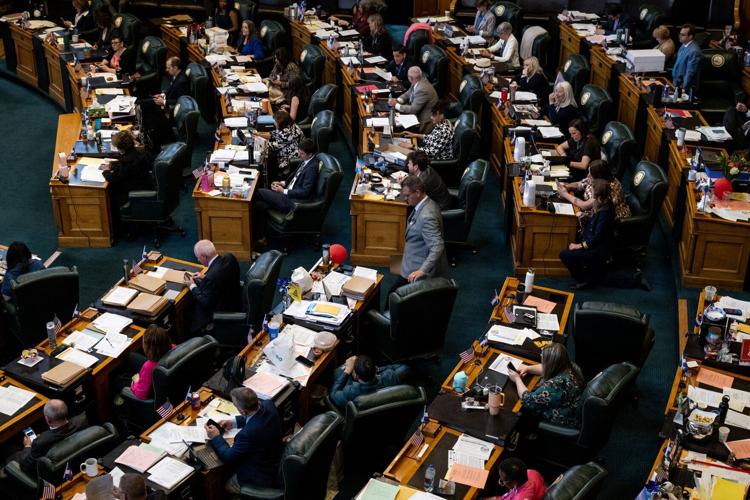
Colorado legislators will officially convene in a special session this morning to plug part of an $800 million budget deficit that Democrats insist is the result of the congressional budget but which Republicans argue is the state’s own making after failing to heed warnings and years of overspending.
Here’s what’s at stake.
Analysts said Colorado will lose $1.2 billion in income tax revenue, mainly on the corporate side. The state has enough in surplus to cover about a third of that. The question is: Where to find the rest?
Proposals have been introduced to tackle as much as $300 million of that shortfall by making changes to corporate taxes in a variety of ways.
Meanwhile, legislative leaders are coalescing around the idea that, ultimately, it is up to Gov. Jared Polis to figure out where to make cuts, rather than having legislators review each agency’s budget to impose reductions.
Two bills in the special session package deal with the governor’s authority to make spending reductions. While the bills do not aim to change his authority, they require the governor to meet with the Joint Budget Committee to share his plans for closing the budget gap.
The idea that Polis will need to solve the deficit as he sees fit, while informing lawmakers of his plans, wasn’t how the governor and legislative leaders characterized the special session when it was announced earlier this month.
Polis said he set the parameters of what the legislators would discuss in the special session, but it will be up to the latter to decide the details of the fiscal remedy.
“The legislators decide what bills to pass and what to do, and the specifics,” Polis said in an interview several days ago.
Lawmakers, he said, will also need to decide how long the session will last.
Meanwhile, business and labor groups are closely watching how legislators will tackle artificial intelligence, specifically what’s anticipated to be a round of fixes being proposed to last year’s law that imposed new regulations.
Senate Bill 24-205 made Colorado the first in the nation to deal with consumer issues around what sponsors see as discrimination in artificial intelligence. While Gov. Jared Polis signed the measure last year, he did so with a long list of misgivings. He also asked for changes.
Both sides have begun to frame the issue. For business, last year’s bill had been rushed, creating more problems than it sought to solve, and any measure this year should avoid those shortcomings. For labor, any changes should adhere to the intent of the original measure — root out “discrimination” in AI algorithms and protect consumers.
Bills introduced so far for the special session can be found here.
Lawmakers from both parties held dueling press conferences prior to the start of the first day, largely pointing fingers at the other side for the fiscal crisis.
House Minority Leader Rep. Rose Pugliese of Colorado Springs called the special session premature. She noted the governor’s call, while pointing to a $1.2 billion income tax revenue shortfall, did not charge lawmakers with coming up with cuts. The call did state lawmakers were being brought back “to address the fiscal crisis caused by recent federal action.”
Republicans were not asked to come to the table, Pugliese said.
Senate Minority Leader Sen. Cleave Simpson of Alamosa said he found it ironic that the special session was called after another newly-elected body (Congress) passed a bill granting tax breaks.
But the state budget crisis has been brewing for some time, Simpson added. “”You could see this coming for the past five years,” he added. The deficit is not the making of Republicans, according to Assistant Minority Leader Sen. Lisa Frizell of Castle Rock. Democrats “have systematically created a structural budget deficit. And it’s long, long past time that they acknowledge that fact publicly,” and choose to point fingers at Congress instead of at their own mismanagement the state finances.
Frizell added that Coloradans should be offended with the Democrats’ notion that taxpayers should pay for “costly partisan projects and bloated government offices.”
Democrats are planning to raise taxes, according to Assistant Minority Leader Rep. Ty Winter of Trinidad. Republicans want to make real cuts, he said.
Joint Budget Committee member Rep. Rick Taggart of Grand Junction noted that a cut of 4% to 6% would save the $800 million the state is short. Instead, the Democrats’ bills focus on revenue enhancements, not spending reforms. Fellow JBC member Sen. Barbara Kirkmeyer of Brighton said Democrats will not balance the budget in the special session.
Will Republicans filibuster some of the bills, particularly those that deal with taxes? Pugliese said the fight will last as long as it takes.
House and Senate Democrats, holding their press conference just 15 minutes later, spent much of their time blaming Republicans, including those in Congress, who voted for H.R. 1, which they said led to the $1.2 billion revenue shortfall. That bill passed the U.S. House by just one vote, and any one of Colorado’s Congressional Republicans could have voted against it but didn’t.
Senate President James Coleman, D-Denver, said HR 1 has cost Coloradans their TABOR refunds this year.
However, two bills passed in the 2024 session, a family affordability tax credit and a child care tax credit, were estimated to tap the TABOR surplus for at least $700 million.
H.R. 1 stole money from Coloradans, according to Rep. Yara Zokaie of Fort Collins. That money was not lost or wasted, she said, it was stolen and given to billionaires through tax breaks. They stole money from hungry children through changes to SNAP and that’s endangering the lives of Coloradans.
JBC Chair Sen. Jeff Bridges of Greenwood Village said what’s been lost in the conversation is the loss of subsidies for health insurance, which will result in premium increases of 28% statewide and 38% on the Western Slope, according to the Division of Insurance. “This is the single largest increase in health insurance premiums in American history,” he said.
Republicans noted they are talking to U.S. Rep. Jeff Hurd, R-Grand Junction, who they said has pledged to introduce a bill to restore the premium tax credits set to expire under H.R. 1.
Democrats have a number of bills intended to provide support for those health insurance premiums through the state’s Health Insurance Affordability Enterprise.
So far, 33 bills have been introduced for the special session.