







Most accurate clock in US is in Colorado, measuring frequency of cesium atoms for accuracy
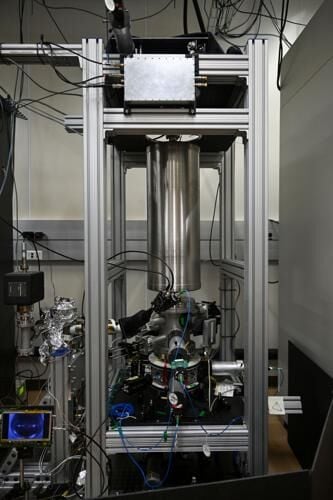
Timekeeping around the planet is more precise than ever thanks to the atomic clock, NIST-F4, at the National Institute of Standards and Technology campus in Boulder.
According to the NIST, the clock is one of the world’s most accurate timekeepers.
NIST-F4 measures the unchanging frequency in the heart of cesium atoms, which is the “internationally agreed-upon basis for defining the second since 1967.” The clock uses a method known as laser cooling to slow down the hot cesium atoms oscillating inside the clock. It then records the frequency at which the atoms travel through a microwave chamber.
According to NIST, the clock is so accurate that if it had begun running 100 million years ago, when the dinosaurs roamed the Earth, it would be off by less than a second today.
NIST-F4 has joined a small group of “similarly elite time pieces” that are run by just ten countries in the world, making timekeeping more “stable and secure.” NIST also says that NIST-F4 helps steer clocks NIST uses for keeping official U.S. time.
As well as being incredibly accurate, the NIST-F4 is rare. There are fewer than 20 cesium fountains operating anywhere in the world, according to NIST. In fact, most fountain clocks are built and operated by scientists in national measurement labs like NIST.
After being delicately built and tested over the past few years, the clock has made the foundation of global time more secure.
STAY INFORMED: Get free Colorado news with our daily newsletter (Click here)