







Aurora’s disruptors sowed chaos, reaped nothing | Michael Hancock
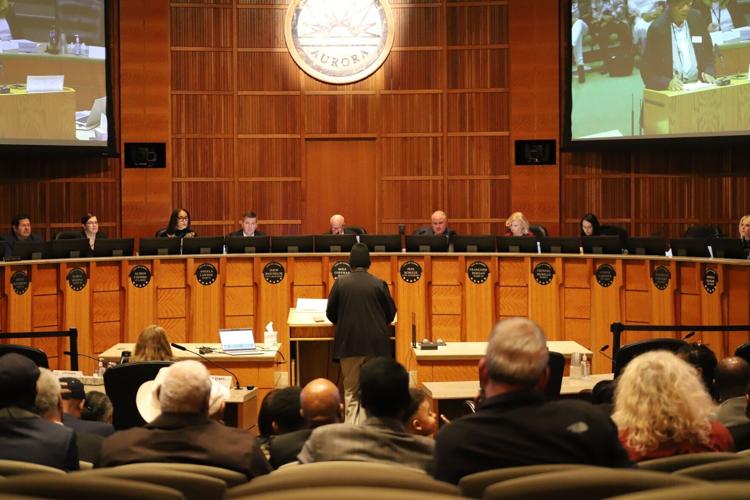
For the past year, Aurora City Council meetings have been hijacked by activists whose message shifted as often as the headlines. What began as outrage over the SWAT-involved death of Kylin Lewis quickly mutated into protests over Palestine, the hiring of a new police chief, and a disjointed collection of progressive causes.
The goal wasn’t resolution. It was sabotage — a page torn straight from Saul Alinsky’s Rules for Radicals, a handbook that prizes ridicule, chaos and confrontation over persuasion. The disruptors shouted louder than anyone else, but when the dust settled, the city kept moving forward. Their campaign to paralyze Aurora’s government failed, and in the process, they made themselves look ridiculous.
Alinsky taught that power is perception: create enough noise, and people will think you are stronger than you are. Week after week, a small but noisy band flooded the chamber with chants and slogans. To inflate their presence, they hurled labels designed to intimidate: council members were called “racists,” “white supremacists,” “fascists,” even “overseers of Blacks being lynched on every corner.” Some went as far as declaring that they would report council members to “future President Kamala Harris,” as though name-dropping a national figure could magnify their local theatrics.
Another Alinsky tactic is ridicule, and the disruptors wielded it without restraint. The intent was never to engage in debate but to publicly humiliate council members, making city government look weak and illegitimate.
Finally, Alinsky urged activists to “keep the pressure constant” by shifting demands. True to form, Aurora’s disruptors never stuck to one issue. One week, it was police use of force, the next it was Gaza, the next city staffing decisions. The inconsistency was deliberate: keep the target off balance, make governing impossible, and hope chaos itself becomes the story.
Theatrics reached their height with a frivolous First Amendment lawsuit claiming the city had silenced them. However, free speech is not the same as a free pass to derail government. The suit was never meant to win on legal grounds; it was Alinsky-style misdirection — an attempt to intimidate leaders into paralysis.
Then came their crowning act of arrogance: proclaiming they were “gifting back time” to the council. After a year of wasted hours, disrupted agendas, and hijacked meetings, they acted as though time belonged to them to give or withhold. It was the perfect symbol of their folly — confusing noise with power.
Despite the chaos, Aurora’s council stayed on track. Budgets were passed. Ordinances were enacted. Residents received city services. Policy decisions went forward. The Alinsky playbook depends on making institutions look powerless. But in Aurora, it backfired.
Council business continued, and the activists became background noise. Their labels lost sting, their lawsuits went nowhere, and their “mass movement” revealed itself as a handful of hecklers chasing headlines. The contrast was unmistakable: while elected leaders did the work of governing, a small group played political theater.
The greatest casualty was not the functioning of Aurora’s government but the credibility of the protesters themselves. By tossing around words like “racist” and “fascist” at every turn, they trivialized even the serious concerns they once claimed to represent. By invoking lynchings on “every corner,” they insulted residents’ intelligence and mocked real historical suffering. And by promising to “report” local officials to Kamala Harris, they turned their activism into parody.
Instead of elevating the issues, they diminished them. Instead of building trust, they burned it. Ultimately, they didn’t weaken Aurora’s government; they weakened themselves.
Saul Alinsky believed disruption was the highest form of politics. Aurora’s disruptors embraced his tactics: ridicule, constant pressure, shifting demands, and theatrical insults. But while they succeeded in creating chaos, they failed to stop progress.
Aurora’s city government carried on. Progress was made. And those who tried to paralyze the city exposed themselves as unserious, ineffective, and absurd.
The lesson is clear: shouting “racist” or “fascist” doesn’t make it true, filing a lawsuit doesn’t make it valid, and disruption without results is nothing more than noise. Aurora deserves better — and, thankfully, it got better. The city prevailed, while the would-be disruptors were left looking like frauds.
Michael A. Hancock is a retired high-tech business executive and a Coloradan since 1973. Originally from Texas, he is a musician, composer, software engineer and U.S. Air Force veteran whose wide-ranging interests — from science and religion to politics, the arts and philosophy — shape his perspective on culture, innovation and what it means to be a Coloradan.
Michael A. Hancock is a retired high-tech business executive and a Coloradan since 1973. Originally from Texas, he is a musician, composer, software engineer and U.S. Air Force veteran whose wide-ranging interests — from science and religion to politics, the arts and philosophy — shape his perspective on culture, innovation and what it means to be a Coloradan.


GUEST COLUMN: National School Choice Week is something to celebrate
Hanna Skandera
hanna-skandera@midtc.com
Updated 22 hours ago
Great schools change lives. School choice puts families in the driver’s seat. As our nation marks National School Choice Week, America has real momentum to celebrate. What once started as a set of policy reforms has become something more lasting:...

Hanna Skandera
Reporter

A reckoning in Cherry Creek Schools? | Jimmy Sengenberger
Jimmy Sengenberger
jimmy-sengenberger@denvergazette.com
Updated 2 days ago
On Wednesday, Superintendent Christopher Smith announced he’s retiring after five years at Cherry Creek Schools. The news should spark a wider district clean-up — but there’s no indication it will. Smith’s announcement took no accountability and gave no clear explanation,...

Jimmy Sengenberger
Reporter

Don’t throw a rock at a man with a gun | Mike Rosen
Michael Rosen
michael-rosen@denvergazette.com
Updated 2 days ago
“Minnesota and its two largest cities sued the Trump administration on Monday to try to stop an immigration enforcement surge that has led to the fatal shooting of a Minnesota woman by a federal officer and evoked outrage and protests...

Michael Rosen
Reporter
The biggest accelerant of our political tribalism | Eric Sondermann
Eric Sonderman
eric-sonderman@gazette.com
Updated 4 days ago
In years past, my go-to word in describing our political condition was “polarization.” I used it endlessly and still do on occasion. But as time has moved on, and the divide has only grown in depth and toxicity, polarization no...

Eric Sonderman
Reporter

Polis’ ‘libertarian’ streak is a false narrative | Jimmy Sengenberger
Jimmy Sengenberger
jimmy-sengenberger@denvergazette.com
Updated 5 days ago
Just because you say something doesn’t make it true — even if the national media eat up the narrative. I’m talking about the idea that Gov. Jared Polis is just a middle-of-the-road, “libertarian” Democrat. It’s a false narrative, but one...
Jimmy Sengenberger
Reporter

If only walls could talk in Colorado governor’s office | Dick Wadhams
Dick Wadhams
dick-wadhams@denvergazette.com
Updated 1 week ago
Restoring the office of the governor in the Colorado State Capitol to its historic glory was a worthy project despite its cost. There is probably never a good time to spend $2.4 million on such a restoration but it is...

Dick Wadhams
Reporter

Women dominate the livestock shows in Denver
Rachel Gabel
rachel-gabel@denvergazette.com
Updated 1 week ago
The first cattle to show in the CoBank Arena in the Sue Anschutz-Rodgers Livestock Center at the National Western Stock Show were the Herefords of the Catch a Calf program. Anschutz is an ardent supporter of the program and a...

Rachel Gabel
Reporter
Perspective: Government unions squeeze Colorado’s budget
Aaron Withe
awithe@freedom.com
Updated 1 week ago
Colorado lawmakers are facing impossible choices this budget season. Fund education or health care? Invest in infrastructure or public safety? But there’s a budget-buster legislators rarely mention by name — government union contracts. Since Gov. Jared Polis signed collective bargaining...

Aaron Withe
Reporter

Colorado is shrinking — time for our elected officials to take notice | Jon Caldara
Jon Caldara
jon-caldara@denvergazette.com
Updated 5 days ago
Something strange is happening in Colorado — strange enough that the political class should notice. People are leaving Colorado. After years of being one of the fastest-growing states in the nation, net in-migration has stopped and may be reversing. According...

Jon Caldara
Reporter
Our leaders are a reflection of us | Pius Kamau
Pius Kamau
pius-kamau@denvergazette.com
Updated 1 week ago
The ceaseless incoherent noise of American politics is filtered and diminished by Colorado’s altitude; it is also diluted by the winds blowing down from the Rockies. That has been my opinion, as I have watched what America has lived through...

Pius Kamau
Reporter
PREV
PREVIOUS

GUEST OPINION: What the Space Command HQ relocation means for Colorado Springs
As you likely know, the President announced this week that U.S. Space Command Headquarters will be moved out of El Paso County. I am opposed to this decision and determined to continue to fight to minimize the impacts on our community. While such a move will take years to implement, I am confident that this […]
Don’t blame mail ballots for losing Space Command | Jimmy Sengenberger
President Trump’s decision to uproot Space Command from Peterson Space Force Base in Colorado Springs and move it to Redstone Arsenal in Huntsville, Alabama rocked Colorado. Trump had a legitimate basis, but by dragging in mail ballots, he muddied the waters and made a defensible case seem political. With escalating threats from China, Russia and […]