







EDITORIAL: More play money for Colorado’s legislature?
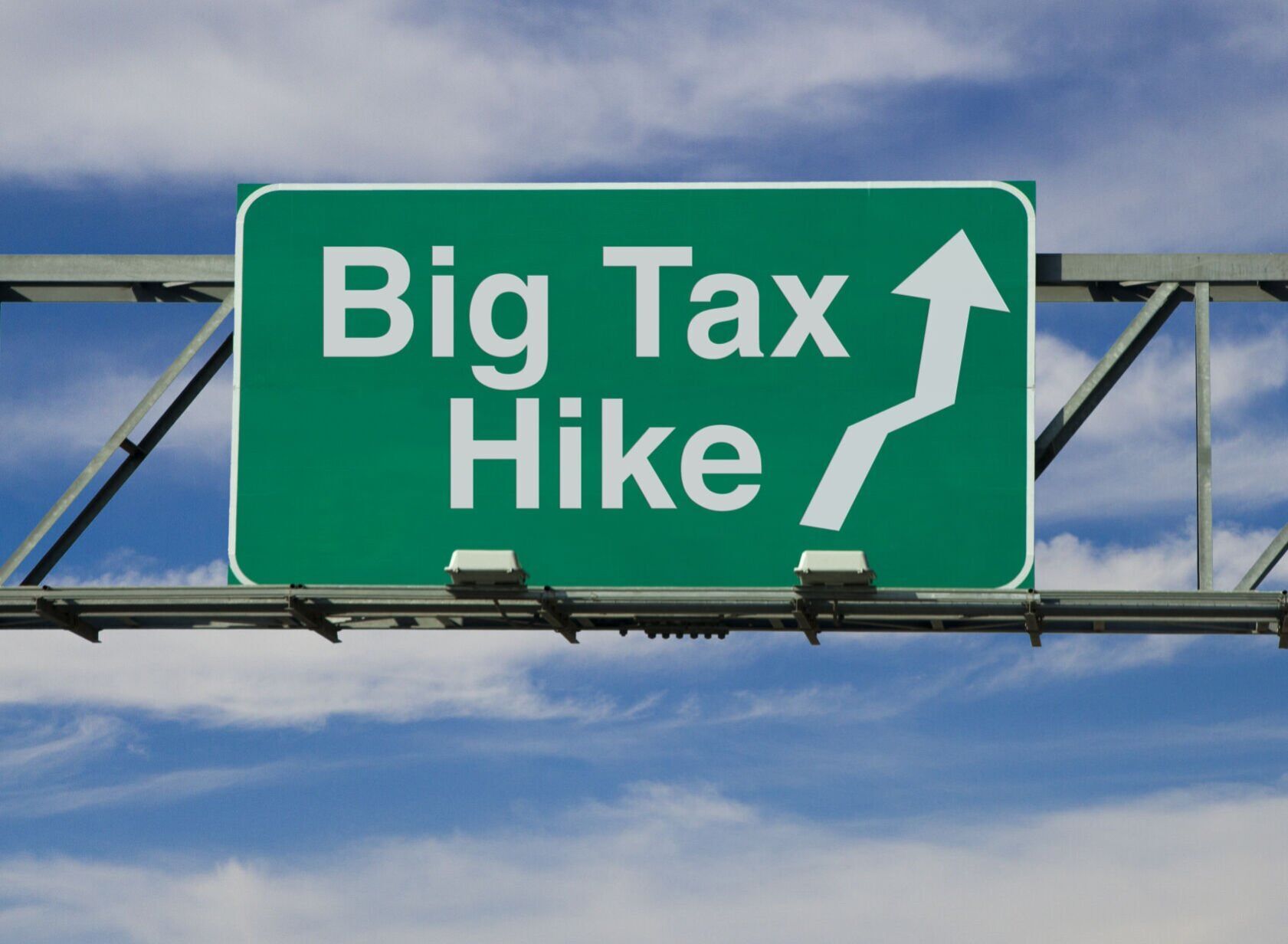
A coalition that has announced plans for an income-tax increase on next year’s statewide ballot cited the findings of its 2023 survey on the subject. Notably, 74% of voters agreed with the statement, “Colorado needs a better tax system that ensures the wealthy pay their fair share and that priorities like schools, transportation and health care have the resources they need.”
Rather than nitpick at such leading, loaded and open-ended wording, let’s cut to the chase: Colorado already has such a tax system.
Everyone pays their fair share under Colorado’s flat tax, currently 4.4%, because it’s the same percentage for all. Which also means the more you earn, the more you pay; 4.4% of $250,000 in adjusted gross income is $11,000; for an income of $75,000, it’s $3,000.
Of course, that’s assuming Colorado needs an income tax at all. It’s a premise challenged by Democratic Gov. Jared Polis, among other income-tax critics. In fact, neighboring Wyoming has no income tax. Neither does Nevada. Nor the nation’s second-most-populous state, Texas.
Yet, the inaptly named Protect Colorado’s Future coalition announced this week it hopes to steer the state’s taxpayers in the opposite direction. The group, representing a familiar assortment of left-leaning causes, plans to ask voters on the 2026 ballot to scrap the state’s simple flat tax and replace it with an array of tax brackets that would raise another $2.3 billion a year the legislature could spend on health care, education, child care and the like.
The proposal would hike the tax rate for higher-income earners. Taxpayers in lower brackets would pay nominally less.
It’s the old gouge-the-rich strategy, long popular on the left — another attempt to appeal to voters through the politics of envy. Whether it will succeed is open to doubt given Colorado’s track record on tax measures.
As we noted here in July regarding earlier inklings of this proposal, Colorado voters have supported limited tax hikes but more often have stiff-armed would-be tax hikers.
There was 2019’s Proposition CC, which asked voters to let the state government keep excess revenue it collected and, purportedly, spend it on transportation and education. Voters soundly rejected it, rightly skeptical the state would spend the money as promised. Voters also nixed Amendment 73 a year earlier; it, too, sought to scrap our flat tax, replacing it with tax brackets to raise money for schools. And then there was 2023’s Proposition HH, which had attempted to lure support with a modest property tax cut while seeking to keep a far larger amount of excess income tax revenue collected by the state. It was trounced by nearly 20 points.
So, the prospects aren’t encouraging for this latest money grab on behalf of our free-spending legislature. That’s just as well.
Michael Fields of the taxpayers-advocacy group Advance Colorado released a public statement declaring, “… the tax hike would chase jobs out of our state, hurt Coloradans and continue to push our revenue down.”
Fields predicted, “If this ill-planned tax hike passes, even more people will leave Colorado, which is the last thing our struggling state needs.”
Indeed, the kinds of high-paying jobs Colorado wants to attract in the tech and other sectors would go to lower-tax states.
Meanwhile, the legislature just concluded a special session to close a budget gap caused by their runaway spending. Giving them another $2 billion-plus would be like handing your car keys and a jug of whiskey to the town drunk.
We’d bet most voters will see it that way, as well.