







Story of late Bill Collins, Colorado’s first Black captain, lives on through Buffs’ family | Buffs Gameday
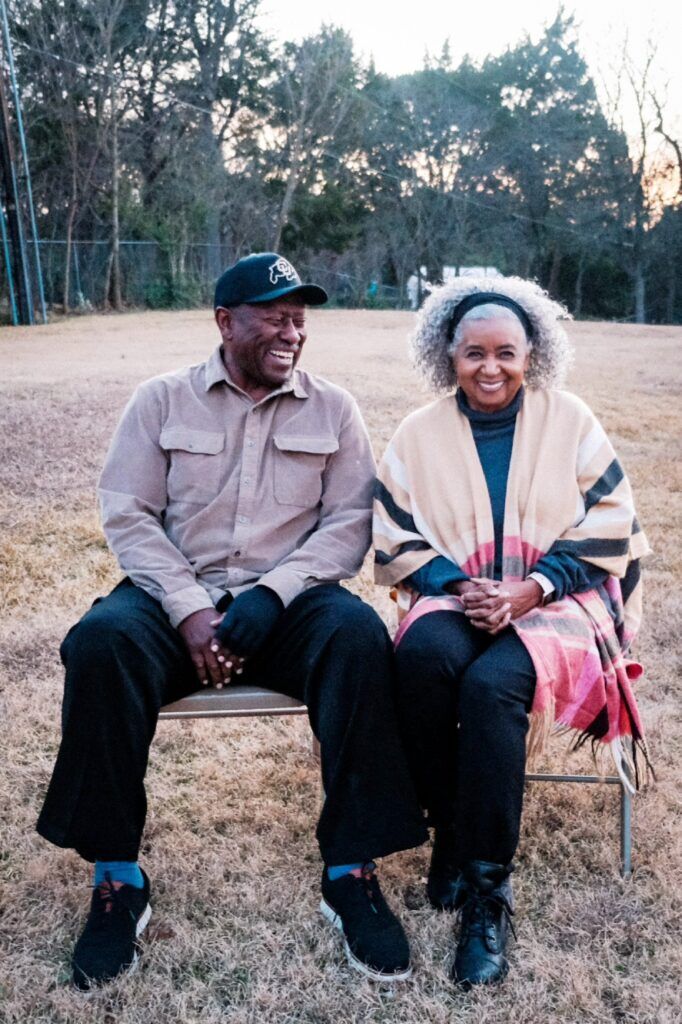
BOULDER — It’s a story that gave Deion Sanders chills the first time he heard it.
It’s one Bobby Anderson and Eric Harris have told countless times throughout their lives. The story of the late Bill Collins is one his wife, Esther, has heard over and over from Bill and others — and plenty more since Bill died July 31 at age 76 after a battle with cancer.
Colorado honored Collins’ life before last Saturday’s game against Delaware. As the Buffaloes head to Collins’ hometown of Houston for Friday’s Big 12 opener, the memory of the program’s first, full-season Black captain remains with them.
“It was such a wonderful experience for all of us,” Collins’ wife, Esther, told The Denver Gazette. “It was bittersweet because the reality is that we were there because my husband is not here, but to be loved and shown so much love by his former teammates and others that did not even know him, it was life changing for his children as well as his grandchildren.”

Collins grew up in Houston and wasn’t recruited by major colleges, so he sent letters to coaches around the country to inquire about earning a scholarship. Two responded, Colorado and Purdue. So, as a 17-year-old who had never left the state of Texas, Collins boarded a train to Denver for the 1966 season, where he joined the Buffaloes as a walk-on member of the freshman team.
Coach Eddie Crowder told Collins he was happy to have him back in a meeting before the team left for winter break, but Collins said he couldn’t afford to come back as a walk-on. He was promptly put on scholarship.

By his senior season in 1969, Collins was one one of seven Black players on the roster and was well-respected enough by his teammates to be voted as the program’s first full-season Black captain, joining future College Football Hall of Famer Bobby Anderson and Mike Pruett.
“We had a great brotherhood and connection with each other and Bill had a lot to do with that,” Anderson told The Denver Gazette. “He was really instrumental in helping us understand the culture and the brotherhood of the Black players, but at the same time, as a captain, he unified all of us together, Black and White. It was at a time in the late ’60s when there was a lot of racial unrest, you might say, in some of the athletic departments all across the country.
“Bill was really a great leader and had this silent strength about him. We want to make a statement and want them to know the brotherhood we have with you is important.”

That racial unrest revealed itself to the Buffs in the Liberty Bowl at the end of the 1969 season. CU traveled to Memphis, 20 months after Dr. Martin Luther King Jr. was assassinated there, to play an Alabama team that had not been integrated.
Collins later said there was a lot of vicious name-calling, including the “N” word, from the Crimson Tide team and the Alabama fans did the same from the stands. It was an environment he said he had never experienced as a kid growing up in Texas.
When the time came for the pregame coin toss, Anderson and Pruett stepped back, allowing Collins to be the sole representative for the Buffs at midfield. Alabama, meanwhile, had over 40 players come toward the middle of the field in an attempt to intimidate Collins and the rest of the Buffs’ Black players.
Anderson said there was never a thought of sending teammates out there to back him up.
“That’s why Bill’s out there,” he said. “We wanted them to know how important he was to us and how important our Black brothers were to us.”
CU went on to win by a final of 47-33.
It’s a story that former teammate and longtime friend Eric Harris, a cornerback who was also one of seven Black players on the team, feels has become increasingly more important to preserve.
“It’s just an example that I can go to and show people and share with people about how you expect to have differences with people, but expect also to be able to work through those differences and there’s a better way to do it other than calling each other names or being disrespectful to one another,” Harris told The Denver Gazette. “Listening to one another and giving each other another chance to be better people than we were before… the lessons learned can be applied to many situations and not just football. It can be applied to working with family, working with communities, working with businesses and individuals.”
That was the last football game of Collins’ career. He spent a few decades back home in Texas working for Xerox, working his way up to an executive before retiring in 2006. Throughout the years, Collins never stopped following the Buffs and could always be spotted repping his alma mater.

He also made it a point to show his family the state that became a second home to him.
“He kept up with them constantly,” Esther said. “His closet, frankly, is filled with Buffs t-shirts, sweatshirts, hats. I mean, his love for Colorado… I can’t even really put it into words. He always wore a Buff hat, even through his sickness, his chemotherapy. It was near and dear to his heart.
“He loved Colorado. He loved the mountains, and he wanted all of his children to see Colorado. His dream and his goal was to take every child to Colorado.”
Last weekend, a good chunk of Bill’s family went to Colorado for the first time since his death. Esther, three of her and Bill’s children and many grandchildren, as well as several former teammates, including both Anderson and Harris, were honored before the game against Delaware.
Just like Bill did nearly 56 years ago, Esther was CU’s lone representative at the coin toss.

“It was a wonderful opportunity for not only myself but several teammates, as well as the family, to be able to get together and demonstrate the love and care that not only Bill had always shown toward the team, but also toward his family and friends,” Harris said.
There were stories told throughout the weekend, including that famous one from the 1969 Liberty Bowl. But there was something different about the latest telling of that famous day in CU football history. There was a new generation eager to hear about it — Collins’ grandchildren. That’s what made the weekend so special for Esther, in particular.
If there’s one thing she’ll always remember from it, it’s what her 19-year-old grandson, Kason, told her.
“I’m going to do better because Papa did.”