







Is Colorado’s craft brew industry on the ropes?
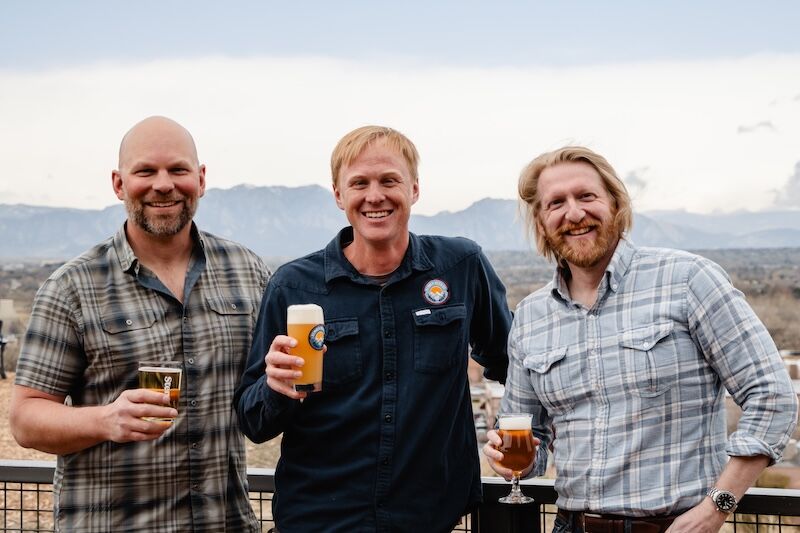
A couple of high-profile metro Denver craft brewery closures in 2025 spurred some worries about the industry’s health.
But industry insiders said while it’s changing for sure — as every growing industry does and there are some concerns with future threats — Colorado’s craft beverage industry remains strong.
Trends the experts noticed that have developed in recent years included consolidation, diversification of product and more breweries expanding and growing in suburban markets.
The Brewers Association reported there are 494 craft breweries “operating or have operated” in Colorado in 2025.
“This is closely aligned with the total brewery counts from 2019-2021,” said Matt Gacioch, staff economist for the Boulder-based association.
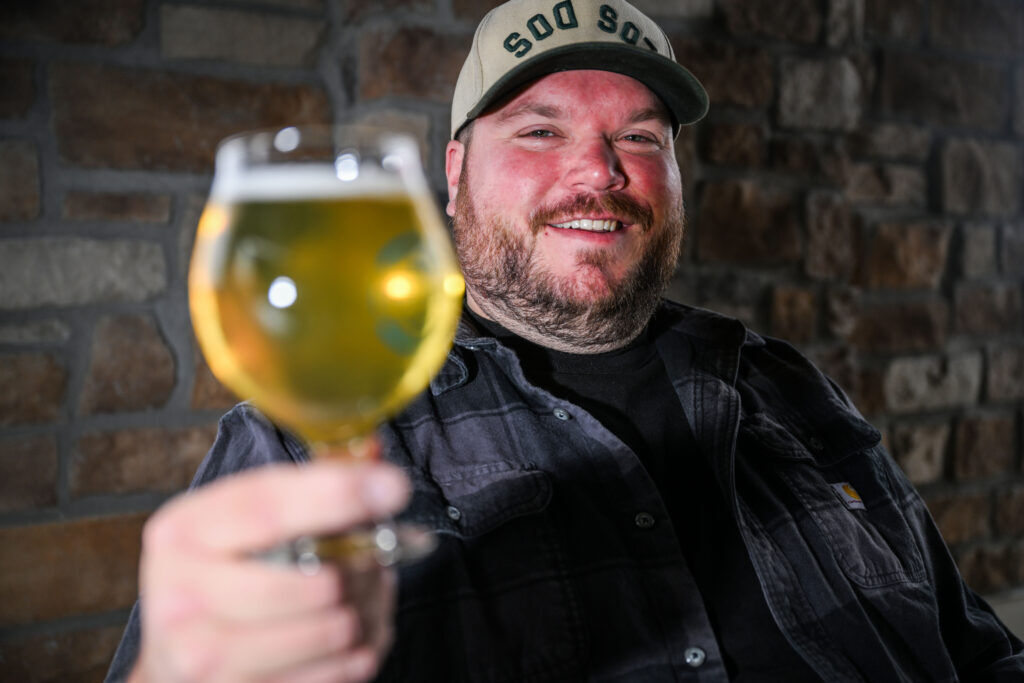
“Brewery closures are far outpacing brewery openings in Colorado so far in 2025 (net -3%), but there tends to be a lot of openings/closing activity at the end of the year,” he said. “So, I wouldn’t expect this figure to necessarily remain through the whole calendar year.”
In 2024, for example, Colorado brewery openings stood at 5% of the total number of breweries, while closings were at 6%.
“This net -1% is in line with the national average,” Gacioch said.
That doesn’t mean it’s not painful for customers who have an emotional attachment to a brand or taproom, such as the three south Broadway favorites that closed this year: TRVE Brewery and Burns Family Artisan Ales.
The list also included Banded Oak Brewing – whose owner told Denver7 it was a combination of rising rents, safety concerns, and a “shifting customer base along Denver’s South Broadway.” It closed Sept. 6 after almost 10 years.
“Each of them closed for different reasons,” said Shawnee Adelson, executive director of the Colorado Brewers Guild. “Things are different than they were five years ago, but it’s not the end of craft beer.”
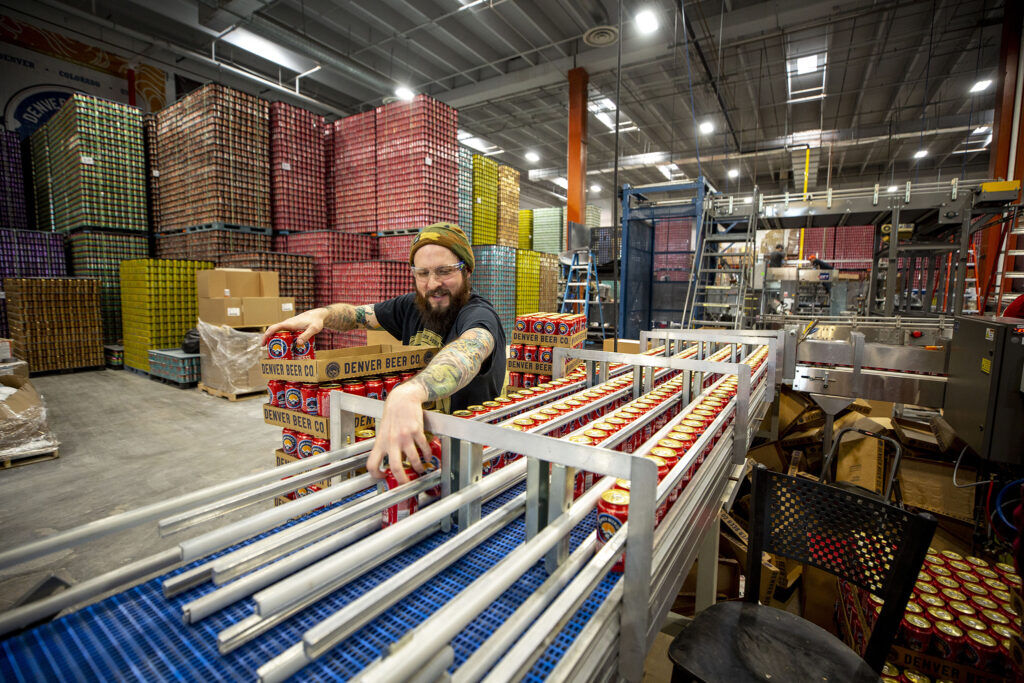
(Courtesy photo, Production at Canworks)
The guild serves to “promote, protect and propel Colorado craft beer,” she said.
“Costs are going up, and that’s for everybody, but for breweries particularly,” Adelson said.
That included rising rents, rising property taxes, aluminum prices for cans spiked by U.S.-China tariffs and — especially for Denver businesses — a minimum wage of $19.29 starting in 2026. That’s one of the highest in the nation.
“Ten years ago, we were seeing so many breweries open, and you think about the lifespan of a lease,” Adelson said. “Most of them are five or 10 years. So, when they renegotiate their lease, that might look very different that it was 10 years ago.”
Adelson noted that many breweries went into Denver’s River North neighborhood “because warehouse space wasn’t very expensive and breweries fit well into warehouses.”
“A lot of breweries went into that neighborhood and a lot of businesses followed,” she said.
Great Divide Brewing Co. was one of those breweries. But it closed its RiNo taproom earlier this year. It sold its Barrel Bar and Packaging Hall as part of a consolidation plan. That’s a recent trend many smaller breweries are turning to — consolidation.
Craft breweries consolidate, while keeping identity
Great Divide became a part of Wilding Brands, a consolidation of beverage companies under one roof created by the owners of Denver Beer Co.
“The craft beverage industry is full of creatives, artists and scientists,” said Charlie Berger, chief development officer for Wilding Brands. “Innovation is part of our DNA.”
Wilding Brands is not yet a year old, but it already has other high profile brands like Stem Ciders, Station 26 Brewing Co. Easyliving sparking hop water, and others.
It opened a production facility in Denver’s Sunnyside neighborhood and a wine and hard cider production facility in Lafayette. Production has ramped up to about 12,000 barrels in Lafayette and about 50,000 barrels of beer in Sunnyside.
“This is an industry that has thrived because we’re not making widgets. Our customers really care, and they always have been invested in these brands,” Berger said. “That’s why people care about the fact that Great Divide is going to remain — and remain local and independent.”
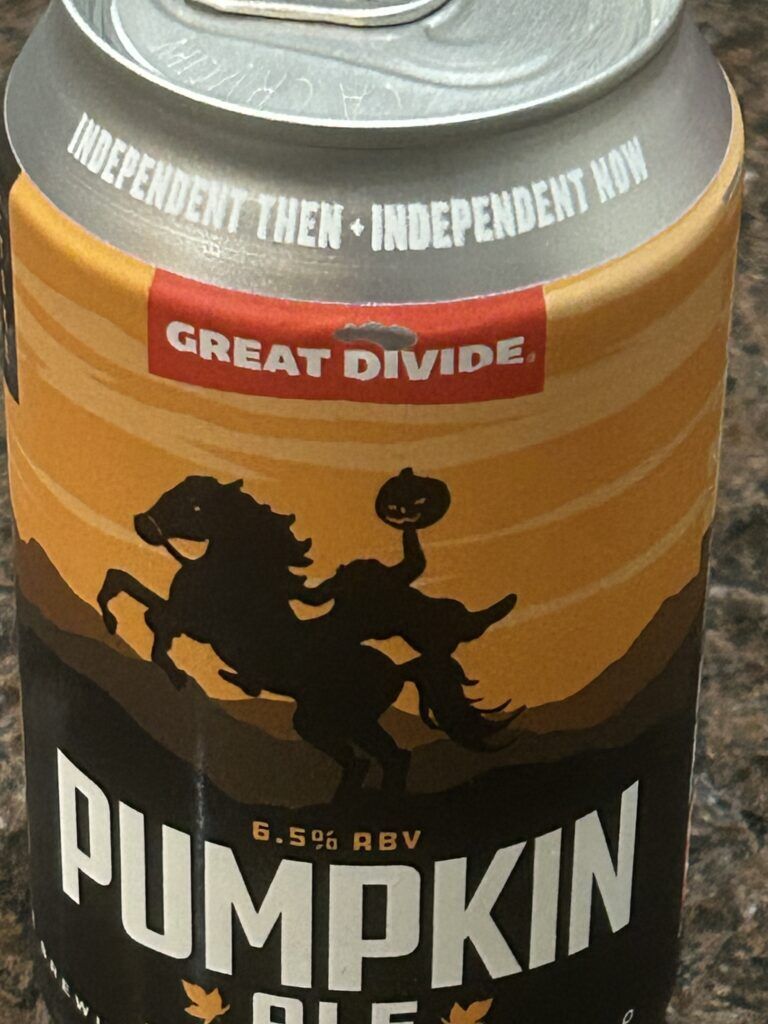
In fact, Great Divide stamps it on all its cans now, including this year’s seasonal release Pumkin Ale with “Independent Then. Independent Now.”
But under the Wilding Brands, the breweries can concentrate on making great beer, while Wilding takes care of production, sales, marketing, research and development.
“As a small brewer, it can be really fun doing it all, but there’s a point at which you bump up against your own weaknesses,” Berger said. “Now, we have great marketing people doing marketing, great sales people doing sales, great accounting people doing accounting.”
“The Station 26 fans should be absolutely stoked that those brands are joining into the Wilding Brands platform because what it allows us to do is really make sure that those brands and those beers are being invested in and the quality is kept high,” he said.
Berger is looking forward to the Brewer’s Association Great American Beer Festival starting Oct. 9 at the Colorado Convention Center, where hundreds of brewers flock to the Mile High City for the three-day event.
“We’re seeing other sorts of conglomerates, or family of brands, like this business model starting to come together around the county and GABF will be a really exciting time to talk to the brewers who are in town to understand how we can maintain that excitement,” Berger said.
Expanding to the ‘burbs
Though Great Divide closed its RiNo taproom, it also opened locations in Lone Tree and Castle Rock. It’s part of a move for many brewers away from downtown Denver and into the suburbs of the metro Denver area.
“The move to the suburbs has to do more with costs and understanding that there’s more people in some of these areas,” the guild’s Adelson said.
The move makes sense when thinking about many of the young adults who grew up watching Colorado’s craft brewery industry in the boom years a decade or 15 years ago are now having families and moving to the suburbs themselves, the association’s Gacioch said.
“Many are still trying to be, and are, actively family friendly,” he said of the suburban breweries. “These folks who have young kids want to socialize, and they want to be safe.”
Wilding’s Berger said comparing the social activity of 2025 to 2017 “is just different.”
“There’s more of a work-from-home mentality, and people work a bit further from the city core,” he said. “We’re definitely having success in these suburban markets.”
Palates evolve
Many said there’s a much greater competition for a beverage consumer’s dollar. That included hard seltzers, ciders, non-alcoholic drinks including hop waters and distilled alcohol.
“Gone are the days when we as brewers were able to kind of tell customers what they should be excited about,” Berger said. “And because customers have diverse palates, they want to try what’s new and different.”
That’s why hardly any one blinked an eye when it was announced GABF, for the first time, will include a distillery booths with bourbon, whiskey, vodkas and gins.
“We haven’t heard a single negative response to including spirits at this years GABF,” Gacioch said. “I think it’s because at this point, breweries are so familiar with either producing or serving across every alcohol category.”
“The landscape for breweries is different and people are either drinking less, or drinking differently,” said Chris Gilmore, director of brewing operations for Los Dos Potrillos Cervecaria.
Los Dos, with Parker and Castle Rock locations, is the first Mexican restaurant and Mexican brewery under one roof in Colorado. It’s flagship beer — or “crown jewel,” as Gilmore described it — is its Mexican lager. Gilmore used to brew for Lone Tree Brewing, which won a GABF gold medal for its Mexican lager in the light lager category in 2017, and three total since.
“It’s great to see everyone making Mexican lagers now. It’s a style that deserves attention,” he said. “But lime does not make a Mexican lager. It’s German pilsner made with corn.”
Of the industry closings, Gilmore said the best have survived.
“No matter what, the cream always rises to the top,” he said. “It’s about authenticity and a true emphasis on quality.”
The Denver Gazette asked longtime brewery Durango-based Ska Brewing Co. — which just celebrated its 30th anniversary last weekend — what’s the secret to longevity in Colorado’s craft brewing industry.
“We’ve always been just small enough that it’s worked in our favor,” said Dave Thibodeau, the co-founder. “We’ve been able to predict the future along the way.”
The brewery peaked at max volume in 2016 with 34,000 barrels produced. It’s now at 28,000.
They were thinking about expanding in 2016, when the whole industry was peaking, but had already done one expansion and decided against doing another. It turned out to be a wise decision, as the government-required COVID shutdowns for businesses hit in 2020 and drove many breweries out of business.
“Wilding and Left Hand (which now distributes Dry Dock Brewing Co. brands) are trying to find unique solutions to a vast and common problem,” Thibodeau said.
Ska, unlike most breweries, has had its own distribution almost since the beginning.
“We’ve distributed Stone (Brewing) and quite a few others, including our own of course,” he said. “It’s been great.”
“Distribution is a numbers game in the sense that you don’t make much money when you distribute, so you have to do a lot of distribution to make it make sense on your books,” Adelson said.
Colorado’s breweries were thrown a new challenge when Colorado law changed to allow full-strength beer and alcohol at grocery stores.
“You can’t afford not to play the grocery store game,” Thibodeau said.
“The increased number of alcohol beverages that are sold through retail, and the competition for shelf space is pretty fierce,” Adelson added. “So, I think that’s one of the threats that we continue to keep an eye on is — how can we make sure that breweries have access to market and a fair playing field?”
Costs rising, consumers more cautious
Though many challenges await the industry as it reshapes itself, the biggest many mentioned is affordability.
“We’re seeing that consumers are being more cautious with their money,” Adelson said.
And craft beer isn’t cheap.
“If people tighten their belts, that’s a real threat,” Wilding’s Berger said. “But we can’t loose too much sleep about that because its not in our control. We think we have great products and we can control the margins by a little bit of scale.”
At a brewery’s core is creating community, they said.
The successful tap rooms do that well.
“If you want your brewery to survive, you’ve got to go visit them,” Adelson said. “You can’t be sad they closed if you haven’t been there in a year.”