








Fort Collins exhibit commemorates history of local Hispanic baseball
By Shen Wu Tan (Special to The Denver Gazette)
FORT COLLINS – “Take me out to the ball game. Take me out to the crowds.”
The 1908 song by Jack Norworth and Albert Von Tilzer, the iconic song of North American baseball sung at every game, lives on more than a century later, immortalized in history.
Betty Aragon-Mitotes, president of Mujeres de Colores (Women of Colors) and a Wellington, Colo., resident, is striving to do the same for the Hispanic baseball players and teams that overcame challenges and helped racially integrate America’s favorite pastime and the communities of northern Colorado.

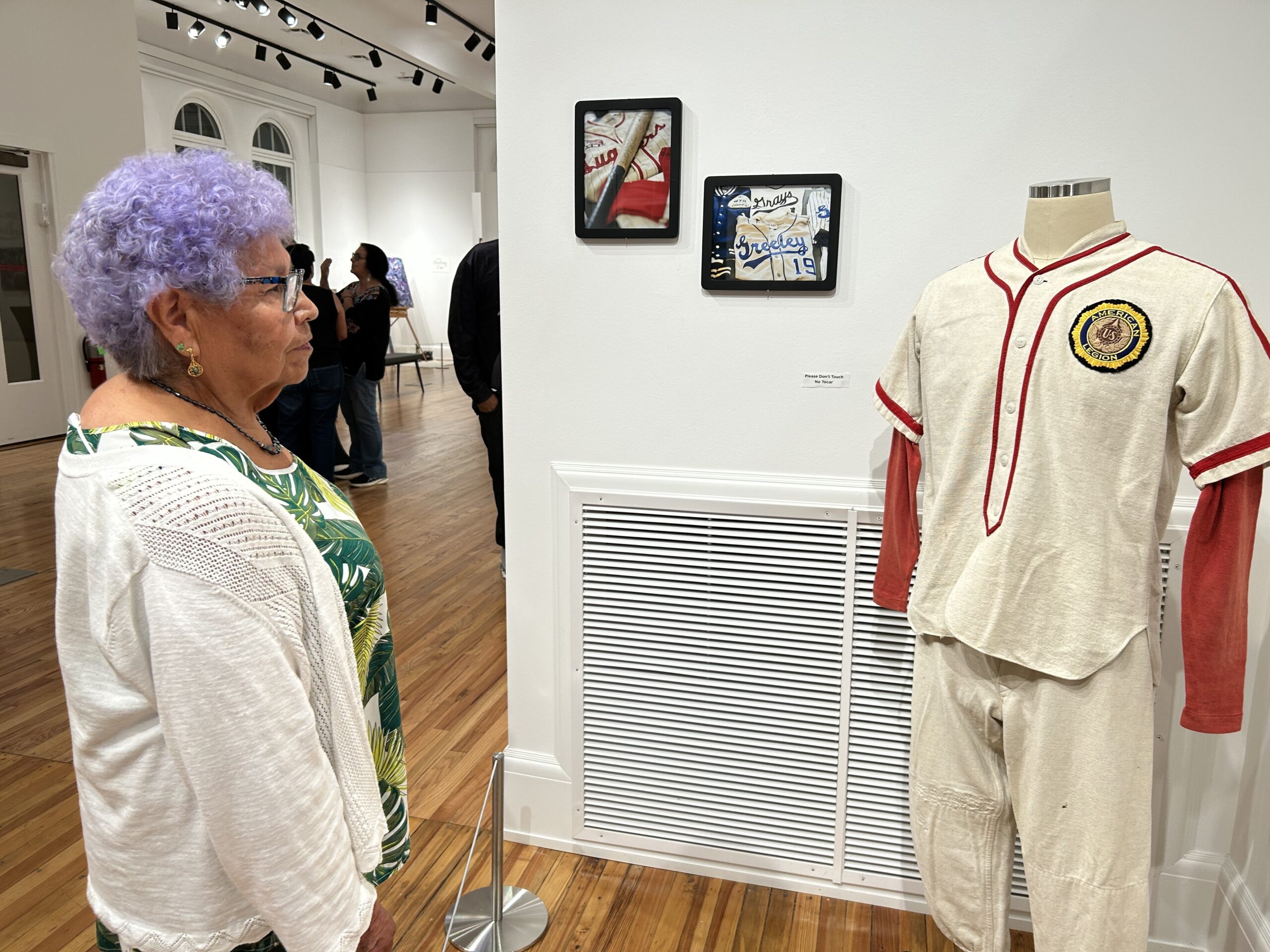
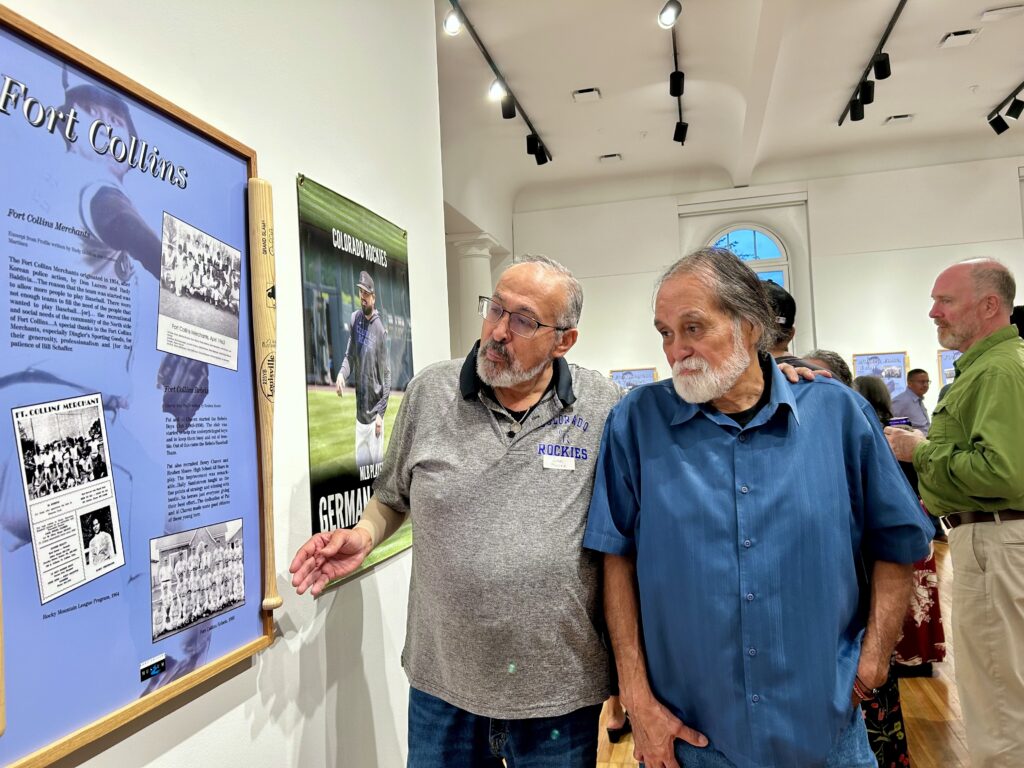
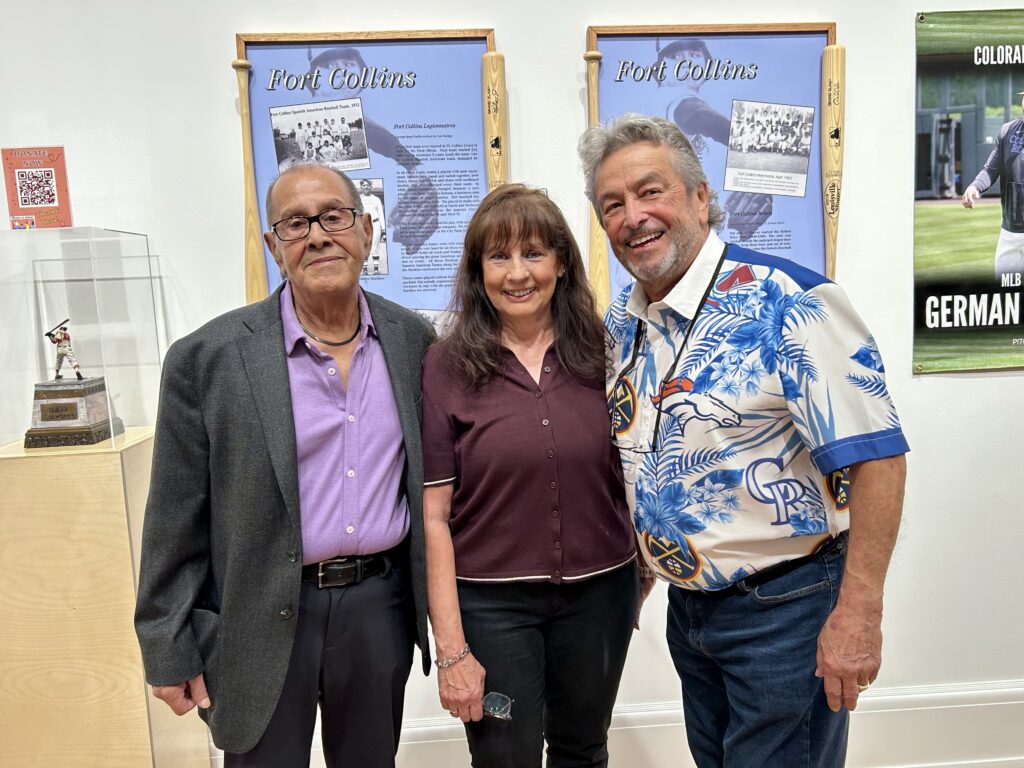
Earlier this month, an exhibit celebrating the history of Hispanic baseball players and teams, an effort spearheaded by Aragon-Mitotes, opened at the Center for Creativity in Fort Collins and will be on display through Sunday, Sept. 28.
“We are preserving the history, the very important rich history of the early Hispanic baseball players and the Mexicans who came out of the [sugar] beet fields and wanted to play ball,” said Aragon-Mitotes. “And this is about educating our community about the contributions and our place in history.”
The exhibit, called “From Sugar to Diamonds” and named after a book written by Jody L. Lopez and Gabriel A. Lopez, primarily highlights the history of early Hispanic baseball teams and players in parts of Colorado, including Fort Collins, Greeley, Erie, Longmont, Milliken, Eaton, and Fort Lupton from the 1920s through the 1960s.
In addition to the exhibit, efforts are underway to designate City Park’s baseball field in Fort Collins, where many of the early Hispanic baseball teams played, as historical and add it to the Colorado State Register of Historic Properties. The nomination of the baseball field was unanimously approved at the Colorado State Register Review Board meeting Sept. 18. The History Colorado Board will review this nomination on Sept. 24.
“The City of Fort Collins values the many ways our community’s history is reflected in the places around us,” said William Bevil, spokesperson for the City of Fort Collins. “We support efforts to recognize historic sites that tell the stories of Hispanic and Latino residents and their contributions to our city’s heritage.”
Aragon-Mitotes has plans to try and erect a baseball monument in City Park as well and eventually produce a full-length documentary about Fort Collins baseball teams that formed between the 1920s through the 1950s, including the Legionnaires and the Merchants.
Kenny Cordova, a former player for the Merchants and Legionnaires who attended the exhibit’s reception on Sept. 12, said: “I come in here and see these pictures and look around, and I’m taken back 60 years.”
He hopes that people take away “the promise of community” from the exhibit.
“If you come and look at this, that’s what you’re going to see. That’s what the community really was back then,” Cordova said. “The way people came together at least once a week, the pride of that, the family, the camaraderie of it all. It was fabulous. And that’s what I want people to see.”
Louis Suniga, another exhibit reception attendee, is a former player of the Fort Collins Legionnaires and the son of Lee Suniga, who was a baseball player, coach, and manager of the Legionnaires baseball team.
“Every Sunday in the summertime, since I could remember, I was involved with baseball,” Suniga said.
“This is really something that should’ve been done a long time ago, and I’m glad there’s a push to make this known for the people that played the game, for the people that watched the game, and for generations that my grandkids’ grandkids might be able to see,” he said of the exhibit. “I’d really like to see a plaque or memorial at City Park recognizing the people who played in those diamonds in the 50’s and 60’s. I’d like to see that.”
Baseball eventually transformed into a “cultural outlet” for many Hispanic laborers and helped foster community identity, according to Colorado State University’s History Matters. Greeley and the Fort Collins’ Tres Colonias – the sugar factory neighborhoods of Alta Vista, Andersonville, and Buckingham – among others formed their own baseball teams and helped break down racial divides characteristic of early games.
Various factors during the early 20th century contributed to the migration of Hispanic laborers to the sugar beet industry in the United States, per CSU’s History Matters. The annexation of Texas in 1845 spurred some migration northward, although more Mexicans departing annexed territories resettled in Mexico. However, after the Mexican Revolution ended in 1920, war refugees and exiles increasingly migrated to the U.S. in search of work and stability. Mexicans also were exempted from immigration policies that capped the number of migrants in the 1920s, allowing U.S. farmers to hire Mexican laborers as temporary workers.
And after a long week in the sugar beet fields, baseball became a weekly respite, often on Sundays, from the labor-intensive agricultural work for many Hispanics.
“It was nice [going to the baseball games],” said Isabelle Martinez, who attended the exhibit reception. When she was a young child and teenager, Martinez said she, her brothers, and parents worked in the sugar beet fields six days a week. But every Sunday afternoon, her mom and dad would take Martinez and her siblings to the baseball games at City Park.
Baseball teams mostly made up of Hispanic players, including the Greeley Grays and one of the Fort Collins teams, the Legionnaires, eventually integrated with white players, assisting with the desegregation of the sport and the different communities.
“They just wanted to be able to play the game and enjoy a Sunday afternoon,” Aragon-Mitotes said. “It was about the community coming together…. It’s possible for us to come together and work together, play together, you know, fight for what’s right together. And it shouldn’t matter what color we are.”

Grateful Dead guitarist Bob Weir dies at age 78
Reuters
reuters@denvergazette.com
Updated 7 hours ago
Veteran rock musician Bob Weir, the Grateful Dead’s rhythm guitarist who helped guide the legendary jam band through decades of change and success, has died at age 78, according to a statement posted to his verified Instagram account on Saturday....

Reuters
Reporter
PIKES PICK: See favorite local art at the airport
Linda Navarro
linda-navarro@denvergazette.com
Updated 6 days ago
Some of the public art enjoyed throughout downtown can now be seen at the Colorado Springs Airport. Sculptures from previous Art on the Streets will be near airport entrances, and see if you can spot new, rotating indoor terminal exhibits....

Linda Navarro
Reporter
Denver Public Library’s new audiobook listening group takes walks at city parks
Stephen Barr
stephen.barr@gazette.com
Updated 1 day ago
Listen up, audiobook fans. Your time has come. Denver Public Library announced an audiobook listening and walking group Thursday. It’s called Audionauts, and it meets quarterly at parks around the city. The group’s first meetup is at Sloan’s Lake from...

Stephen Barr
Reporter
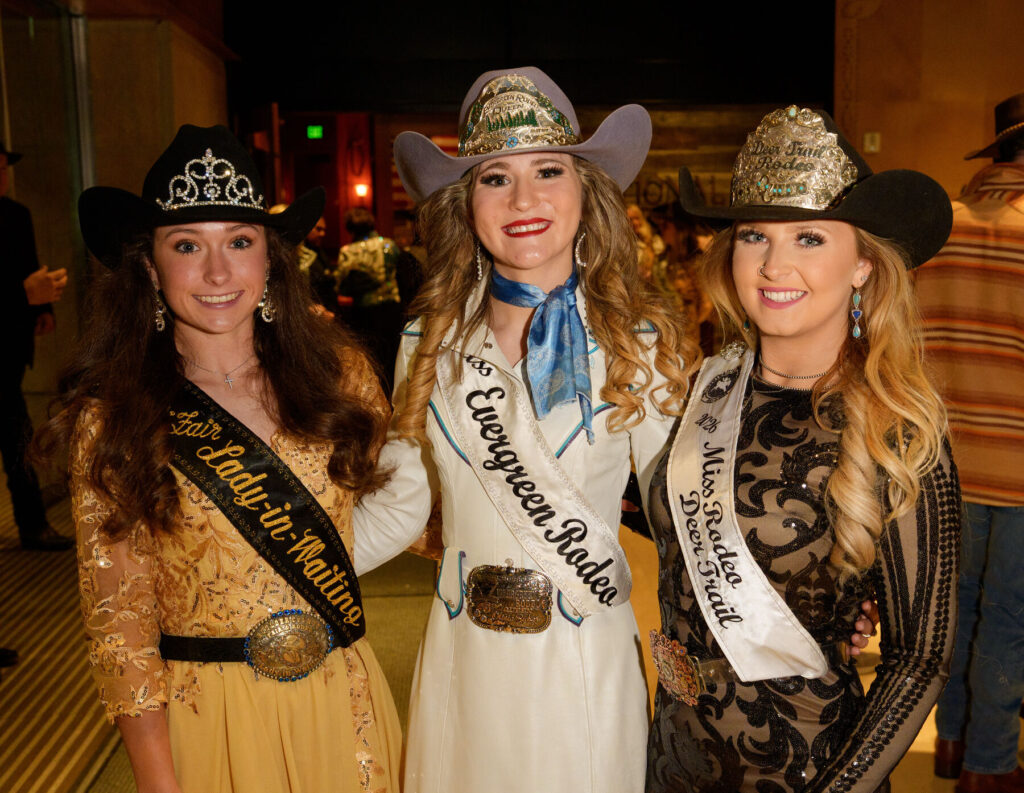
Red Carpet Reception proves new home’s a winner for Coors Western Art Exhibit & Sale | NONPROFIT REGISTER
Joanne Davidson Special to Colorado Politics
joanne-davidson-special-to-colorado-politics@denvergazette.com
Updated 1 day ago
NATIONAL WESTERN STOCK SHOW News: It wasn’t just the art that people were talking about at Thursday night’s Red Carpet Reception for the 34th Coors Western Art Exhibit & Sale. A good number of the 1,000-plus guests were on their first visit to the show’s spacious new location on the...

Denver area events for Jan. 9
Carlotta Olson
carlotta-olson@denvergazette.com
Updated 17 hours ago
If you have an event taking place in the Denver area, email information to carlotta.olson@gazette.com at least two weeks in advance. All events are listed in the calendar on space availability. Friday Shlump — With Shanghai Doom, DirtySnatcha, Chozen, 8 p.m., Ogden Theatre,...

Carlotta Olson
Reporter
Weekend things to do around Colorado Springs and beyond: Dinosaur events, Orchid Showcase, Bird Count, Swan Lake
Linda Navarro
linda-navarro@denvergazette.com
Updated 5 days ago
FRIDAY-SUNDAY A dinosaur weekend for sure. On Friday a program for the mature audience will introduce the rare Theio, the Garden of the Gods Dinosaur. Park Guide Jennifer shares “more of a mystery story than in-depth science lecture.” Theio is...
Linda Navarro
Reporter
Denver area events for Jan. 8
Carlotta Olson
carlotta-olson@denvergazette.com
Updated 3 days ago
If you have an event taking place in the Denver area, email information to carlotta.olson@gazette.com at least two weeks in advance. All events are listed in the calendar on space availability. Thursday RiNo Arts District Food Tour — 1-4 p.m., Denver, $60...
Carlotta Olson
Reporter

Movie rundown for the weekend through Jan. 11: ‘Greenland 2: Migration’ opens
Carlotta Olson
carlotta-olson@denvergazette.com
Updated 2 days ago
OPENING “28 Years Later: The Bone Temple” — (Horror, not rated, 109 minutes). Dr. Kelson discovers something that could change the world while Spike joins Jimmy Crystal’s gang. “Father Mother Sister Brother” — (Comedy, R, 110 minutes). Estranged siblings are...
Carlotta Olson
Reporter
Weekend things to do around Denver and beyond: National Western Stock Show and more
Linda Navarro
linda-navarro@denvergazette.com
Updated 3 days ago
Each Thursday, explore Denver’s essential weekend events curated by The Denver Gazette. Dive into cultural experiences and entertainment delights across the city. Whether you enjoy art galleries, pottery, or outdoor sports, there’s something for everyone in Denver’s vibrant cultural scene....
Linda Navarro
Reporter
Aging-related weight gain in women: It may start earlier in life than you think
Mayo Clinic News Network
mayo-clinic-news-network@gazette.com
Updated 3 days ago
Mayo Clinic News Network JACKSONVILLE, Fla. — Weight gain is common in women during perimenopause and after menopause, but the physical changes underlying it start much earlier in adulthood. Daniela Hurtado Andrade, M.D., Ph.D., an endocrinologist and obesity expert at...

Mayo Clinic News Network
Reporter
PREV
PREVIOUS

Ice Castles to be constructed in 2 Colorado mountain towns this year
The popular Ice Castles attraction will be returning to Colorado this year, with massive frozen wonderlands set to be constructed in two popular mountain towns. Continuing a tradition from last year, one Ice Castle will be built in Cripple Creek. Meanwhile, a second Ice Castle will be constructed in Summit County, in partnership with the […]

$205 million awarded to family of 6-year-old killed at mountaintop adventure park in Colorado
On September 5 of 2021, 6-year-old Wongel Estifanos was tragically killed while riding the Haunted Mine Drop at Glenwood Caverns Adventure Park in Glenwood Springs. More than four years later, a verdict has been reached in a wrongful death lawsuit related to the horrific accident, awarding the family of Wongel around $205 million. A report […]