







Lakewood never had single-family only zoning before changes, city says

Changes being made to Lakewood’s zoning code have raised questions and ire throughout the community, especially when it comes to the city’s single-family residential districts.
Residents have said they want to retain their single-family home neighborhoods.
The city never had single-family only residential zoning, according to Mayor Wendi Strom.
“The city’s current zone districts often associated mostly with single-family homes already allow several of the following uses: duplexes, group homes, accessory dwelling uses, animal care businesses, bed-and-breakfasts, etc. Lakewood doesn’t currently have a zone district where only single-family home use is allowed,” Strom said in a statement following the 9-2 approval of the zoning changes at a City Council meeting on Monday.
But some residents are miffed — and bewildered.
Resident Chris Geissbuhler wrote on the City Council’s website on Sept. 8 that any new zoning that would “force high-density developments into single-family communities would certainly adversely impact property values for residents who bought into those areas with the current and future value of their property in mind.”
The disconnect between residents’ beliefs and what city officials insist are the actual code changes comes down to misinformation, according to Lakewood spokesperson Stacie Oulton.
“Many residents have repeated the information about the city getting rid of single-family only zoning, but that doesn’t make it correct,” she said. “In some cases, the language that residents are using is inflammatory to provoke an emotional response.”
Former zoning versus new
On Monday, the Lakewood City Council approved an amended version of Article 3 of the city’s 2026 zoning code proposal — a 400-page planning document covering residential, commercial and mixed-use site design standards, parking and historic preservation.
The entirety of the new zoning proposal is set to be voted upon before the Nov. 4 election.
The proposal ultimately erases the term “single-family zoning,” which does not appear in the document. Instead, the city uses “residential dwellings.” A residential dwelling could be a single-family home, duplex, tri-plex or townhome.
The new residential districts are broken up into low-form residential and mid-form residential classifications.
Low-form residential will include single-family homes and small-scale attached and detached housing to “support compact, walkable neighborhoods with a range of housing options,” according to the proposal.
Mid-form will include medium-density housing and multi-family buildings.
The updates include combining nine residential uses into three: residential dwellings, accessory dwellings and temporary dwellings, according to Oulton.
The current code has eight different residential districts. Seven allow single-family homes and accessory dwelling units that have met specific standards. Two include permitted uses of duplexes. One includes multi-family dwelling units and attached dwelling units.
All eight districts include permitted use of group homes. Some allow bed and breakfast buildings, cemeteries, day cares and even golf courses.
None are single-family residential use only.
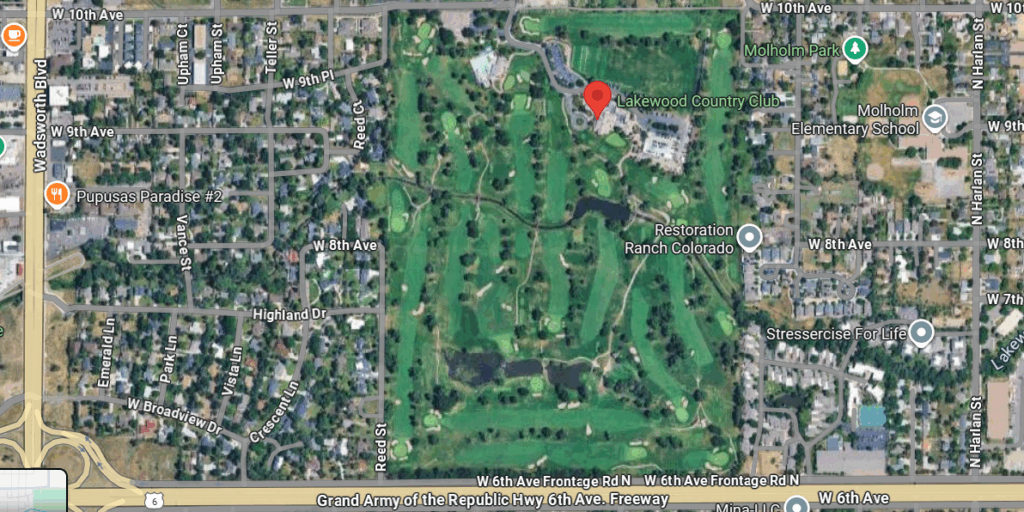
There are a number of group homes in several residential neighborhoods in the city, according to Oulton. There are no cemeteries that she is aware of, but the Lakewood Country Club is in a residential neighborhood in northern Lakewood and a golf course is one of the uses allowed there.
Lakewood is also moving to limit the size of new residential dwellings, cutting the maximum from 18,000 square feet to 5,000 or less. In low-form residential zones, that means residential dwellings would be capped at 4,000 square feet with one or two units, such as a single-family home or a duplex, and 5,000 square feet for three or more units, such as a tri-plex.
The change is tied to a 2024 state law — House Bill 24-1007 — that supersedes Lakewood’s old rule allowing only five unrelated people to share a home. Under one reading of the state law, a very large house could be rented out room by room to dozens of people, sharply increasing neighborhood population.
There hasn’t been a market for massive homes that could be rented out to numerous people, according to Oulton, but the new restrictions will act as a guardrail to avoid the possibility.
“Zoning isn’t about dramatic changes overnight,” she said. “The proposed updates change nothing with single-family homeowners’ ability to live in their current single-family home, sell it, or pass it on. Because of the potential impacts from new state laws, we are actually making the zoning code more restrictive overall.”
A divided city
The opinion on the zoning changes appears to be split.
While there are Facebook groups like Lakewood Is for Everyone garnering petition signatures against the zoning proposal, many have shown up in support at City Council meetings.
The City Council decided in August to break the proposal down into four separate second readings, voting on each section individually to allow for more public input.
At the first meeting on Aug. 25, 33 people spoke in favor of the zoning updates. Eight people spoke against them.
During a nearly eight-hour council meeting on Sept. 8, 22 public speakers testified in favor of the updates, while 22 were against them.
At the Sept. 22 meeting, eight people spoke in favor of the zoning updates, and five people spoke against them.
“I have yet to see a bulldozer. No single-family homes are being destroyed. We are not in a war zone, like it sounds like,” Amber Varwig said during public comments on Sept. 22. “We’re going to lose our seniors and our kids because we don’t have the housing that they need to survive here.”
“Simply cramming in more townhomes or duplexes or apartments everywhere doesn’t guarantee “affordability,” a resident named Regina commented on the City Council’s website on Sept. 7. “It often pushes property values up, strains infrastructure, schools, and roads, and erodes neighborhood character. In other words, creating density in every neighborhood doesn’t magically lower prices. It just densifies chaos, traffic and competition for limited resources.”
The last section of the proposal — the overview of the zoning map — is set to be voted on next month. A meeting regarding the map is currently scheduled for Oct. 13. If it gets final approval, the new zoning document would go into effect next year.


Colorado lawmakers tackle legislation on sexual assault
Jenny Deam
jenny.deam@gazette.com
Updated 8 hours ago
A panel of Colorado lawmakers on Monday unanimously approved a bill that supporters say will offer protections and support to victims of domestic violence, stalking, sex trafficking and sexual assault, including mandatory training for law enforcement on trauma. The measure,...

Jenny Deam
Reporter

Denver adopts face mask ban for law enforcement
Deborah Grigsby
deborah.smith@denvergazette.com
Updated 10 hours ago
Members of the Denver City Council unanimously approved an ordinance Monday that prohibits law enforcement officers, including federal immigration agents, from wearing a mask or face covering while interrogating, detaining, or arresting an individual within Denver, including in city-owned buildings....

Deborah Grigsby
Reporter

More than 20 Colorado counties receive grants to improve land record-keeping systems
Maren Prince
maren.prince@denvergazette.com
Updated 11 hours ago
More than 20 Colorado counties received $2.5 million to improve their land record-keeping systems, according to a Monday news release. The State’s Electronic Recording Technology Board awarded 22 counties with grants ranging from $5,000 to $350,000, according to the release....

Maren Prince
Reporter

Denver among top 5 finalist cities for 2028 DNC
Deborah Grigsby
deborah.smith@denvergazette.com
Updated 12 hours ago
Denver is among the five cities that could host the 2028 Democratic National Convention, the Democratic National Committee announced Monday. Along with Denver, Philadelphia, Atlanta, Boston and Chicago have advanced in the application process to host the next DNC, which...
Deborah Grigsby
Reporter
Colorado Senate swears in Adrienne Benavidez after SD 21 vacancy win
Marianne Goodland
marianne.goodland@coloradopolitics.com
Updated 15 hours ago
Sen. Adrienne Benavidez, D-Adams County, was sworn in Monday to the Colorado Senate, just four days after winning a vacancy election in District 21. She was sworn in by Colorado Court of Appeals Justice Lino S. Lipinsky de Orlov. Usually,...

Marianne Goodland
Reporter

Colorado Senate swears in Adrienne Benavidez after district vacancy win
Marianne Goodland
marianne.goodland@coloradopolitics.com
Updated 14 hours ago
Sen. Adrienne Benavidez, a Democrat from Adams County, was sworn in Monday to the Colorado Senate, just four days after winning a vacancy election in District 21. She was sworn in by Colorado Court of Appeals Justice Lino S. Lipinsky...
Marianne Goodland
Reporter

Aurora, Holmes reach settlement in First Amendment lawsuit
Kyla Pearce
kyla-pearce@denvergazette.com
Updated 11 hours ago
Aurora officials and activist MiDian Holmes (Shofner) announced a settlement Monday in a First Amendment lawsuit filed by Holmes almost a year ago. The lawsuit claimed the decision by Aurora City Council members to end public comment pending a decision...

Kyla Pearce
Reporter

Denver mayor says his commute time tripled following ‘road diet’ change
Mark Samuelson
mark-samuelson@denvergazette.com
Updated 13 hours ago
Mayor Mike Johnston is pushing back sharply against the claim by Denver councilmembers and bike activists that the city succumbed to lobbying pressure in revising a “road diet” plan for East Alameda Avenue, while noting that his own commute time...

Mark Samuelson
Reporter

Rural legislators, Colorado farmers defeat pollinator bill backed by Gov. Polis
Marianne Goodland
marianne.goodland@coloradopolitics.com
Updated 14 hours ago
A proposal to limit the use of neonicotinoid-coated crop seeds collapsed in the Senate Agriculture and Natural Resources Committee last week, as rural lawmakers, including two Democrats, joined Republicans to reject what they called an expensive, impractical mandate on farmers....
Marianne Goodland
Reporter

Competing overtime bills for agriculture workers split Colorado Democrats
Marianne Goodland
marianne-goodland@denvergazette.com
Updated 18 hours ago
Competing bills setting the overtime threshold for farmworkers have split legislators at the Colorado state Capitol, with one group saying a law passed in 2021 has harmed, rather than helped, farming operations and workers alike, while the other side insists...

Marianne Goodland
Reporter
PREV
PREVIOUS

Volunteers give a makeover to Tiny Town’s century-old miniatures
When Dale Fischer’s grandkids returned from a class trip up to Tiny Town last month, they gave their granddad a mixed review on the century-old miniature municipality. The little town and its scaled-down railroad line off U.S. 285 in the foothills above Morrison were lots of fun, they reported, but the place was in bad […]

No cuts to trash or snow removal, but some Denver services may slow in 2026
There will be no cuts to solid waste collection or snow removal, and active funded projects will keep moving forward, Denver Department of Transportation and Infrastructure Director Amy Ford told the City Council on Friday as she laid out her 2026 budget. However, Ford said, with citywide budget cuts and staff reductions underway, residents will […]