







Jose Barco, an Iraq War and Fort Carson veteran, loses deportation fight
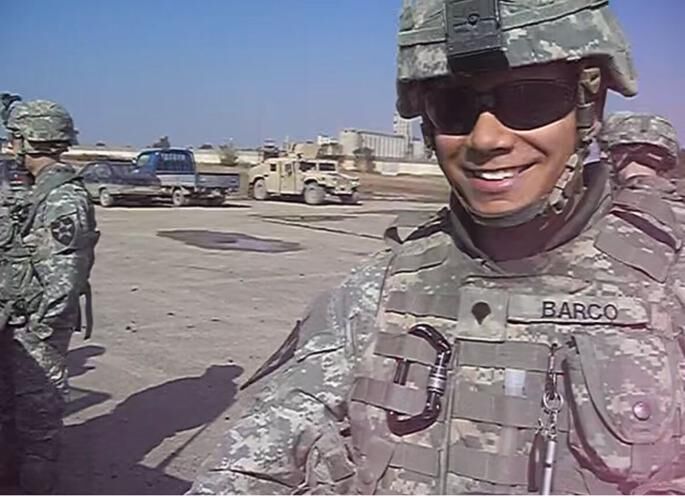
Jose Barco has lost his nine-month-long fight to avoid deportation.
Immigration judge Tyler Wood denied each of Barco’s five motions for relief, including an application for asylum, and ordered the U.S. veteran to be removed in a 10-page ruling released on Thursday.
Wood did not stipulate an exact date for Barco’s deportation, but his attorney, Kevin O’Connor, said the removal process could start any day.
Barco’s venture in immigration limbo gained national attention because he is a decorated Iraq War veteran whose heroism during two tours was tarnished upon his return to Fort Carson, when he shot a pregnant woman in the leg.
In October 2009, he was convicted of attempted murder and sentenced to 52 years but was released from prison after 15 years.
After Barco served his time for his crime, he was apprehended by Immigration and Customs Enforcement the day he was released on parole from prison in Canon City on Jan. 21, 2025.
Since that day, Barco, a Venezuelan citizen who has lived in the United States since he was 4, has been fighting to block deportation.
In the last month, the Department of Homeland Security listed three possibilities for where he could end up — Venezuela, Cuba, or Mexico. At this time, a decision on a final destination has not been made but Venezuela was at the top of the list.
During a two-and-a-half-hour immigration hearing last month, Barco pleaded his case, saying that facing possible extra time in a cell in a foreign country, especially Venezuela, “would be the worst thing that could happen to me.”
He testified that as an American soldier whose case has had plenty of publicity, there is a chance of “no one hearing from me again.”
That hearing happened on Aug. 11. On Thursday, Wood’s ruling showed that the judge was not convinced.
Wood said that Barco had not “met his burden to show that it is more likely than not that he would face harm amounting to torture” if he ends up in Venezuela, Cuba or Mexico.
Barco’s family said that he has not decided whether to appeal the decision, adding that his detention in rooms that are often crowded and loud has exacerbated his PTSD and TBI symptoms.
“Obviously, he (the judge) doesn’t give a damn that other veterans who have been detained have been in danger either,” said Tia Barco, his wife, in an exclusive interview with The Denver Gazette. “We are devastated.”
The ICE website shows Barco’s status as “in ICE custody.”
At the time of this writing, ICE had not responded for a request for comment. The spokesperson for the Denver region is in Chicago.
Citizenship status
Barco is a man without a country.
His father was a political dissident in Cuba and fled to Venezuela in 1982 as a refugee. Barco was born in the South American country three years later and his family again relocated in 1990, this time to the United States, to escape escalating crime.
Barco’s birth certificate from Venezuela is invalid. Even though he is a convicted criminal, he has permanent resident status in the U.S., better known as a green card. His green card expired while he was in prison.
Danitza James, president of Repatriate Our Patriots, said that he could reapply.
A temporary legal resident alien card was distributed to his family by the U.S. when they first arrived as refugees. Later, his family status was adjusted to legal permanent resident.
Barco applied for U.S. citizenship in 2006 between his two Iraq War tours, but although the U.S. Citizenship and Immigration Services received the documents, they were never processed.
His second and final Iraq tour during the “surge” ended in December 2007 and, four months later, his life took a turn when he decided to attend a party in Colorado Springs.
When it came time for his first chance at parole, he expressed remorse for the 2008 shooting to his parole board, explaining that he had “learned self awareness.”
He had been eventually re-sentenced down to 40 years from the original 52 by 4th Judicial District Judge Larry Schwarz. He spent his prison time helping other inmates earn their GEDs and was released on Jan. 21, 2025 — the same week that President Donald Trump was sworn in.
The Trump administration immediately set into motion what the president promised on the campaign trail — a crackdown on illegal immigration with a special emphasis on individuals convicted of crimes.
Since January, Barco’s family and a band of dozens of his Army brothers have navigated an immigration legal system.
In February, when he was targeted for deportation, Barco was transferred nine different times, including one trip to Honduras when Venezuelan immigration officials turned him around because of what they called a “fake” Venezuelan passport.
Barco was sent back to Denver from where he was being held in Alexandria, La., but not before a pit stop, in which he flew alone on a commercial jet that was sent to New Jersey to pick up a new batch of recently arrested immigrants illegally staying in the U.S.
Wood is Barco’s third immigration judge in nine months.
Since January, Tia Barco said she has had “endless nights of anxiety” but that Thursday’s ruling has turned restlessness into a state of numb disbelief.
“This feels like the country he fought and almost died for has left him behind,” she said. “I hope he can live out the rest of his life in peace.”