







EDITORIAL: Locals need a say in community development
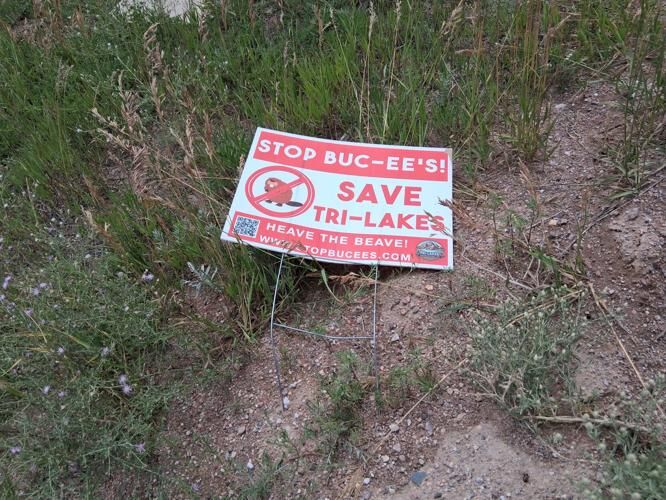
A small-town tussle over plans for Colorado’s second Buc-ee’s — on I-25 along the Palmer Divide, between Denver and Colorado Springs — has mushroomed over the past half year into a statewide debate that has drawn in wide-ranging stakeholders and even political luminaries.
The controversy could be resolved as early as today, when the Palmer Lake Board of Trustees is scheduled to vote on a much-debated proposal to annex and zone land that would accommodate one of the Texas-based chain’s Texas-sized travel centers.
The project’s future is now very much in doubt — and the takeaways from the saga have implications for many Colorado communities navigating growth and development.
The town’s planning commission recommended against the annexation last month following a local outcry and months of back-and-forth over the development. The commission majority cited conflicts with Palmer Lake’s master plan, depleting groundwater in the area and encroachment on nearby open space among the reasons for their opposition.
Local community members, meanwhile, successfully pushed for a recall election in which two Board of Trustees members who had supported the development were ousted and replaced with two who opposed it. And in the same election, Palmer Lake voters passed a new ordinance requiring the annexation, and any in the future, to be put to a public vote.
Alongside it all, some of the state’s notables, including top politicos, have weighed in against the project. Gov. Jared Polis and Colorado U.S. Sens. Michael Bennet and John Hickenlooper, sent a letter to Buc-ee’s CEO Arch Aplin urging him to reconsider the planned location because of its impact on nearby conservation areas. Former Colorado Springs Mayor John Suthers didn’t hold back, either, in a recent published commentary, noting in part, “Palmer Lake’s land grab would let the town capture whatever ostensible revenue Buc-ee’s generates while dumping all of the inevitable downsides — traffic, noise, pollution and light — on citizens in unincorporated El Paso County who have no voice whatsoever in Palmer Lake elections.”
Their concerns have merit.
So, of course, did concerns raised by advocates for the proposal, notably that it offered a way to raise tax revenue for the cash-strapped town. The Gazette’s editorial board acknowledged that pressing need in initially supporting the development.
But given the compelling case that has been made since then by informed voices against the proposed development and annexation, on the balance, its drawbacks outweigh its merits.
The upshot is the project’s prospects are dimming as a newly realigned Board of Trustees votes on the proposal. Even if it were to pass, the proposal subsequently would have to face a public vote under the newly adopted law, and by all indications, the citizens would vote no.
At this point, that would be just as well. In the light of many reasonable objections to the proposal, it would be unsurprising if it passed muster either with the Board of Trustees today or, subsequently, if it were put to a vote of the town’s citizens. Their rejection would give the town a chance to heal, move on, and explore other options for enhancing its revenue base.
More broadly, the citizens of Palmer Lake have provided a worthy lesson for our entire state in civic engagement — and a reminder that a community’s residents must be at the table in charting a course for community development. It can be reasonable and necessary to hold a public election on major land-use decisions, like annexation or adopting new zoning codes, that fundamentally affect a community’s quality of life as well as its budget and governance.
The lesson for the rest of the state ultimately isn’t a judgment on Buc-ee’s or any other business. It’s about heeding the people’s will on such decisions. Let’s hope our state’s elected leaders study the developments in Palmer Lake and take heed.