







Supreme Court is skeptical of Colorado’s ‘conversion therapy’ ban
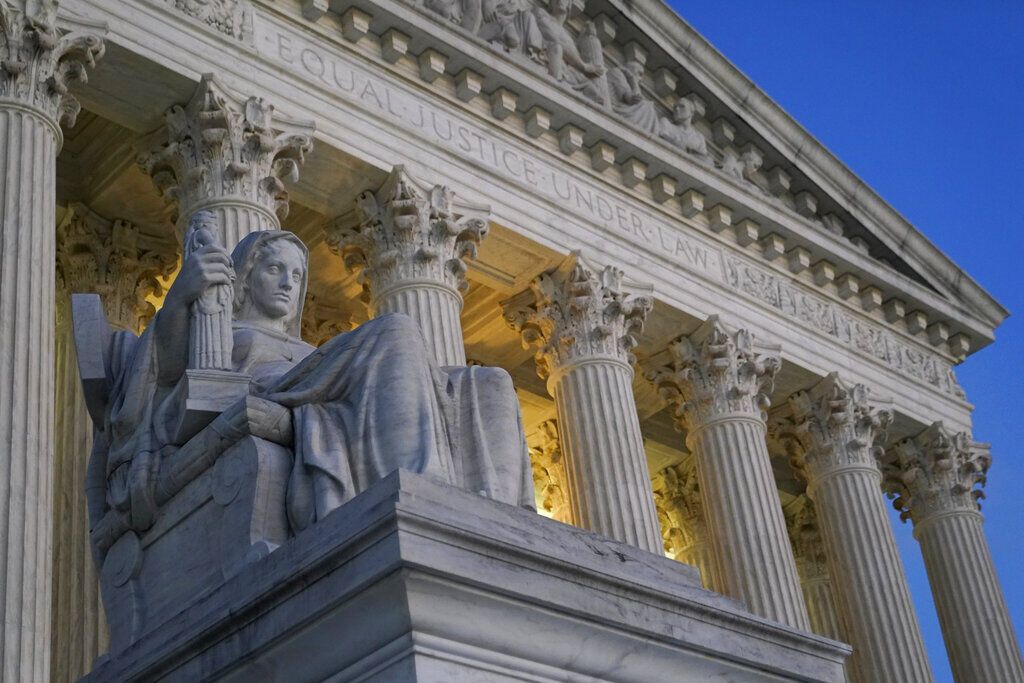
Supreme Court justices grilled lawyers for Colorado on Tuesday over the state’s argument that counselors giving talk therapy should be subjected to the same medical regulations as doctors and therefore do not accrue First Amendment protections.
In Chiles v. Salazar, the justices heard a case involving Kaley Chiles, a licensed counselor in Colorado, who claims that the state’s law banning “conversion therapy” unlawfully censors her ability to speak with children and families who seek her out by prohibiting her from trying to dissuade the minors from changing their gender identities or sexual orientations.
Chiles argued that the law violates her free speech rights, while Colorado defended it as regulating healthcare — a contention the justices appeared skeptical of during oral arguments.
Justice Clarence Thomas opened the questioning of Colorado Solicitor General Shannon Stevenson by asking why licensed counselors, such as Chiles, are subject to the restrictions, while ministers and life coaches are not.
“It is the relationship between a healthcare provider and the patient that establishes this special context,” Stevenson said. “If you go to a life coach, or you go to someone else, they’re not licensed by the state, you’re not expecting them to be complying with standards of care. You have a different expectation.”
Justice Elena Kagan later questioned Colorado’s argument in favor of holding counselors offering talk therapy and doctors offering medical advice to the same standards.
“When you’re going to see a licensed healthcare professional, who owes you fiduciary duties, your expectations are different,” she added. “You’re expecting information that is complying with the standard of care and not expecting the practitioner to just be exercising their right to say whatever they want to say.”
“Are you saying that there’s no distinction between what we’re dealing with here and the range of things that a doctor can tell you in her office about what kind of care is appropriate for any particular condition?” Kagan asked — to which Stevenson responded that, in Colorado’s view, there is not “any distinction.”
Justice Samuel Alito also said the Colorado law “looks like blatant viewpoint discrimination.”
Justice Ketanji Brown Jackson questioned why the Colorado law should be struck down while the court upheld a different measure from Tennessee that bans transition-related treatments for transgender kids.
“I’m just, from a very, very broad perspective, concerned about making sure that we have equivalence with respect to these things,” she said.
The Justice Department countered that Tennessee’s law is different because it involves medical treatments, rather than conversations between a patient and their therapist.
Tuesday’s case marked the first major arguments of the new term. Other significant cases include challenges to President Donald Trump’s tariffs policy and race-based redistricting. The court is also expected to hear a case this term over which sports teams transgender athletes can join.
Chiles contended her approach is different from the kind of conversion therapy once associated with practices like shock therapy decades ago. She said she believes “people flourish when they live consistently with God’s design, including their biological sex.”
Her attorneys argued the Colorado ban makes it difficult for parents to find a therapist willing to work on gender identity — unless the counseling specifically affirms transition.
“Ms. Chiles is being silenced, and the kids and families who want her help are unable to access it,” said attorney James Campbell.
Violating the law carries potential fines of $5,000 and license suspension or even revocation.
As defined in a 2019 Colorado law, “conversion therapy” is a practice or treatment by a licensed physician aimed at changing a person’s sexual orientation or their gender identity, or to otherwise eliminate feelings of attraction toward members of the same sex.
In late 2022, a trial judge declined to grant a preliminary injunction blocking the law. U.S. District Court Judge Charlotte N. Sweeney found the state was within its rights to prohibit specific treatment by those who obtain a professional license.
Last year, by 2-1, the U.S. Court of Appeals for the 10th Circuit agreed the law is a regulation on professional conduct that only “incidentally” affected speech. Meanwhile, the dissenting judge, Harris L Hartz, believed the state is effectively regulating Chiles’ speech and cast doubt on the scientific consensus against “conversion therapy.”
It’s not the first Colorado case implicating religion, speech and LGBTQ issues that has been litigated before the U.S. Supreme Court.
The case Masterpiece Cakeshop involved a Christian baker who refused to make a wedding cake for a same-sex couple. The Supreme Court didn’t answer the question of whether Colorado’s non-discrimination law unconstitutionally infringed on the baker’s exercise of his religious beliefs.
In another case, 303 Creative, the court addressed whether a Christian website designer could decline to create wedding websites for same-sex couples and advertise that restriction accordingly. The majority determined the plaintiff’s expressive activity is protected by the First Amendment.
The Arizona-based legal organization that litigated those cases is also litigating Chiles.
The high court is expected to release its decision in Chiles sometime before the end of June 2026.


Vision Zero: As Denver doubles down, fatalities keep climbing
Mark Samuelson
mark-samuelson@denvergazette.com
Updated 5 hours ago
A decade ago, Denver became one of many U.S. cities to adopt a bold, new model of traffic safety — one that envisioned an end to the hundreds of serious injuries and dozens of fatalities that plague the streets each...

Mark Samuelson
Reporter

Colorado attorney general joins lawsuit against Trump energy emergency order
Scott Weiser
scott-weiser@denvergazette.com
Updated 5 hours ago
Colorado Attorney General Phil Weiser joined a multistate lawsuit challenging an executive order invoking the National Emergencies Act that President Donald Trump issued on the day of his inauguration. The order fast-tracks fossil fuel projects by bypassing or shortening environmental...

Scott Weiser
Reporter

Colorado’s federal judges slash motions backlog to lowest in years
Michael Karlik
michael-karlik@denvergazette.com
Updated 7 hours ago
Colorado’s federal trial judges collectively had 37 motions in civil cases that had been sitting on their dockets for at least six months without a ruling, as of Sept. 30. That is the smallest backlog the state’s U.S. District Court...

Michael Karlik
Reporter
Family of man fatally shot by DougCo deputy files wrongful death lawsuit
Michael Braithwaite
michael.braithwaite@gazette.com
Updated 7 hours ago
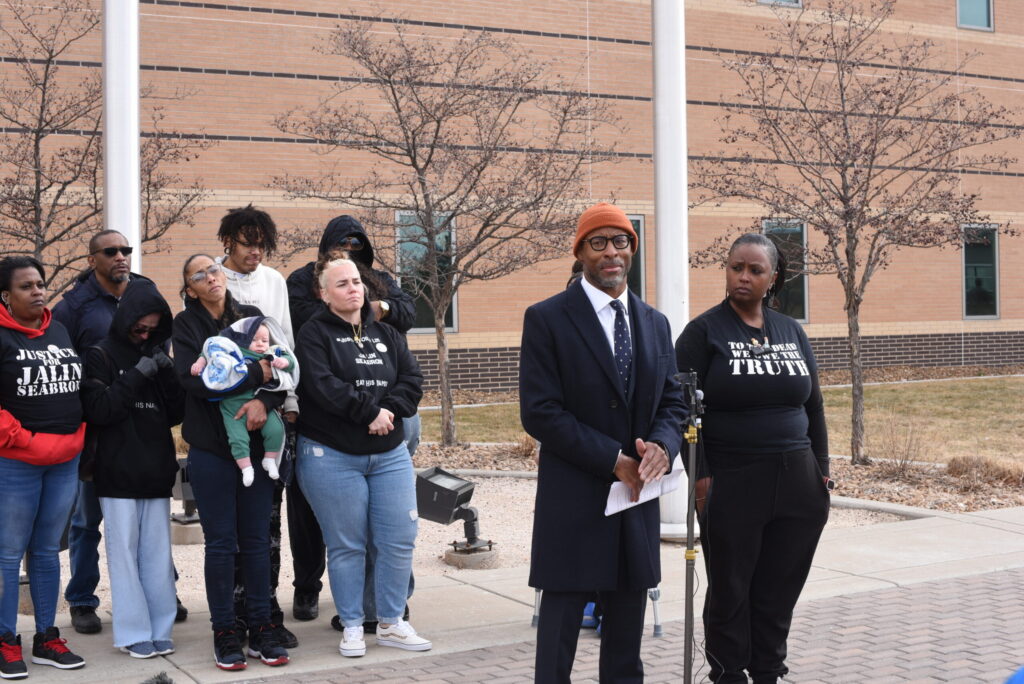
The family of a man who was fatally shot by a Douglas County Sheriff’s Office deputy while legally armed filed a wrongful death lawsuit against both the deputy and the department. Tyrone Glover, an attorney representing the family of Jalin...

Michael Braithwaite
Reporter

Second suspect sentenced in 2022 fatal Lakewood apartment fire
Sage Kelley
sage.kelley@denvergazette.com
Updated 6 hours ago
The 15-year-old boy charged with murdering a mother and daughter in an apartment fire years ago was finally sentenced last week. Jefferson County District Judge Lindsay VanGilder sentenced the juvenile to a maximum sentence of seven years in the Colorado...

Sage Kelley
Reporter
Colorado Supreme Court to review child custody decision
Michael Karlik
michael-karlik@denvergazette.com
Updated 7 hours ago
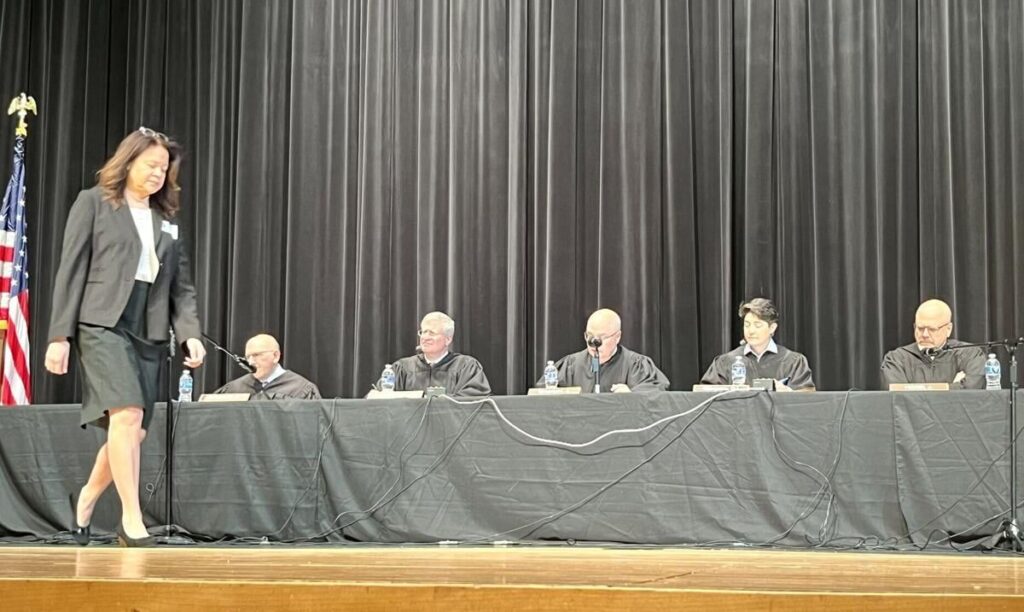
The Colorado Supreme Court announced on Monday that it will review whether the state’s second-highest court described the correct framework for deciding whether to terminate a parent’s legal rights over a child. At least three of the court’s seven members...
Michael Karlik
Reporter
Colorado justices reject defendant’s claim of race-based murder prosecution
Michael Karlik
michael-karlik@denvergazette.com
Updated 1 day ago
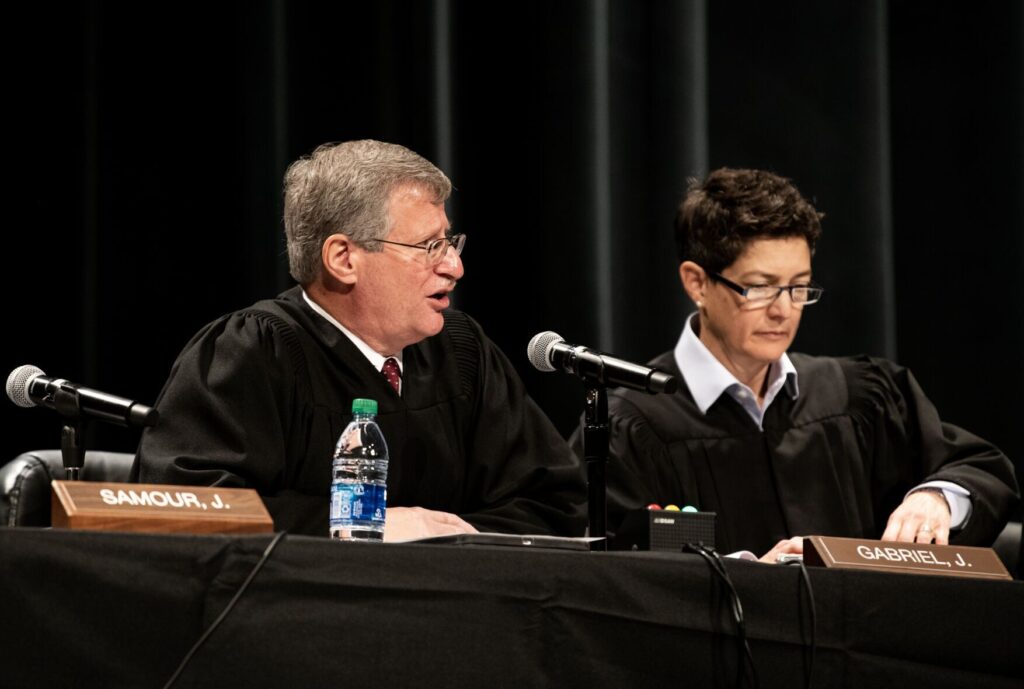
The Colorado Supreme Court rejected a convicted defendant’s argument on Monday that Arapahoe County prosecutors unconstitutionally singled out him and another Black teenager for murder prosecutions as adults, while offering lenient plea deals to their two non-Black co-defendants. Lloyd Chavez...
Michael Karlik
Reporter
Colorado justices find portion of anti-SLAPP law unconstitutional
Michael Karlik
michael-karlik@denvergazette.com
Updated 2 days ago
The Colorado Supreme Court ruled on Monday that a 2019 law designed to protect the exercise of First Amendment rights conflicts with the state constitution in certain scenarios involving appeals from county courts. Known as the “anti-SLAPP” law, which stands for...
Michael Karlik
Reporter

Jeffco counselor pleads guilty on sexual assault charge
Sage Kelley
sage.kelley@denvergazette.com
Updated 1 day ago
A Jeffco Public Schools counselor pleaded guilty to a sexual assault charge Monday morning following a multitude of delays. Chloe Castro — standing next to her defense attorney, Marshall Breit — pleaded guilty to one count of sexual assault on...
Sage Kelley
Reporter

Federal judge green-lights excessive force trial against Fort Collins officers
Michael Karlik
michael-karlik@denvergazette.com
Updated 4 days ago
A federal judge concluded last week that a jury will need to resolve whether two Fort Collins police officers violated a man’s constitutional rights by using excessive force after he refused to accept a citation. In a Jan. 21 order,...
Michael Karlik
Reporter
PREV
PREVIOUS

Roybal-Smith denied bail in connection with Aurora double homicide
A man accused of fatally stabbing two men over 100 times in Aurora in late June was denied bail by an Adams County Judge Tuesday afternoon. Ricky Roybal-Smith, 38, was arrested by Denver police in connection with a hit-and-run crash while under the influence of drugs on June 29. Investigators later named him the suspect […]

Denver area events for Oct. 8
If you have an event taking place in the Denver area, email information to carlotta.olson@gazette.com at least two weeks in advance. All events are listed in the calendar on space availability. Wednesday All Shall Perish — With Desmadre, Girl of Glass & Torture Hammer, 6:30 p.m., The Oriental Theater, 4435 W. 44th Ave., Denver, $36.40 and up. Tickets: […]