







From Fast Food to Semiconductor Manufacturing: Tracking One Apprentice’s Career Path at TSMC Arizona
The Denver Gazette newsroom and editorial staff were not involved in the creation of this content.
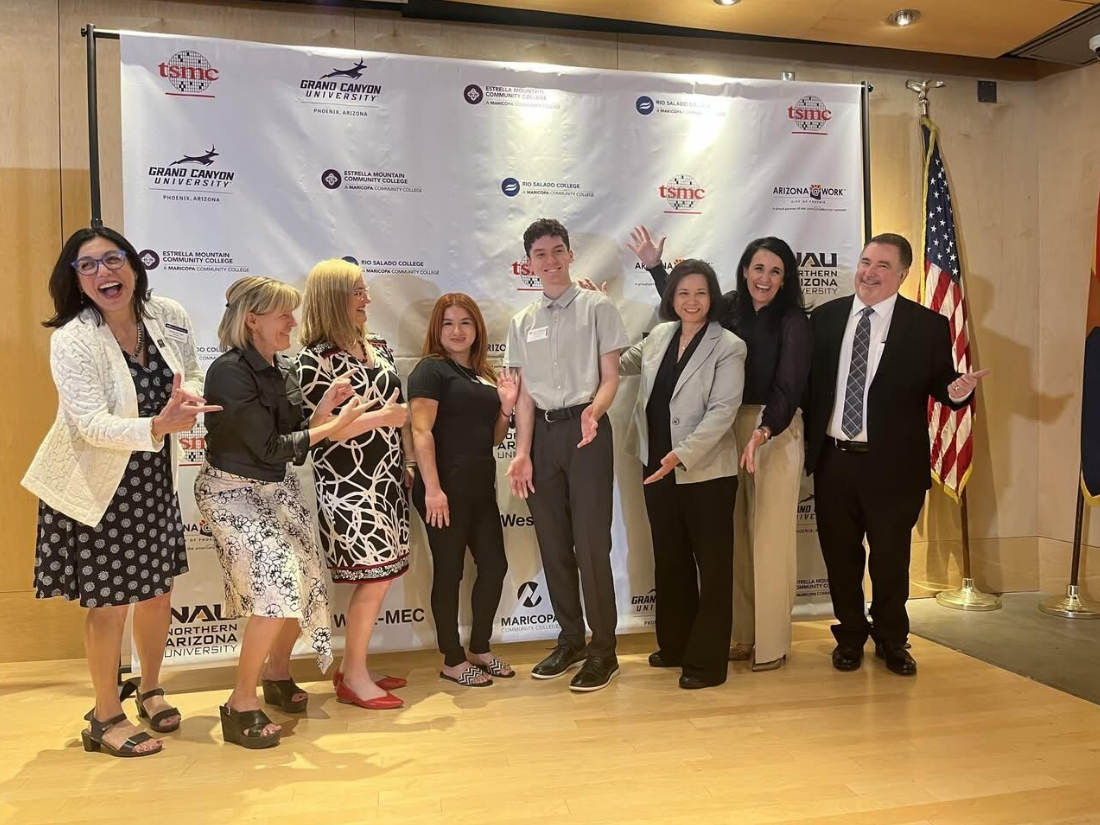
At 23, Nolan Cottingham has transitioned from six years of burger assembly at In-N-Out to monitoring semiconductor production lines at TSMC’s Phoenix facility. His trajectory through TSMC Arizona’s apprenticeship program offers a window into how the chipmaker is building its workforce from local talent pools.
Cottingham joined TSMC’s first apprentice cohort of equipment and process technicians of this category in April 2024, part of 44 individuals selected for the program—34 equipment technicians and 10 process technicians. The timing aligned with TSMC’s broader workforce development push. The company has committed $5 million to its apprenticeship programs and expects to employ roughly 6,000 workers once all three Phoenix fabs are operational.
Program Structure and Daily Operations
Process technicians at TSMC Arizona work 12-hour shifts, following a three-day, four-day rotation schedule. Cottingham’s responsibilities center on maintaining production line continuity—monitoring wafer processing, responding to system alarms, and coordinating with manufacturing departments to prevent workflow disruptions.
“We handle making sure that the production line operates smoothly and that we don’t run into any bumps or holdups,” Cottingham explained during an interview. His work requires constant communication across departments, with messages arriving each morning from various departments requesting assistance with experiments, problems, or production adjustments.
The apprenticeship combines full-time employment with structured education. Process technician apprentices attend classes one day per week for six hours, splitting time between two courses. The program duration ranges from 18 to 24 months, after which participants earn industry-recognized certifications or “journeyman cards.”
Recruitment and Selection Process
TSMC’s apprenticeship eligibility requirements are deliberately broad: candidates must be at least 18 years old with a high school diploma or GED. The company accepts applications regardless of prior semiconductor experience or existing college degrees.
Cottingham’s path to TSMC began with proximity—he lived 10 minutes from the construction site and had monitored the facility’s progress through the company’s “insider program,” which provides monthly job updates to subscribers. When applications opened, his father texted him at work with a single directive: “Apply.”
The selection process involved multiple stages: initial application, cognitive assessment testing (including memory and mathematics components), a preliminary interview with a small panel, and a final panel interview. Between these stages, candidates waited for advancement notifications, creating what Cottingham described as periods of uncertainty about progression.
Mentorship and Knowledge Transfer
Each apprentice receives assignment to an experienced technician mentor. Cottingham works with John, a senior process technician who employs guided discovery teaching methods rather than direct instruction. “He doesn’t give me the answer; he’ll steer me to figure it out for myself,” Cottingham noted.
For the initial three and a half months, Cottingham shadowed his mentor during every shift. After demonstrating competency, he transitioned to a modified schedule accommodating his educational requirements, now working Tuesday through Friday and seeing his mentor one to two days weekly.
Knowledge acquisition at TSMC operates on multiple levels. Process technicians must understand approximately 2,000 individual process steps in semiconductor manufacturing. The complexity requires what Cottingham describes as “detective work”—identifying which specific step among thousands might be causing production issues.
Educational Partnerships and Curriculum
TSMC Arizona’s apprenticeship programs operate through partnerships with Grand Canyon University, Maricopa Community Colleges, Northern Arizona University, Rio Salado College, and Western Maricopa Education Center. The curriculum aligns with both TSMC’s Taiwan-based training programs and U.S. apprenticeship standards.
Process technician apprentices attend classes together as a cohort, creating what Cottingham describes as a collaborative learning environment. Beyond the base apprenticeship, TSMC offers stackable credentials and tuition support for Associate’s degrees. Cottingham indicated the program requires approximately four to five semesters of coursework, with the company covering tuition costs for continued education.
Economic Impact on Individual Workers
Cottingham’s transition from food service to semiconductor manufacturing has produced tangible economic results. Five months into the program, he purchased a townhouse, shifting from rental payments to mortgage ownership. This aligns with patterns observed across the process technician apprentice cohort, where participants range from 19 to approximately 40 years old, with varying life circumstances and financial obligations.
The position provides what Cottingham characterizes as career stability previously absent in food service work. “A year ago, I was still working at In-N-Out and going home and looking at job applications and being like, ‘Do I go and take out a student loan?’” he recalled. The apprenticeship eliminated the need for the $80,000 investment he had considered.
Workforce Development at Scale
TSMC Arizona plans to recruit nearly 130 new apprentices and trainees in 2025, adding to the hundreds of open positions at its Phoenix operation. The expansion includes newly created positions for equipment technicians, process technicians, and manufacturing technician specialists.
The apprenticeship program, launched as a pilot in April 2024, focused exclusively on facilities technicians. By November 2024, TSMC announced its expansion to include three additional technician roles.
Phoenix has been designated as a Workforce Hub under federal CHIPS Act initiatives, with Maricopa Community Colleges and Arizona State University serving as anchor institutions. The Phoenix workforce board became the first to sponsor a registered apprenticeship program in the semiconductor industry.
Cultural Integration and Workplace Dynamics
Working at TSMC Arizona involves navigating cross-cultural professional environments. Cottingham noted adopting communication patterns from Taiwanese colleagues, including replacing verbal acknowledgments like “okay” with nonverbal responses. Food exchanges have become a cultural bridge—Cottingham brings in In-N-Out burgers and local donuts, while Taiwanese engineers share traditional snacks and home-cooked meals.
The apprentice cohort maintains regular communication despite departmental separation. Two apprentices work in Cottingham’s final defect review department, creating informal mentorship networks where experienced apprentices assist newer colleagues with technical questions.
Long-Term Career Progression
TSMC’s internal advancement structure provides defined pathways for technician development. After completing the apprenticeship and receiving official process technician recognition, employees typically require five to eight years to qualify for senior technician positions, contingent on skill development and performance metrics.
Cottingham expressed interest in advancing through multiple technology nodes as TSMC expands its Phoenix operations. The company’s phased construction plan—with facilities under development adjacent to current operations—creates opportunities for technicians to transition between fabrication plants and technology generations.
The apprenticeship model addresses TSMC’s stated challenge of technician recruitment in the U.S. market. Company president Rose Castanares has emphasized that attracting qualified technicians represents one of TSMC’s “tougher challenges,” given the advanced nature of semiconductor manufacturing equipment.
As TSMC Arizona continues scaling toward its planned 6,000-employee workforce, Cottingham’s trajectory from food service to semiconductor manufacturing illustrates one pathway the company has developed for converting local workers into specialized technicians. His experience suggests the apprenticeship program functions as intended—transforming individuals with minimal technical backgrounds into operational components of advanced chip production.