








Nora Garrett’s Hollywood screenwriting debut: Fierce
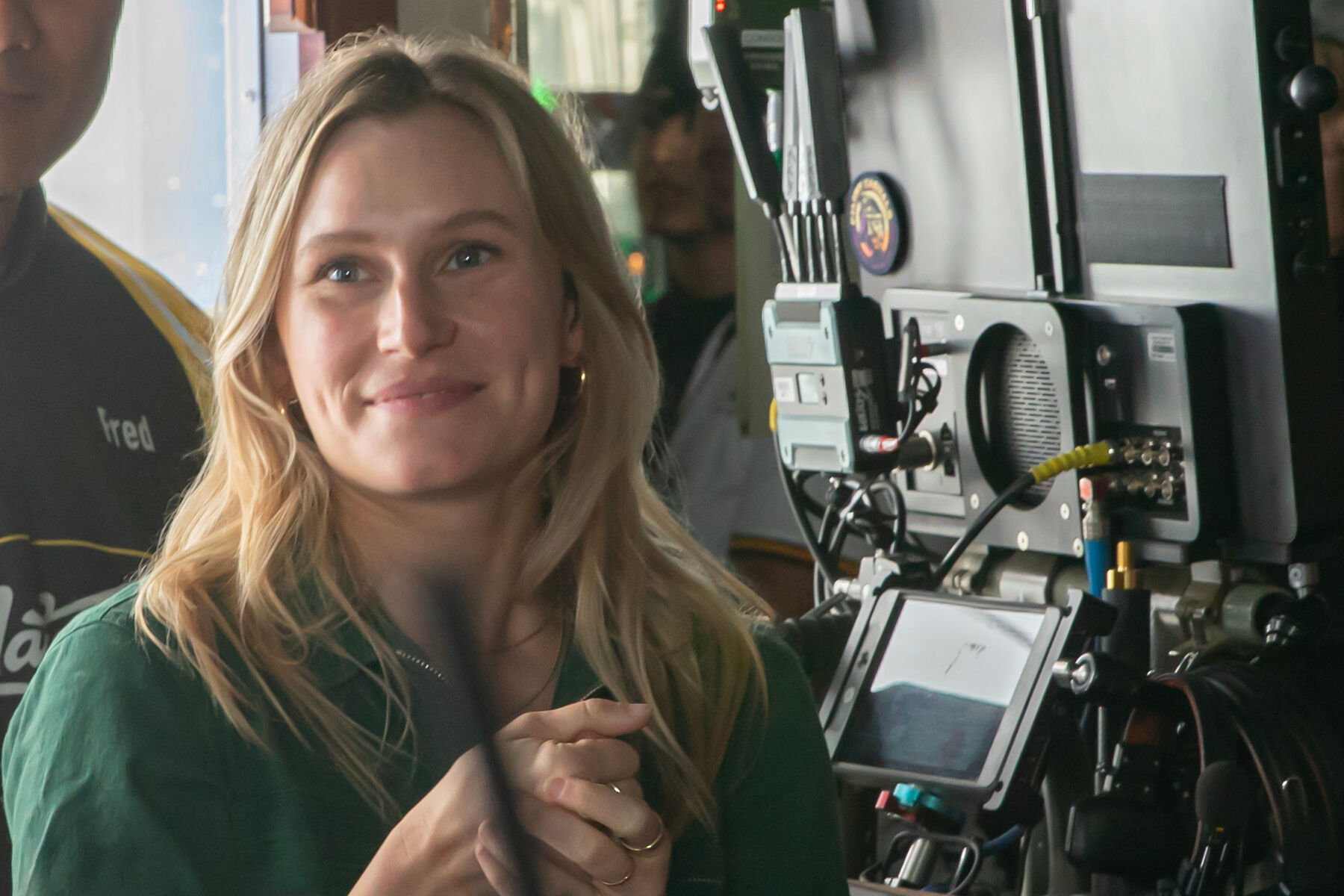
Denver School of the Arts grad’s combustible tale, starring Julia Roberts, has been called the most provocative film of 2025
There is a one-word playbook for how to effectively play the simmering, sexually frustrated Maggie the Cat in Tennessee Williams’ classic play “Cat on a Hot Tin Roof,” and it says this:
“Fierce.”
Funny, when I asked Denver School of the Arts Director of Theater Shawn Hann how Nora Garrett fared as a sophomore wildcat back in 2007, she said without prompting:
“She was just so fierce.”
Garrett laughs at the memory.

“That is something that is so insane to look back on,” she said. “To me, there was nothing at all strange about having a flat-chested 14-year-old play Maggie the Cat. I actually felt like I was very equipped for it at the time. And I just loved the part. It was my first entry into Tennessee Williams, who has been a massive influence on my life and on my writing ever since.”
No coincidence, then, that same word – fierce – is being freely used to describe “After the Hunt,” Garrett’s button-smashing new film that is as remarkable for its very existence as it is for its unsettling content. Salon Magazine is calling it the most provocative film of the year.
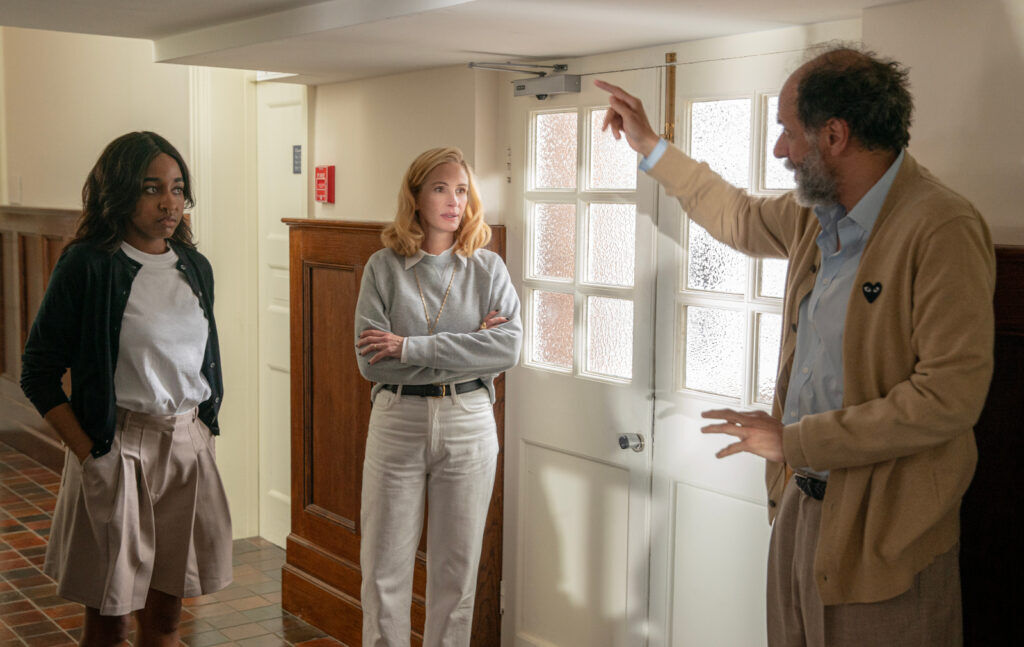
“After the Hunt” is Garrett’s first film. And she is credited as an executive producer. And she was assigned a Hitchcockian waitress cameo by prolific director Luca Guadagnino, best known for “Suspiria” and “Call Me By Your Name.”
Think about it: How many writers’ first films ever get made? OK, a few. Without a manager or an agent (at first)? As if. How many star Julia Roberts, Andrew Garfield, Ayo Edebiri, Michael Stuhlbarg and Chloe Sevigny? In Vegas, where there are odds for everything, there are simply no odds for something like that.
“I feel like there’s always the temptation to understand and gamify how something happened,” Garrett told me. “But the truth is, I got enormously lucky. And a lot of it began with Luca. He has such a wonderful reputation and an unassailable body of work, and a lot of the cast came on because they wanted to work with him.”
Still, I had to know: It’s your first day on the set of your first film and – there they all are: Erin Brockovich. Spider-Man. Chef from “The Bear.” How did you not lose your (bleep)?
“Honestly, I didn’t have time to lose my (bleep), we were moving so fast,” she said with a laugh. “I had to just kind of careen past losing my (bleep). But yeah, it’s insane. I think maybe in a couple of months, maybe in a year, I’ll look back on all this and I’ll be like, how did that happen? It continues to be surreal.”
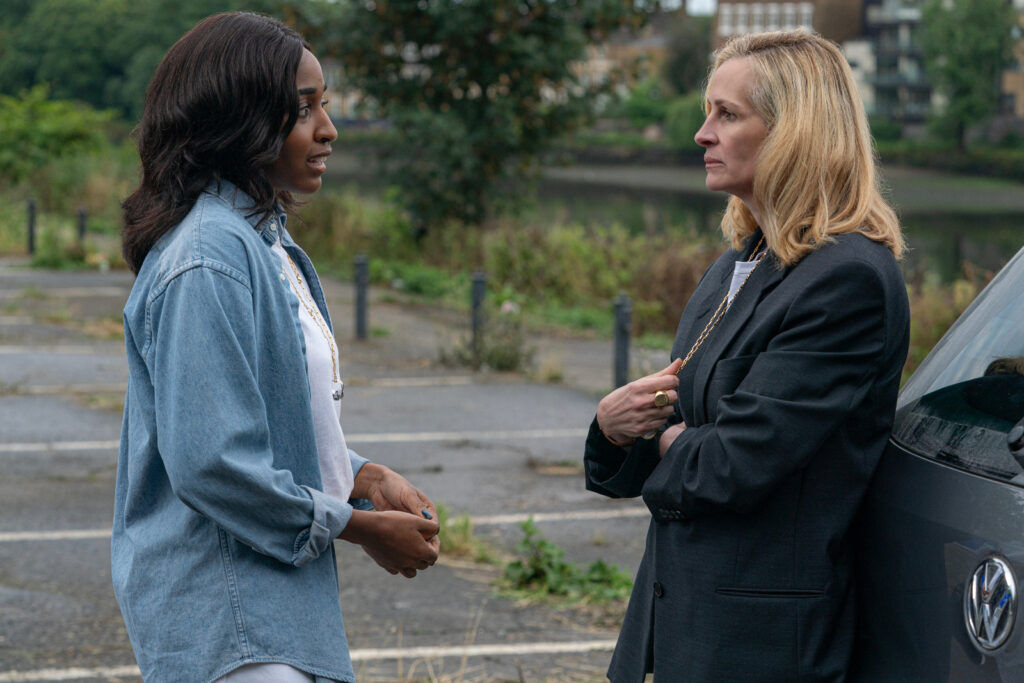
“After the Hunt” is a psychological thriller centering on a tenure-track Yale professor (Roberts) whose own life starts to fall apart when her student (Edebiri) accuses her colleague (Garfield) of sexual assault.
In the week since its release, “After the Hunt” has broken the collective brain of what’s left of the nation’s collective film-criticism braintrust because – pardon the expression – this is a script that doesn’t follow the script.
It’s a #MeToo movie without being a #MeToo movie. It challenges the notion that you must believe the victim, or that women must inherently support women. It eviscerates the hypocrisy of academic elitism, privilege and cancel culture.
Every frame is fraught.
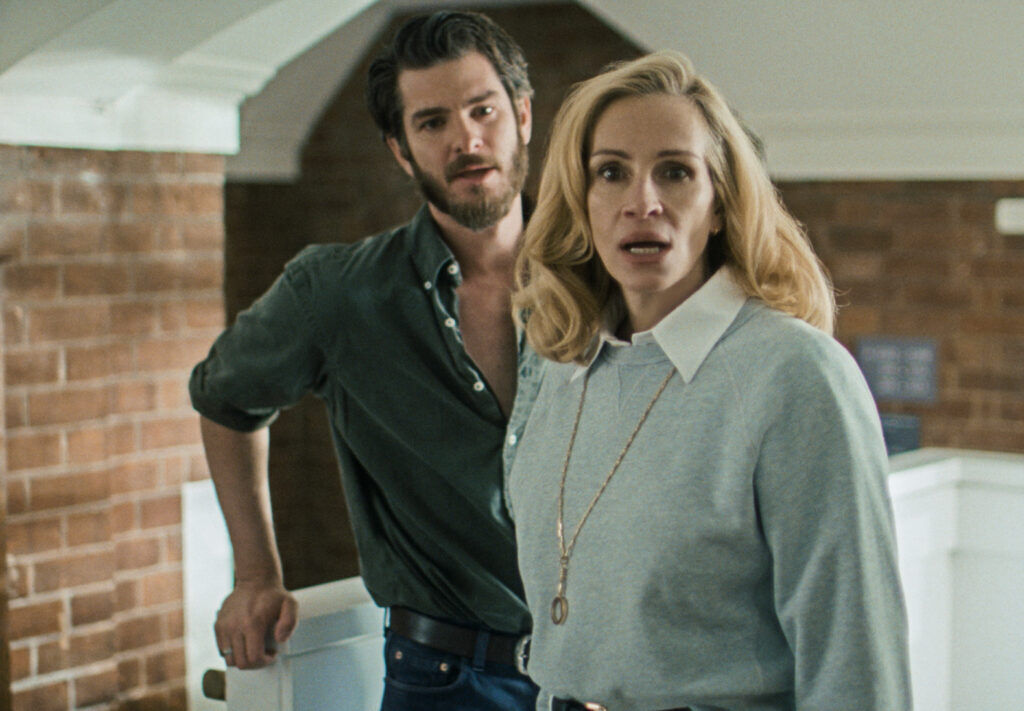
As the screenwriter, Garrett has tipped one of the most incendiary societal dominoes of our times, followed by a decisive adherence to narrative ambiguity. What’s making heads implode is that you are not handed a definitive resolution, and it is never established what actually happened between the man and the woman.
(Imagine Jack Nicholson barking: “You can’t handle the ambiguity!”)
Garrett allows for as many interpretations of the story as there are interpreters. That has some observers calling the film brave and groundbreaking, while others see it as divisive and potentially anti-feminist.
All of which is catching the first-time screenwriter wholly unprepared.
“I truly didn’t see anything that I was putting in the script as controversial or provocative,” she said, “which feels kind of naive in hindsight.”
“After the Hunt” began in 2022 as a writer in a room with a blank page. Her starting point was, as she calls it, Screenwriting 101: “Put your characters in situations that are going to be the most painful for them.”
She proceeded to invent two fully formed women who are both complicated and contradictory human beings. Both brilliant and both incredibly flawed. Setting them against each other in today’s climate takes great storytelling courage. Because pairing women in conflict within the context of sexual assault is inherently problematic.
Garrett just thought it was a good story for and about women.
“I always thought that the fight for representation in film was to give enough humanity to women to be able to see all aspects of them, not just the sense of ‘utopian feminism’ or the Victorian motherhood ideal,” she said. “To me, the flattening of what a woman is in the cultural imaginary is something that I find frustrating and would like to unpick.
“I feel like people are complicated and flawed – and most of them have elements of ‘bad and good’ and ‘darkness and light,’ in them, and women are not exceptions to that.
“To me, this film is about two women who have very different ways of living in the world, but they don’t know that yet. And it is the events of the film that teaches them who they are.
Born at the ballet
Young Nora Garrett, the daughter of two Denver attorneys, “was very much in the performance engine from an early age,” she said. She danced for the Colorado Ballet in seasonal productions of “Dracula” and “The Nutcracker,” which meant a rigorous holiday performance schedule, which she loved.
“I would perform two shows on Christmas Eve and one on Christmas every single winter that I was able to, and I just adored it,” she said. Growing up in an environment with full permission to be an artist, she said, was formative. “It has definitely come to bear on the person and the artist that I am – and also on how much I love and adore theater, both in the audience and performing.”
Every kid in her circle wanted to go to Denver School of the Arts, where students declare majors, much like college, starting in Grade 6. Garrett auditioned to join the dance program in eighth grade but the class was full, which was OK.
“I was never that strong of a dancer, but I always was a strong performer,” she said. The next year, channeling her inner Stephen Sondheim, she auditioned for the theater program, and got in. She says it was writing a series of short plays her senior year “that was really instrumental for me in feeling like my writing had a certain amount of efficacy, and that this is something that I can actually do.”
That does not include her final high-school task of co-writing the official senior play with some friends. “It was a retelling of ‘Alice in Wonderland’ written by a bunch of high-schoolers who fetishized the idea of doing LSD,” she said with a laugh. “It was not coherent whatsoever, but it was really fun.”
Denver School of the Arts is a pipeline to some of the nation’s top theater colleges and conservatories, and Garrett moved on to the prestigious NYU Tisch School of the Arts.
A steady stream of Denver School of the Arts students have enjoyed prolific careers as actors, filmmakers and playwrights. But there’s been a remarkable number of grads from around Garrett’s time that are now enjoying breakout success in their early 30s. Two weeks ago, her pal Justine Lupe (“Succession”) was on “Jimmy Kimmel Live!” talking up her role on “Nobody Wants This” with Kristin Bell. Playwright Jake Brasch became the king of Denver – or at least of the Denver Center – when his play “The Reservoir” premiered here before stagings in Los Angeles and Atlanta and in advance of its Off-Broadway debut coming up in February.
So what’s in the water at DSA?
“Oh, gosh, I wish I knew. I would tell everyone to replicate it,” Garrett said. “I think being at a school where creativity and artistic sensibilities are promoted and elevated and encouraged is becoming more and more rare. I think what makes DSA special is so much about the permission to be curious and to be taken seriously as an artist at a very young age that allows you to start getting your 10,000 hours a lot earlier perhaps than most others.
“A bunch of my friends here in L.A. are from DSA, and sometimes we just marvel at how many of us actually were able to achieve the dreams that we set out to achieve.”
Hann said the head of a human-resources company in L.A. recently reached out to her and said, “There’s something about a DSA theater kid. It’s the work ethic, it’s the drive, it’s the ability to have a creative vision – and the ability to communicate that vision to somebody else.”
After graduating from NYU, Garrett did a little bit of everything in Los Angeles, landing a brief moment in the Jon Hamm film “Beirut” as – yes, a waitress. She paid the bills as a personal trainer, as a personal assistant to Hollywood stars, and as a data analyst training AI for Meta.
Then she started to write – again, without an agent and without a manager. Which is a lot like writing in a forest.
“I was at my wit’s end in terms of the industry and my place in it,” she said. “By that time, I was working with an eye toward becoming a corporate cog just so I could have a livable income and health insurance.”
Then, after an introduction from a friend, she landed a manager who sent the script to Allan Mandelbaum, executive vice president at Imagine Entertainment. Then came Guadagnino, then came Julia, then came Trent Reznor (Nine Inch Nails) and Atticus Ross up to compose the (very) original score – and then came that boggling executive producer credit.
“I think this industry right now is in such a place of flux and contraction that it’s incredibly rare to get an original script made,” Garrett said. “I just got very good agents who were all very kind and protective of the notion that this was an original script that was garnering a certain amount of attention. And so I think the executive-producer credit was really meant to signify and solidify for me that my voice would remain the first voice on this script. And so, that was a real privilege.”
Hann said her former student is a young woman who should not only make Denver School of the Arts proud, but Denver itself.
“This business is all about being in the right place at the right time and networking and putting your voice into the world,” Hann said. “I am just super proud that she’s hit on something that has made people sit up and take notice – and that’s amazing.”
That’s fierce.
John Moore is the Denver Gazette’s Senior Arts Journalist. Email him at john.moore@denvergazette.com

DENVER SCHOOL OF THE ARTS/Alums in the news
What some Denver School of the Arts alums from the classes of 2005-10 are up to right now:
- Gabriel Ebert (2005): Tony Award nomination for the Broadway play ‘John Proctor is the Villain’
- Ryan Fitzgerald (2006): Just came through Denver in the national touring production of ‘Shucked.’
- Justine Lupe (2007): Actor who broke out in ‘Succession’ and now appears in ‘Nobody Wants This’ on Netflix
- Max Posner (2007): Playwright whose newest play ‘Hanukkah Spectacular,’ developed in partnership with Lincoln Center Theater, is described as ‘a really incredible play about modern Jewish identity’
- Will Seefried (2008): Director of new film ‘Lilies Not for Me,’ which explores gay conversion therapy in the early 20th century
- Nora Garrett (Class of 2009): Screenwriter, executive producer and actor in the new Julia Roberts film ‘After the Hunt’
- Jake Brasch (2010): Wrote the Denver Center Theatre Company world-premiere play ‘The Reservoir,’ which bows at Off-Broadway’s Atlantic Theater Company in February
- Barton Cowperthwaite (2010): Recently completed a year in the Tony Award-winning Best Musical ‘The Outsiders’
- Bonus: Emma Maisel (2015): just appeared in the film ‘Please Don’t Feed the Children,’ directed by Steven Spielberg’s daughter, Destry



Erich von Daniken, Swiss writer who spawned alien archaeology, dies at 90
The Associated Press
the-associated-press@denvergazette.com
Updated 26 minutes ago
BERLIN — Erich von Daniken, the Swiss author whose bestselling books about the extraterrestrial origins of ancient civilizations brought him fame among paranormal enthusiasts and scorn from the scientific community, has died. He was 90. Von Daniken’s representatives announced on...

The Associated Press
Reporter

Grateful Dead guitarist Bob Weir dies at age 78
Reuters
reuters@denvergazette.com
Updated 18 hours ago
Veteran rock musician Bob Weir, the Grateful Dead’s rhythm guitarist who helped guide the legendary jam band through decades of change and success, has died at age 78, according to a statement posted to his verified Instagram account on Saturday....

Reuters
Reporter

PIKES PICK: See favorite local art at the airport
Linda Navarro
linda-navarro@denvergazette.com
Updated 6 days ago
Some of the public art enjoyed throughout downtown can now be seen at the Colorado Springs Airport. Sculptures from previous Art on the Streets will be near airport entrances, and see if you can spot new, rotating indoor terminal exhibits....

Linda Navarro
Reporter
Denver Public Library’s new audiobook listening group takes walks at city parks
Stephen Barr
stephen.barr@gazette.com
Updated 2 days ago
Listen up, audiobook fans. Your time has come. Denver Public Library announced an audiobook listening and walking group Thursday. It’s called Audionauts, and it meets quarterly at parks around the city. The group’s first meetup is at Sloan’s Lake from...

Stephen Barr
Reporter
Red Carpet Reception proves new home’s a winner for Coors Western Art Exhibit & Sale | NONPROFIT REGISTER
Joanne Davidson Special to Colorado Politics
joanne-davidson-special-to-colorado-politics@denvergazette.com
Updated 2 days ago
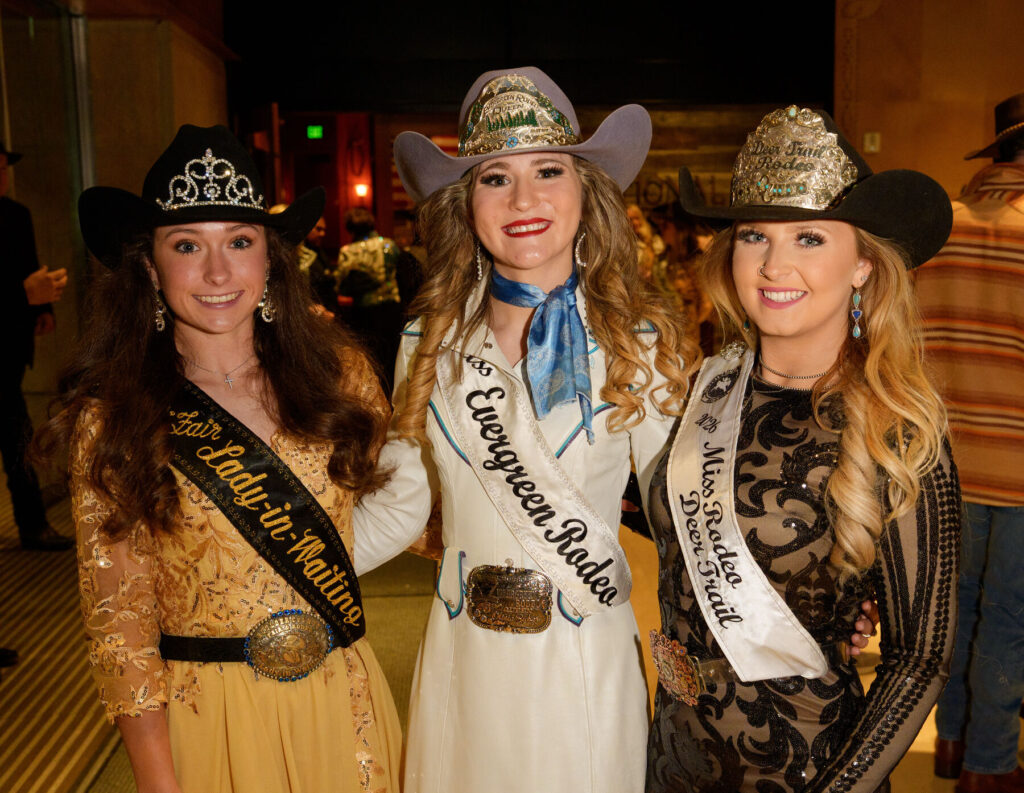
NATIONAL WESTERN STOCK SHOW News: It wasn’t just the art that people were talking about at Thursday night’s Red Carpet Reception for the 34th Coors Western Art Exhibit & Sale. A good number of the 1,000-plus guests were on their first visit to the show’s spacious new location on the...

Denver area events for Jan. 9
Carlotta Olson
carlotta-olson@denvergazette.com
Updated 1 day ago
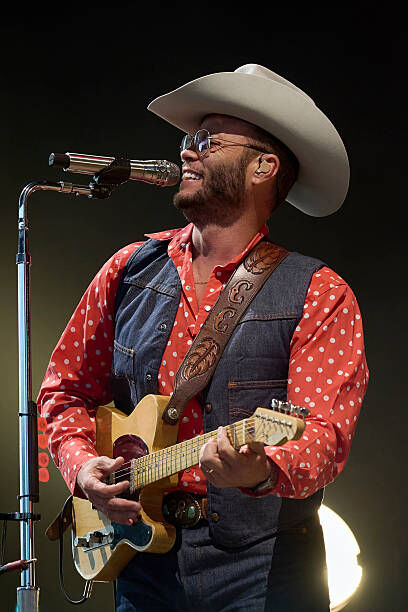
If you have an event taking place in the Denver area, email information to carlotta.olson@gazette.com at least two weeks in advance. All events are listed in the calendar on space availability. Friday Shlump — With Shanghai Doom, DirtySnatcha, Chozen, 8 p.m., Ogden Theatre,...

Carlotta Olson
Reporter

Weekend things to do around Colorado Springs and beyond: Dinosaur events, Orchid Showcase, Bird Count, Swan Lake
Linda Navarro
linda-navarro@denvergazette.com
Updated 5 days ago
FRIDAY-SUNDAY A dinosaur weekend for sure. On Friday a program for the mature audience will introduce the rare Theio, the Garden of the Gods Dinosaur. Park Guide Jennifer shares “more of a mystery story than in-depth science lecture.” Theio is...
Linda Navarro
Reporter
Denver area events for Jan. 8
Carlotta Olson
carlotta-olson@denvergazette.com
Updated 4 days ago
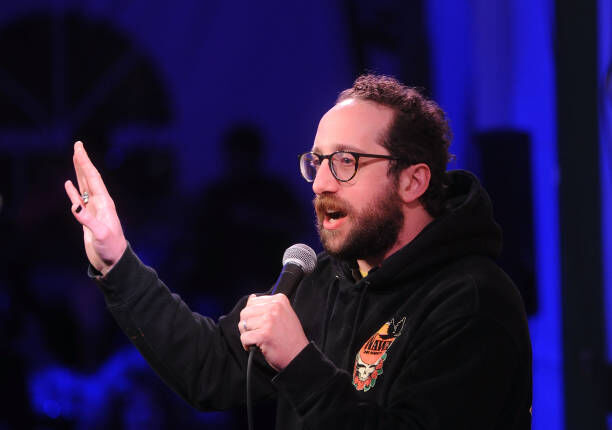
If you have an event taking place in the Denver area, email information to carlotta.olson@gazette.com at least two weeks in advance. All events are listed in the calendar on space availability. Thursday RiNo Arts District Food Tour — 1-4 p.m., Denver, $60...
Carlotta Olson
Reporter

Movie rundown for the weekend through Jan. 11: ‘Greenland 2: Migration’ opens
Carlotta Olson
carlotta-olson@denvergazette.com
Updated 3 days ago
OPENING “28 Years Later: The Bone Temple” — (Horror, not rated, 109 minutes). Dr. Kelson discovers something that could change the world while Spike joins Jimmy Crystal’s gang. “Father Mother Sister Brother” — (Comedy, R, 110 minutes). Estranged siblings are...
Carlotta Olson
Reporter
Weekend things to do around Denver and beyond: National Western Stock Show and more
Linda Navarro
linda-navarro@denvergazette.com
Updated 4 days ago
Each Thursday, explore Denver’s essential weekend events curated by The Denver Gazette. Dive into cultural experiences and entertainment delights across the city. Whether you enjoy art galleries, pottery, or outdoor sports, there’s something for everyone in Denver’s vibrant cultural scene....
Linda Navarro
Reporter
PREV
PREVIOUS

US Fish and Wildlife Services tells Colorado: No more wolves from Canada, Alaska
Efforts by Colorado Parks and Wildlife to bring in more wolves from Canada later this year may have hit a snag after the U.S. Fish & Wildlife Service told the state it may not do so. In an Oct. 10 letter, Brian Nesvik, director of USFWS, told Gov. Jared Polis and Jeff Davis, director of […]

Denver area events for Oct. 24
If you have an event taking place in the Denver area, email information to carlotta.olson@gazette.com at least two weeks in advance. All events are listed in the calendar on space availability. Friday Trick-or-Treat Street — With games, booths and lots of candy, 4-5:15 p.m. or 5:15-6:30 p.m., Goodson Recreation Center parking lot, 6315 S. University Blvd., Centennial. […]