Colorado’s own ‘Miracle’ team | Vince Bzdek
The sign for “miracle” in American Sign Language is a combination of the signs for “wonderful” and “work.”
Joe Sisneros will tell you that those two words together, wonderful work, perfectly describe his more than 26 years as coach of the football team at the Colorado School for the Deaf and the Blind in Colorado Springs, especially the miracle year of 1977.
“It’s been a great ride,” Sisneros told me in an interview. “My success was those boys.”
Sisneros, who was inducted into the Colorado Springs Sports Hall of Fame last week, developed and implemented a groundbreaking communications approach “that allowed his players to understand plays, coordinate strategies, and perform as a cohesive unit, all without sacrificing the competitive intensity of the game,” as the Hall of Fame put it in its tribute.
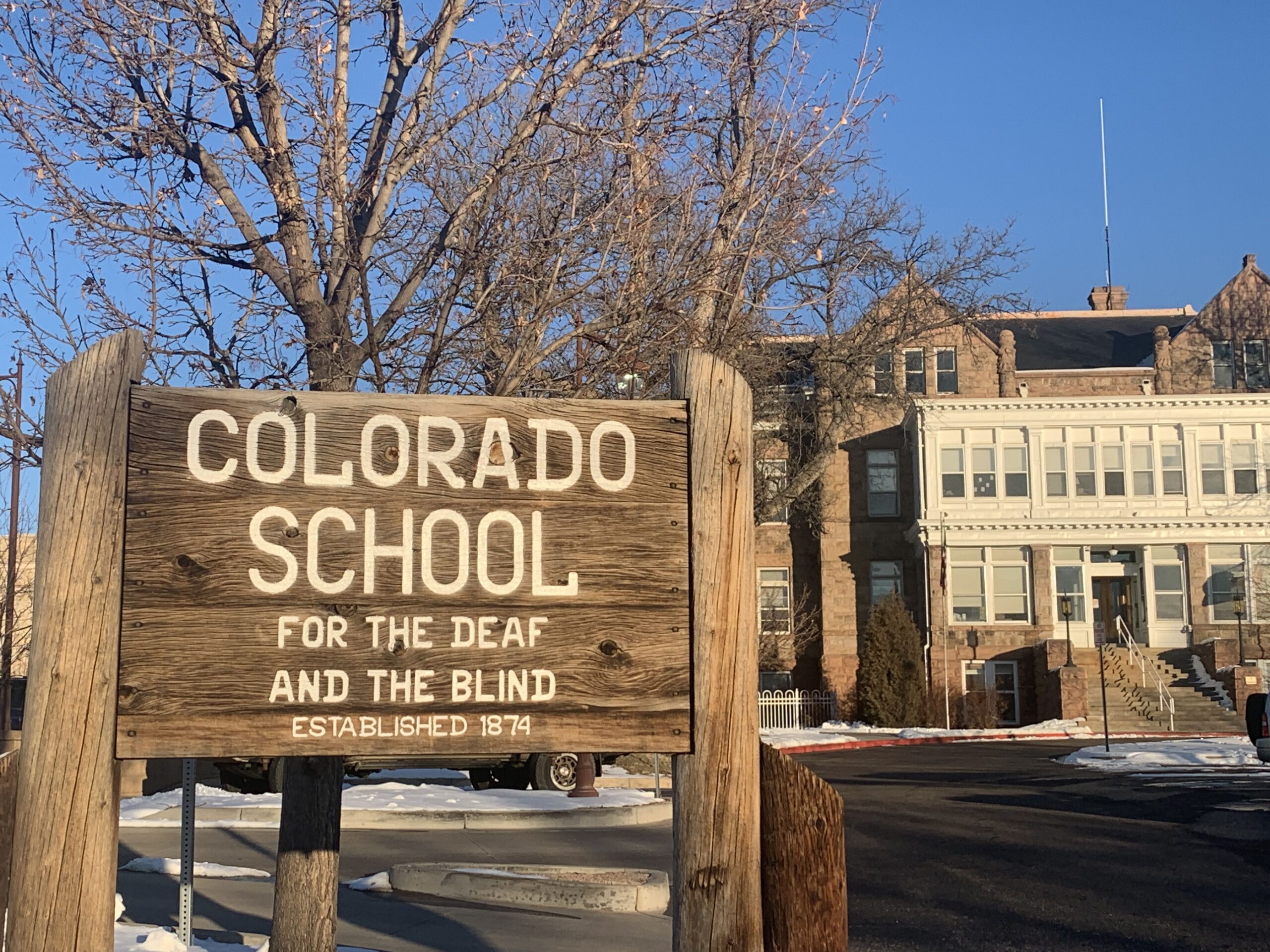
When he first learned he had gotten the job at CSDB in 1966, Sisneros asked himself, “How the hell am I gonna communicate with these boys?”
He practiced finger spelling every billboard and highway sign he saw the summer before he started, but felt like his communication skills held the team back the first year. By the second year, though, he knew sign language through and through and he’d made up elaborate playbooks for the kids to study before every practice.
“It took our players about four times longer to learn our system,” Sisneros said in an earlier interview. “It takes a lot of patience, and I am patient — but I’m also known to be strict as heck. We had to buckle down in order to get our stuff done.”
He also did extra training in peripheral vision in the gym with his deaf players, teaching them to look to the side without moving their heads. “That paid off with basketball and wrestling, too.” Sisneros said.
He began to teach his players to ignore their handicaps.
“I treat the football field as a classroom,” Sisneros once told The Gazette. “I see so many coaches that say, ‘What can that kid do for my football program?’ But I think it should be the exact opposite. I ask myself how my football program can benefit these kids on the field and in the classroom.”
One of his centers, Dan Crespin, was legally blind. The quarterback would tell him which way to block by tapping his left leg or right leg. “We told him to knock down anybody who got in his way,” Sisneros said.
Sisneros soon taught his kids to play a razzle-dazzle style of eight-man football, where two lineman and a back are deleted from the traditional 11-man formation.
In the huddle Joe’s kids used sign language to call the plays, but there were no signals at the line, no “Hut hut” or “Omaha.” The quarterback would call for the snap by nudging the center. The line would leap into action when the ball moved.
“The boys couldn’t hear the five-second countdown by the ref because he was standing behind them,” Sisneros noted. “We persuaded the ref to move to the front so our quarterback could read his lips.”
To signal a run. a player placed the middle finger of his right hand over the index finger of the same hand and brushed them against his chin.
Sisneros usually scripted the first 15 plays, but otherwise the quarterback would stand outside the huddle and get the play via sign language and relay it to the rest of the team.
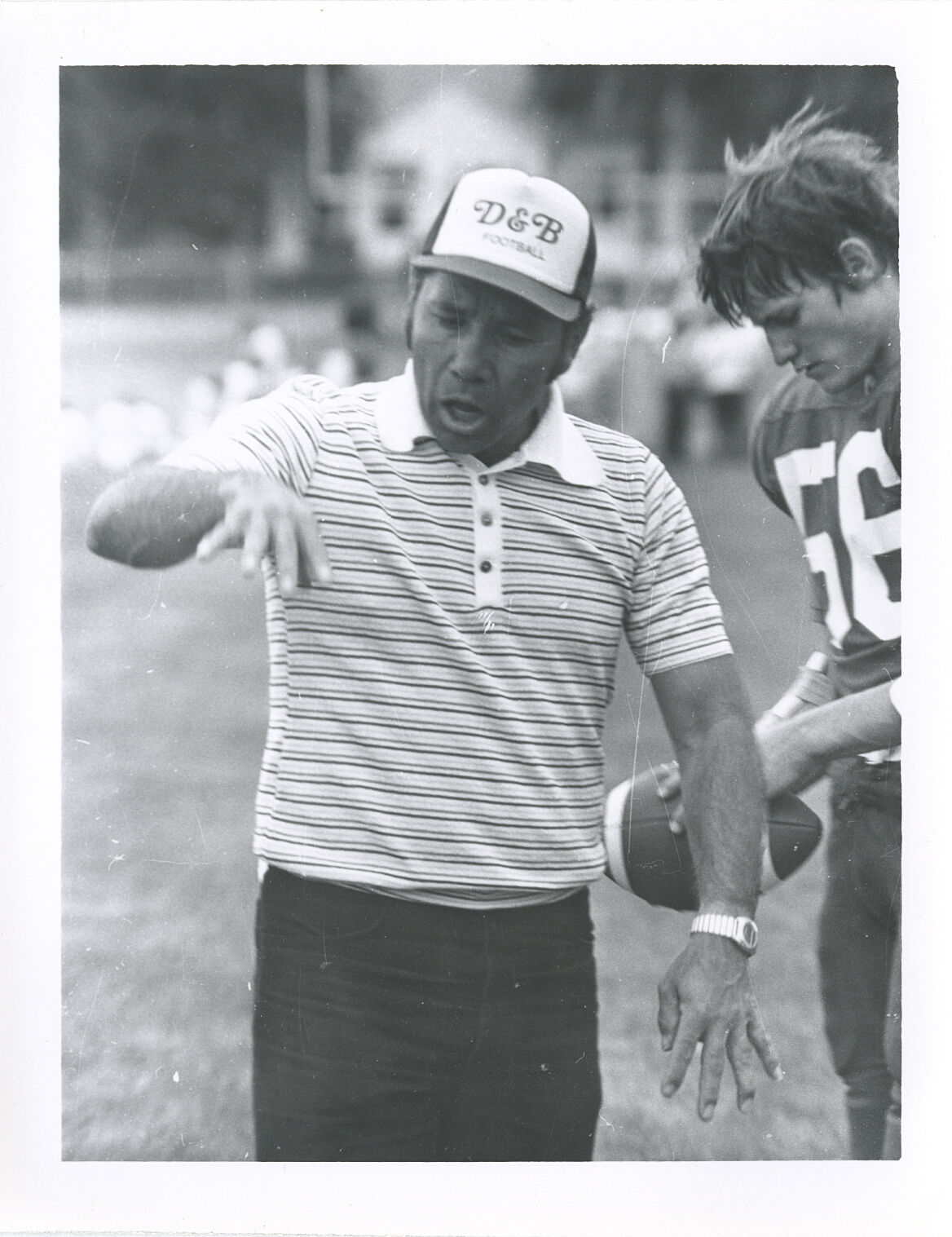
In football, the main drawbacks of a lack of hearing are players not being able to hear the whistle blow during a game, and Sisneros sometimes having trouble getting players’ attention from afar. But that didn’t stop them from winning.
Sisneros started making a name for himself in the 1972 season, when Gary Washington, a broad-shouldered back, scored 31 touchdowns, including nine touchdowns in one game.
Fidel Martinez, who Sisneros called the most vicious blocker the Bulldogs ever had, opened the holes for Washington to scamper through.
Sisneros once told the Rocky Mountain News that Washington was “a pusher with lots of drive and God-given talents to do just about anything he wants. He’s strong enough to run right through most open field tackles and with his speed, once it’s open, it’s six points.”
After going undefeated during their regular season, the Bulldogs became a national story. President Nixon received Sisneros’s team at the White House at the end of that season to promote the Special Olympics, and sportscaster Howard Cosell featured them on ABC.
Washington went on to play running back and defensive back at the University of Colorado. In his final game, he ran 72 yards for a touchdown and was carried off the field on his teammates’ shoulders to a standing ovation from 50,000 fans.
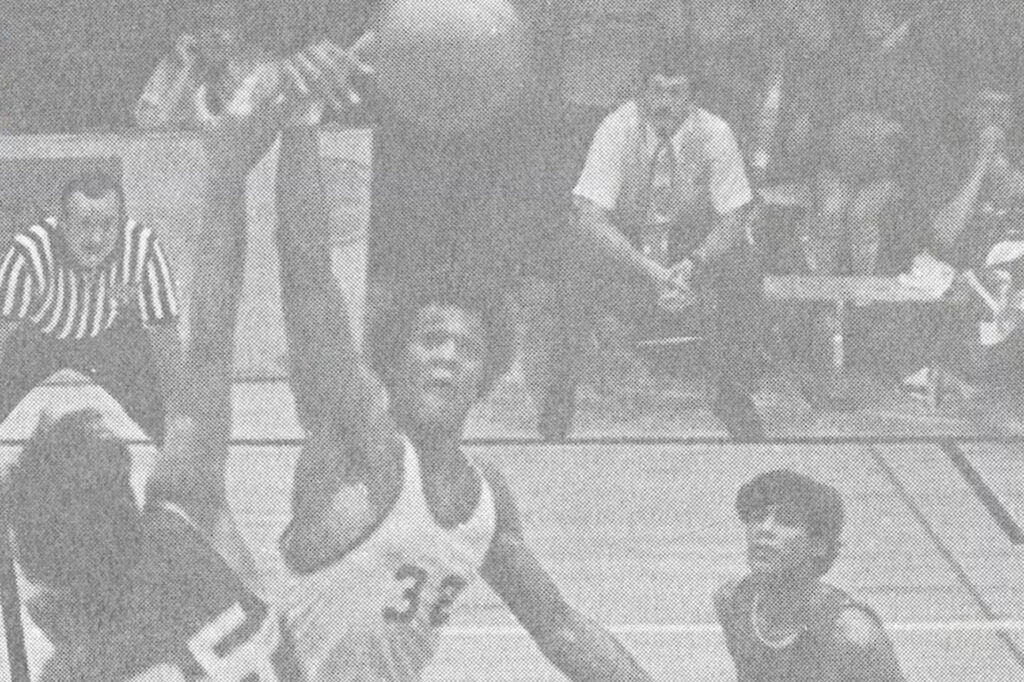
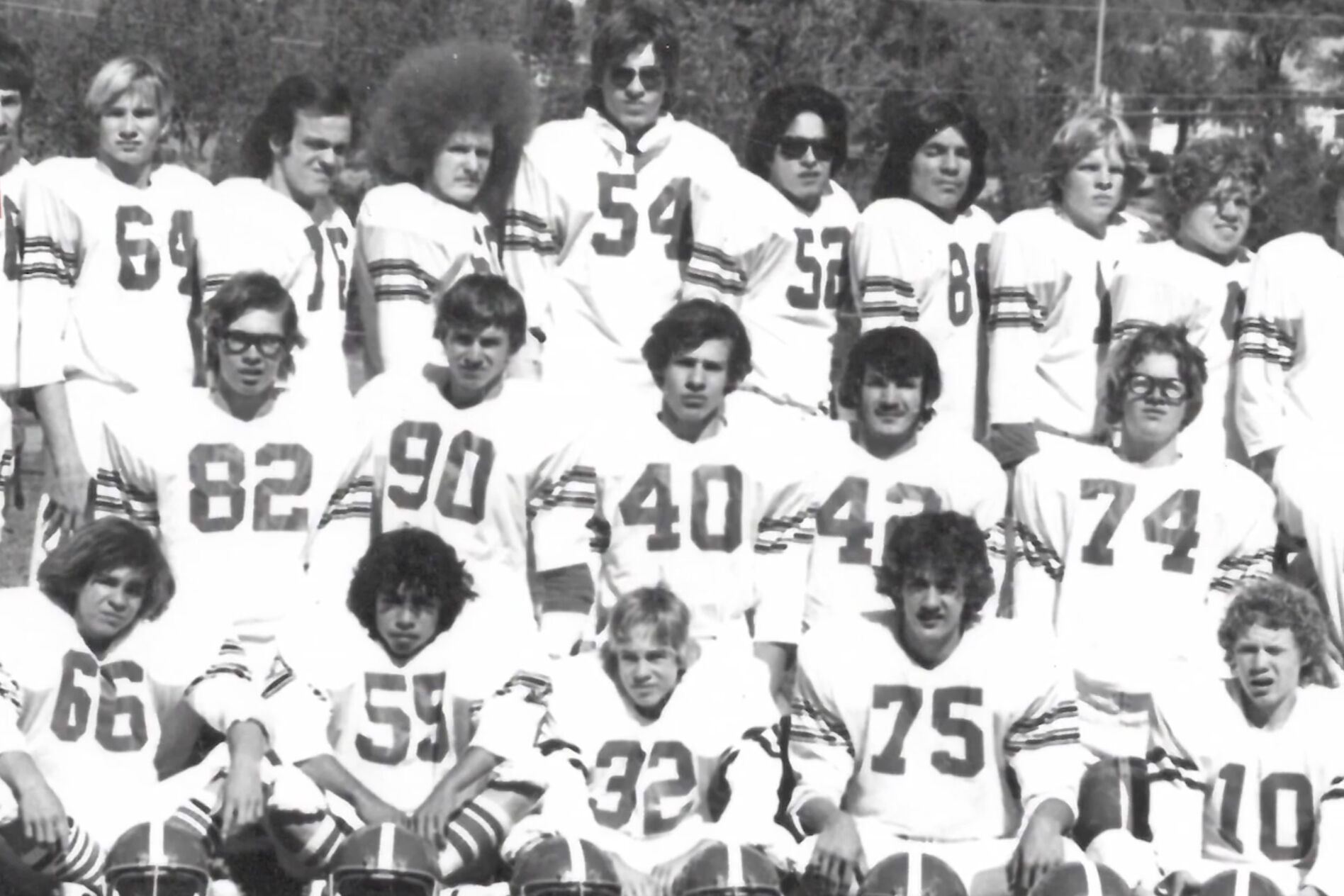
But it was the 1977 season that won Sisneros and his Bulldogs a place in the Hall of Fame. Nineteen seventy-seven was the miracle season.
“For many years we just couldn’t get over that hump,” Sisneros said. But it all came together in ’77.
“They’ll never hear the cheer of the crowd,” The Rocky Mountain News wrote after the Bulldogs tore through eight opponents in their regular season to win the Black Forest League title and make it to the state quarterfinals, averaging an “eye-popping” 39 points per game.
In the first round of the playoffs, the undefeated Bulldogs beat Peetz handily.
The semifinal game against Custer County, however, was a real battle. CSDB was behind at halftime 12-6. But after Sisneros signed a memorable halftime “talk,” the team exploded for 46 points in the second half behind quarterback Merle McAdow’s five touchdowns.
They went on to beat Custer County 52-24 and earn a first-ever berth in the state championship game.
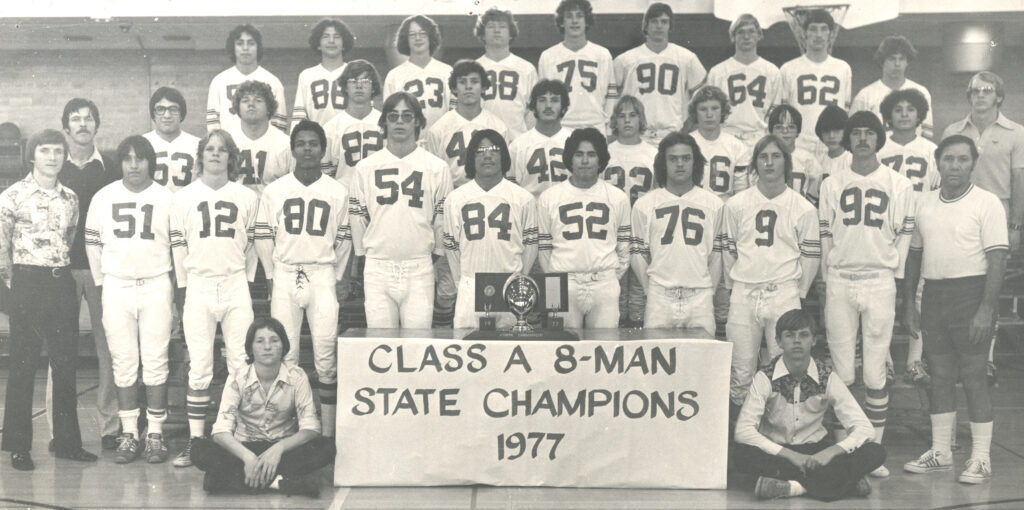
Don Alsbaugh, in a video interview for CSDB’s 150th anniversary, remembered the day of the championship game at the Bulldogs’ field in Colorado Springs vividly years later. “We woke up that morning and it was so windy, really windy, probably 60-70 mph winds,” he said.
Another player, Ralph Arellano, remembered in that video that “We couldn’t kick the ball without it flying astray. We couldn’t pass the ball either, so we just had to stick to running. When the wind blew, it was just sand and dust in the air. It was hard to see.”
Added Alsbaugh, “We were amazed. So many people came to watch. I had butterflies in my stomach, but I thought, it’s all right. Let’s go. We’re here to play.”
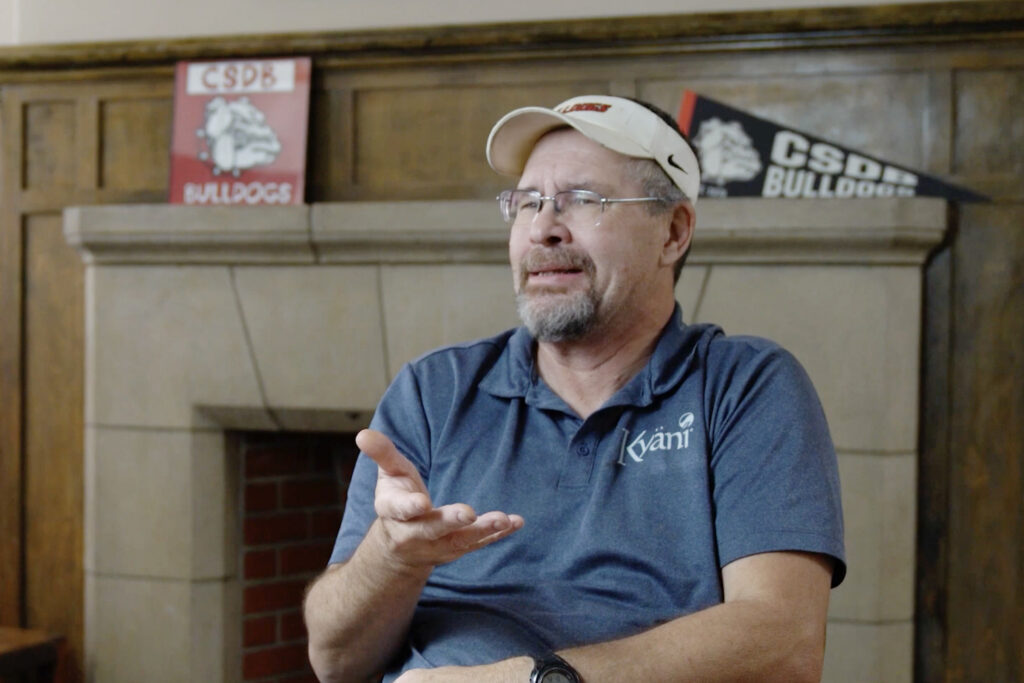
CSDB beat Simla 22-16 that day.
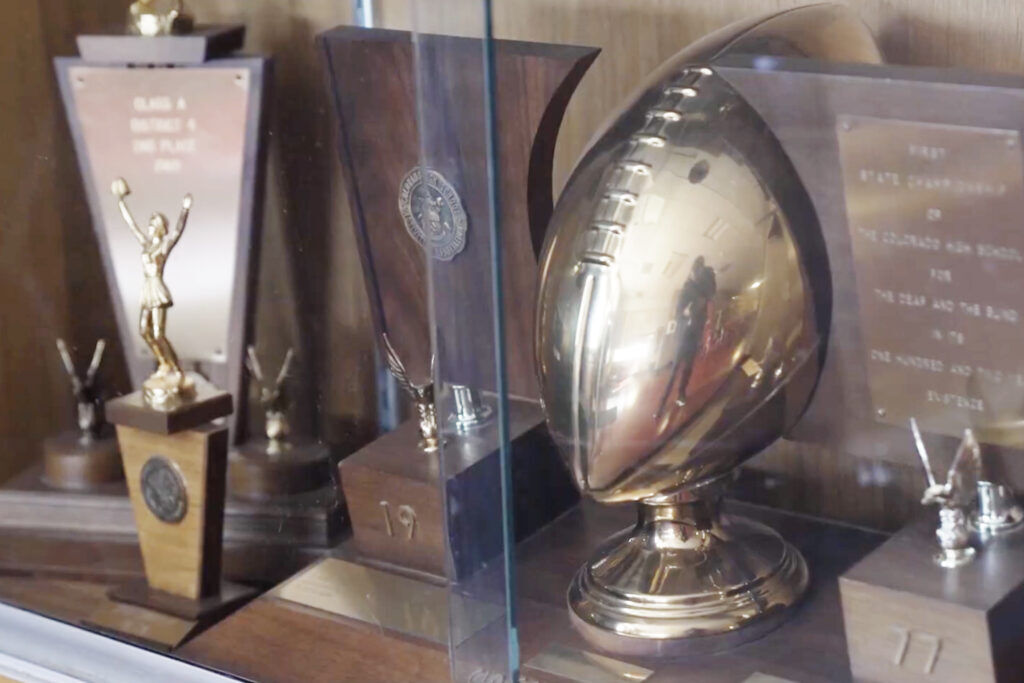
“Finally! Finally! Finally!” shouted Sisneros at the end of the game after Assistant Coach Rick Wellington jumped into his arms. More than 850 fans streamed onto the field to add their congrats. It was the first time CSDB had finished first in any sport in 102 years.
It was a victory that reverberated far beyond the field, teaching a generation of deaf and blind kids that they weren’t necessarily handicapped at all. As the Sports Hall of Fame citation said, that special season “opened doors for generations of athletes and proved that excellence knows no limits when heart and innovation lead the way.”
Coach Sisneros, they said, had “redefined what was possible for student-athletes facing unique challenges — proving that communication, determination, and unity can overcome any barrier.”
Player Tim Elstad recalled that season like it was yesterday, “That experience and the journey getting to that was amazing. Starting with us just playing around together every afternoon. That helped us to actually win something really big. “
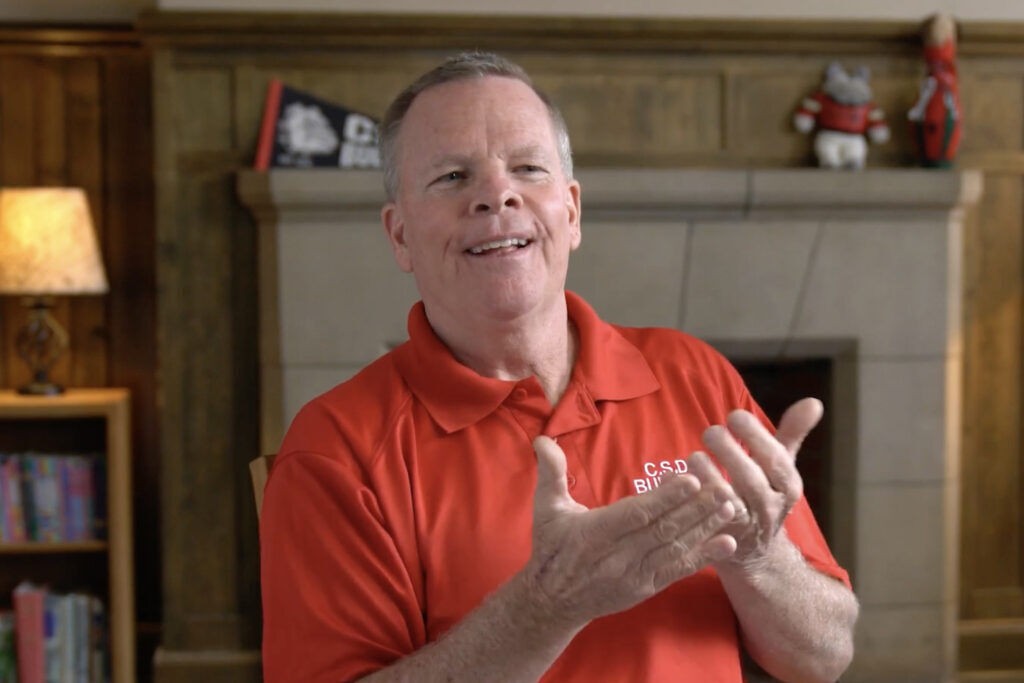
The Gazette that year chose Merle McAdow as Offensive Player of the Year for the entire state. And Joe Sisneros Coach of the Year.
In the accompanying Gazette article back then, Sisneros said, “I don’t know what to say. Things like this haven’t happened here before. This is something new and exciting. It all has to do with a lot of nice people, a lot of nice boys. This kind of stuff isn’t possible without people knowing and caring about people.”
Years later, after winning the prestigious Col. F. Don Miller Sports Service Award honoring his decades of service and commitment to inclusive athletics, Sisneros told The Gazette, “I’ve just done things that I loved to do and it’s worked out well. But my focus has always been on the kids; they are the reason I do everything.”
Even though he’s pushing 90, he says his kids still call him when they need something.
“One of them was having a heart operation and said I want you to be there,” Sisneros said. He got there the next day.
“I’m just like a father and they’re like kids to me,” he said.
A lifetime of wonderful work, in other words.