







World Series watch: Talent, money, ‘stat-geeks’ and coaches’ intuition
Coloradans mostly gave up watching baseball this year because the Colorado Rockies were not worth watching — and that’s being polite about it.
But now sports fans have a World Series between the Los Angeles Dodgers and the Toronto Blue Jays that will be widely watched. And it will be exciting, even if the wealthy, talent-heavy Dodgers are expected to win this best-of-seven series.
The series will attract a large viewing audience because our “new Babe Ruth,” superstar Shohei Ohtani, will be playing. As you may have heard, Ohtani had 10 strikeouts as a pitcher and three towering home runs as a batter in the deciding game of the National League Championship Series last weekend. This has been touted as the most heroic baseball performance of our time — and maybe all time.
It is of minor intrigue that the American League champs — the Toronto Blue Jays — are a Canadian rather than a U.S. team. The Dodgers had to travel with their passports to enter Canada for their first two games on Friday and Saturday.
Most of Canada, with its 41 million citizens, will be rooting for the Blue Jays, especially as the American president has threatened to make Canada the 51st U.S. state.
Historians remind us that the U.S. has invaded Canada four times. Toronto fans were understandably upset when N.Y. Yankee fans, two weeks ago, booed the Canadian national anthem played before the game at Yankee Stadium.
Blue Jay players exulted this past weekend when they beat the Seattle Mariners and won their league championship, saying they were thrilled to win this title for “their fans, their city, and their country” (obviously meaning Canada).
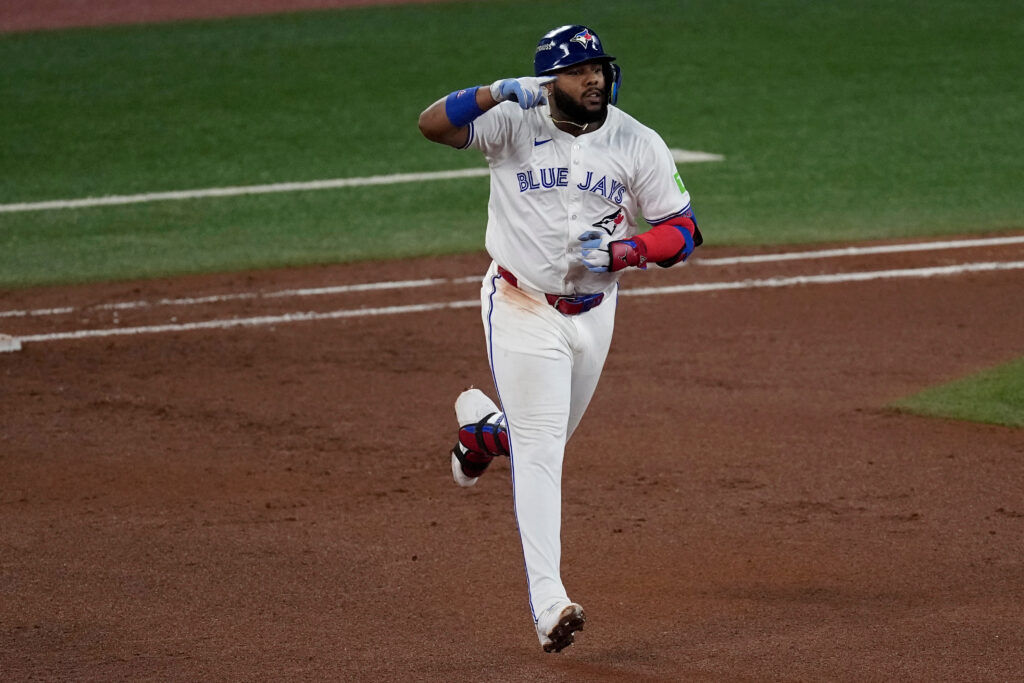
There is only one Canadian, technically speaking, on the Toronto team — and that is Vladimir Guerrero Jr., who was born in Montreal when his dad was a baseball star there. However, he was raised in, and considers himself a citizen of, the Dominican Republic.
Freddie Freeman, a popular team leader for the Dodgers, carries both U.S. and Canadian citizenship, as his parents were both born in Canada. He’ll have a quicker time getting through the passport check-in.
Baseball these days is a fascinating mix of incredibly gifted players, “stat geeks” who research the probability for a particular match-up, or type of pitch to call for, when to try to steal a base, when to bunt — and the intuition of coaches.
Let’s look at the money first. The Dodgers are one of the wealthiest teams in baseball. Their annual payroll is more than $100 million higher than Toronto’s. Still, Toronto is owned by one of the wealthiest owners in professional baseball, and several of his stars are well-compensated.
Dodgers manager coach Dave Roberts, 53, is reportedly paid approximately $8 million a year, compared to Toronto’s manager John Schneider, who is paid about $1 million. Roberts holds a 944-576 win/loss record, while the younger Schneider, 45, has a 303-257 record.
But here are some striking numbers. Shohei Ohtani, who was bought from the Los Angeles Angels in 2023, has a $700 million contract for the next several years. Dodgers teammate Mookie Betts, purchased from the Boston Red Sox, has a $365 million contract. Freeman, purchased from the Atlanta Braves, has a $162 million contract.
Guerrero Jr. earlier this year signed a 14-year $500 million contract. He earned it with a stellar performance over the past few weeks. His co-star George Springer has a $150 million contract.
Much has been written in recent years about the role that statisticians, or “stat geeks,” play in baseball and in most sports. Player performance is analyzed to predict how batters will bat against right- or left-handed pitchers. Turns out, as we learned years ago, that batters do much better facing a pitcher of the opposite arm.
The stat geeks also have data to predict when a batter should bunt, when a runner will likely be successful stealing a base, and when an intentional walk should be encouraged. By the way, Ohtani has stolen 79 bases over the past two seasons and maybe another couple this week?
One of the challenges a manager faces is when to take a pitcher out of a game. It is an easy decision if a pitcher is allowing a lot of hits and has seemingly “lost his stuff.” But what to do when a pitcher has pitched exceptionally well and your team has a small lead, yet it is now in the seventh or eighth inning?
A week or two ago, in this situation, one manager yanked his pitcher and the relief pitcher proceeded to allow an additional three runs that lost the game. In retrospect, the coach’s intuition or gut judgment looked wrong — and was costly.
In a similar situation a week ago, Roberts exercised his “coach’s acumen” and allowed a top-performing pitcher to continue to pitch the eighth and ninth innings. The game turned out to be a win for L.A. and made everyone happy — fans, pitcher and manager.
Why did Roberts, at least in this instance, go against the front-office stat geeks, and let his pitcher stay the course? It may have been a quick decision, but Roberts doubtless considered several factors.
He knew his team was ahead both in this game and in the series. He knew his relief pitchers were not as strong as they could be. He also knew the strength, resilience and character of the pitcher on the mound. He had almost certainly looked that pitcher straight in the eye and asked him if he had it in him to go all the way. And the pitcher had passed that dugout test.
Managers doubtless make their greatest contribution in spring training when they prepare the team to be competitive, physically and psychologically. This kind of managing continues throughout the season, with pregame prep strategies, lineup changes and devising a careful rotation of pitchers. But there are occasions in any game when managers must obey their gut feelings to make decisions that can win or lose a game.
As you watch the rest of this L.A. vs. Canada World Series, look at the managers. What signals are they sending? What type of pitches are they calling for? When will they choose to walk super-slugger Ohtani, rather than let him try for another home run?
Everyone lives in a world of uncertainty — not only managers, but coaches and leaders in every profession. When do we listen to our intuition and favor our gut feeling as opposed to or in addition to the available raw data?
The term intuition is usually defined as a quick perception or insight with minimal conscious reasoning or examination of data. Intuition may differ from linear, rational and logical thinking, yet it isn’t exactly contrary to reason. Roberts, who was famous at UCLA for stealing bases, has been in the baseball business for decades. His team won the World Series last year. He has already seen virtually everything that happens in the game. He has an encyclopedia of facts, patterns, probabilities and possibilities stored in his memory.
Effective managers, coaches and leaders accept the role intuition, or soft data, plays in making decisions. They understand they cannot know everything and that having perfect information is an illusory goal. They understand, too, that not everything that can be counted counts, and not everything that counts is really countable. Making decisions with incomplete information is their job.
The success of a baseball team — or of any organization — lies in this blend of clear-headed reasoning, empirical analytics, but also imagination and intuition.
May the best team win. L.A. has had more years being a winner, their players earn more, their manager earns much more, and they have the best baseball player in history. On the other hand, Toronto is hungry and scrappy, as shown by their impressive win in Game One, and it also has some outstanding players. The Blue Jays are playing for their nation — not just for Toronto. And like the famous Indiana high school team coached by Gene Hackman in the film Hoosiers, the Blue Jays will embrace their underdog role.
Advice to LA fans: Don’t boo the Canadian national anthem.
Tom Cronin is a news columnist who played first base for his Little League team. He is the author of Fireside Chats of a Retired College President (2025) and co-author of American Politics Film Festival (2025).

Colorado State grinds out sixth-straight win, continues February surge in Mountain West
Tyler King tyler.king@gazette.com
tyler.king@gazette.com
Updated 46 minutes ago
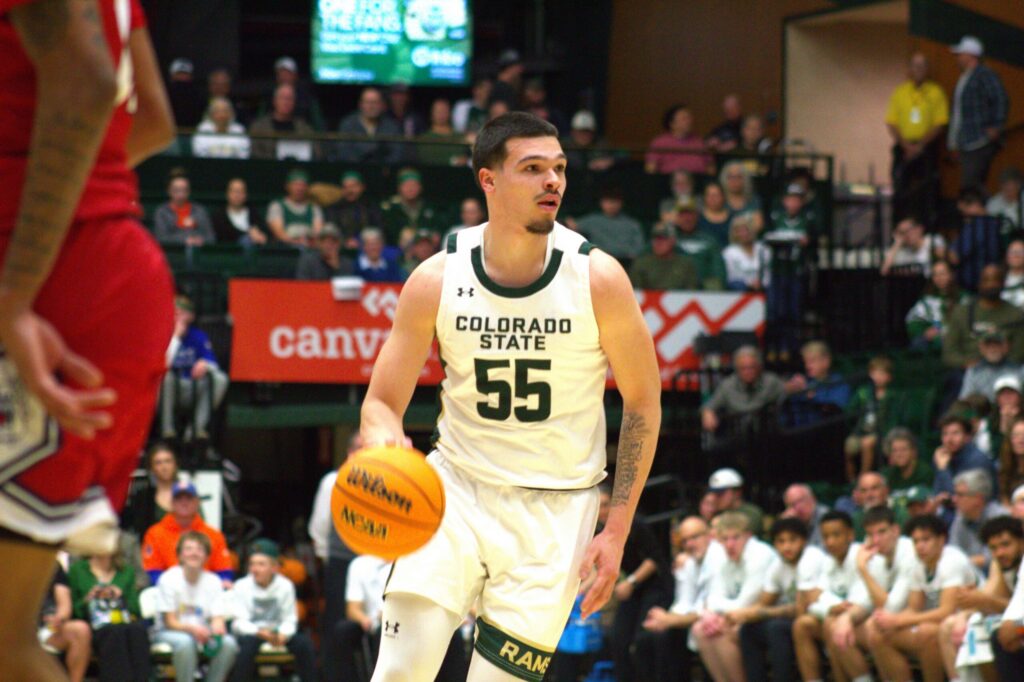
FORT COLLINS — Kyle Jorgensen uttered a phrase that could’ve been said a few times now in the month of February. “About a month ago, I don’t think we were winning that game,” the sophomore forward said after Colorado State’s...

Tyler King tyler.king@gazette.com
Reporter
Broncos coach Sean Payton says contract extension for GM George Paton is ‘overdue’
Chris Tomasson
chris.tomasson@gazette.com
Updated 3 hours ago
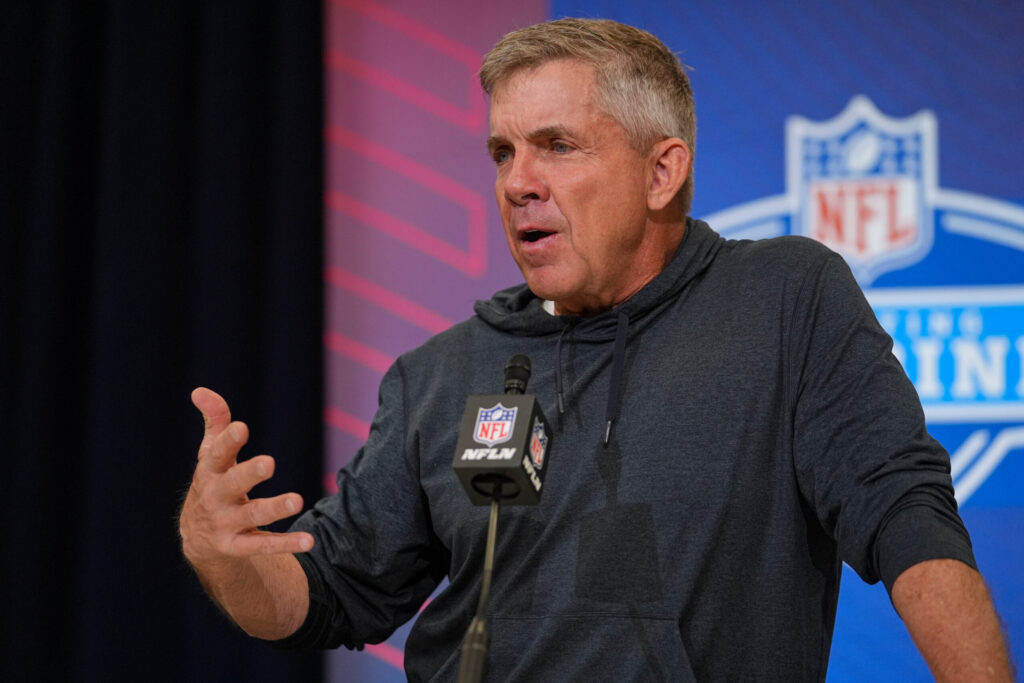
INDIANAPOLIS – Sean Payton is stumping for George Paton. Paton, who joined the Broncos as general manager in January 2021, is entering his final season on a six-year deal. His head coach said he “already” has started advocating for Paton...

Chris Tomasson
Reporter
Handful of games remain for Milahnie Perry to finish climb up Air Force women’s scoring list
Brent Briggeman
brent-briggeman@denvergazette.com
Updated 5 hours ago
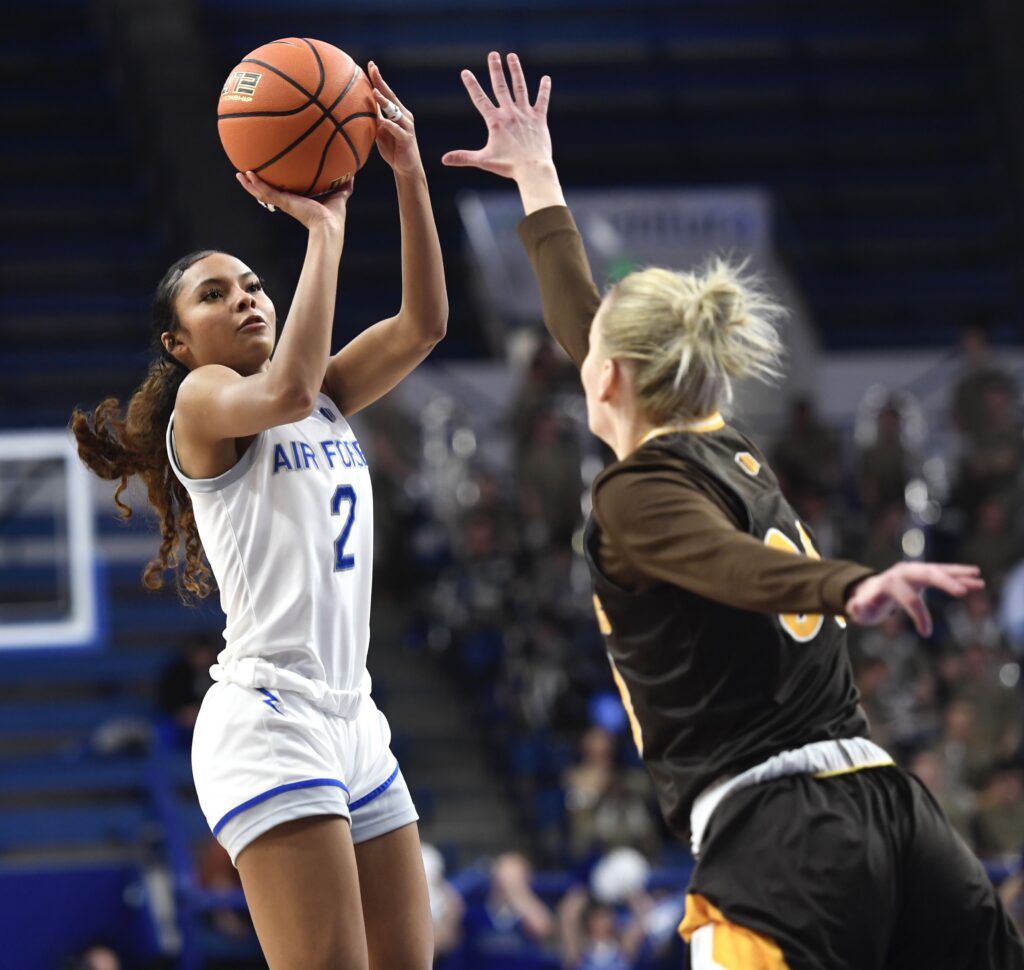
Milahnie Perry’s climb up Air Force’s scoring chart is nearly complete. The senior sits in third place on the program’s all-time list at 1,688 points. She needs 18 points to match Michelle Johnson (1977-81) in second place and 50 to...

Brent Briggeman
Reporter
How Denver Nuggets hope to make most of difficult week ahead
Vinny Benedetto
vinny-benedetto@denvergazette.com
Updated 6 hours ago
A few wins would go a long way to make the Nuggets’ wait to be a whole lot more bearable, but they won’t come easily. After a 1-2 start following the All-Star break, Denver begins a challenging week against the...

Vinny Benedetto
Reporter
Broncos’ Sean Payton to hand over play calling to ‘extremely talented’ offensive coordinator Davis Webb
Chris Tomasson
chris.tomasson@gazette.com
Updated 4 hours ago
INDIANAPOLIS – Sean Payton started calling plays as an NFL head coach when Davis Webb was 11 years old. Now he will turn those duties over to the recently hired offensive coordinator who is half his age. Payton announced at...
Chris Tomasson
Reporter

Status of Avalanche’s Olympians uncertain in return from Olympics break
Evan Rawal
evan-rawal@denvergazette.com
Updated 8 hours ago
As the United States men’s hockey team visited the White House after winning an Olympics gold medal, there was a familiar face missing from the photos and videos: Brock Nelson. Nelson, along with Canadian Olympians Nathan MacKinnon, Devon Toews, and...

Evan Rawal
Reporter
Denver Pioneers star Carson Johnson again wins Summit League player of the week award
Paul Klee
paul-klee@denvergazette.com
Updated 8 hours ago
The best college basketball player in Colorado might be Denver’s Carson Johnson. A 6-foot-1 sophomore guard for the Pioneers, Johnson on Tuesday was named Summit League player of the week for the third time this season. His run is reminiscent...

Paul Klee
Reporter
Mountain West newcomer North Dakota State will visit Air Force football in 2026 as revised list of opponents is released
Brent Briggeman
brent-briggeman@denvergazette.com
Updated 9 hours ago
Air Force’s 2026 football schedule grew a little less tropical on Tuesday. The Mountain West released revised opponents for the upcoming season following a reshuffle with the late addition of North Dakota State, and the Falcons’ new slate does not...
Brent Briggeman
Reporter

Cherokee Trail, Arapahoe top CHSAA’s Class 6A girls basketball rankings | Colorado Sunshine
Paul Klee
paul-klee@denvergazette.com
Updated 13 hours ago
Where good news shines Cherokee Trail and Arapahoe are the teams to beat in Class 6A girls basketball. The Cougars and Warriors ranked No. 1 and 2, respectively, in the CHSAA rankings released Monday. They were followed by No. 3...
Paul Klee
Reporter
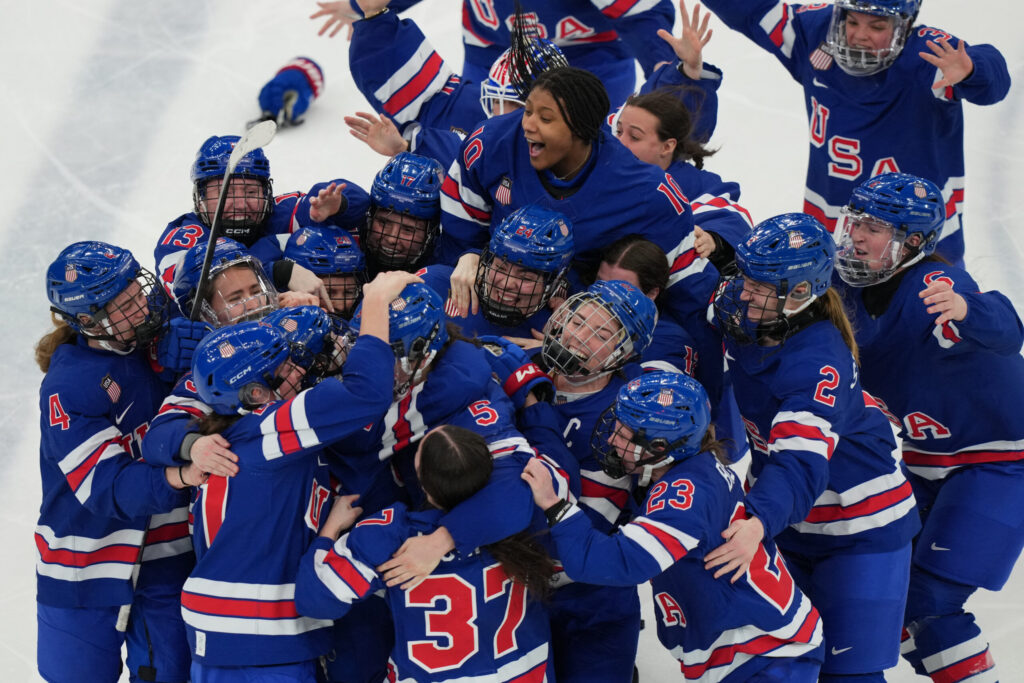
Mayor Johnston wants to host a parade to honor U.S. women’s hockey team in Denver
Emily Bejarano
emily-bejarano@gazette.com
Updated 11 hours ago
Gold medal celebrations were made controversial after the U.S. men’s hockey team received a phone call from President Donald Trump The 2026 Winter Olympics ended in Milan and Cortina on Sunday with both the U.S. men’s and women’s hockey teams sweeping the gold 2-1...

Emily Bejarano
Reporter
PREV
PREVIOUS

Jamal Murray continues strong start as Denver Nuggets win home opener
Jamal Murray used the Nuggets’ home opener to continue his quest to change the narrative around the way he starts seasons. After Denver’s 133-111 win over the Phoenix Suns on Saturday, Murray acknowledged the story surrounding him being a slow starter had gotten a little stale. “That’s why I wanted to come out and have […]

The question on Colorado's mind: Why, Chauncey? | The Starting Lineup
Turn on the game! Three must-see events this week: 1. New Orleans Pelicans at Nuggets (7 p.m. Wednesday, Altitude TV) — Against his former team, Bruce Brown would do Denver a solid by showing he still has that ‘Brucey B’ bounce. 2. Avalanche at Vegas Golden Knights (2 p.m. Friday, Altitude TV/ESPN+) — A Halloween […]