







Let’s not scrap Colorado’s congressional map | Jimmy Sengenberger
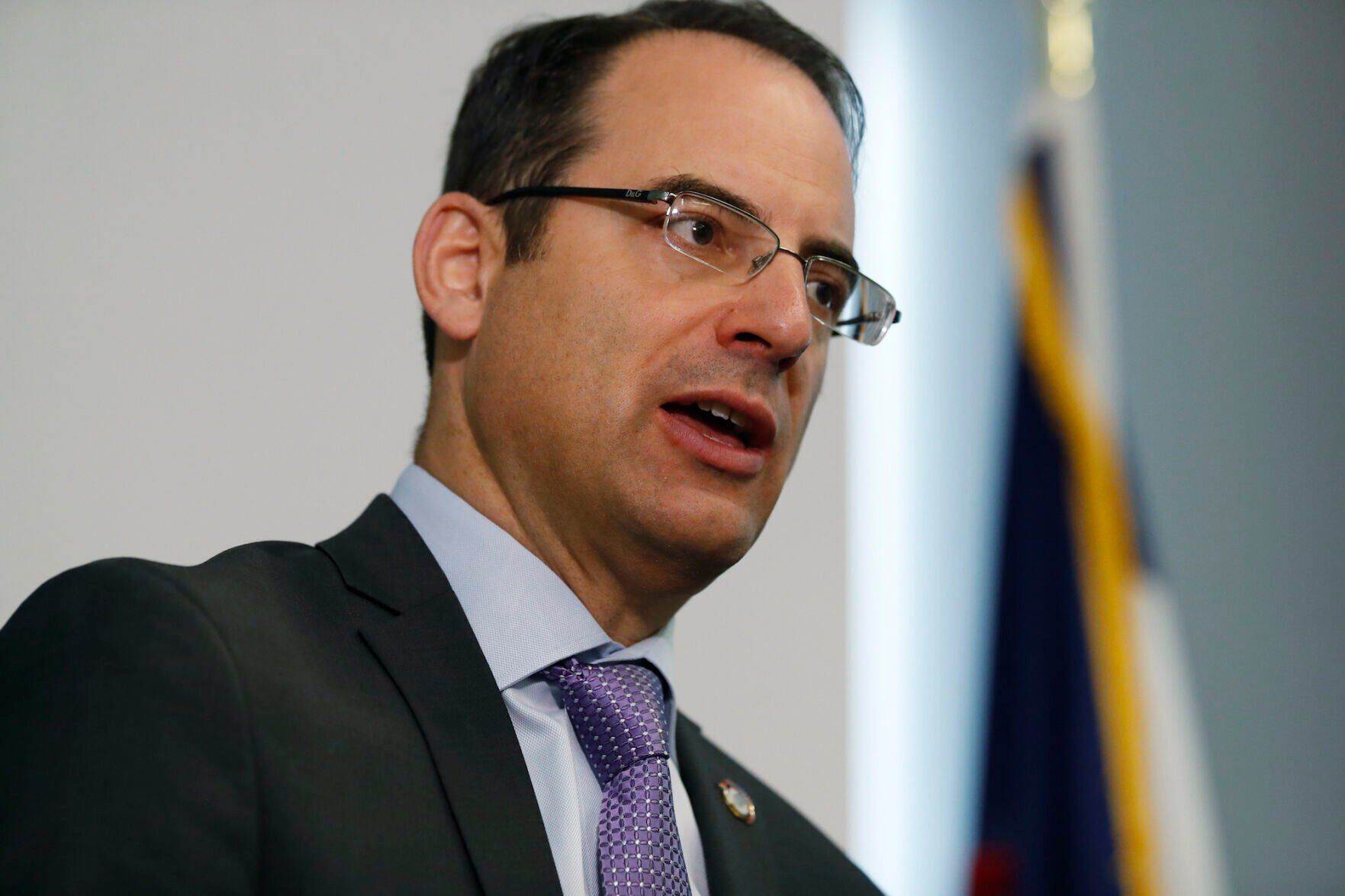
Colorado’s Attorney General Phil Weiser is hoping to drag our state into a national partisan arms race to redraw congressional maps.
Last week, the Democrat and gubernatorial hopeful started shopping a scheme to media outlets, pushing out a press release posted to his website under the banner of “Defending Colorado and Our Rights.” In reality, he wants to undermine a very Colorado way of governing.
In 2018, a resounding 71% of voters passed Amendments Y and Z, creating independent redistricting commissions to draw both congressional and state legislative maps, which happens once every decade after the U.S. Census.
Coloradans were sick of politicians carving districts behind closed doors for partisan benefit. So, they wrote balance, fairness and transparency into the constitution.
Recently, a few Republican states starting with Texas have launched unprecedented mid-decade redistricting — changing congressional maps before the next census to grab more House seats, pressed to that partisan crusade by President Trump.
Democratic states like California are racing to retaliate in kind. It’s the exact red-versus-blue, tit-for-tat game Coloradans rejected.
Instead of rejecting the madness, too, Weiser wants Colorado to join in — by amending the state constitution so the Democrats who control state government can redraw the maps anew.
He’s pitching his proposal as a “narrowly drawn exception,” a “break glass in case of emergency” option when “other states break the established norm” — all in the name of “defending our democracy.”
“We’re not going to let those changing the rules to get an unfair advantage benefit from those efforts,” he said. “Colorado must be ready to step up and do our part.”
Let’s be honest: This isn’t about democracy or Colorado’s interests. It’s gerrymandering for national partisan gain.
Colorado has a balanced House delegation — four Republicans, four Democrats and two competitive districts. That’s what voters wanted when they passed Y and Z — a check on partisanship, not a boomerang whenever national politics gets ridiculous.
And it’s worked. Our current map is among the fairest in the country, with Princeton University’s Gerrymandering Project giving it an A. Meanwhile, the red states we’re supposed to “fight back” against — Texas, Tennessee, North Carolina — already flunk their fairness test.
Weiser knows gerrymandering is wrong — because he’s taken others to task for it. When conservative Weld County redrew its commissioner districts, Weiser sued, blasting county officials for “improperly dividing Greeley voters… for political purposes” and creating a map that “dilutes the voting power… of urban voters and Latino voters.”
But that’s exactly what his plan would do: “dilute the voting power” of rural Colorado to advantage bluer urban strongholds.
“I think actually the congressional delegation represents the larger aspects of Colorado very well,” Rebecca Theobald, a geography professor at University of Colorado Colorado Springs leading the GeoCivics program there, told Rocky Mountain PBS in August.
Theobald said Colorado is “an excellent microcosm of the country” and “more of a purple state than people imagine,” with Democrats clustered in cities while Republicans spread across rural communities.
Yet we’re supposed to scrap a system that works to copy states that don’t — because “democracy?”
Phil Weiser has spent years projecting himself as an “above the fray” attorney general. When he first ran for office, and after he was elected, I interviewed him multiple times on air. We disagreed plenty, but he always came across as someone driven more by principle than raw partisanship. That’s why this is so disappointing.
Even Weiser admits his plan for a 2026 ballot measure couldn’t affect elections until 2028, after the current fight. So, why do it now? Because it’s political posturing dressed up as good governance, grasping for national headlines and campaign cash.
He hasn’t proposed any “fairer” maps of his own — because the goal is bluer, not fairer. Why would Coloradans choose to rig our maps now after we overwhelmingly voted against it?
The results speak for themselves. The 8th District is one of the most competitive in America, and the 3rd isn’t far behind. Republicans hold them now, but they can easily swing the other way — just as the GOP’s U.S. Rep. Gabe Evans flipped the 8th last year away from Democratic former Rep. Yadira Caraveo. You don’t need to rig representation when voters can change it themselves.
U.S. Sen. Michael Bennet, also running for the Democratic gubernatorial nomination, said changing maps in 2028 is “too late.” He’d prefer Democrats flip Republican seats. But Bennet
offered zero objections to blowing up our constitutional redistricting system. “All options should be on the table to defend our democracy,” he said.
Let’s be serious: Even if you want blue states to “fight fire with fire,” Colorado is the last place to play that game. Our voters — half of whom are deliberately unaffiliated because they’re fed up with both parties — have already chosen to cut politics out of map-making. Weiser’s scheme doesn’t square with those independent values.
Colorado shouldn’t follow either President Trump or California’s Gov. Gavin Newsom into an endless partisan rat race. We should lead the nation by keeping partisanship out of map-making — and show it’s possible to pursue fairness over tribalism.
Jimmy Sengenberger is an investigative journalist, public speaker, and longtime local talk-radio host. Reach Jimmy online at Jimmysengenberger.com or on X (formerly Twitter) @SengCenter.

Colorado’s Jason Crow misfires over Iran | Jimmy Sengenberger
Jimmy Sengenberger
jimmy-sengenberger@denvergazette.com
Updated 2 days ago
Over the weekend, President Donald Trump ordered Operation Epic Fury — a bold strike on Iran, conducted in tandem with the Israeli Defense Force. Some 40 members of Iran’s most senior political and military leadership were taken out in short order — including brutal...
Jimmy Sengenberger
Reporter
GUEST COLUMN: Another attempt at a fur ban? Still a ‘no’
Luke Wiedel
lwiedel@gmail.com
Updated 2 days ago
The Colorado Parks and Wildlife Commission (CPWC) will consider a petition to impose a statewide ban on the sale of fur at their March 4-5 or May 6-7 meetings. If you’re a Denver voter hearing about this petition for the...

Luke Wiedel
Reporter

Legislation on poison, poultry and prostitution dominate | Rachel Gabel
Rachel Gabel
rachel-gabel@denvergazette.com
Updated 2 days ago
Many weeks, my search history is odd but the past two weeks might worry our county sheriff if he didn’t know me as well as he does. This week has been the week of poison, poultry, and prostitution. Not to...

Rachel Gabel
Reporter
PERSPECTIVE: Jailbreak — Legislative Dems look to empty Colorado’s prisons
George Brauchler
george-brauchler@denvergazette.com
Updated 2 days ago
Colorado Democrats are working feverishly this legislative session to increase the rate at which convicted felons are released from our prisons back onto our streets. They claim they must, because of overcrowding and cost. Do not fall for that lie. ...

George Brauchler
Reporter
Are Colorado businesses leaving or evacuating? | Jon Caldara
Jon Caldara
jon-caldara@denvergazette.com
Updated 6 days ago
At this point, if you hear beeping downtown, it’s not a construction crew. It’s a company backing out. And look, I get it. Businesses relocate for all sorts of reasons: taxes, regulations, labor costs, office space, crime, commute times, the...

Jon Caldara
Reporter
GUEST OPINION: Generosity has defined Colorado for 150 years
Kyle Hybl
khybl1@gazette.com
Updated 5 days ago
What does it look like when a state takes care of its own? It looks like neighbors opening their homes to families displaced by wildfire. Volunteers standing shoulder to shoulder, offering food, clothing, and hope to people they have never...

Kyle Hybl
Reporter
Additional thoughts on State of the Union address/rally | Cronin and Loevy
Tom Cronin Bob Loevy
tom-cronin-bob-loevy@gazette.com
Updated 4 days ago
The U.S. Constitution’s Article II states that “He (the president) shall from time to time give to the Congress Information of the State of the Union, and recommend to their Consideration such Measures as he shall judge necessary and expedient...

Tom Cronin Bob Loevy
Reporter

What is the state legislature trying to hide?| Vince Bzdek
Vince Bzdek
vince-bzdek@denvergazette.com
Updated 4 days ago
What is it that the State Legislature is trying to hide? A bill that passed out of committee last week lets governments squirrel away important public notices on their own websites rather than publishing them in newspapers and other news...

Vince Bzdek
Reporter
Cute puppy overload and an audition of a different kind: Capitol M | Week of Feb. 28, 2026
Marianne Goodland
marianne-goodland@denvergazette.com
Updated 6 days ago
The lighter side of the Capitol, and most days, you ought to be really grateful for it. There’s a rumor (jk) floating around that an amendment is coming for the bill to legalize prostitution. The amendment would ban condoms made...

Marianne Goodland
Reporter
Union kills safeguards for Colorado schoolkids | Jimmy Sengenberger
Jimmy Sengenberger
jimmy-sengenberger@denvergazette.com
Updated 6 days ago
Without giving it a second thought, Democrats on the state Senate’s “kill committee” shot down a bill to keep dangerous public school employees from quietly moving between districts — even as supporters and critics alike urged amendments to make it work. Republican Sen. Mark Baisley, whose legislative...
Jimmy Sengenberger
Reporter
PREV
PREVIOUS

EDITORIAL: Colorado’s teachers turn away from unions
When a school district’s union speaks, it’s often billed as the voice of the teachers. Not so fast. Out of Colorado’s 179 school districts, fewer than 40 are formally “unionized” through collective-bargaining, or “master” agreements, in which unions negotiate pay, benefits and other matters on behalf of all teachers. Some districts agree to memorandums of […]

EDITORIAL: Colorado crime soars when criminals go free
It was encouraging to see a news report in The Gazette this week about a recent rise in car chases by police in Colorado’s third-largest city. A needed shift in policy by the Aurora City Council last March gave the city’s police more latitude in pursuing suspected car thieves and other lawbreakers. It’s part of […]