







Regis University exhibits lively Day of the Dead art show
13 local artists celebrate the cycle of life
For Alfredo Cardenas — one of 13 local artists showcased in Regis University’s exhibition “Día de Muertos: A Celebration of Remembrance” — the Day of the Dead holds personal gravitas, but also grace.
The Día de los Muertos art show in the Regis library through Nov. 2 exhibits two paintings and a large metal sculpture by Cardenas.
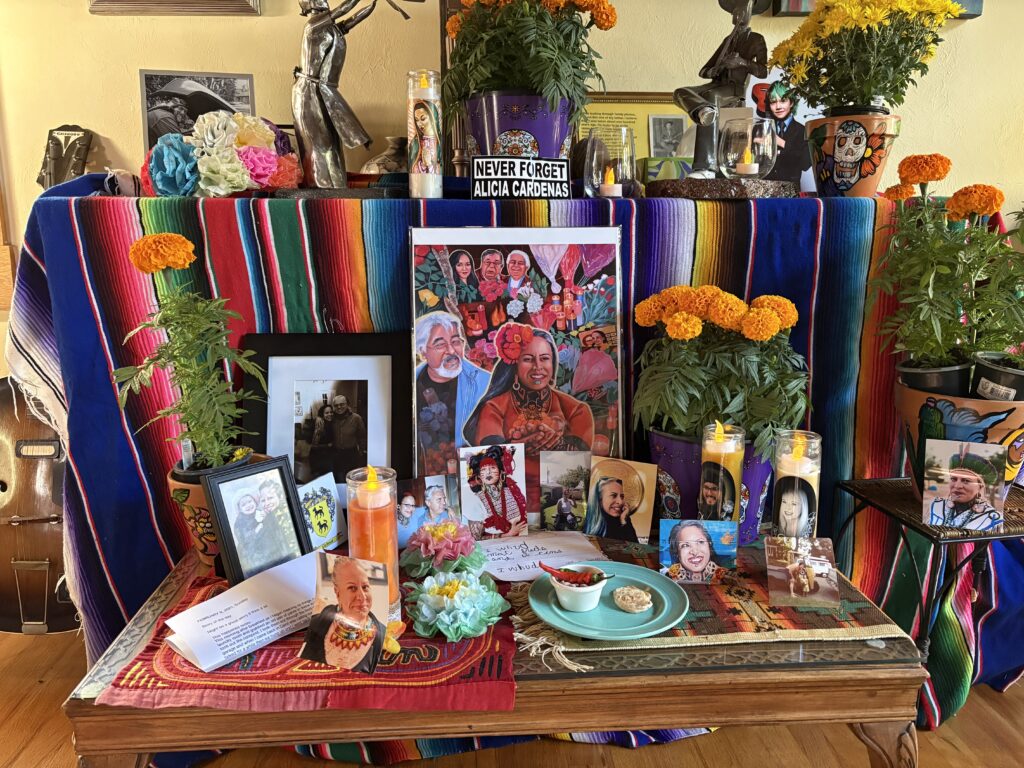
For the holiday that comes annually on the heels of Halloween, the artist also created a traditional Día de Muertos altar to honor his only daughter, 44-year-old Alicia Cardenas. The well-known tattoo artist and activist was murdered in her Denver shop in 2021 in a shooting rampage culminating in the deaths of six people, including the gunman.
“She lost her life to gun violence, but she left her fingerprints all over the world,” said Cardenas. “She was very influential. We think about her every day.”
He and his wife, Carol King, installed a permanent altar in a niche in their home to honor their daughter. They recently added a larger Day of the Dead altar to remember her for the holiday.
Mexican immigrants’ traditions mainstreamed by Mexican-Americans
“We are a Mexican-American family, and Day of the Dead is a Mexican celebration,” said Cardenas, a Denver native. “My family goes back a couple of centuries in New Mexico, but the real influx of Mexicans and their art came in the ‘60s. The Mexican immigrants brought pinatas and mariachis and Day of the Dead celebrations. I didn’t know about the holiday until I was an adult, but the Day of the Dead traditions from Mexico were espoused in the Chicano community here and took hold and blended in so well. The idea is that the dead are not something to fear or lament, but to celebrate.”
Mainstream American culture often shuns death as a taboo topic, but the Day of the Dead is a time to embrace death as part of life. And afterlife.
Technically, the Day of the Dead is two days observed each Nov. 1 and 2. Belief holds that the gates of heaven open, allowing the spirits to visit their families, with souls of children returning on Nov. 1 and adults on Nov. 2.
Contemporary American observation involves a reverential yet lighthearted luring spirits of the dead family members back from the dark underworld to the land of the living with offerings or in Spanish ofrendas: photographs, candles, flowers, favorite foods. The holy days emphasize an ongoing relationship between the living and the dead.
Cardenas’ altar, in keeping with tradition, includes photos of his daughter and many of the traditional elements, all arranged on colorfully striped serape.
“It’s not unusual to see a bottle of tequila or a can of beer on an altar or whatever the departed liked,” he said. “Part of celebrating is intermingling with the departed and drinking a beer, saying ‘Here’s to you!’”
A tradition from Aztec culture
The Day of the Dead dates back as far as 3,000 years to Aztec and other Mesoamerican cultural traditions honoring the lives of deceased loved ones. The modern Day of the Dead celebration combines ancient Indigenous roots with the Catholic holidays of All Saints’ Day observed on Nov. 1, and All Soul’s Day observed on Nov. 2.
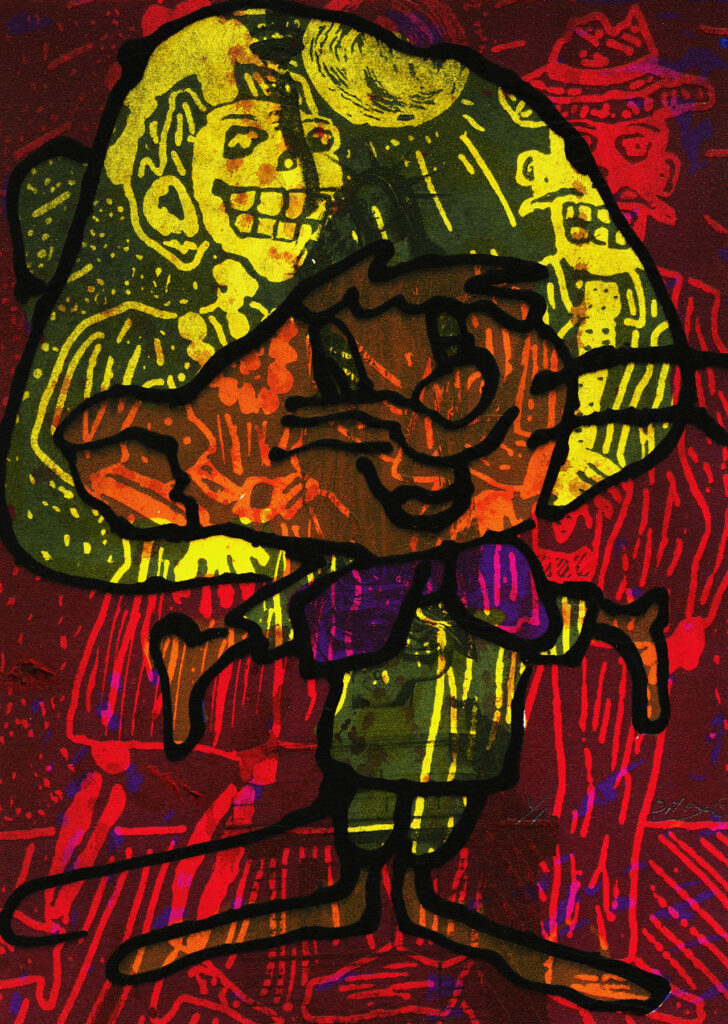
The joyful, colorful and mysterious holy days have inspired many creatives over millennia. Cardenas over the course of his career has created many artworks with skeletons and skulls as subject matter — two prominent Day of the Dead motifs reminding us that human life winds down eventually to bones.
Skulls, or calaveras, are a prominent symbol, often seen in sugar candy form decorated with brightly colored flowers to represent both death and life’s continuation. Artists often incorporate the skeletal figure of “La Catrina” as a satirical image.
“I studied anatomy in art school, and I combined it with the Day of the Dead,” said Cardenas. “One of my favorite artists is José Guadalupe Posada, who was working in Mexico about a hundred years ago.”
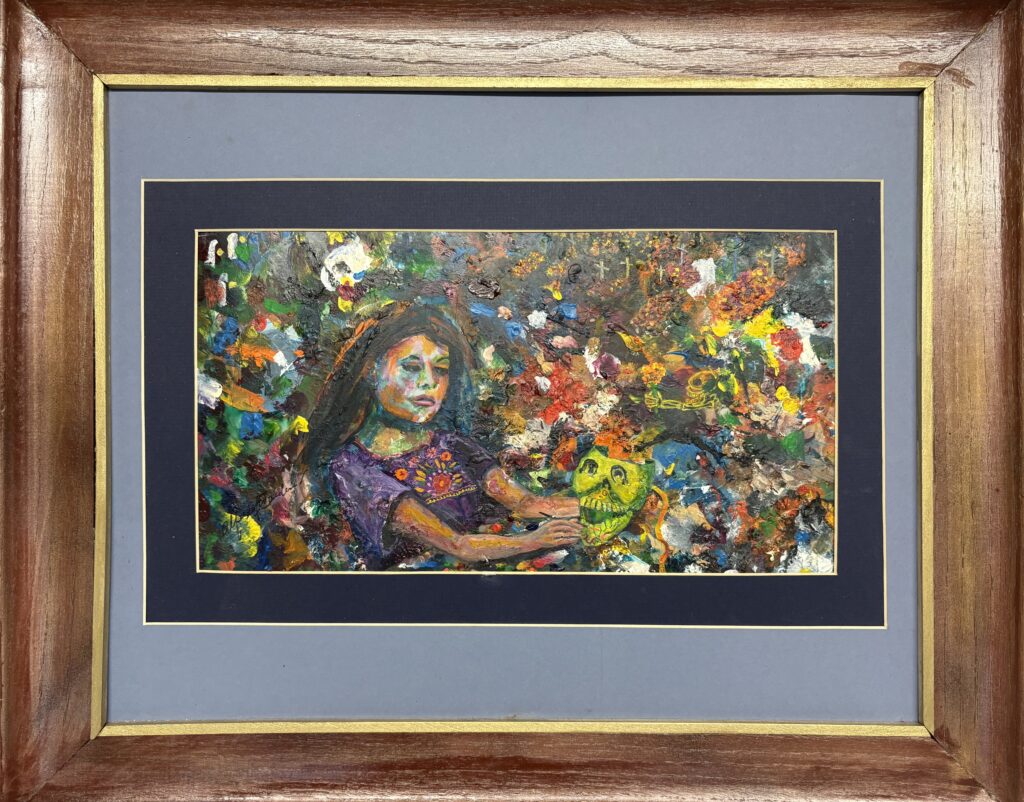
One of the exhibit’s paintings by Cardenas depicts a skeleton in a coffin. The picture includes a marigold and a monarch butterfly. Marigolds, cempasúchil in Spanish, are traditional flowers for Day of the Dead. With their bright yellow and orange colors and their strong scent, the flowers guide spirits home.
“It’s a little esoteric,” Cardenas said. “In some traditions, the monarch represents a soul returning to Earth for the celebration.”
Tony Ortega, Regis art professor and curator
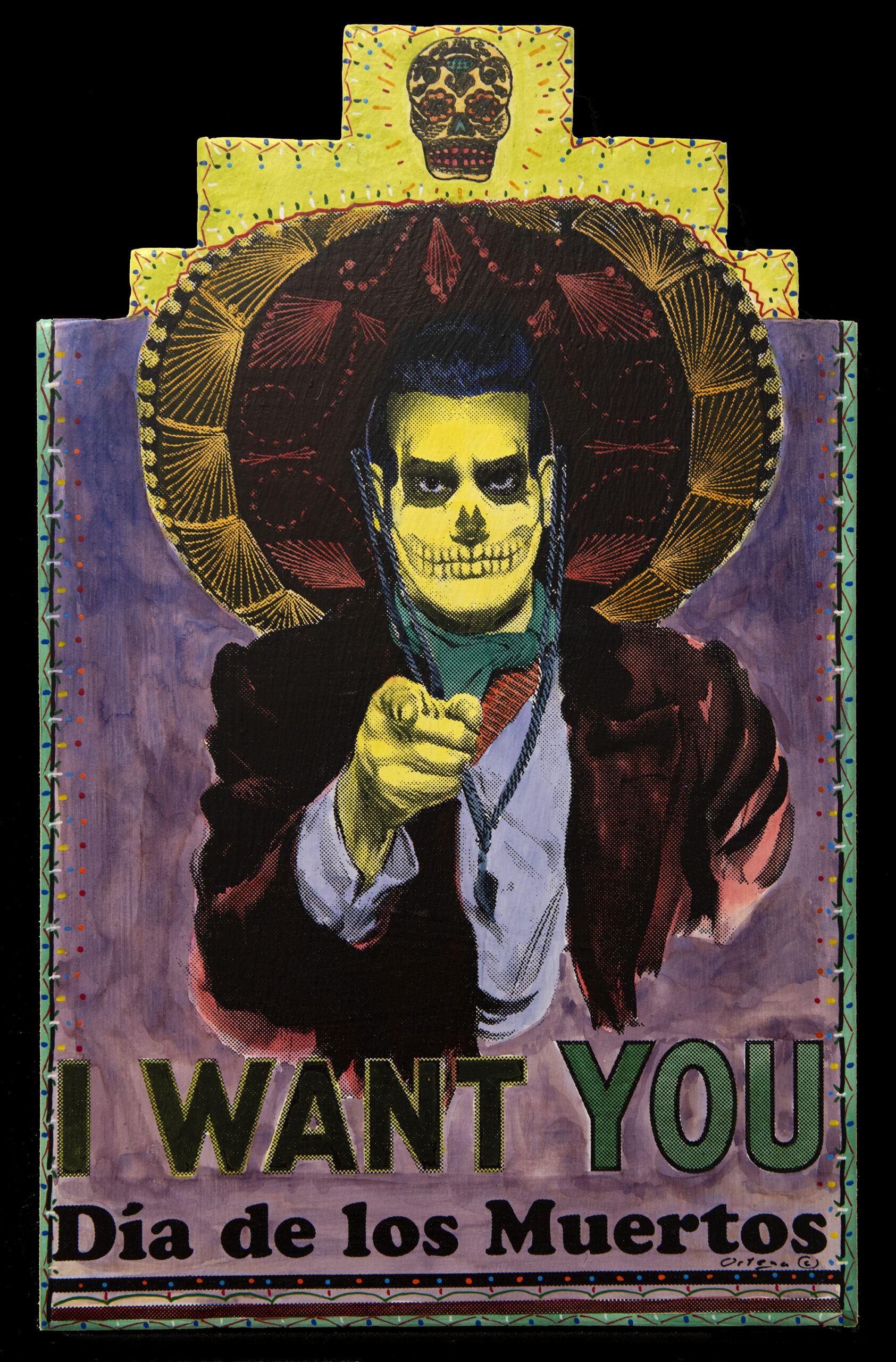
Tony Ortega, a Regis professor of art for the past 33 years, curated the art exhibit. Ortega, represented by William Havu Gallery in Denver, is well known for his colorful Chicano-centric art. The exhibit includes his riff on the Uncle Sam poster with a skull-faced man in a sombrero pointing at the viewer and the words “I want you.”
Ortega first learned about the Day of the Dead while a college student in Mexico.
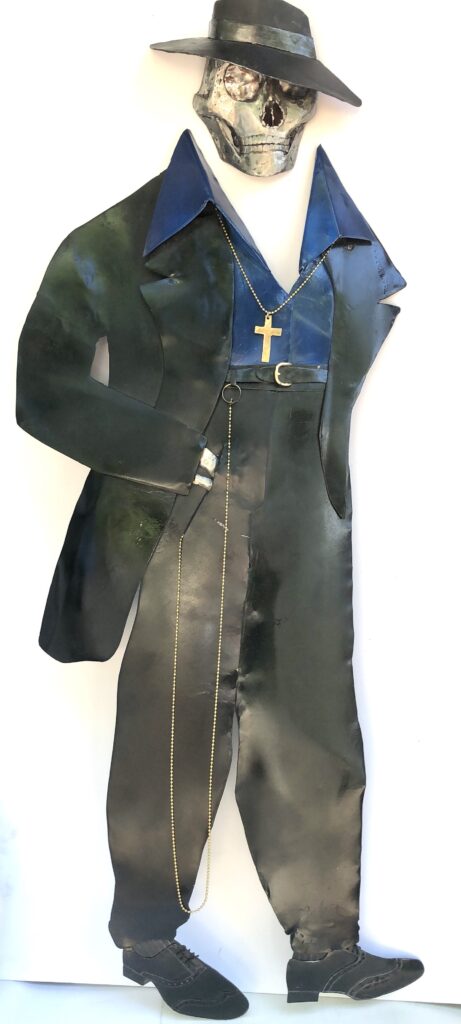
“I didn’t fully understand it,” said Ortega. He recalled Denver’s early interest in the holiday originating with a group of local artists affiliated with the Chicano Humanities and Arts Council (CHAC).
“The interest increased exponentially after our first show at Pirate Gallery,” said Ortega. “Now there’s Day of the Dead celebrations on Sante Fe, Botanic Gardens, DCPA. It’s gotten big,” said Ortega, who said the animated movie “Coco” boosted the holiday.
“A theme in ‘Coco’ from pre-Columbian thinking came into Mexican thinking: We die two deaths. One is our physical death, and the second one is when there’s nobody alive who remembers you,” Ortega said.
“We as humans understand death as part of life, part of the cyclical nature of life we see in our world — in the Earth going around the sun, our cyclical calendars. It’s universal that we know death is coming,” Ortega added. “In the U.S., we’re more about denying death, but the Day of the Dead has helped me deal with my mom’s death, my grandmother’s death, my great aunt and other family members close to me. We call it Day of the Dead, but it’s but more for the living.”
An epiphany about eternity
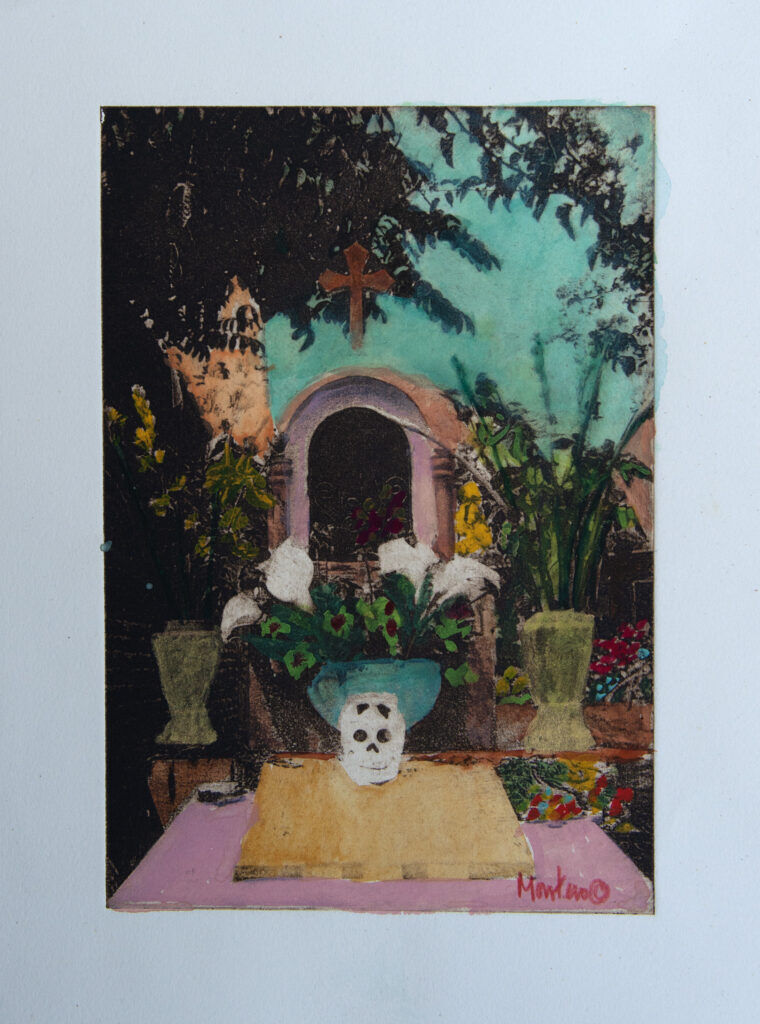
The exhibit includes three hand-colored solar etchings by Ortega’s wife, Sylvia Montero, a contemporary Indigenous artist. She noted that the Day of the Dead has evolved into a widely popular commercial success in the U.S.
Montero and Ortega traveled twice to Mexico for the Day of the Dead.
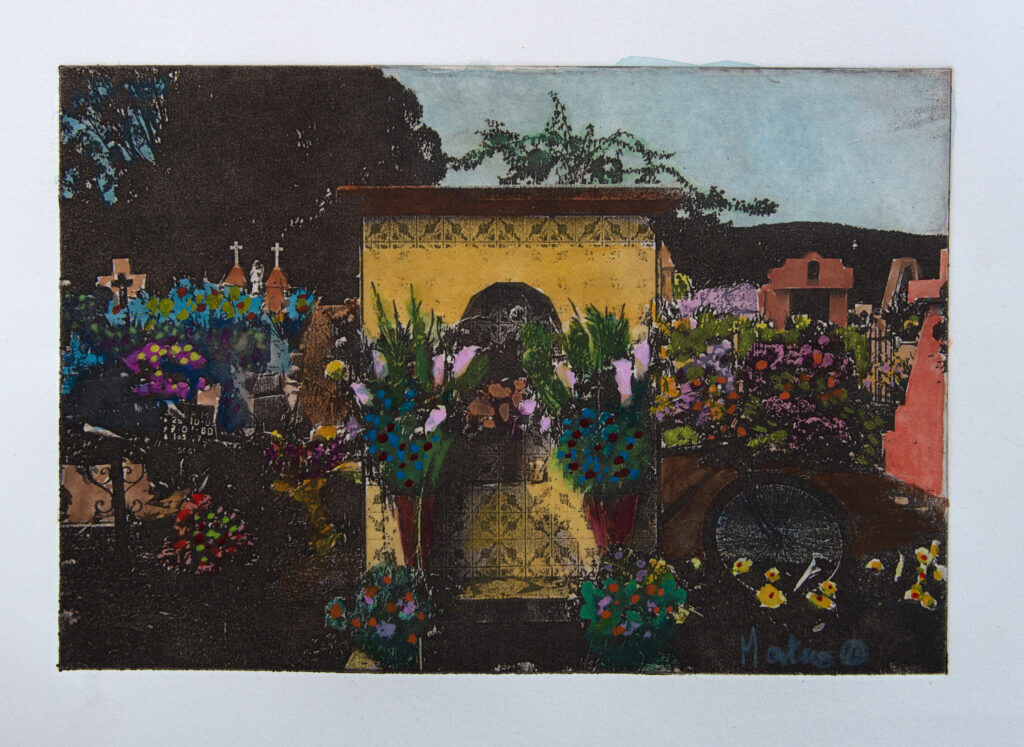
“It was wonderful, very quiet, and people went directly to graveyards to put stuff down on tomb,” Montero said.
“There were lots of flowers because people don’t have money to buy statues or crosses so they make their own. One woman and man has a Virgin Mary made of marigold. They’re very resourceful about what they put on the graves. It might be a hairbrush or comb, a pack of cigarettes,” she said, recalling the experience.
“They take food to graveyards and stay all night singing and hanging around with candles everywhere — tall candles about 5 feet high. In the morning, they eat the foods and talk to the dead,” she said. “It was great to see everybody get into it and make altars and keep them up for a couple of days on their porches.”
For Montera, observing the Day of the Dead in Mexico inspired her to come to terms with mortality. “It really helped me because I was fearing my father’s death, and when we went down and saw the celebration, I had great epiphany that it was something wonderful,” she said. “Celebrating the Day of the Dead is good therapy.”
The Regis exhibit also showcases works by Regis alumni Angel Estrada, Ada Gonzalez, Kim Gutierrez and Cipriano Ortega, the son of Ortega and Montero. Art by Regis faculty member Gabriel Carrion and a recent Regis instructor, Veronica Herrera, are featured in the show, along with George Rivera, Arlette Lucero, Matt Jaramillo and Anthony Alemán.