







Aurora’s water policy could redefine the West | Michael A. Hancock
Turn the tap in Aurora and water flows. Most residents never think about what it takes to make that happen. But behind that simple act, Aurora has been quietly rewriting one of the oldest — and most contentious — stories in the West: the fight between cities and farms over water.

For decades, Colorado’s cities followed a pattern known as “buy and dry.” Urban growth meant purchasing agricultural water rights, diverting them to municipal systems, and leaving rural land to die. The cities thrived. The farm towns shriveled. But Aurora is doing something different — something that could become a model for the future.
Instead of permanently taking water away from farms, Aurora has begun entering into shared-use partnerships that allow farmers to keep working the land most years, while the city temporarily diverts water only in drought years. It’s called interruptible supply, and it’s a win for both sides. Farmers get a financial partner when times are tough, and the city gets a reliable drought reserve without destroying the communities that produce our food.
One such example is Aurora’s Catlin Canal partnership. Under the agreement, local farmers continue to cultivate their fields seven years out of 10. During the other three, Aurora takes the water it needs. When those fallow years end, the city helps re-establish crops, ensuring the soil stays healthy and the land remains productive. It’s an arrangement built not on extraction but on trust — a new kind of cooperation between the urban Front Range and the agricultural Arkansas Valley.
Much of this work is anchored at Rocky Ford, where Aurora’s water management team maintains thousands of acres of farmland and open pasture along the Arkansas River. There, city staff oversee grazing operations, irrigation improvements, and revegetation projects that keep the land alive while balancing municipal supply. What was once viewed as “foreign territory” for a Front Range city has become a living example of long-term stewardship — a partnership built on mutual respect rather than extraction.
The city’s staff and council deserve credit for recognizing that water, not land, defines the city’s future. Aurora is one of the fastest-growing communities in the state, yet its leaders are openly acknowledging that there’s a limit to how far growth can go. The reality is that Aurora’s water supply from the Arkansas River Basin is capped. Once that ceiling is reached, the city can’t just annex more land and assume the water will follow. Growth has to become intentional — designed to fit within the natural limits of supply.
That kind of realism marks a civic turning point. Aurora is no longer a city simply chasing expansion; it’s maturing into a community that understands the responsibility that comes with size. It’s learning that progress sometimes means knowing when to stop.
There’s also a moral dimension to what’s happening. In the past, city water projects often left rural counties with less water, lower tax revenue and empty storefronts. Aurora is working to avoid that. When farmland is converted for city use, the city makes payments in lieu of taxes to counties like Otero so they don’t lose vital revenue for schools and services. When Aurora buys water but not land, it helps farmers modernize irrigation systems and sustain their operations. The message is simple: urban prosperity shouldn’t come at the expense of rural collapse.
None of this is simple work. Aurora has to navigate a maze of state compacts, federal reservoirs, and local water boards — many of which don’t give the city formal representation, even as Aurora contributes financially. But the city’s water managers have adopted a posture that’s pragmatic, not combative: build relationships, keep promises, and find ways for everyone involved to benefit. In the world of Western water politics, that’s practically revolutionary.
Council members also understand that public education is critical. Most residents have little sense of where their water comes from or how limited it really is. That’s changing. The city is considering policies — like serving water in restaurants only upon request — not as mandates, but as conversation starters. Tours of Aurora’s treatment plants and trans-mountain projects are turning everyday citizens into advocates who finally grasp the complexity behind the faucet. As one council member put it, “We have to talk to people like they’re in second grade — because if they don’t understand, they can’t help.”
The deeper point is cultural. The old Western myth was that cities could grow endlessly if they were clever enough to move water from somewhere else. Aurora is quietly disproving that myth. Its leaders are showing that it’s possible to grow responsibly, to treat farmers as partners, and to plan for a future bounded by stewardship rather than conquest.
If Aurora succeeds in locking in a stable water portfolio while keeping the rural economies it touches alive, it won’t just secure its own future — it will have drawn a new map for the entire region. Other Front Range cities are watching. So are the rural communities that have long feared the sound of urban pipelines.
In a century when the West’s defining challenge is how to live within our limits, Aurora’s answer is refreshingly wise: don’t just buy water — earn it. Learn to farm, learn to share, and learn to grow only as fast as nature allows. That’s not just water policy. That’s what civic maturity looks like.
Michael A. Hancock is a retired high-tech business executive and a Coloradan since 1973. Originally from Texas, he is a musician, composer, software engineer and U.S. Air Force veteran whose wide-ranging interests — from science and religion to politics, the arts and philosophy — shape his perspective on culture, innovation and what it means to be a Coloradan.

Victims of the drug trade
David Olesky
dolesky@gmail.com
Updated 4 days ago
Two months ago, I crossed two milestones. It was 25 years since graduating the Drug Enforcement Administration (DEA) Academy. It was also the same day I turned 50. When I applied to DEA, I was still living in my New...

David Olesky
Reporter

The First Amendment protects the Second | Jon Caldara
Jon Caldara
jon-caldara@denvergazette.com
Updated 3 days ago
It’s not an attack on the Second Amendment, but the First Amendment. I know this is going to sound crazy but, there was a time when liberals, not conservatives, were the champions of free speech. Today? Now in Colorado it...

Jon Caldara
Reporter
Shedding tears over NREL’s demise | Pius Kamau
Pius Kamau
pius-kamau@denvergazette.com
Updated 3 days ago
Donald Trump’s attempts to unwind progress in environmental matters hasn’t met much resistance from scientific-minded Republicans. The former National Renewable Energy Laboratory, NREL, is now NLR – National Laboratory of the Rockies. Trump excised the RE bit claiming that climate change...

Pius Kamau
Reporter
The freest man in Colorado history | Vince Bzdek
Vince Bzdek
vince-bzdek@denvergazette.com
Updated 21 hours ago
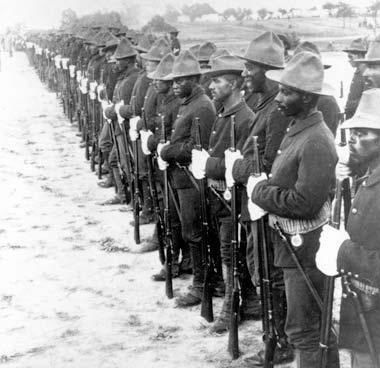
Every Coloradan should know the story of Buffalo Soldier John Taylor, who fought harder and longer than perhaps any man in our history to be truly free. Taylor’s story stands out above all others in a thought-provoking exhibit about Buffalo...

Vince Bzdek
Reporter
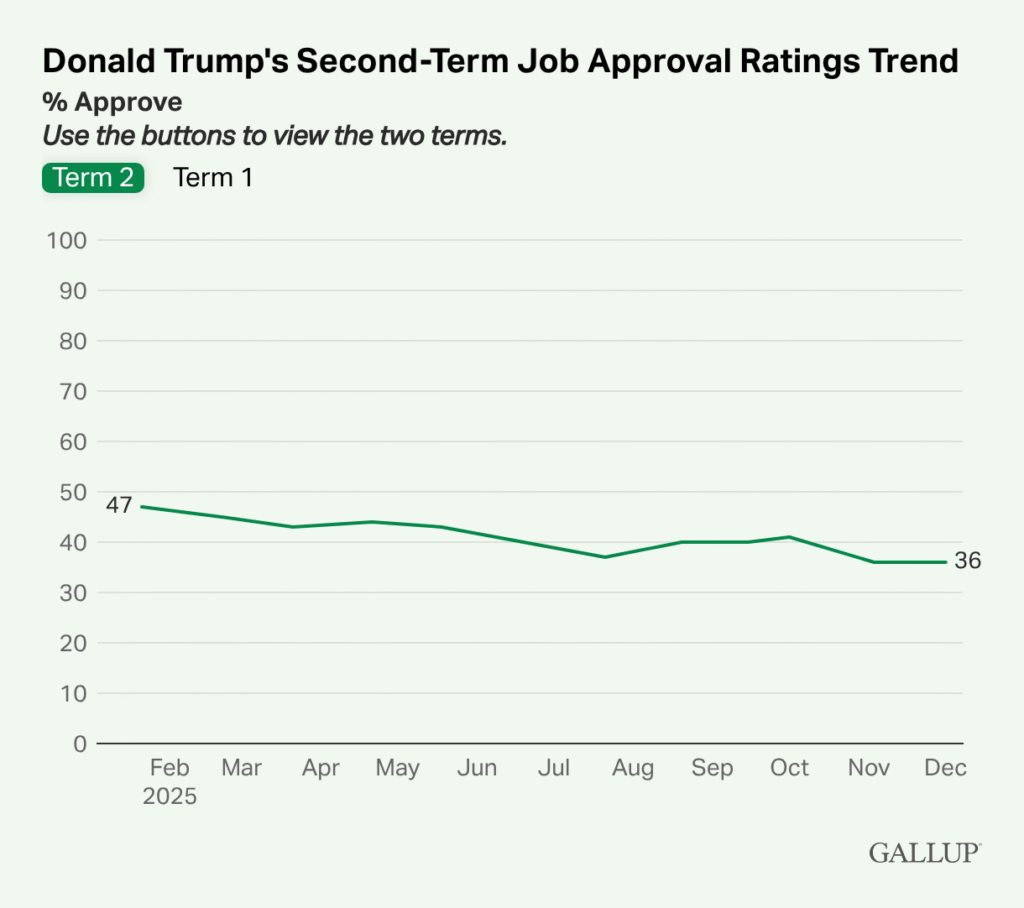
What Gallup polls teach us about presidents | Cronin and Loevy
Tom Cronin Bob Loevy
tom-cronin-bob-loevy@gazette.com
Updated 1 day ago
The Gallup organization, founded by George Gallup, announced on Feb. 11 they will no longer conduct their well-known polls that rate whether Americans approve or disapprove of the way presidents are handling their job. Gallup began these polls in the...

Tom Cronin Bob Loevy
Reporter

Keep Colorado out of national partisan power grab | Jimmy Sengenberger
Jimmy Sengenberger
jimmy-sengenberger@denvergazette.com
Updated 3 days ago
It’s billed as establishing “a level playing field” by “fighting back against Trump’s election-rigging.” But a campaign to get voters to throw out Colorado’s independent redistricting system would do exactly the opposite. The new political committee, Coloradans for a Level...

Jimmy Sengenberger
Reporter
GUEST COLUMN: Aurora City Council should stand with city’s youth
Alison Reidmohr
aReidmohr@gmail.com
Updated 3 days ago
I had just bought a home in Aurora three years ago when I found out I was going to become a mom. I quickly found out that the public perception of Aurora was that it was an unsuitable place to...

Alison Reidmohr
Reporter
GUEST COLUMN: Colorado’s once-in-a-generation opportunity — if we don’t regulate it away
Mark Witkiewicz
markwit@gmail.com
Updated 4 days ago
Colorado is at an inflection point. As lawmakers debate how to regulate data centers, which are the backbone infrastructure powering everything from cloud computing to artificial intelligence, we face a simple but consequential question: will Colorado help shape the next...

Mark Witkiewicz
Reporter
When improvement isn’t enough | Michael A. Hancock
Michael Hancock
michael-hancock@gazette.com
Updated 5 days ago
At a recent Aurora Public Safety Committee meeting, Police Chief Todd Chamberlain did something that has become surprisingly rare in civic life: he presented operational reform backed by measurable results. For the past 18 months, the Aurora Police Department has...
Michael Hancock
Reporter
Protecting Colorado’s kids — when lawmakers won’t | Jimmy Sengenberger
Jimmy Sengenberger
jimmy-sengenberger@denvergazette.com
Updated 6 days ago
At a time when state lawmakers are pushing a radical bill to decriminalize prostitution with no regulation or restrictions, concerned Colorado parents are stepping in where our legislators fear to tread: protecting Colorado’s kids. A grassroots coalition led by the...
Jimmy Sengenberger
Reporter
PREV
PREVIOUS

EDITORIAL: Will Bennet, Hick help reopen our government?
Now that the nation’s largest labor union for federal employees — a bastion of Democratic Party support — is calling on U.S. Senate Democrats to end the federal government shutdown, will the lawmakers listen? And will Colorado’s own Democratic U.S. Sens. Michael Bennet and John Hickenlooper heed the union’s appeal to their party this week […]

EDITORIAL: One Denver City Council is enough
An old quip holds that no one’s life, liberty or property are safe while the legislature is in session. The same arguably applies to Denver’s City Council, given its ability to wreak havoc. As for the groundbreaking “civic assembly” that one Denver council member is now proposing to convene — sometime next year — we […]