







GUEST OPINION: Time to sunset some zombies

Every Halloween we see people dressed as zombies, imitating the catatonic and clumsy evildoers in nearly 600 bad movies. In Haitian folklore, a zombie is a dead body reanimated through Vodou magic, but in the movies they all have one thing in common: no matter how many times they are killed, they keep coming back.
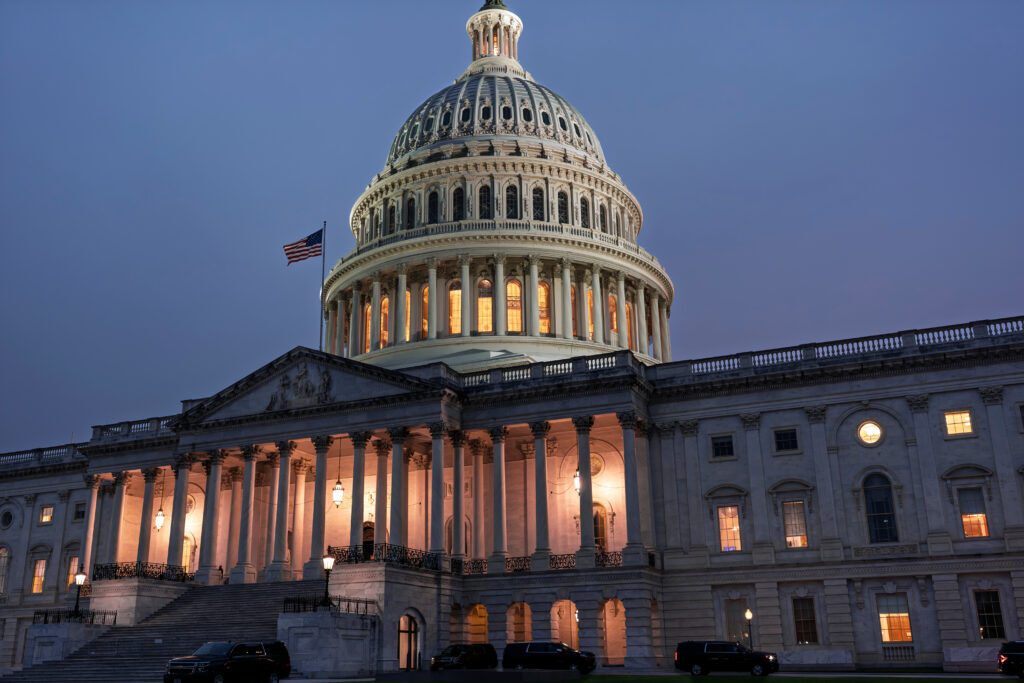
In government the word “zombie” commonly describes federal programs – sometimes entire agencies – which have expired but nevertheless continue operating as if nothing has changed. There are hundreds of them.
The Congressional Budget Office (CBO) issues annual reports on “expired and expiring authorizations,” and the number and scope of such programs – now called “zombie programs” – is stunning. At the beginning of 2025, the preliminary report showed that Congress had appropriated a half trillion dollars – $500,000,000,000 – to 457 agencies/programs whose legal authority to exist had expired. Another 304 programs have expired since then – all of them still operating.
No wonder Ronald Reagan said the nearest thing to eternal life on Earth is a government program.
It is important to note the difference between agencies’ legal “authorization” – the laws under which Congress creates agencies and programs, giving them legal “authority” – and their annual appropriations – the money with which to carry out their duties. Legally, Congress must pass both. Every agency needs the law telling it what to do, and the money to do it. Under its own rules, Congress cannot appropriate money to programs that do not have “authorization” laws already on the books. Members in both Houses can raise points of order against even considering appropriations for programs “not authorized by law.” Yet both Houses ignore that rule – year after year after year. Points of order are often raised but routinely overruled, usually by voice votes, or even by unanimous consent with no vote at all.
Congress has become mostly dysfunctional with respect to both the authorization bills and the appropriations. In fact, it seems almost a sure bet that Congress can’t pass any bill on any subject anymore, so fierce is the infighting and partisan bickering. That leaves the executive branch free to operate under policies set by executive orders rather than laws. And the money flies in on autopilot with Congress hardly involved at all.
That’s because Congress no longer passes the “required” annual appropriation bills. There are 12 of them, but it has been 32 years since Congress passed all 12 – a decade since it has passed even one of them. So, because money cannot be spent without an appropriation, both Houses hastily throw everything together in “continuing resolutions,” funding the entire government at existing levels for a few weeks at a time, beginning the whole embarrassing process again.
The same dysfunction also prevents many of the existing authorizations from being renewed, since Members rarely agree among themselves on any needed changes or updates in policy. Thus, much of the government operates on autopilot without congressional authority or oversight. The task is not as daunting as it might seem. Much of the money flowing to “zombie programs” involves only 23 specific expired laws, according to the CBO report. Those include authorizations for veterans’ health care, foreign relations, national defense, energy policy, housing, Head Start, and a few others. Several entire agencies have expired, including the National Oceanic and Atmospheric Administration, Federal Election Commission, Federal Aviation Administration, and NASA. A few others have never been authorized by Congress at all, including FEMA and OMB (both created by executive orders, not laws).
That is not an insurmountable workload, even for politicians: this year Congress has already enacted 36 laws, and the previous Congress enacted 274 in two years. Many of those were inconsequential, which is why Members were able to agree on them. But surely continuing authority for the $835 billion national defense system, or the $44 billion energy and water programs, should be higher priorities than naming post offices after dead people.
I’m glad that many, if not most, federal programs have expiration dates. Coloradans are justifiably proud that their state became the first, in 1976, to enact a state “sunset law,” under which regulatory agencies and programs are automatically discontinued after a specified time, unless reauthorized by the legislature. At least 27 states have enacted various sunset laws since then, roughly half of which are still in force, and we often hear advocates ask why the federal government doesn’t have similar protections against eternal bureaucracies. But in fact, most federal programs and agencies do have expiration dates. The problem is that under the irresponsible routine that has evolved in recent decades, expired programs get automatically continued, not automatically abolished.
That’s why, legal authority notwithstanding, federal agencies just keep going, like the zombies that can never be killed. Congress should fix the sunset process to be more like Colorado. If re-authorizations are not passed, programs should automatically be abolished, not continued. In the movies, zombies are not vampires, so they are not afraid of the sunset – but perhaps they should be.
Wil Armstrong is an entrepreneur and investor in Denver, and the chairman of the Board of Trustees at Colorado Christian University.


Colorado’s Jason Crow misfires over Iran | Jimmy Sengenberger
Jimmy Sengenberger
jimmy-sengenberger@denvergazette.com
Updated 2 days ago
Over the weekend, President Donald Trump ordered Operation Epic Fury — a bold strike on Iran, conducted in tandem with the Israeli Defense Force. Some 40 members of Iran’s most senior political and military leadership were taken out in short order — including brutal...

Jimmy Sengenberger
Reporter

GUEST COLUMN: Another attempt at a fur ban? Still a ‘no’
Luke Wiedel
lwiedel@gmail.com
Updated 2 days ago
The Colorado Parks and Wildlife Commission (CPWC) will consider a petition to impose a statewide ban on the sale of fur at their March 4-5 or May 6-7 meetings. If you’re a Denver voter hearing about this petition for the...

Luke Wiedel
Reporter

Legislation on poison, poultry and prostitution dominate | Rachel Gabel
Rachel Gabel
rachel-gabel@denvergazette.com
Updated 2 days ago
Many weeks, my search history is odd but the past two weeks might worry our county sheriff if he didn’t know me as well as he does. This week has been the week of poison, poultry, and prostitution. Not to...

Rachel Gabel
Reporter

PERSPECTIVE: Jailbreak — Legislative Dems look to empty Colorado’s prisons
George Brauchler
george-brauchler@denvergazette.com
Updated 2 days ago
Colorado Democrats are working feverishly this legislative session to increase the rate at which convicted felons are released from our prisons back onto our streets. They claim they must, because of overcrowding and cost. Do not fall for that lie. ...

George Brauchler
Reporter

Are Colorado businesses leaving or evacuating? | Jon Caldara
Jon Caldara
jon-caldara@denvergazette.com
Updated 6 days ago
At this point, if you hear beeping downtown, it’s not a construction crew. It’s a company backing out. And look, I get it. Businesses relocate for all sorts of reasons: taxes, regulations, labor costs, office space, crime, commute times, the...

Jon Caldara
Reporter

GUEST OPINION: Generosity has defined Colorado for 150 years
Kyle Hybl
khybl1@gazette.com
Updated 5 days ago
What does it look like when a state takes care of its own? It looks like neighbors opening their homes to families displaced by wildfire. Volunteers standing shoulder to shoulder, offering food, clothing, and hope to people they have never...

Kyle Hybl
Reporter

Additional thoughts on State of the Union address/rally | Cronin and Loevy
Tom Cronin Bob Loevy
tom-cronin-bob-loevy@gazette.com
Updated 4 days ago
The U.S. Constitution’s Article II states that “He (the president) shall from time to time give to the Congress Information of the State of the Union, and recommend to their Consideration such Measures as he shall judge necessary and expedient...

Tom Cronin Bob Loevy
Reporter

What is the state legislature trying to hide?| Vince Bzdek
Vince Bzdek
vince-bzdek@denvergazette.com
Updated 4 days ago
What is it that the State Legislature is trying to hide? A bill that passed out of committee last week lets governments squirrel away important public notices on their own websites rather than publishing them in newspapers and other news...

Vince Bzdek
Reporter
Cute puppy overload and an audition of a different kind: Capitol M | Week of Feb. 28, 2026
Marianne Goodland
marianne-goodland@denvergazette.com
Updated 6 days ago
The lighter side of the Capitol, and most days, you ought to be really grateful for it. There’s a rumor (jk) floating around that an amendment is coming for the bill to legalize prostitution. The amendment would ban condoms made...

Marianne Goodland
Reporter

Union kills safeguards for Colorado schoolkids | Jimmy Sengenberger
Jimmy Sengenberger
jimmy-sengenberger@denvergazette.com
Updated 6 days ago
Without giving it a second thought, Democrats on the state Senate’s “kill committee” shot down a bill to keep dangerous public school employees from quietly moving between districts — even as supporters and critics alike urged amendments to make it work. Republican Sen. Mark Baisley, whose legislative...
Jimmy Sengenberger
Reporter
PREV
PREVIOUS

Aurora’s water policy could redefine the West | Michael A. Hancock
Turn the tap in Aurora and water flows. Most residents never think about what it takes to make that happen. But behind that simple act, Aurora has been quietly rewriting one of the oldest — and most contentious — stories in the West: the fight between cities and farms over water. For decades, Colorado’s cities […]

EDITORIAL: Colorado’s wolf plan flouts federal law
When Coloradans narrowly voted to reintroduce wolves in 2020, they were told it would restore Colorado’s natural balance and bring back an endangered species that belonged here. But the people who brought you the wolf in an effort to “restore” a species may be violating the very federal act that’s supposed to protect endangered species […]