








Gov. Jared Polis’ budget proposal faces backlash over Medicaid and Pinnacol deal

Gov. Jared Polis’ proposed state budget for 2026-27 drew sharp criticism Wednesday from the legislature’s Joint Budget Committee, as lawmakers from both parties criticized plans to slow Medicaid spending growth and rely on a deal to privatize Pinnacol Assurance to generate revenue.
Pinnacol, a quasi-state agency, is the state’s largest provider of workers’ compensation insurance.
Polis has already cut $79 million in the current budget, primarily for rates paid to Medicaid providers in dental and behavioral health programs, as well as to services to children with disabilities.
The governor’s 2026-27 budget proposes an additional $197.7 million in general fund dollars, or about 5.6%, in the Medicaid program. But the projected growth is estimated at 11.9% – at a cost of $631.4 million. He has also brought in a national expert to review Medicaid trends.
Polis told the Joint Budget Committee that Medicaid is the fastest-growing portion of the state’s spending – growth that, he said, isn’t sustainable.
JBC Vice Chair Sen. Jeff Bridges, D-Greenwood Village, said there are only three levers when it comes to Medicaid: reducing who receives benefits, decreasing the benefits they receive or cutting what the state pays.
With that in mind, the legislator asked: What’s the process for making reductions?
Polis responded that the first — reducing who receives benefits — is not on the table.
“The worst decision” for the health of recipients is to lose coverage, he said.
His administration is looking for “better value,” he said, which he said results in better health outcomes. High Medicaid spending has not resulted in better health outcomes, and the state should focus on which investments will lead in that direction, he said.
The national expert’s report would be finalized by February.
Most of the committee members were not pleased with the governor’s Medicaid proposal.
Sen. Judy Amabile, D-Boulder, whose focus has been on mental health services, said the cuts, particularly in provider rates, will impact the state’s most vulnerable residents. There will be long-term consequences for provider rates based on the decisions the state makes, she said. She added that will restrict the care those populations will get and potentially even drive people into more expensive institutional settings, including in behavioral health.
Polis responded that civil commitments may be more expensive but that they sometimes lead to better outcomes.
The committee’s newest member, Rep. Kyle Brown, D-Louisville, also criticized the Medicaid spending.
This doesn’t attack utilization, he said, adding, “It attacks the rates we pay providers.”
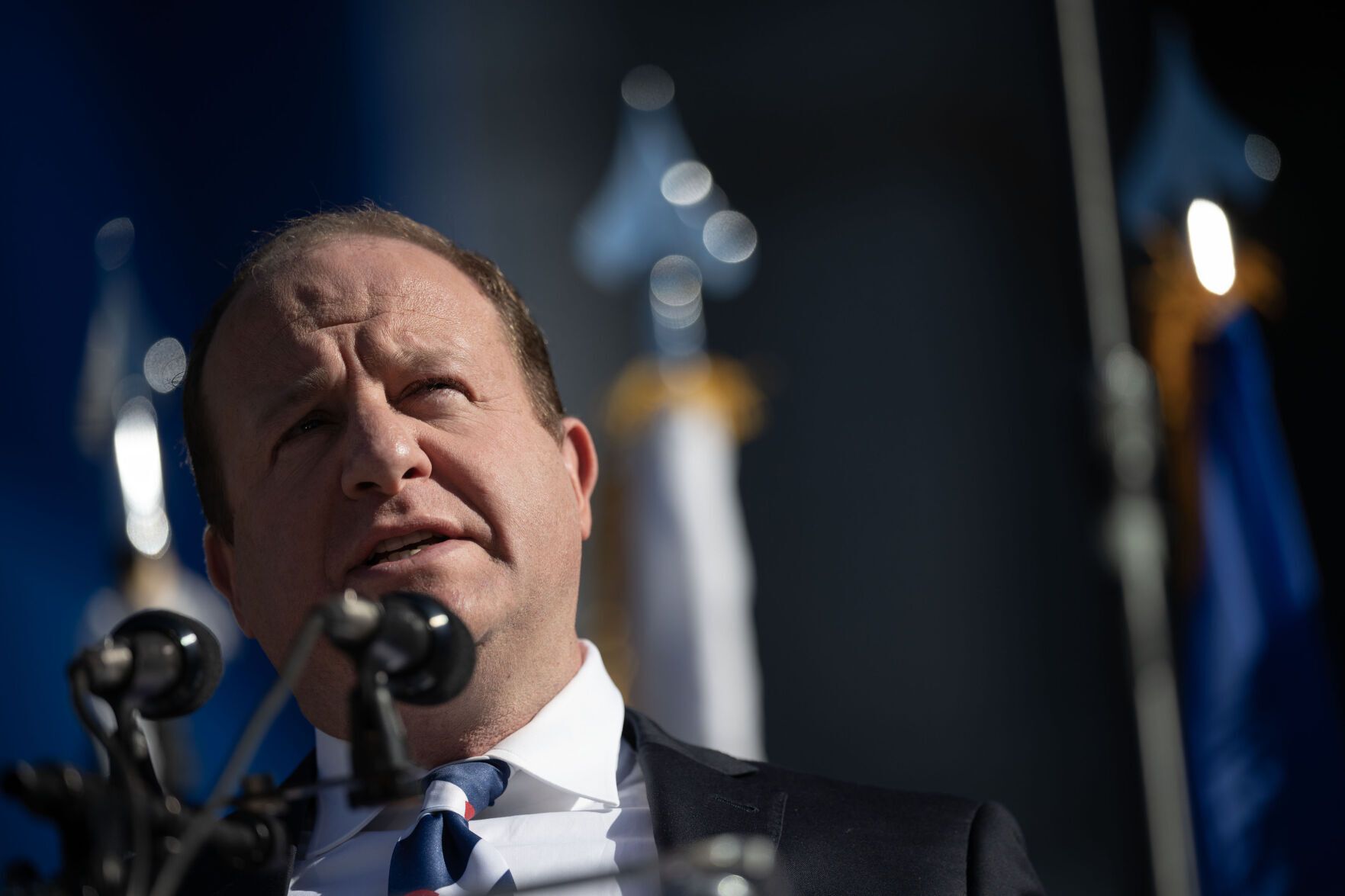
Polis pointed out that the state is paying 85% of Medicare reimbursement rates, when the national average is about 75%.
The governor has pushed back in the past on the JBC’s decisions to boost provider rates.
Mark Ferrandino, director of the governor’s Office of State Planning and Budgeting, noted that the state is implementing utilization management tools to slow the growth of expenditures. The state has also capped spending on dental services, where costs have tripled in the last few years.
Provider rate reductions are the simplest things they can do to help balance the budget, Ferrandino said.
Sen. Barbara Kirkmeyer, R-Brighton, said she is “incredibly disappointed” by the budget proposal. Kirkmeyer has advocated for provider rate increases in the last several years.
“This request isn’t balanced,” noting a $124 million placeholder on cuts for Medicaid with no explanation of where those cuts are coming from.
That $124.3 million placeholder says it is for “remaining savings from caseload for FY 2026-27 to hit a 5.6% growth target.”
The budget doesn’t hit the 15% required statutory reserve and won’t even meet a 13% reserve, she noted.
As for Medicaid, Kirkmeyer said the state should increase the budget, not cut it. When inflation was at 8%, the provider increase was 3%. In 2024, inflation stood ta 5.7% and the provider rate increased by 2.2%, she said.
The budget proposes cutting $30 million in support for children with autism, which she called “appalling.” And then there’s the cuts for maternal health in a state where 25 counties are now health care “deserts,” she added.
The hospital in Delta just closed its maternal health care ward, Banner Health in Greeley is closing its maternal health care, and pregnant women in the Arkansas Valley now have to drive for hours to deliver their babies, she told the governor.
“It’s not just people on Medicaid that are being impacted by the lack of access,” she said, adding, “This is not a responsible budget.”
She called the proposal not serious and a “retreat” from the state’s basic responsibilities.
Then there’s the Pinnacol proposal, which is supposed to provide the state with about $400 million to shore up the statutory reserve and pay for the senior and disabled veterans’ homestead exemptions.
“That’s a $400 million hole in the budget,” Kirkmeyer said.
Kirkmeyer said lawmakers met this week with the Public Employees’ Retirement Association (PERA), which is also a part of the deal. Under the proposal, Pinnacol must buy out its employees’ pensions, on top of the money it will pay to the state, which could be around $250 million.
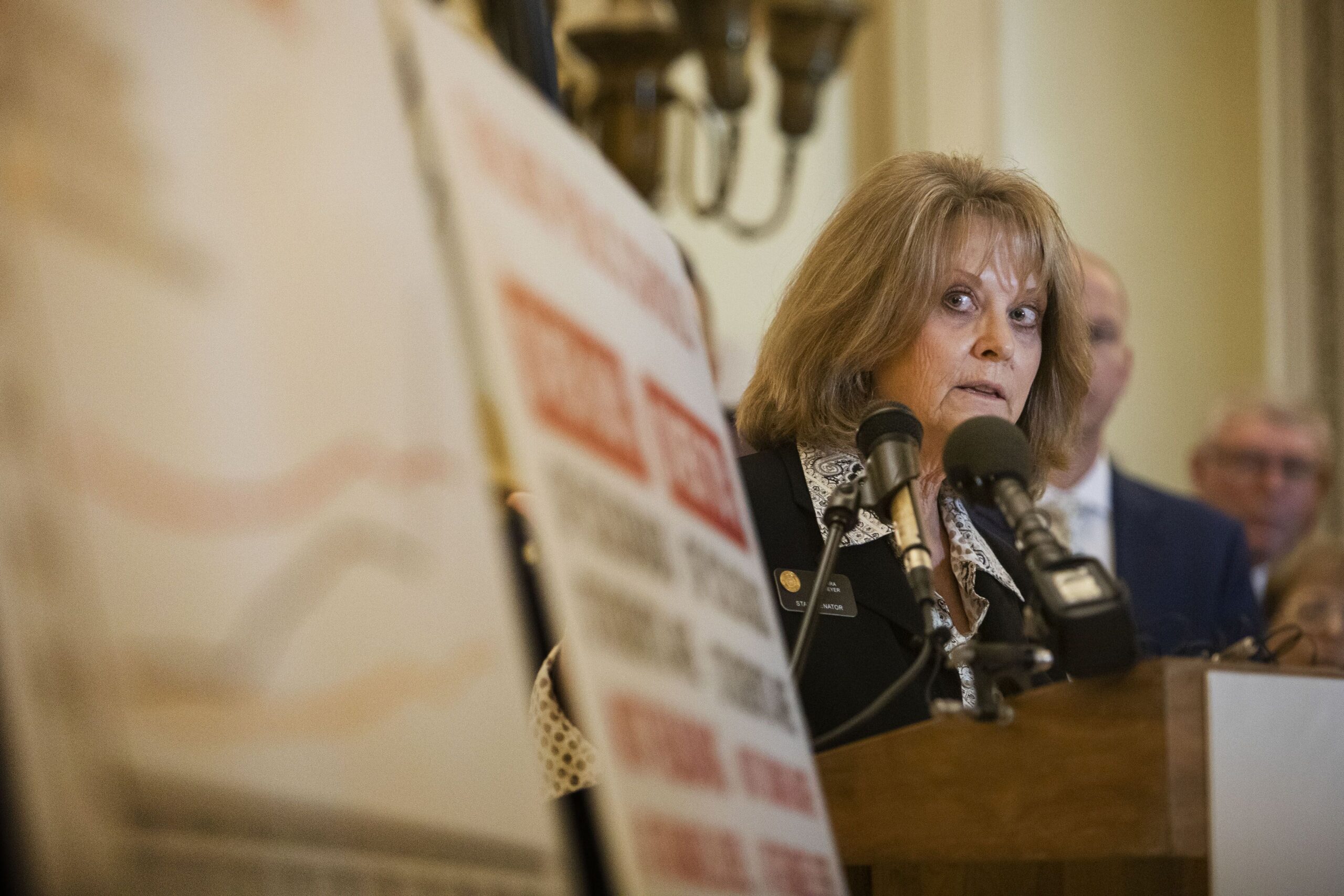
The Pinnacol proposal also drew worries from JBC Chair Rep. Emily Sirota, D-Denver.
“I can’t help but feel frustrated and anxious about what we have before us,” she said, noting a budget with a $400 million hole.
She noted a memo from the solicitor general that, she said, raised significant legal concerns about whose money this is. She said the governor’s proposal intends to balance the budget on the backs of workers and businesses.
If the legislature isn’t willing to approve the Pinnacol deal, how will policymakers make up that gap? Sirota asked.
Rep. Rick Taggart, R-Grand Junction, a business owner, questioned where the valuation came from and cited the lack of agreement on how much Pinnacol would pay PERA to buy out its employees’ share of the pension plan.
It’s one-time money, Polis responded. It will cover the senior homestead exemption, which won’t be paid otherwise since the reductions in tax revenue to the state, a result of the federal H.R. 1, mean Colorado won’t have a Taxpayer’s Bill of Rights (TABOR) surplus next year, which is what pays for the property tax rebate.
Ferrandino said his office would provide the valuation to lawmakers as to the PERA cost, which is tied to a discount rate (between 5.25%, PERA’s demand rate, and the current rate of 7.25%). A higher discount rate means a lower cost for getting out of PERA. And at 7.25%, the state could realize an additional $75 million-$150 million, he said.
Kirkmeyer also cited the lack of meaningful budget cuts in state departments, at the same time that the budget proposal seeks to add 350 more state employees.
That prompted Taggart to ask when the administration will get serious about efficiencies.
“We used to balance the budget on the backs of students; now we’re balancing it on the backs of people who rely on Medicaid,” Taggart said. “This is a crisis of priorities.”
Polis responded that some of the 350 new employees are for the Judicial Department, which is increasing the number of judges.
But increasing Medicaid will crowd out funding for education, roads and public safety, Polis said, adding that is not carving the right direction for the state.
There is no “hole” in the budget – it’s balanced, he insisted.
As for Pinnacol, that money generated will not go toward operating costs, and if it doesn’t work out, the state can suspend the homestead exemption, he said. That has been done before.
Ferrandino noted that most of the money in the state budget pays for things like early childhood learning, higher education, health care providers and K-12 schools.
Only about 10% of the general fund budget goes toward operating costs, he said.
The administration could cut 10%, which would yield $100 million to $200 million in savings, but it wouldn’t address Medicaid growth, Ferrandino also said.
The JBC also heard from its staff director on the budget.
“I’m getting a bit of a ‘Groundhog Day’ kind of feel,” said Craig Harper. “It seems like each year I come in and there’s a shortfall of a billion dollars to talk about.”
Harper said his preliminary estimate predicts a billion-dollar shortfall in next year’s budget, and the following year, too.
The state has been spending more than it’s taking in on an annual basis, Harper said, and the impact of H.R. 1 means “we will be in the same situation next year.”
The September revenue forecast had predicted a shortfall of around $841.1 million, but it didn’t account for updated Medicaid caseload costs, which pushed that figure higher.
K-12 costs are also going to require a “significant” general fund bump beginning in the 2027-28 budget based on current forecasts, he said.
The budget committee has fewer options to address those shortfalls in the upcoming budget than it did for the shortfall in the 2025-26 budget, Harper said. Lawmakers had used several one-time tools and cash fund transfers to balance the budget, but those aren’t available anymore.
While there are cuts in the budget, they aren’t enough to balance it, and that balancing hinges on the $400 million assumption from the Pinnacol deal, he said.


Woman fatally shot by ICE agent in Minneapolis originally from Colorado Springs area
The Minnesota Star Tribune
the-minnesota-star-tribune@gazette.com
Updated 4 hours ago
MINNEAPOLIS — A federal immigration agent shot and killed a 37-year-old woman Wednesday morning during an enforcement operation in south Minneapolis, prompting protests, sharp rebukes from city leaders and calls for an independent investigation. The Department of Homeland Security said...

The Minnesota Star Tribune
Reporter

729 employees to be laid off at USPS transfer hub in Aurora
Kyla Pearce
kyla-pearce@denvergazette.com
Updated 6 hours ago
Mail transit company Alan Ritchey, Inc. is shutting down operations at a USPS transfer hub in Aurora in late February, resulting in more than 700 layoffs, according to a Tuesday WARN letter. In the letter sent to Aurora Mayor Mike...

Kyla Pearce
Reporter

Denver may revise animal bite penalties to consider criminal intent
Deborah Grigsby
deborah.smith@denvergazette.com
Updated 5 hours ago
Denver pet owners are responsible for bites and injuries caused by their animals, facing both civil penalties and criminal charges of up to $999 and 300 days in jail. However, some city officials have suggested that the city consider revisions...

Deborah Grigsby
Reporter

Senate may invoke War Powers, as Rubio promises new government in Venezuela
Mary Shinn
mary-shinn@denvergazette.com
Updated 6 hours ago
The Senate could vote Thursday to block the Trump administration from sending troops into Venezuela, as Secretary of State Marco Rubio laid out a vision to open up the country’s economy and allow for a government transition. The prospect of...

Mary Shinn
Reporter

Rubio to meet with Danish leadership as Trump pushes to take over Greenland
Associated Press
associated-press@denvergazette.com
Updated 7 hours ago
Secretary of State Marco Rubio said he plans to meet with Danish officials next week after the Trump administration doubled down on its intention to acquire Greenland, the strategic Arctic island that is a self-governing territory of Denmark. Since the capture of former...

Associated Press
Reporter

Weekend things to do around Denver and beyond: National Western Stock Show and more
Linda Navarro
linda-navarro@denvergazette.com
Updated 11 hours ago
Each Thursday, explore Denver’s essential weekend events curated by The Denver Gazette. Dive into cultural experiences and entertainment delights across the city. Whether you enjoy art galleries, pottery, or outdoor sports, there’s something for everyone in Denver’s vibrant cultural scene....

Linda Navarro
Reporter

Douglas County commissioners speak on revisiting ‘home rule’ proposal after last year’s failure
Noah Festenstein
noah-festenstein@denvergazette.com
Updated 7 hours ago
The future of Douglas County chasing “home rule” status may not be in the hands of commissioners, but rather by residents who are considering placing the issue back on the ballot, according to one commissioner. Last March, Douglas County commissioners...

Noah Festenstein
Reporter

Suspect arrested in connection with fatal Highlands neighborhood stabbing
Michael Braithwaite
michael.braithwaite@gazette.com
Updated 9 hours ago
Police announced Wednesday they had arrested a suspect in connection with a fatal stabbing in Denver’s Highlands neighborhood Monday night. Christopher Fielder, 38, faces second-degree murder charges on allegations he fatally stabbed a man in the 4200 block of North...

Michael Braithwaite
Reporter

Aurora man identified as victim in fatal head-on crash near Silverthorne
Michael Braithwaite
michael.braithwaite@gazette.com
Updated 9 hours ago
A 21-year-old Aurora man was identified as the victim of a head-on crash that took place on U.S. 9 northwest of Silverthorne Tuesday morning. The man, who was driving a Dodge Dakota pickup truck, was driving northbound on the highway...
Michael Braithwaite
Reporter

After October labor data skip, Colorado’s unemployment rate fell to 3.9% in November
Bernadette Berdychowski
bernadette.berdychowski@denvergazette.com
Updated 10 hours ago
Colorado’s unemployment rate continued on its downward trend after peaking at 4.8% in May 2025. The state recorded a 3.9% unemployment rate in November, according to estimates from the Colorado Department of Labor and Employment released Wednesday, down from 4.1%...

Bernadette Berdychowski
Reporter
PREV
PREVIOUS

Denver Police Department celebrates 3 officers for acts of kindness
Three Denver police officers were recognized on Wednesday for extraordinary acts of compassion while on duty. The civilian awards, presented by the nonprofit organization Citizens Appreciate Police, were given to Capt. Daniel Morehead, Ofc. Robert Anderson, and Ofc. Michael Barrios. “Our CAP Board is honored to bring to light just a few of the many […]

Denver's new women's soccer stadium to feature all-electric design
The national women’s soccer stadium to be built in Denver could be all electric. During the South Platte River committee meeting on Wednesday, Summit FC owner Robert Cohen said it would likely become the third all-electric stadium to be built in the U.S. The other two all-electric stadiums include Seattle’s Climate Pledge Arena, home of […]