







COLUMN: Aurora aims to transform dependency into dignity

Shantelle Anderson, who once slept under stairwells, is now in a major leadership role in one of Colorado’s boldest homelessness initiatives.
That’s not a feel-good story. It’s a strategic imperative.
On Monday, Nov. 17 in Aurora, the Regional Navigation Campus will open — a 600-bed facility that goes well beyond the old shelter paradigm. Most cities build a bed, fill it, maybe paint it pretty. Aurora didn’t stop there. It started with a different premise: that transformation — not maintenance — is the goal.

The homelessness debate has long been framed as a false binary: housing first or work first. One side says: give people a unit and the rest falls into place. The other says: no help unless you’re earning. Both contain truth — but both fail when treated as singular.
As Advance Pathways’ board chair Owen McAleer puts it, the truth lies in the middle. Some people will, by virtue of disability or trauma, need a lifetime of structured support. Others are capable of self-sufficiency if given meaningful structure, dignity, and expectation. Treat them the same, and you fail both.
And history shows something dangerous: giving housing unconditionally, without programming or accountability, worsens outcomes. One Denver study found higher mortality among housed persons than those still on the streets.
Here’s how Aurora flips the script:
- A single campus where someone can enter at the lowest barrier, move to transitional housing, then launch into independent life — all guided by the same staff and case manager.
- Services built in, not tacked on: addiction recovery, job training, legal help, life skills, all housed in-house.
- Access doesn’t require residency: someone still in an apartment but struggling can plug into job training or support without “living in a shelter first.”
- Incentives, not hand-wringing: show up, engage, improve — you earn more stability. Backslide — you lose privileges. Less punishment. More consequences.
This is where the model bites into reality. Capital costs (for buying/renovating the former Crowne Plaza) were funded by public funds: state navigation grants, local ARPA, and federal HOME-ARP programs. But operations? That’s where the game changed.
Advance Pathways is responsible for raising 75% of annual operational costs through philanthropy, private foundations, and community fundraising. Aurora’s contribution is capped (~25% of ops), not open-ended. In short, the nonprofit must deliver results to sustain the work.
No one is paid to house people. They’re paid to transition them. That changes incentives.
Yes, on paper it’s strategic. In practice, it’s personal.
As program director, Anderson’s story is raw: from Park Hill child of addiction, teenage mother, homeless, addict, living behind dumpsters, to recovery, nursing school, recovery-home work, and now leading Aurora’s campus.
McAleer himself has over 40 years of sobriety and has turned his experience into a funding and service strategy. These are people who know what the “system” looks like when it fails — and how it must be built when it works.
Forget “meals served” or “beds filled.” Success here means: entry, progression, stable housing, then work and ultimately, alumni who mentor others.
Where a traditional shelter might convert 1-2 % of clients to stable housing/employment, Aurora hopes to hit 10 % and can scale upward. If that holds, we’re looking at results, not just promises.
Aurora’s ambition isn’t a local footnote. It’s a demonstration: cut homelessness by half, refine a model, and export it. This requires community-city partnership, private fundraising in parallel with public investment, and lived-experience leadership at the table. That’s not what most cities do. Most cities contract with nonprofits, pay them regardless of outcomes, keep programs compartmentalized, and sit back.
Aurora is doing the opposite. And that should raise a question for Denver, Boulder and cities nationwide: If this model works, what’s your excuse?
Anderson says to every guest who walks through the door, “When you feel like you can’t go on, fight for one more day. I’ll walk with you.” That is not sentimentality. It is strategy. It is structure. It is the kind of civic renewal we say we want — when we stop treating people as statistics and start treating them as citizens.
If Aurora succeeds, it won’t be because someone handed out beds. It will be because the system handed out trust, demanded responsibility, and never let go. And if that happens, the real question won’t be why Aurora tried this — it will be why the rest of Colorado didn’t.
Michael A. Hancock is a retired high-tech business executive and a Coloradan since 1973. Originally from Texas, he is a musician, composer, software engineer and U.S. Air Force veteran whose wide-ranging interests — from science and religion to politics, the arts and philosophy — shape his perspective on culture, innovation and what it means to be a Coloradan.

Victims of the drug trade
David Olesky
dolesky@gmail.com
Updated 3 days ago
Two months ago, I crossed two milestones. It was 25 years since graduating the Drug Enforcement Administration (DEA) Academy. It was also the same day I turned 50. When I applied to DEA, I was still living in my New...

David Olesky
Reporter

The First Amendment protects the Second | Jon Caldara
Jon Caldara
jon-caldara@denvergazette.com
Updated 3 days ago
It’s not an attack on the Second Amendment, but the First Amendment. I know this is going to sound crazy but, there was a time when liberals, not conservatives, were the champions of free speech. Today? Now in Colorado it...

Jon Caldara
Reporter
Shedding tears over NREL’s demise | Pius Kamau
Pius Kamau
pius-kamau@denvergazette.com
Updated 2 days ago
Donald Trump’s attempts to unwind progress in environmental matters hasn’t met much resistance from scientific-minded Republicans. The former National Renewable Energy Laboratory, NREL, is now NLR – National Laboratory of the Rockies. Trump excised the RE bit claiming that climate change...

Pius Kamau
Reporter
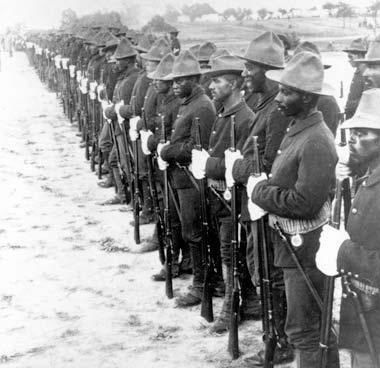
The freest man in Colorado history | Vince Bzdek
Vince Bzdek
vince-bzdek@denvergazette.com
Updated 18 hours ago
Every Coloradan should know the story of Buffalo Soldier John Taylor, who fought harder and longer than perhaps any man in our history to be truly free. Taylor’s story stands out above all others in a thought-provoking exhibit about Buffalo...

Vince Bzdek
Reporter

What Gallup polls teach us about presidents | Cronin and Loevy
Tom Cronin Bob Loevy
tom-cronin-bob-loevy@gazette.com
Updated 1 day ago
The Gallup organization, founded by George Gallup, announced on Feb. 11 they will no longer conduct their well-known polls that rate whether Americans approve or disapprove of the way presidents are handling their job. Gallup began these polls in the...

Tom Cronin Bob Loevy
Reporter

Keep Colorado out of national partisan power grab | Jimmy Sengenberger
Jimmy Sengenberger
jimmy-sengenberger@denvergazette.com
Updated 3 days ago
It’s billed as establishing “a level playing field” by “fighting back against Trump’s election-rigging.” But a campaign to get voters to throw out Colorado’s independent redistricting system would do exactly the opposite. The new political committee, Coloradans for a Level...

Jimmy Sengenberger
Reporter
GUEST COLUMN: Aurora City Council should stand with city’s youth
Alison Reidmohr
aReidmohr@gmail.com
Updated 2 days ago
I had just bought a home in Aurora three years ago when I found out I was going to become a mom. I quickly found out that the public perception of Aurora was that it was an unsuitable place to...

Alison Reidmohr
Reporter
GUEST COLUMN: Colorado’s once-in-a-generation opportunity — if we don’t regulate it away
Mark Witkiewicz
markwit@gmail.com
Updated 3 days ago
Colorado is at an inflection point. As lawmakers debate how to regulate data centers, which are the backbone infrastructure powering everything from cloud computing to artificial intelligence, we face a simple but consequential question: will Colorado help shape the next...

Mark Witkiewicz
Reporter
When improvement isn’t enough | Michael A. Hancock
Michael Hancock
michael-hancock@gazette.com
Updated 4 days ago
At a recent Aurora Public Safety Committee meeting, Police Chief Todd Chamberlain did something that has become surprisingly rare in civic life: he presented operational reform backed by measurable results. For the past 18 months, the Aurora Police Department has...
Michael Hancock
Reporter
Protecting Colorado’s kids — when lawmakers won’t | Jimmy Sengenberger
Jimmy Sengenberger
jimmy-sengenberger@denvergazette.com
Updated 5 days ago
At a time when state lawmakers are pushing a radical bill to decriminalize prostitution with no regulation or restrictions, concerned Colorado parents are stepping in where our legislators fear to tread: protecting Colorado’s kids. A grassroots coalition led by the...
Jimmy Sengenberger
Reporter
PREV
PREVIOUS

COLUMN: In Jeffco, taxpayers and community come last | Jimmy Sengenberger
On Thursday, Jeffco’s school board will approve the bargain sale of a closed school to the City of Lakewood — a sweetheart deal available only to cities and the county, at a below-market price. How sweet? The district will unload a property worth up to $12 million for $4 million, then watch Lakewood flip the […]

EDITORIAL: Springs council cops out on car camping
Springs residents only could be disappointed with their City Council’s decision Monday to postpone a measure reining in car camping. A crackdown was warranted. At issue is a mobile version of the tents and lean-tos that pop up around town in parks, at roadsides and along waterways. In this case, dilapidated RVs and other vehicles […]