







Understanding and preventing antimicrobial resistance

Antimicrobial resistance is a growing public health concern that occurs when bacteria, viruses, fungi and parasites stop responding to the drugs designed to address them.
This resistance makes infections harder to treat and increases the risk of disease spread, severe illness and death.
Adi Shah, an infectious disease specialist at Mayo Clinic, says AMR frequently happens when microorganisms such as bacteria and viruses are exposed to various and repeated episodes of antimicrobial use.
To combat antimicrobial resistance, Mayo Clinic has a stewardship team that leads the effort to promote the careful and correct use of infection-fighting medications. Among the team’s initiatives is an outpatient program that works with pharmacists, doctors, nurses and other healthcare professionals to improve how antimicrobial medicines are used.
“Our efforts have focused both on unnecessary antibiotic prescriptions overall and unnecessarily long durations of therapy,” says Dan Ilges, the clinical pharmacist lead for ambulatory antimicrobial stewardship efforts at Mayo Clinic in Arizona.
Experts underscore that patients play a critical role in the fight. Open communication with healthcare teams is essential.
“We know that for many germs, exposure to antibiotics and antifungals can increase the risk of resistance developing and resistant germs are more difficult to treat,” says Sara Ausman, the clinical pharmacist lead for antimicrobial stewardship efforts at Mayo Clinic Health System in Eau Claire, Wisconsin. “Antibiotics are useful tools but aren’t always the best treatment option.”
Ausman notes that for colds, your healthcare team will likely recommend over-the-counter remedies to address symptoms instead of antibiotics.
Ausman emphasizes that if you are prescribed an antibiotic, you should ask about the shortest prescription length that is needed to treat your infection, as well as whether antibiotics are the right choice for your symptoms.
Beyond appropriate antibiotic use, prevention is a powerful tool. Experts emphasize these simple, everyday practices:
–Wash your hands. Properly washing your hands removes germs to prevent infection of yourself and those around you.
–Vaccination is an important preventative step to improving public health and preventing the need for antimicrobials


Can deliberation save democracy? | Vince Bzdek
vince-bzdek
vince.bzdek@gazette.com
Updated 2 hours ago
By Vince Bzdek In September 2019, 523 Americans traveled to Dallas, Texas, for an experiment called “America in One Room.” The gathering was designed to test a theory: Could representative citizens deliberate productively even in an era of intense polarization?...

vince-bzdek
Reporter

Colorado health equity funder’s redirection debated
Debbie Kelley
debbie.kelley@gazette.com
Updated 15 hours ago
A redirection in grantmaking that began two years ago for The Colorado Trust, a 40-year-old Denver-headquartered funder, has led some employees to now voice concerns, which has reportedly put their jobs in jeopardy. The vice president of communications for the...

Debbie Kelley
Reporter

Battle of the Badges connects cops, community and cancer
John Moore
john.moore@denvergazette.com
Updated 44 minutes ago
For Aurora and Denver first responders, the gloves come on for a good time and a good cause Guns down, gloves up. That was the mantra last Saturday night for the 30 Denver and Aurora police officers, firefighters, corrections officers...

John Moore
Reporter

Europe faces gas trouble as war strains supplies and Russia weighs cut-off
Maydeen Merino, Washington Examiner
maydeen-merino-washington-examiner@import.placeholder
Updated 19 hours ago
Europe is facing major economic trouble due to constrained natural gas supplies as the war in Iran upends global energy flows, with further disruptions possible as Russia weighs suspending gas exports. In the days since the start of the war in Iran, Europe has seen a...

Maydeen Merino, Washington Examiner
Reporter

Hopes and fears: Colorado Iranians speak out on widening war
Mark Samuelson
mark.samuelson@denvergazette.com
Updated 2 hours ago
Group talks about young people protesting against the Islamic Republic, and Reza Pahlavi and the monarchy When Denver area real estate agent Fara Novin dined out for her birthday Friday night, Feb. 27, she blew out a candle on a...

Mark Samuelson
Reporter
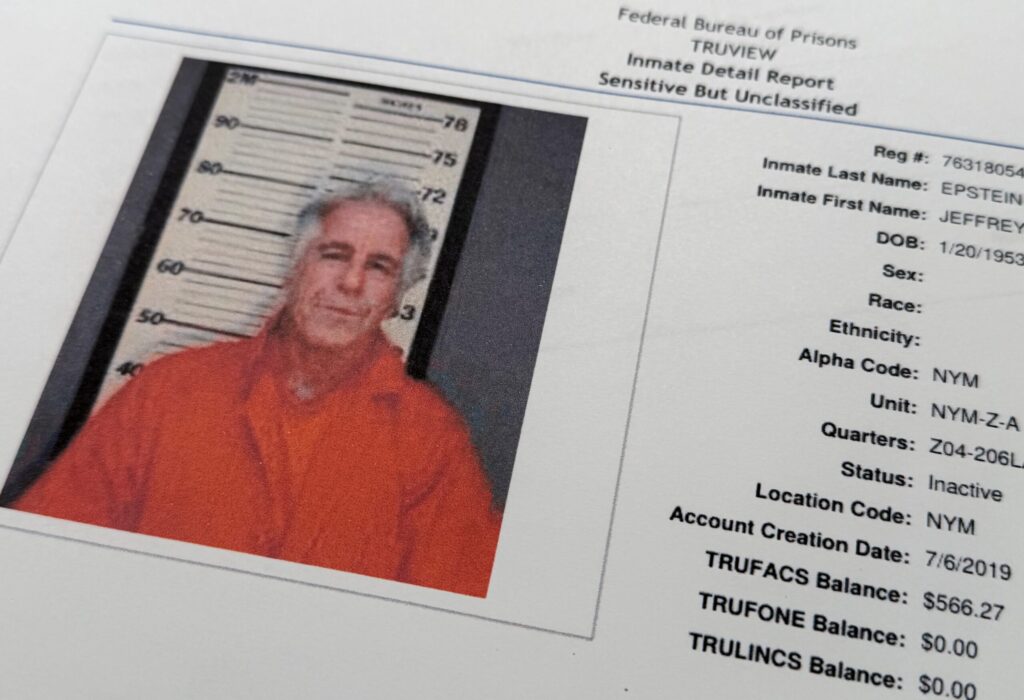
DOJ publishes more Epstein documents mentioning Trump after initial omission
Rena Rowe, Washington Examiner
rena.rowe.washington.examiner@gazetteedit.wpenginepowered.com
Updated 20 hours ago
The Justice Department released additional Epstein files on Thursday, including uncorroborated accusations from a woman claiming she was sexually assaulted by President Donald Trump. Last week, Rep. Robert Garcia (D-CA), the top Democrat on the House Oversight and Government Reform...

Rena Rowe, Washington Examiner
Reporter

Truck driver hospitalized, United flight deplaned after Denver airport crash
Michael Braithwaite
michael.braithwaite@gazette.com
Updated 18 hours ago
The driver of a de-icing truck was hospitalized and a United Airlines flight was deplaned after a crash at Denver International Airport Friday morning. Amid heavy snowfall, United Airlines flight 605 headed to Nashville hit the truck while leaving the...

Michael Braithwaite
Reporter

House GOP leaders begin push for reconciliation 2.0
Lauren Green, Washington Examiner
lauren.green.washington.examiner@gazetteedit.wpenginepowered.com
Updated 20 hours ago
House Republican leaders are pushing for a second party-line reconciliation bill and plan to discuss it at their upcoming policy retreat in Doral, Florida, next week. Sources close to GOP leadership told the Washington Examiner that Speaker Mike Johnson (R-LA)...

Lauren Green, Washington Examiner
Reporter

Trump confirms frustration over Noem’s $220 million ad campaign: ‘Didn’t know about it’
Emily Hallas, Washington Examiner
emily.hallas.washington.examiner@gazetteedit.wpenginepowered.com
Updated 20 hours ago
President Donald Trump questioned former Homeland Security Secretary Kristi Noem’s approval of a costly ad campaign prominently featuring herself. Noem has repeatedly claimed, including during congressional testimony on Tuesday, that Trump personally asked her to craft the DHS ad campaign,...

Emily Hallas, Washington Examiner
Reporter

Khamenei’s secret bunker under Tehran destroyed by Israeli military jet bombardment
Brady Knox, Washington Examiner
brady.knox.washington.examiner@gazetteedit.wpenginepowered.com
Updated 20 hours ago
The bunker created for former Iranian Ayatollah Ali Khamenei was reportedly still in use by senior Iranian figures when it was obliterated in a bombardment from 50 Israeli Air Force jets Friday. Khamenei was assassinated in an Israeli airstrike in...

Brady Knox, Washington Examiner
Reporter
PREV
PREVIOUS

Denver police officer found justified in fatal shooting of man with pellet gun
Three Denver police officers were found justified for a fatal August shooting of a man who carried a pellet gun loaded with live ammunition. In a Monday letter to Denver Police Department Chief Ron Thomas, Denver District Attorney John Walsh exonerated Ofc. Whaylen Phares, who shot and killed Javier Nava-Carbajal, 48, in the 4900 block […]

Denver area events for Nov. 18
If you have an event taking place in the Denver area, email information to carlotta.olson@gazette.com at least two weeks in advance. All events are listed in the calendar on space availability. Tuesday Emelise, Acoustic Rock — 6 p.m., Rosetta Hall, 1109 Walnut St., Boulder; rosettahall.com. Kat Ellis Ensemble — 6:30 p.m., Dazzle at Baur’s, 1080 14th St., […]