








Committee on Legal Services approves legal defense for 15 Colorado Democrats accused of accepting illegal gifts

The Colorado legislature’s legal services arm has approved a request from a group of Democrats for legal representation to defend an ethics complaint that accuses them of accepting illegal contributions to fund a retreat in Vail last month.
On Thursday, the Committee on Legal Services, a bipartisan panel, unanimously approved the request to hire Mark Grueskin of Denver-based firm Recht Kornfeld to represent 15 senators and representatives in an investigation by the Independent Ethics Commission.
On Wednesday, the ethics commission found that Colorado Common Cause’s complaints against 15 members of the Colorado Opportunity Caucus, a group of moderate Democrats in the House and Senate, were valid.
While the investigation moves forward for 15 of the Democrats accused, Common Cause, the organization that levied the complaints, dropped Rep. Shannon Bird of Westminster, from the list after her attorney proved she had removed herself as chair of the caucus and did not participate in the retreat.
Common Cause alleged that One Main Street Colorado, a political organization that has been criticized as a “dark money” group, organized a closed-door “summit” at the Sonnenalp Resort in Vail for business advocates to “educate” Opportunity Caucus members on issues important to business interests.
Legislators couldn’t afford the $25,000 cost of their rooms at the hotel, the complaint said, “so they asked One Main Street to pay that bill.”
The complaint also alleged that One Main Street helped pay for lawmakers’ food, drinks, and travel expenses.
State law prohibits an independent expenditure committee from coordinating with candidates. Under the Colorado Constitution, lawmakers are not allowed to accept gifts valued at more than $75 per person per year. Common Cause’s complaint alleged that the group paid between $300 and $500 per night for rooms at the Sonnenalp, totaling about $25,000 for the three-day retreat.
If the lawmakers are found to have violated the law, they can be fined twice the cost of the event.
The complaints were made against the following Sen. Lindsey Daugherty of Arvada, the group’s chair. Reps. Tisha Mauro of Pueblo, Michael Carter of Aurora, Jacque Phillips of Thornton, Rebekah Stewart of Lakewood, Meghan Lukens of Steamboat Springs, Karen McCormick of Longmont, Cecelia Espenoza and Sean Camacho, both of Denver; Matthew Martinez of Alamosa, Katie Stewart of Durango, William Lindstedt of Broomfield; Senate President pro tem Dafna Michaelson Jenet of Aurora; and Sens. Marc Snyder of Colorado Springs, Kyle Mullica of Thornton and Judy Amabile of Boulder.
Mullica did not request counsel.
Under Colorado law, the Committee on Legal Services can retain counsel to represent the House, the Senate, the Colorado General Assembly as a whole, its committees, as well as members of the legislative branch. Funding for legal counsel for lawmakers comes from the Legislative Expenses Cash Fund and appropriations made to the Committee on Legal Services — this year, that appropriation amounted to nearly $11 million in General Fund dollars.
According to Office of Legislative Legal Services director Ed DeCecco, the state has retained counsel for lawmakers twice in recent history. The first occurred in 2016, when a constituent filed an ethics complaint against then-Rep. Kim Ransom, R-Lone Tree, for receiving a $600 “gold pass” to attend the Western Conservative Summit the year prior. The Independent Ethics Commission ultimately dismissed the complaint, contending that the pass met the requirements for an exception to the gift limit.
The second such case happened in 2017, when then-Sen. Vicki Marble, R-Fort Collins, was accused of hosting a community meeting paid for by an oil and gas company. In 2018, the ethics commission ruled that Marble violated the state’s gift rule and fined her a little over $2,000.
Marianne Goodland contributed to this story.


Frozen funds, vetoes and lawsuits: Why Colorado says it’s in Trump’s crosshairs
Thelma Grimes
thelma.grimes@coloradopolitics.com
Updated 2 days ago
Colorado Democrats have accused President Donald Trump of deliberately targeting their state, arguing his administration is using federal powers to punish it for its policies and resistance. But whether Colorado is being singled out — and why — depends largely...

Thelma Grimes
Reporter

Gov. Jared Polis ‘frustrated, surprised’ at efforts to revive vetoed union bill
Marissa Ventrelli
marissa-ventrelli@denvergazette.com
Updated 3 days ago
Gov. Jared Polis was surprised that Democratic lawmakers and labor groups are seeking to revive a union-backed legislation less than a year after he vetoed the bill due to concerns about its impact on businesses and mandatory dues. Elected officials...

Marissa Ventrelli
Reporter

House rejects effort to override presidential veto for Colorado Water Project
Marianne Goodland
marianne-goodland@denvergazette.com
Updated 3 days ago
The U.S. House of Representatives on Thursday rejected a Colorado-led effort to override a Dec. 30 presidential veto of a measure that would have helped finance the Arkansas Valley conduit. The measure, known as H.R. 131 and sponsored by U.S....
Marianne Goodland
Reporter
House refuses to override Trump veto on Colorado water project as Republicans stick with president
Kevin Freking
kevin.freking@associatedpress.com
Updated 4 days ago
WASHINGTON (AP) — The House refused Thursday to override President Donald Trump’s veto of two low-profile bills as Republicans stuck with the president despite their prior support for the measures. Congress can override a veto with support from two-thirds of...

Kevin Freking
Reporter
As lawmakers return, federal pressure and fiscal stress poised to shape Colorado’s 2026 session
Marissa Ventrelli
marissa-ventrelli@denvergazette.com
Updated 13 hours ago
The eight months since lawmakers wrapped up the 2025 legislative session have been anything but quiet. Federal funding cuts, a flurry of presidential executive orders, an election year fast approaching — not to mention a projected $1.2 billion budget shortfall...
Marissa Ventrelli
Reporter

Former Colorado wildlife director heads to Wyoming
Marianne Goodland
marianne-goodland@denvergazette.com
Updated 5 days ago
Jeff Davis, the former director of Colorado Parks and Wildlife who oversaw the introduction of wolves in Colorado, is headed to Wyoming, where he will take on a new job as deputy director for that state’s game and fish agency....
Marianne Goodland
Reporter
Former Rep. Rose Pugliese vies for Mesa County Treasurer
Marianne Goodland
marianne-goodland@denvergazette.com
Updated 5 days ago
Former Republican Leader Rose Pugliese has jumped into the 2026 primary for Mesa County Treasurer. Pugliese moved to Grand Junction after resigning from the Colorado House in September, citing a “collapse of integrity” within the Colorado House. She previously served...
Marianne Goodland
Reporter

Primary challenges surge as Colorado lawmakers head into 2026 election cycle
Marianne Goodland
marianne-goodland@denvergazette.com
Updated 2 days ago
As the 2026 election cycle begins, an unusually large number of Colorado lawmakers — many appointed through the vacancy process — are facing primary challenges that reflect deepening divisions within both major parties. And it isn’t only open seats that...
Marianne Goodland
Reporter

Trump freezes child care funding for Colorado, 3 other states
Thelma Grimes
thelma.grimes@coloradopolitics.com
Updated 6 days ago
Colorado was swept up in a $10 billion federal child care funding freeze announced on Monday by the Trump administration, a move state officials said they learned about through media reports. The Trump administration said it would freeze child care...
Thelma Grimes
Reporter
U.S. House weighs override of Trump veto on Colorado water project
Marianne Goodland
marianne-goodland@denvergazette.com
Updated 4 days ago
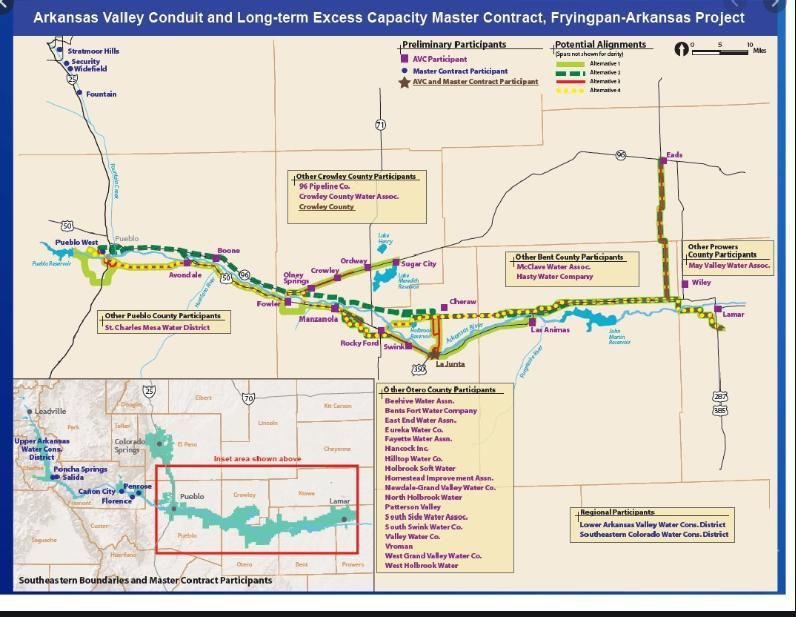
The U.S. House is expected to consider on Thursday whether to override President Donald Trump’s veto of a bill aimed at helping finance a water pipeline in Colorado. Should it happen, it would be the first attempt at an override...
Marianne Goodland
Reporter
PREV
PREVIOUS

Aurora opens real-time information center to help solve crime quickly
The Aurora Police Department fully opened its new Real Time Information Center this week, which helps officials respond more efficiently to emergencies and solve crime more quickly. The system centralizes new and existing technology and allows officials to access key data instantly, according to police. The center brings together technology, like facial recognition, drone operations […]

Colorado ballot measure for tougher fentanyl penalties moves forward
A proposed measure that would increase penalties for fentanyl manufacturing, distribution and possession has collected enough signatures to qualify for the 2026 ballot, following several failed attempts by the state legislature to pass similar legislation. Backed by Advance Colorado, the ballot initiative would make the sale of any amount of fentanyl a Class 1 felony, […]