








Denver shoppers wary ahead of holidays, but people may keep spending

The holiday bells are ringing and so are the cash registers — or more like self checkouts nowadays.
The run up of holidays beginning from Thanksgiving to Christmas, Hanukkah and New Year’s Day is the biggest shopping season of the year and closely watched by analysts to see how the economy is running.

This year, marked by economic uncertainty over tariffs, could have record-breaking sales, though consumers in the U.S. and in Denver are considering scaling back their spending.
The average shopper in Denver is expected to spend $1,526 during the holiday season, 14% less than the year before, according to the 2025 Deloitte Holiday Retail Survey. It’s the lowest amount of the last five years the survey has collected data.
It’s a slightly steeper drop than the national average, where shoppers across the U.S. said they expect to spend 10% less than 2024’s holiday season at an average of $1,595.
Meanwhile, the National Retail Federation announced it is predicting this year will be the first $1 trillion holiday season. Retail sales are expected to climb between 3.7% and 4.2% from 2024.
“American consumers may be cautious in sentiment, yet remain fundamentally strong and continue to drive U.S. economic activity,” said NRF President and CEO Matthew Shay in a news release.
The main association representing retailers is still “bullish,” he said.
It expects “consumers will continue to seek savings in nonessential categories to be able to spend on gifts for loved ones,” Shay added.
More people in Denver are expecting prices to go up this year, according to Deloitte’s survey of 424 people conducted between Aug. 27 and Sept. 17.
About 81% of the surveyed respondents in the region said they expect higher prices on holiday items, compared to 72% last year.
The number of people who expect the economy to weaken in the next year also drastically climbed, which could affect how they both spend and save during the holiday season.

Ahead of the holiday shopping season last year, about 34% of Denver consumers thought the economy would weaken. But this year, 67% are worried about what next year will bring.
“What you’re seeing is a lot of reactionary activity despite that sentiment, or maybe because of that sentiment,” said Robert Ried, a retail and consumer consultant at Deloitte based in Denver.
That may mean people may plan to figure out their finances earlier in the holiday shopping season and spread out the spending or are seeking deals more this year than before, he explained.
Since President Donald Trump enacted sweeping tariffs, consumers are worried about a return of high inflation seen during the Biden administration. Businesses also face uncertainty as trade negotiations have hashed out new deals, making it more difficult to price items.
Ried pointed out that tariffs are also affecting people’s perceptions of how things will cost, and it might not be based on what they actually cost.
Out of the $1,526 average holiday spend in Denver, $776 is expected to be spent on retail goods and $750 will go toward experience purchases.
Retail goods took a 20% drop from the year before, compared to experiences down by 8%.
Experiences, such as travel or nice dinners, can be affected by tariffs, he said. But people primarily associate tariffs with imported goods so their expectation is products shipped overseas, such as gifts, would have a direct impact on its cost. Also people are more likely to buy less items if they’re in a pinch and will value experiences more.
Denver Macarons, a vegan and gluten-free bakery at 450 Lincoln St., is expecting more sales this year after expanding into its own full kitchen, said owner Jamie Picasarri.
“At the same time, we are noticing the ways people are being more thoughtful and budget-conscious,” Picasarri said. “We have had more inquiries from shoppers who request quotes but do not always move forward because of cost.”

The bakery made sure to offer different price points for its menu, from offering three-packs to a full dozen.
Denver Macarons is also seeing more people looking for gifts to matter more.
“They want quality over quantity, support local and choose gifts that feel connected to something larger,” Picasarri added, so they also started donating 10% of proceeds of holiday boxes to the Denver Animal Shelter.
Sales numbers may not give an adequate explanation of how consumers have spent during the season, said Zac Rogers, associate professor of supply chain management at Colorado State University.
“Actual sales, like in terms of the number of products sold, will probably be down. But the price of so many products is up,” he said. “So, partly tariffs, just like inflation a couple years ago, gives retailers sort of a cover to raise prices a bit.”
As the retail association predicts a big year in sales, Rogers said he expects another big year in returned products, too.
“One of the things we’ve seen in the last year, especially since tariffs, is a ton of activity at secondary-market retailers,” he said.
A lot more people are returning items to stores and filling up the inventory of off-price stores.
Those could be potential places to look for deals before and after the holidays.
Nordstrom’s current inventory is likely affected by tariffs, Rogers said, but Nordstrom Rack could have big deals for items that were not just leftover inventory needing to be sold but also are products from before the new tariffs were imposed.
The holiday season is a time to see how the economy is doing, as many companies try to close out their financial year and consumers have to make more decisions between what they want to buy more than any other time of the year.
Rogers works on the Logistics Managers’ Index, a monthly economic barometer that follows inventory and transportation data to get a sense of how the economy is shifting.
The logic is that if sales are happening in December, then the product is already moving in November.
So far, Rogers said the data is starting to show November is a slower month for manufacturers and shippers.
“The trends with manufacturing are very similar to what we would see during a recession,” he said. “Retailers, though, look pretty healthy.”
It’s most similar to 2018, when Trump enacted his first round of tariffs, Rogers explained, which were much smaller in comparison to his second term. He said there was a limited recession in the manufacturing and freight industry at the time, but consumers were able to keep the whole economy hot.
The difference this year is that consumers have been strained by the pandemic and several years of rising prices — and the tariffs are larger.
“If we don’t have a recession, it will be because the consumers were once again the superheroes of the U.S. economy,” Rogers said. ”However, if consumers are feeling tired or worn down … they might not have the resilience they had in 2018.”


A new year, and metro housing market continues to lose a little steam
Mark Samuelson
mark-samuelson@denvergazette.com
Updated 17 minutes ago
As Denver real estate agents begin working a new year’s market, data from late 2025 show a continued pattern of slightly declining prices, slightly increased inventory, and a little more time required for home listings to sell. But agents are...

Mark Samuelson
Reporter

Aurora Immigrant Affairs Office to host Hispanic-focused business conference
Kyla Pearce
kyla-pearce@denvergazette.com
Updated 1 hour ago
The city of Aurora’s Office of International and Immigrant Affairs is hosting the city’s first Hispanic-focused business conference Saturday. The conference, called “Innovation Unlimited 2026,” will take place from 8:30 a.m. to 3 p.m. on Jan. 10 at the Aurora...

Kyla Pearce
Reporter
Mission Ballroom plaza to get Denver’s first alcohol license for common consumption
Bernadette Berdychowski
bernadette.berdychowski@denvergazette.com
Updated 1 hour ago
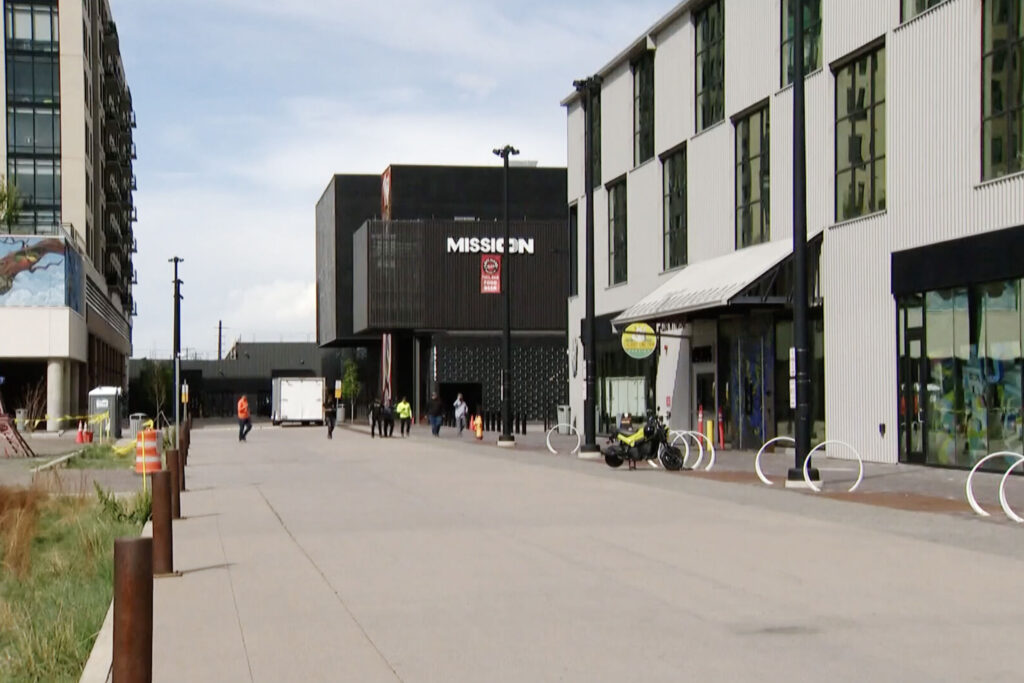
Guests will soon be able to drink at the outdoor plaza next to Mission Ballroom. The Denver City Council approved a bill in a block vote to designate the area around the concert venue as the North Wynkoop Entertainment District,...
Bernadette Berdychowski
Reporter

Home remodelers jailed in widespread racketeering scheme
Mark Samuelson
mark-samuelson@denvergazette.com
Updated 1 hour ago
At a moment when slow home sales have owners looking at remodeling, M3 Designs described itself as a design-build firm that “prioritizes sustainability, economic improvement, and efficient construction…advancing urbanism and community development.” But last month, a grand jury charged that...
Mark Samuelson
Reporter
Marvell to buy networking equipment firm XConn in $540 million deal
Reuters
reuters@denvergazette.com
Updated 4 hours ago
Marvell Technology said Tuesday it will buy networking equipment provider XConn Technologies in a deal worth about $540 million, as the chipmaker doubles down on data center hardware amid a race to expand artificial intelligence infrastructure. XConn’s acquisition will help...

Reuters
Reporter

Morgan Stanley files for bitcoin, solana ETFs in digital assets push
Reuters
reuters@denvergazette.com
Updated 4 hours ago
Morgan Stanley is seeking regulatory approval to launch exchange-traded funds tied to the price of cryptocurrency tokens, according to filings with the U.S. Securities and Exchange Commission on Tuesday, the first such move by a big U.S. bank. The bank...
Reuters
Reporter

AB InBev buys back stake in U.S. metal packaging plants for $3 billion
Reuters
reuters@denvergazette.com
Updated 4 hours ago
Anheuser-Busch InBev will buy back a 49.9% stake in its U.S. metal container plants for about $3 billion, the world’s top brewer said Tuesday, at a time of soaring aluminium costs due to tariffs. The maker of Budweiser and Corona...
Reuters
Reporter

NBCUniversal’s ad slots for 2026 Winter Olympics sell out to ‘unprecedented’ demand
Reuters
reuters@denvergazette.com
Updated 4 hours ago
NBCUniversal has sold out advertising spots for the 2026 Winter Olympics in Italy a month before the start of the Games in early February, the Comcast-owned company said Tuesday. More than 100 new advertisers have signed on for the Milano...
Reuters
Reporter

Comerica shareholders approve $10.9B deal with Fifth Third Bancorp
Reuters
reuters@denvergazette.com
Updated 4 hours ago
Comerica shareholders on Tuesday approved a $10.9 billion sale to larger rival Fifth Third Bancorp, the two companies said, ignoring an activist hedge fund’s calls to block the deal after having initially urged the bank to put itself up for...
Reuters
Reporter

The coolest technology so far from CES 2026
The Associated Press
the-associated-press@denvergazette.com
Updated 4 hours ago
LAS VEGAS — Nvidia, AMD and Intel all had important chip and AI platform announcements as CES 2026 got underway this week, but all audiences wanted to see more of was Star Wars and Jensen Huang’s little robot buddies. CES...

The Associated Press
Reporter
PREV
PREVIOUS

Should America resume nuclear tests?
America’s last nuclear detonation was nothing special. Smaller than the bomb that killed 73,000 people in Nagasaki, it exploded 1,397 feet below the Nevada desert. It shook the ground, created a shallow concavity in the sand, and killed no one that we know of, although it vented 0.1 curie of radiation, an amount used in […]

Record number of Americans expected to travel away from home for Thanksgiving
Nearly 82 million travelers are forecasted to hit the road and the skies this Thanksgiving — a record-breaking number, one North American travel organization predicted. Travel organization AAA estimates 81.8 million people will travel at least 50 miles from home during the holiday travel period from Tuesday through Dec. 1. This includes 1.6 million more […]