





Colorado title board to review graduated income tax proposal for 2026 election
On Wednesday, the Secretary of State’s title board will review another attempt at a graduated income tax ballot measure for the 2026 general election.
In October, the title board rejected two proposals submitted by the Bell Policy Center because they did not fit the state’s single-subject rule. A third was withdrawn.
The two ballot proposals, as well as the one to be reviewed on Wednesday, would change the state’s flat income tax rate — in which everyone currently pays the same rate of 4.41% — to a graduated income tax, where people with incomes of up to $500,000 would get a small tax cut. Those who earn more would see an increase.
The proposal contains a dozen tax brackets, with the highest levels set to accrue up to hundreds of thousands of dollars in additional liabilities, while cutting them for individuals at the lower end of the proposed spectrum.
How it would affect individuals depends on their annual household or business income.
At the lower end, people could see their taxes cut by a few hundred dollars. At the highest end, $10 million or above, individuals and businesses could pay hundreds of thousands more each year.
The title board is a three-person panel that includes a representative from the attorney general’s office, another from the secretary of state’s office, and the head of the General Assembly’s Office of Legislative Legal Services or the latter’s designee.
Its primary role is to determine whether a ballot measure meets the state’s single-subject requirement and whether the final ballot language does what it says it does.
One of the objections raised by the title board in October, as well as by opponents of the measures, was the removal of surcharge language in TABOR, known as Article 20 of the state Constitution.
Article 20 says, “Any income tax law change after July 1, 1992, requires all taxable net income to be taxed at one rate, excluding refund tax credits or voter-approved tax credits, with no added tax or surcharge.”
Both ballot measure proposals would have removed the entire sentence; the title board found that it was a single-subject violation and rejected both proposals unanimously.
The latest submission by the Bell Policy Center now says, “ Any income tax law change after July 1, 1992, shall also require all taxable net income to be taxed at one rate, excluding refund tax credits or voter-approved tax credits, with no added tax or surcharge.
A “draft variation chart” submitted to the Secretary of State notes the change, as well as the inclusion of an audit report on how the excess revenue would be used.
The proposal says excess revenue – one estimate from the Bell pegs that at about $2.3 billion annually – would go for public education, including increasing teacher pay; replacing lost Medicaid funding from the federal government, and for childcare and workforce development.
Ballot proposal #181, as it’s now known, is the only measure up for review in Wednesday’s title board hearing, which starts at 9 a.m.
One measure that won’t be on the title board: Proposal #186, the most recent proposal submitted to the Legislative Council. It was withdrawn before a review and comment hearing, the first step for all ballot measures.
Proposal #186 would require Colorado to secede from the Union and become an independent nation, with the Colorado Constitution as the supreme law of the land.
The measure, which is 35 pages, says Colorado should secede because President Trump was ineligible to serve as president because the 14th Amendment bars anyone who engaged in insurrection from holding public office, and he “tried to overthrow the government with the January 6th Capitol Riot.”
The ballot measure claims Colorado has the right to secede under the 10th Amendment.
It also states that anyone can apply for citizenship, including those seeking asylum from oppression.
Colorado would take over any programs run by the United States as of Jan. 19, 2025. Tariffs levied against Colorado would allow the General Assembly to impose similar tariffs against that country, the proposal says.
The governor’s authority would include the ability to appoint ambassadors and make treaties.
The ballot measure also says Colorado would recognize all nations recognized by the United Nations, except for the United States, unless the General Assembly says otherwise.
In 2013, 11 mostly northeastern counties voted on whether to secede from Colorado, with five approving the measure.
One proponent, Emerson Sturgis of Lyons, is a climate activist who has been advocating for Colorado’s secession since just after last November’s election.
Lynn Segal of Boulder, the other listed proponent, was among the people marching on the Pearl Street Mall in June, calling for the release of Israeli hostages in Gaza, when a man, using a flamethrower and tossing an incendiary device, attacked, shouting “free Palestine.” Six people were injured. Segal was not among those wounded.

Historic Denver YMCA to be transformed into affordable housing
Deborah Grigsby
deborah.smith@denvergazette.com
Updated 9 minutes ago
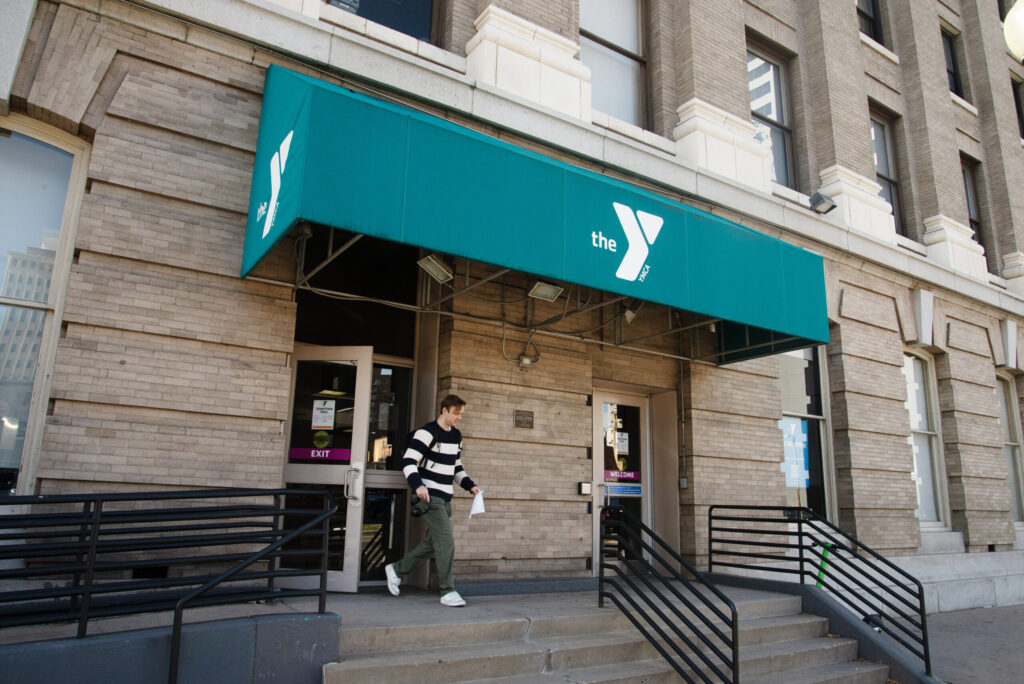
U.S. Vice President Charles W. Fairbanks placed the original cornerstone for the Denver YMCA at the corner of 16th Avenue and Lincoln Street in late 1906 in an “elaborate and formal ceremony.” However, as this year comes to an end,...

Deborah Grigsby
Reporter

National Renewable Energy Laboratory renamed to fit Trump’s energy policy
Bernadette Berdychowski
bernadette.berdychowski@denvergazette.com
Updated 1 hour ago
The National Renewable Energy Laboratory based in Golden has a new name to match the shift in U.S. energy policy under President Donald Trump. The Department of Energy announced it renamed the National Renewable Energy Laboratory to the “National Laboratory...

Bernadette Berdychowski
Reporter

38-year-old cold case murder tied to infamous Denver area serial killer
Michael Braithwaite
michael.braithwaite@gazette.com
Updated 47 minutes ago
The Douglas County Sheriff’s Office announced a resolution to a 38-year-old cold case murder Tuesday. Using modern DNA and forensic analysis, the office determined that the killer of Rhonda Marie Fisher — found dead in 1987 — was Vincent Groves,...

Michael Braithwaite
Reporter

RTD changes downtown Denver transit schedules Saturday for Parade of Lights
Noah Festenstein
noah-festenstein@denvergazette.com
Updated 11 minutes ago
Denver’s Regional Transportation District is modifying transit schedules on Saturday as thousands expect to travel downtown for the Parade of Lights. 9NEWS’ 51st annual Parade of Lights celebration begins at 6 p.m. RTD officials warned travelers of bus and train...

Noah Festenstein
Reporter
Aurora to illuminate tree, ring in the holidays in annual festival
Kyla Pearce
kyla-pearce@denvergazette.com
Updated 39 minutes ago
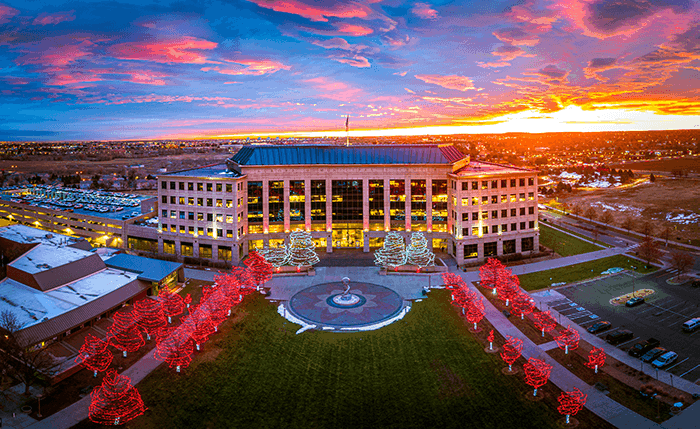
Aurora will illuminate the city’s Christmas tree with thousands of light strands and ring in the holiday season Tuesday night with activities for all ages. The city’s annual holiday tree lighting event takes place at the Aurora Municipal Center, 15151...

Kyla Pearce
Reporter
Denver experiences driest November in four years, eighth driest in city history
Jonathan Ingraham
jonathan.ingraham@denvergazette.com
Updated 19 minutes ago
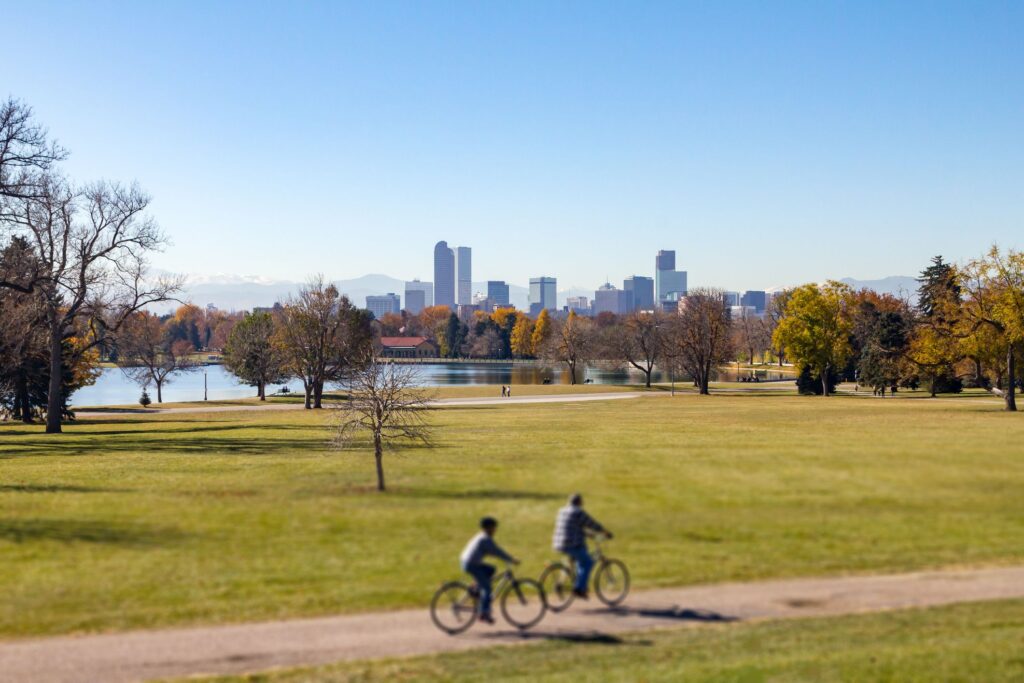
To say Denver residents experienced a dry November puts it mildly. It was not only the driest November since 2021, but the eighth-driest November since weather records began in 1872. The National Weather Service released its monthly weather summary for...

Jonathan Ingraham
Reporter

The Broadmoor unveils life-sized gingerbread display, a holiday tradition in Colorado Springs
Seth Boster
seth-boster@denvergazette.com
Updated 2 hours ago
A sweet tradition of epic proportions has returned to The Broadmoor. The famed, historic resort in Colorado Springs has unveiled its life-sized gingerbread display for the holiday season — a time-honored attraction with alternating themes. This year’s: a whimsical take...

Seth Boster
Reporter

Tracy Huggins, head of Denver Urban Renewal Authority for 25 years, to step down
Bernadette Berdychowski
bernadette.berdychowski@denvergazette.com
Updated 5 hours ago
The Denver Urban Renewal Authority will have a new executive director. The organization announced Tracey Huggins, who has run DURA for about 25 years, will step down and move into a senior advisor role. She will end her term on...
Bernadette Berdychowski
Reporter

Denver Broncos to guest star in Colorado Ballet’s ‘The Nutcracker’ again this year
Daniel Boniface
dan.boniface@denvergazette.com
Updated 3 hours ago
There’s a rare opportunity to see the Denver Broncos perform next Thursday night. And no, it’s not Thursday Night Football. The Colorado Ballet on Tuesday announced its Dec. 11 performance of “The Nutcracker” at the Ellie Caulkins Opera House will...

Daniel Boniface
Reporter

Broadway to close overnight Tuesday for sign bridge installation
Michael Braithwaite
michael.braithwaite@gazette.com
Updated 4 hours ago
Construction crews will close Broadway in both directions overnight Tuesday as they install an overhead sign bridge near Interstate 25. The closure, which will last from 10 p.m. Tuesday through 4 a.m. Wednesday, will impact Broadway between Ohio and Tennessee...
Michael Braithwaite
Reporter
PREV
PREVIOUS

The Broadmoor unveils life-sized gingerbread display, a holiday tradition in Colorado Springs
A sweet tradition of epic proportions has returned to The Broadmoor. The famed, historic resort in Colorado Springs has unveiled its life-sized gingerbread display for the holiday season — a time-honored attraction with alternating themes. This year’s: a whimsical take on the upcoming Winter Olympics in Milano Cortina, including what The Broadmoor calls “a whimsical […]

2025 Holiday Events in and around Denver
MUSIC Through Dec. 20: Strolling Holiday Carolers — Weekends, The Shops at Northfield, 8340 Northfield Blvd., Denver; shopsatnorthfield.com/events. Dec. 2: Christmas with the Celts — 7:30 p.m., Paramount Theatre, 1621 Glenarm Place, Denver, $41 and up. Tickets: ticketmaster.com. Dec. 3: Jake Shimabukuro: Holidays in Hawaii — 7:30 p.m., Lone Tree Arts Center, 10075 Commons St., Lone Tree, […]