







Tracy Huggins, head of Denver Urban Renewal Authority for 25 years, to step down
The woman who played a major role in many of Denver’s largest development projects over the last 25 years is stepping down from her role leading the Denver Urban Renewal Authority.
The organization announced Tracy Huggins will step down as executive director of DURA, a role she held since 2000.
She will end her term on Jan. 2 next year and stay on as an advisor until June.
Huggins has led the organization amid redevelopment of the Stapleton International Airport and through major projects, such as Lowry and Central Park, as well as the efforts to reinvigorate downtown Denver in the late 1990s and early 2000s.
As the Stapleton airport redevelopment wraps up on its bond payments, Huggins said DURA has several new major projects that will take years and now is a good time to find someone else to be at the helm.
One of those projects is Burnham Yard, the preferred site for a new Denver Broncos stadium.
“The board really felt that this is a pretty unique opportunity from a timing standpoint to be able to start that transition and have new leadership look to those future projects,” Huggins said in a phone call.
Angela Bricmont, chair of DURA’s board of commissioners, said it’s going to be “really difficult” to find someone with the expertise and skills Huggins brought to the table.
The organization will begin a national search early next year to find a new executive director.
Bill Pruter will serve as interim executive director, DURA said in the news release. Pruter is a board member and a former vice president of development for Kroenke Sports, where he worked on the Pepsi Center, now known as Ball Arena.
“We’ll be looking for somebody who can not only bring Tracy’s skill set and understanding and commitment to the mission as well as the ability to jump into the new projects and really work closely with the city and those communities,” Bricmont said.

The City and County of Denver founded DURA in 1958 to help revive blighted areas of the city and support redevelopment projects.
When asked which projects she was most proud of, Huggins said it was like choosing a “favorite child.”
She said the collaboration of DURA, Denver and the Downtown Denver Partnership in the 1990s to revitalize downtown was “just remarkable.”
“We all worked together to really take ourselves from a city where no one was wanting to make an investment to one that really was the envy of downtowns across the country,” she said.
She also pointed to the Stapleton Airport project and Dahlia Square in Northeast Park Hill, “one of the hardest projects that we did.”
Dahlia Square was a former shopping mall that the city hoped to revivify beginning in 2001, but redevelopment plans halted after discovery that the site was contaminated from a former brickyard the mall was built on top of.
DURA worked with the city, property owners and Denver Health to clean the site in 2005. Today, it’s home to Denver Health’s Park Hill Family Health Center, senior apartments and a mental health center.
“Denver Health actually operated out of trailers for several years while that work was being done, but none of us ever lost sight of what the ultimate vision for the site would be,” Huggins said.
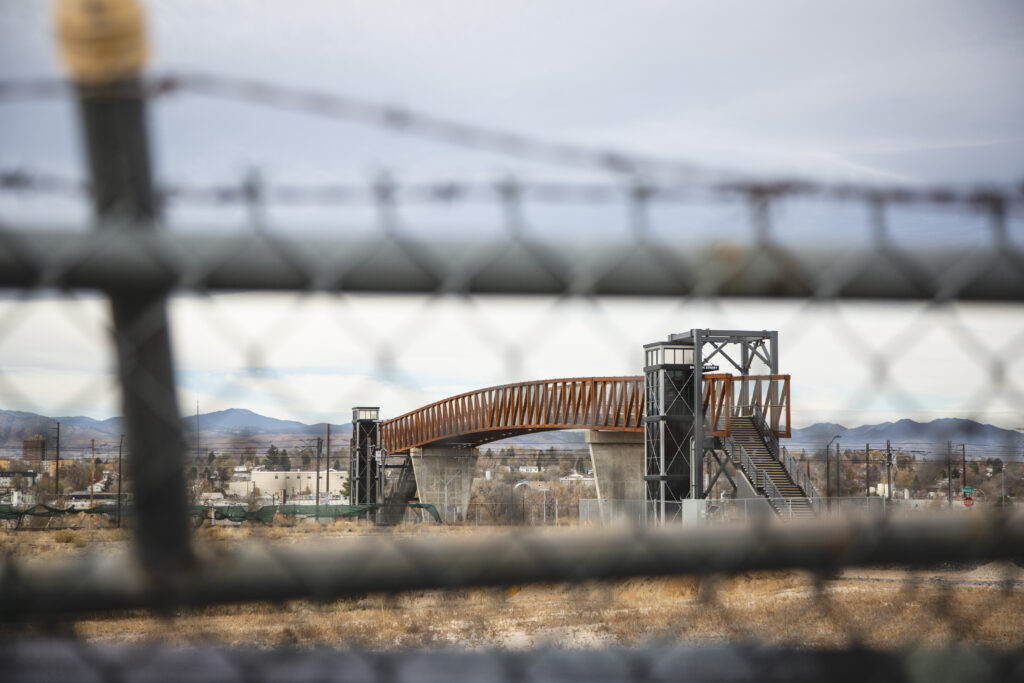
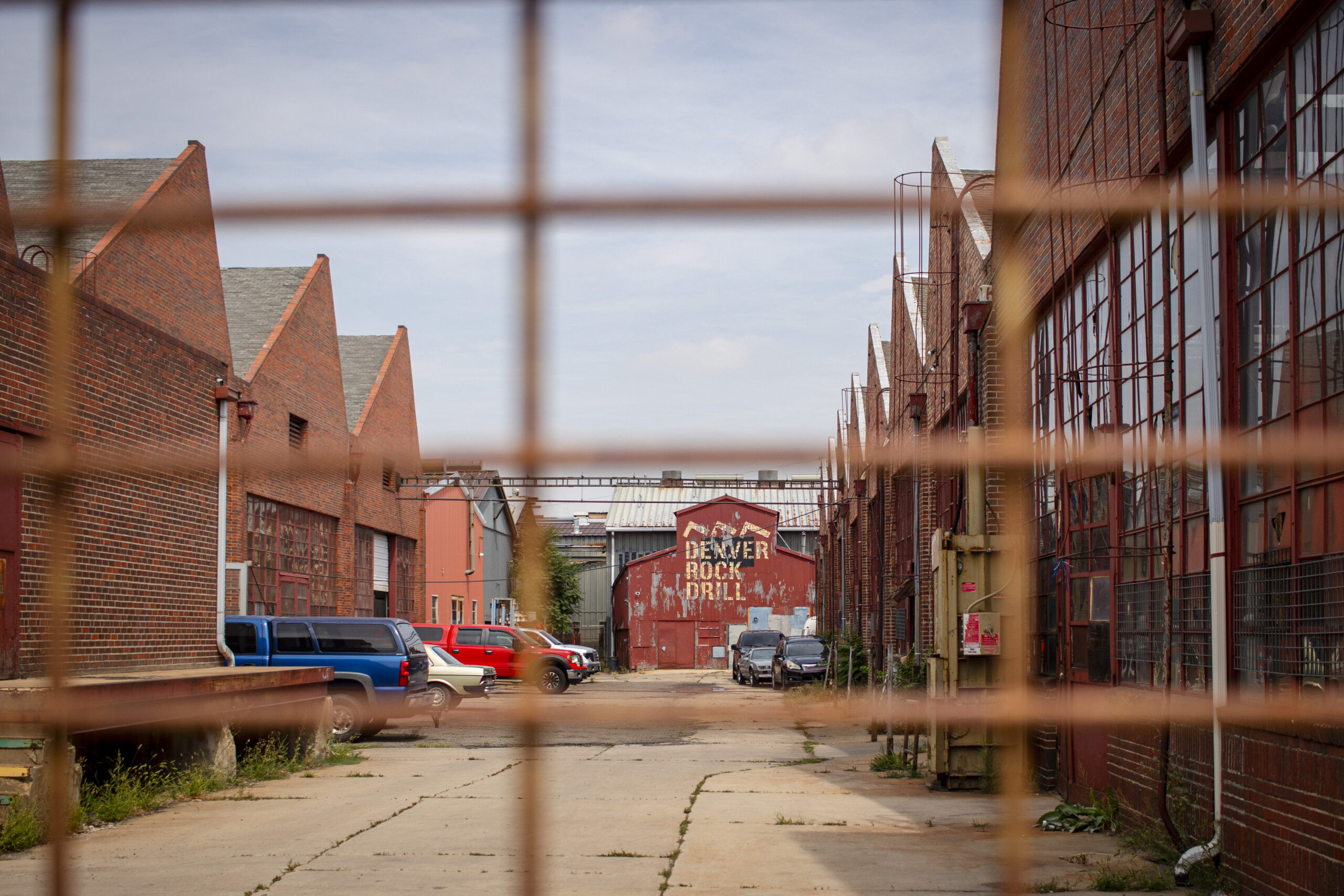
Most recently, DURA has had a hand in securing tax-increment financing for blighted areas in the city, such as a block on River North’s Larimer Street and the historic Rock Drill factory. It also helped create an urban renewal zone for the former Gates factory, where Denver Summit plans to build its women’s soccer stadium, though those plans are at risk due to delays.
Burnham Yard may also be eligible for tax-increment financing for the Denver Broncos’ potential new stadium due to its blighted condition.
Huggins began working at DURA in 1991 as a controller. She was named executive director in 2000.
Huggins’ departure was surprising, said Bill Mosher, Denver’s chief projects officer and former president of the Downtown Denver Partnership in the 1990s.
“I was also kind of shocked that somebody had been there so long because it’s hard to do that,” Mosher said. “She deserves a pat on the back.”
Mosher said he knew her for more than 30 years from working on projects with her, such as the redevelopment of Denver Dry Goods building, the creation of Denver Pavilions and planning for Union Station’s future.
“She’s just been a stalwart,” Mosher said.
Huggins has been involved with almost every significant project in downtown Denver over the past few decades, said Tami Door, another former president of the Downtown Denver Partnership and current interim CEO of the Downtown Boulder Partnership.
“There are individuals who commit their entire careers to building places and communities that can thrive long after they’re finished in their respective roles,” Door said. “Tracy is one of those leaders.”
Door said she always appreciated Huggins’ problem-solving skills.
“If you had a vision or an idea, but you didn’t quite know how you could bring it to fruition and how you could get access to the capital, Tracy always has an idea about how something can get done,” she said. “It didn’t have to be related directly to DURA.”
Former Mayor Mike Hancock, who worked with Huggins from his time on the City Council days to his mayoral days, said he remembers fondly when he met with her in his new office during the first weeks of his term in 2011.
“We were just coming out of the Great Recession and I said, ‘Tracy I don’t know what was going on before I got here, but let’s go build this city.'” Hancock recalled. “We fist bumped and agreed to go build the city.”
There were times they didn’t always agree when he wanted to certify sites for urban renewal that she wouldn’t approve, he said. At the end of the day, he still respected her decisions.
“Tracy really loves this city,” he added. “She wanted us to be competitive and she wanted us to do things right: Don’t cut corners. Urban renewal is just a guardrail … If you use those tools without guardrails, anyone can take advantage of it.”
Longtime Denver multifamily developer David Zucker, CEO of Zocalo Community Development, agreed with her fulfilling the watchdog role that position entails.
“She was a true dynamic force at DURA,” he said. “As an applicant, I remember sensing a series of evolving emotions; that she was antagonist; then adversary; to an adversary who’s smart as hell; to worthy opponent; to partner and, finally; to trusted partner.
“The laws around urban renewal and TIF are arcane, complicated and obtuse. Her job wasn’t to explain or make the rules comprehensible. The duty she very clearly felt was to be a protector of the taxpayer and the city’s finance.”
Huggins said Denver, like any other city, goes through cycles and changes and it’s important to continue investing in its future.
“You’re seeing that with downtown right now,” Huggins said.
She said downtown is having many of the same problems it did several decades ago, when she began at DURA.
“It’s not because we took our eye off of it. It’s just how city building happens,” she said.
She said the city should keep reexamining its plans and listening to community voices, who are often the “first finger on the pulse of change.”
“It’s the most rewarding work,” she said. “But it’s work that’s never done.”
Denver Gazette City Editor Dennis Huspeni contributed to this story.