





After years of leading the nation, Colorado’s economy shows signs of cooling | FISCAL ROCKIES

| Editor’s Note: Once among the nation’s fastest-growing economies, Colorado today confronts mounting challenges that threaten its momentum. This series reveals how a state once defined by prosperity is navigating economic cliffs and ridges. We explore the impact of increased regulations, tariffs, shifting tax policies, the high cost of living and widening urban–rural divides have on businesses, workers, and communities. The series also highlights the push to leverage Colorado’s outdoor economy — one of its most valuable assets — for renewed growth, while working to attract industries like quantum and aerospace while capitalizing on unique industries that call Colorado home. |
Over the past two centuries, Colorado’s economy evolved from one driven primarily by natural resources, notably tourism, mining and agriculture, to a more diverse portfolio powered by, among other things, innovation in aerospace, defense and information technology.
During that time, the United States faced several economic crises, from the Great Depression to the 2008 Great Recession. Yet Colorado has emerged from these downturns in ways other states could not, according to Professor Brian Lewandowski, the executive director of the University of Colorado’s Business Research Division.
Despite this resilience, he and other economists warned that the state’s job market may be headed for another decline after more than a decade of consistent growth.
Colorado’s economy was hit hard by the 2001 Recession following the collapse of the dot-com bubble, largely – according to Lewandowski – because of its growing tech sector.
It took the state about five years to recover from that tech bust, only to be hit by yet another recession in 2008. But once that recession ended in mid-2009, Colorado’s economy took off anew.
Between 2010 and 2020, Colorado ranked among the top states in the country for just about every economic metric, including population growth, employment growth, and income growth, Lewandowski said.
“Then, a couple of years ago, we started to see a little bit of slowing in Colorado’s economy, and we’re continuing to see that in 2025,” he said.
Growth stalls, while the labor force holds steady
According to the Colorado Department of Labor and Employment’s most recent report, the state’s unemployment rate stood at 4.2%, just slightly below the national average.
Job growth compared to the same time last year was slightly below the national average at 0.6%, while the average hourly wage increased from August 2024 to $39.13 – $2.60 higher than the national average.
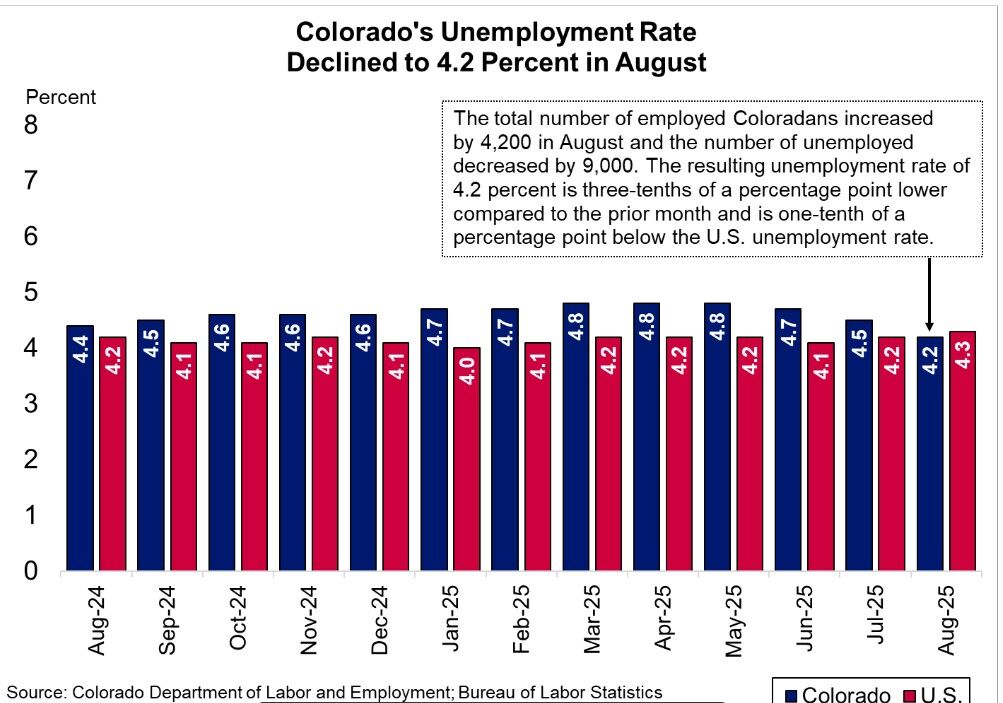
Growth varied widely by region, with metro areas such as Boulder, Colorado Springs, and Grand Junction seeing job gains. In contrast, cities like Fort Collins, Greeley, and Pueblo experienced decreases.
Lower-income regions and rural counties in Southern Colorado saw higher unemployment rates than the rest of the state, with more than 6% of workers in Costilla County, for example, out of a job.
Residents without college degrees, men and people of color are also more likely to be unemployed. Individuals with less than a high school diploma were also almost four times more likely to be unemployed than college grads.

While the relatively low unemployment rate and higher-than-average earnings were worth celebrating, Lewandowski said Colorado still falls behind on other key indicators of economic health — for the second quarter of 2025, the state ranked 34th for employment growth, 29th for personal income growth, and 50th for one-year home price change.
“We had that 15-year period where Colorado’s economy was really just on a tear, and now when we’re benchmarking to other states. For some of these metrics, it’s truly a slowdown,” he said. “We’re seeing slower growth compared to other states in the country, but for other metrics, it’s a matter of other states now playing catch-up.”
While it’s impossible to pinpoint precisely what’s causing Colorado’s economic slowdown, Lewandowski and his colleagues have a few theories, including reduced population growth and a rapid increase in home prices leading to an affordability crisis.
Some experts believe this slowdown is temporary.
The Colorado Chamber of Commerce agrees. According to its quarterly reports, the number of online job listings posted by employers in the state is in line with national trends.
“That suggests the state’s recent drop in GDP and employment growth rankings may not reflect a disproportionate slowdown in hiring compared to other states,” said Cynthia Eveleth-Havens, the chamber’s chief strategy officer.
That said, several areas worry the chamber. Eveleth-Havens said Colorado has consistently ranked among the top 10 states in the country for business.
This year, however, it slid to No. 11.
The chamber described this trend, along with the results of its recent business leader survey, as “early warning signs of future challenges.” In that survey, two-thirds of respondents said they believe the state’s economy is on the wrong track.
“It’s important for our legislature to understand the impact state policies have on our overall economy,” Eveleth-Havens said. “We’re focused on advancing policies that improve competitiveness and set us up for sustained future growth.”
What Colorado is getting right
Since the Bureau of Labor and Statistics started collecting employment data in the mid-1970s, Colorado has consistently ranked among the top states for labor force participation rate, or the percentage of the population 16 and older that is either employed or actively seeking work. In the early 1980s, the state’s labor force participation rate stood between 60% and 70%. Following a downturn during the 2008 Great Recession and the pandemic, that number is almost the same as it was four decades ago.
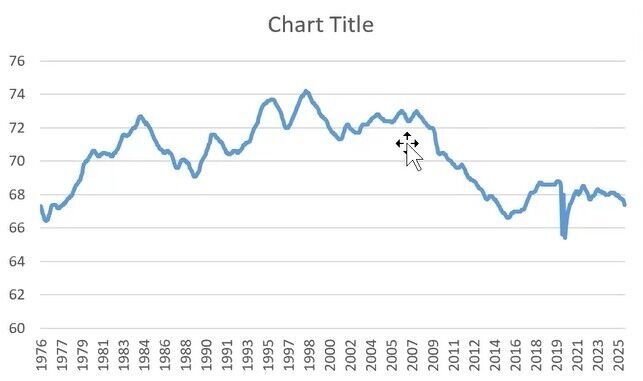
According to August’s jobs report, Colorado had the seventh-highest labor force participation rate in the country. As with many economic trends, Lewandowski said he can only offer an educated guess about why so many Coloradans are part of the workforce.
“I’ve wondered – is it because Colorado has a younger population than the national average?” he said. “It could be people working for longer. It could be where we have dual-income households versus some states, where they can get by on single incomes.”
He added: “Some of this stuff is hard to definitively say what causes it, but there are things that seem logical to help us understand or try to explain what could be happening behind some of these numbers.”

Colorado also has a high concentration of professional and business service jobs, which tend to be relatively sedentary. As a result, workers here tend to retire later than those in states where labor-intensive jobs are more common.
“If you’re an accountant, it’s not like your body is worn out at 50 or 55 from swinging a hammer for 30 years. That’s a profession where you can work into your 70s or 80s and still be pretty productive, so you don’t have to hang it up because your body is fatigued from doing it for so long,” Lewandowski explained.
Colorado excels at capitalizing on its top-performing industries, such as aerospace, technology and bioscience, Lewandowski added.
“I think the state has also been good at keeping their eye on the ball as to what’s next,” he said, noting new technologies like artificial intelligence and quantum.
A recent Colorado Chamber report noted that the number of AI jobs in Colorado has increased by 62% over the last year, 13 percentage points above the national growth rate.

“We want business leaders in technology, aerospace, manufacturing, and more to choose Colorado to make future investments and grow jobs,” Eveleth-Havens said. “If we focus on the right policies, we can ensure Colorado remains competitive now and in the future.”
What does the future hold?
Colorado’s economy has consistently shown that it can recover after a setback, but Lewandowski said he believes that the next few years could be particularly challenging, given the country’s current political environment.
Colorado is home to several federal research institutions, including the National Renewable Energy Laboratory, the National Oceanic and Atmospheric Administration and the National Institute of Standards and Technology.
The state has always been home to a high number of federal employees and contractors, Lewandowski said, but that number is dwindling as federal jobs move to states like Texas and Indiana.
“Colorado’s federal footprint is at its lowest level in 35 years,” Lewandowski said, noting that, in 2025, the federal government employs less than 2% of the state’s workers.

“We’re certainly calibrating to a new federal environment, and I think that’s sort of painful and difficult to recalibrate in the short run in general, right?” However, he added, “I think all of those things look like short-term risks.”
Eveleth-Havens from the Colorado Chamber of Commerce said Colorado’s regulatory landscape also pose a challenge for businesses over the next decade. A recent report ranked Colorado as sixth-most regulated state in the country.
“This is negatively impacting our competitiveness and future economic growth, and we’re focused on solutions to bring meaningful relief to businesses statewide,” she said.


Q&A: Denver Metro Chamber of Commerce VP says it’s ‘getting harder, more expensive to do business’ in Colorado | FISCAL ROCKIES
Thelma Grimes
thelma.grimes@coloradopolitics.com
Updated 10 minutes ago
Editor’s Note: Once among the nation’s fastest-growing economies, Colorado today confronts mounting challenges that threaten its momentum. This series reveals how a state once defined by prosperity is navigating economic cliffs and ridges. We explore the impact of increased regulations, tariffs,...

Thelma Grimes
Reporter

Can you afford to live in Denver? | FISCAL ROCKIES
Michael Braithwaite
michael.braithwaite@gazette.com
Updated 30 minutes ago
Editor’s Note: Once among the nation’s fastest-growing economies, Colorado today confronts mounting challenges that threaten its momentum. This series reveals how a state once defined by prosperity is navigating economic cliffs and ridges. We explore the impact of increased regulations, tariffs,...

Michael Braithwaite
Reporter

Q&A: Colorado Chamber of Commerce CEO sees warning signs for state economy, despite strengths | FISCAL ROCKIES
Thelma Grimes
thelma.grimes@coloradopolitics.com
Updated 42 minutes ago
Editor’s Note: Once among the nation’s fastest-growing economies, Colorado today confronts mounting challenges that threaten its momentum. This series reveals how a state once defined by prosperity is navigating economic cliffs and ridges. We explore the impact of increased regulations, tariffs,...
Thelma Grimes
Reporter

Once a step ahead, Colorado’s economy cools, burdened by rising costs and regulations | FISCAL ROCKIES
Thelma Grimes
thelma.grimes@coloradopolitics.com
Updated 44 minutes ago
Editor’s Note: Once among the nation’s fastest-growing economies, Colorado today confronts mounting challenges that threaten its momentum. This series reveals how a state once defined by prosperity is navigating economic cliffs and ridges. We explore the impact of increased regulations, tariffs,...
Thelma Grimes
Reporter

Benjamin Moore loft recalls exciting days in Denver’s ballpark neighborhood
Mark Samuelson
mark-samuelson@denvergazette.com
Updated 21 hours ago
Coming into a new year when Denver’s downtown reads like a good-news, bad-news story, homebuyers can tour a 3-bedroom loft this Sunday that’s in an iconic building, in a place that was all the rage during a decade when the...

Mark Samuelson
Reporter
U.S. private payrolls decline in November as small businesses shed jobs
Reuters
reuters@denvergazette.com
Updated 24 hours ago
WASHINGTON – U.S. private payrolls unexpectedly declined in November as small businesses shed jobs, but the weakness is probably not a true reflection of the labor market’s health, with recent government data showing layoffs remaining at low levels late last...

Reuters
Reporter
Costco becomes biggest company yet to demand refund of Trump tariffs
The Associated Press
the-associated-press@denvergazette.com
Updated 24 hours ago
WASHINGTON — Costco is joining other companies that aren’t waiting to see whether the Supreme Court strikes down President Donald Trump’s most sweeping import taxes. They’re going to court to demand refunds on the tariffs they’ve paid. The specialized U.S. Court of...

The Associated Press
Reporter
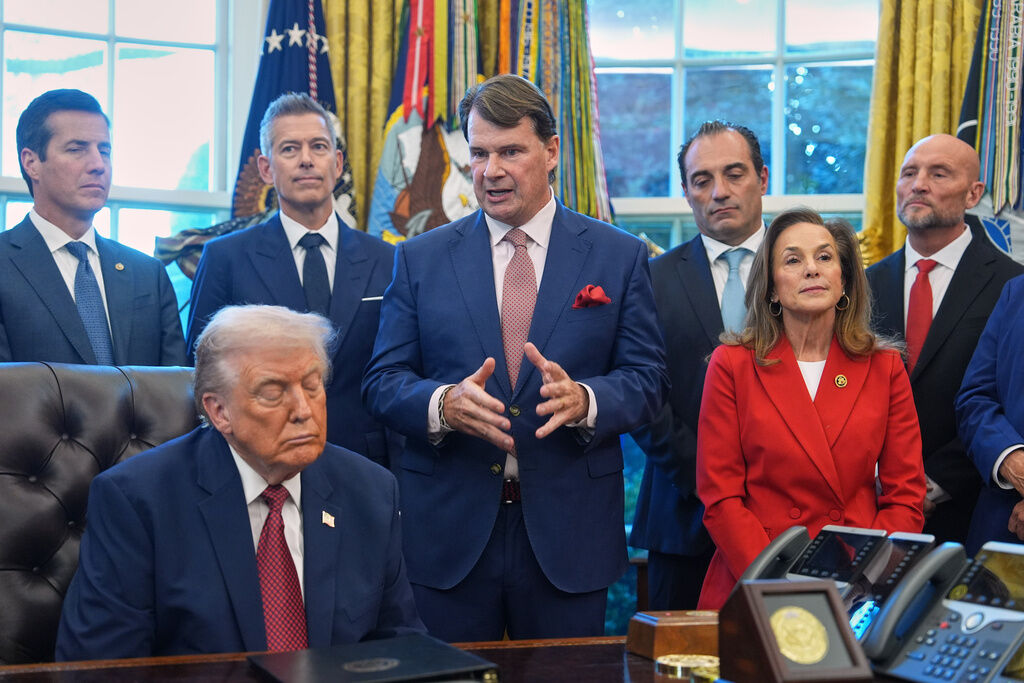
Trump proposes slashing fuel economy rules in boost for gas vehicles
The Associated Press
the-associated-press@denvergazette.com
Updated 24 hours ago
WWASHINGTON — President Donald Trump on Wednesday announced a proposal to weaken vehicle mileage rules for the auto industry, loosening regulatory pressure on automakers to control pollution from gasoline-powered cars and trucks. The plan, if finalized next year, would significantly reduce fuel economy requirements,...
The Associated Press
Reporter
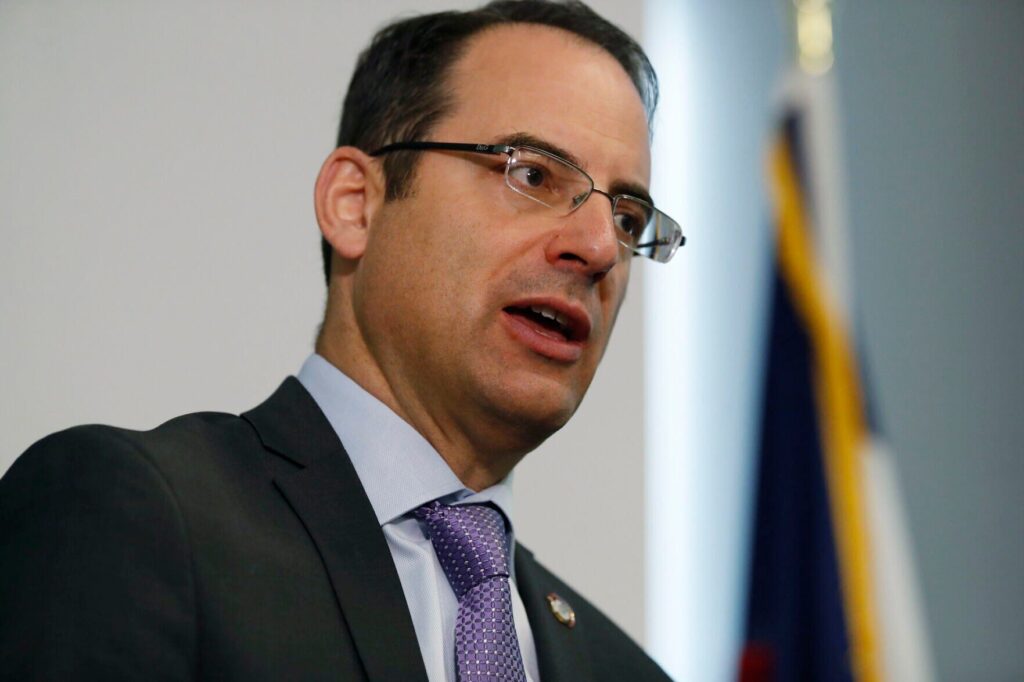
Apartment giant Greystar settles with Colorado over fraudulent advertising
Mark Samuelson
mark-samuelson@denvergazette.com
Updated 23 hours ago
Greystar, the nation’s largest apartment owner and manager with holdings of more than 100,000 units, has settled a far-reaching suit by the Federal Trade Commission and the State of Colorado over deceptive advertising that conceals hidden rental fees. “Addressing deceptive...
Mark Samuelson
Reporter

National Renewable Energy Laboratory renamed to fit Trump’s energy policy
Bernadette Berdychowski
bernadette.berdychowski@denvergazette.com
Updated 21 hours ago
The National Renewable Energy Laboratory based in Golden has a new name to match the shift in U.S. energy policy under President Donald Trump. The Department of Energy announced it renamed the National Renewable Energy Laboratory to the “National Laboratory...

Bernadette Berdychowski
Reporter
PREV
PREVIOUS

Father and son face 10 charges in deadly Lakewood street racing crash
Judicial officials filed a combined 10 felony charges against a father and son Wednesday in connection with a fatal November crash that allegedly involved street racing. Gregory Giles, 65, and Bruce Giles, 26, each face five charges, including vehicular homicide, vehicular assault and reckless driving, after two people were killed and three injured while the […]

Can you afford to live in Denver? | FISCAL ROCKIES
Editor’s Note: Once among the nation’s fastest-growing economies, Colorado today confronts mounting challenges that threaten its momentum. This series reveals how a state once defined by prosperity is navigating economic cliffs and ridges. We explore the impact of increased regulations, tariffs, shifting tax policies, the high cost of living and widening urban–rural divides have on businesses, […]