







Metro Denver fire officials warn of winter wildfire risks amid less snow
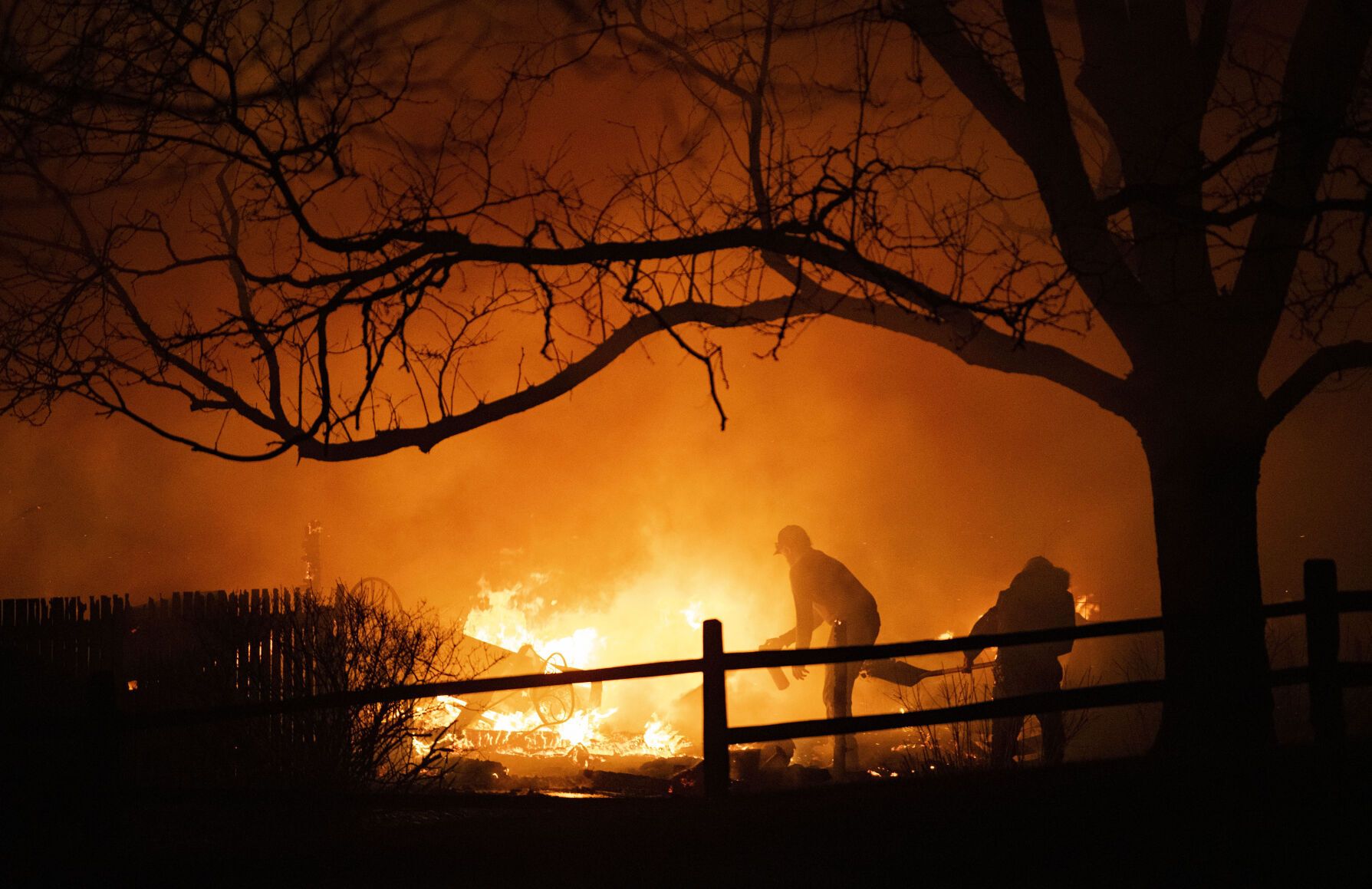
Wildfire season along Colorado’s Front Range is no longer limited to hotter conditions, it’s now year-round, according to various metro Denver fire experts who warned of winter wildfire risks.
That’s especially true this year, as November was extremely dry and the first official snowfall in Denver didn’t land until last week. As the melting snow ushers in drier conditions, fire agencies are on high wildfire alert.
On Thursday, the Jefferson County Sheriff’s Office issued a “red flag fire weather restrictions” alert and asked residents to avoid outdoor activity that could cause a spark.
Similar dry conditions, coupled with extreme winds, led to the devastating Marshall fire almost four years ago.
On Dec. 30, 2021, the wind-whipped blaze killed two people and destroyed more than 1,000 homes and businesses in Boulder County near Louisville and Superior. A day later, several inches of snow fell onto burnt homes and businesses.
Last week was the first time since 2021 that metro Denver’s first significant snowfall happened in December.
“It makes me nervous,” Louisville Fire Protection District Chief John Wilson, reflecting on the Marshall fire, said of a late snow fall this season.
“All we tried to do is we tried to lift as much damage as there was moving forward,” Wilson added, “and be better prepared to get to it quicker.”
Colorado’s primary wildfire season typically lasts from May to September. Despite this, local fire agencies said they are prepared for one at all times —even during winter months.
“As we have seen with incidents like the Marshall fire and recent wildfires in California, wildfires are no longer limited to a single season,” said Aaron Johnson, the wildland coordinator for West Metro Fire Rescue.
SNOW ONLY BUYS TIME
Once snow melts and the pressure changes, winds can swoop down from the mountains into the eastern plains, causing dead vegetation or grass to rapidly dry up and become a fuel source, according to fire experts.
“Combine that with strong winter winds common to the Front Range and conditions are in place for rapid fire spread,” Johnson said.
This winter, he said, “we are in a La Niña cycle, which usually means lower precipitation.”
That also means increased risks of wildfires.
Chris Warren, the wildfire mitigation specialist for Arvada Fire Department, said he’s on high alert in the winter when dead grass or vegetation is exposed. As a “one-hour fuel type,” dead vegetation quickly adapts to dry conditions after snow melts, according to the wildfire expert.
“We need to make sure that that perception matches reality with the timeline of safety that snow buys us,” Warren said.
Warren noted AFD created his position in April this year to help prevent tragedies like the Marshall fire. The mindset, he emphasized, is that wildfires are always possible regardless of season.
“When these dry grasses and high winds align with an ignition,” he said, “a catastrophic fire like the Marshall fire can be anticipated.”
LOCAL AGENCIES LEARN FROM MARSHALL FIRE
On that morning in December 2021, powerful winds quickly fueled two separate fires east of Highway 93 and Marshall Road. One was sparked by Xcel equipment, authorities said. The other started from previously burned embers on private property.
Throughout the day, more than 30,000 residents evacuated as the rapidly growing flames destroyed homes and businesses.
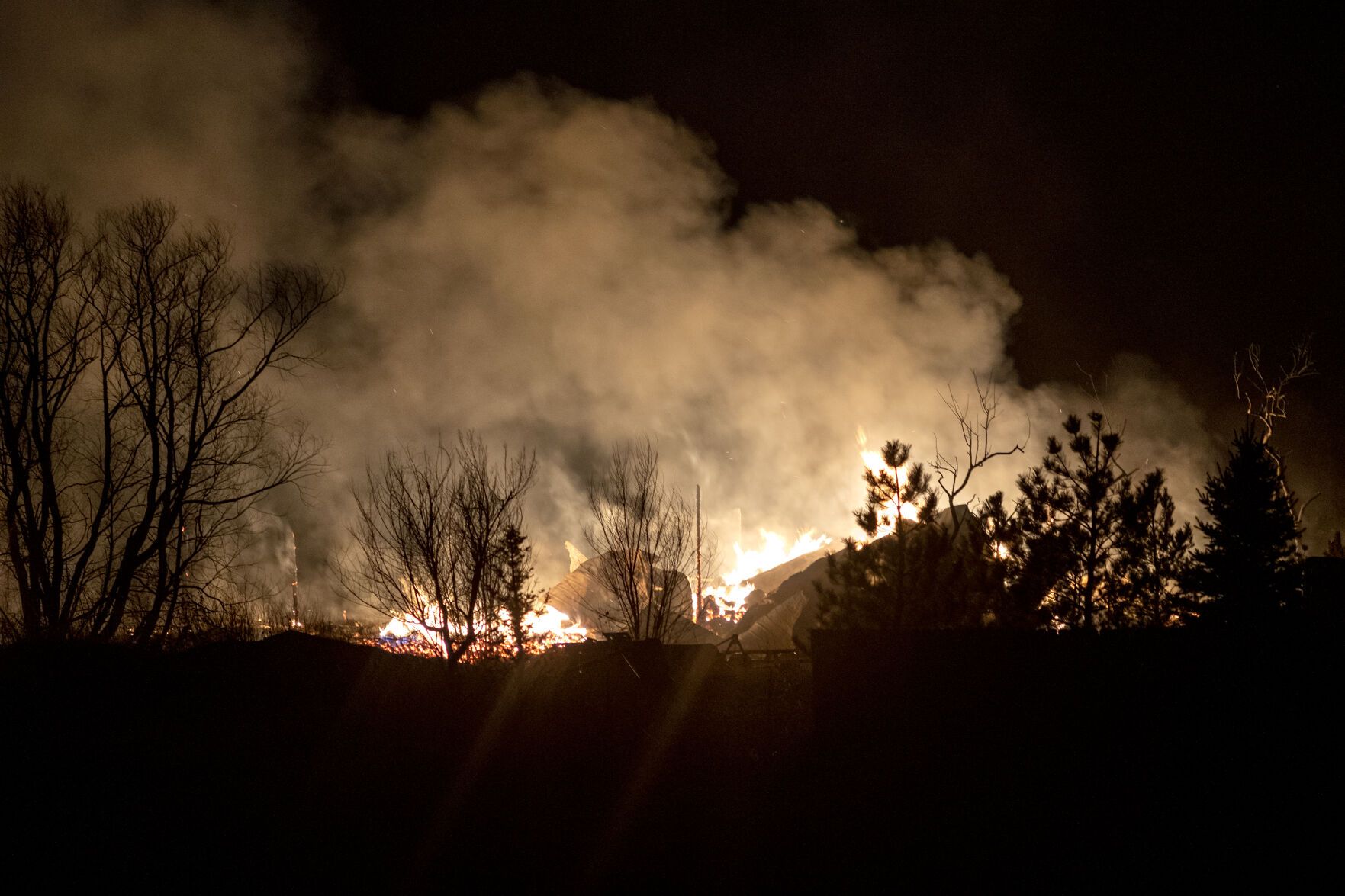
Wilson, Louisville Fire Protection District’s chief, said he remembered a dry spell that led up to the Marshall fire, until it snowed the day after.
He also recalled what he saw that day responding to the blaze.
“It was so smoky, so windy,” Wilson said. “I’ve never felt or seen anything like that … as soon as you get one house on fire, then the next house is on fire within five minutes. It just went from house to house to house after it got into Louisville.”
Beyond the Marshall fire, “we’re more heightened on red flag days on windy days, on dry days, basically we respond with more resources on calls on those kinds of days,” Wilson said.
Fire agencies pointed to population density as a worry for future wildfires.
“The Marshall fire is something that’s been in the back of our minds in the communities for a long time,” said Paul Ostroy, the wildland team’s fire management officer at Mountain View Fire Rescue.
The fire agency serves 250 square miles across Boulder and Weld counties.
Ostroy said his department has implemented fire prevention programs to address year-round wildfire risks.
“We’ve changed our response level to recognize higher incident-potential days,” Ostroy said, adding the department expands its resources up to threefold on high-risk days.
Mountain View Fire Rescue officials said other prevention methods include encouraging the use of non-flammable construction materials, better fencing and increased “cattle grazing” so animals can eat dying vegetation.
South Metro Fire Rescue spokesperson Matthew Assell said land in jurisdictions they serve are susceptible to wildfires.
“Even if there is some of that snow around you, there’s still that increased risk of wildfire with the types of vegetation and fuels that we see in Colorado,” Assell said.
“If you’re looking at something like South Metro’s district,” Assell added, “even in those suburbs that we do have more of those densely populated homes and all of those things, you’re still having a lot of that open space.”
Partly served by SMFR, Douglas County is about 51% open space and includes much of the Palmer Divide, where the weather rapidly shifts. The county is home to more than 400,000 people. It’s also Colorado’s only county with its own wildfire response helicopter.
“It is easy to think because snow is on the ground that fires won’t happen,” Abe Laydon, a Douglas County commissioner and founder of the Douglas County Wildfire Action Collaborative, said.
“Suburban fires do happen,” he added.
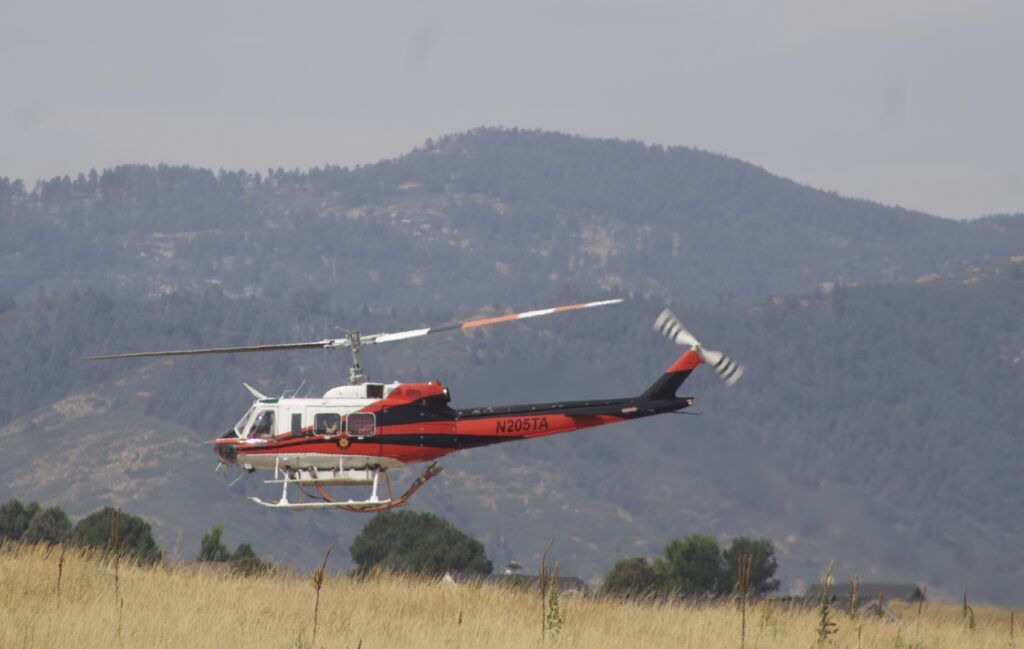
The county has invested $1.53 million this year into its year-round wildfire response helicopter, which assists in containment efforts. In July, the helicopter immediately responded to multiple grass fires that scorched 130 acres near the small town of Louviers.
If not for that response, Laydon said, Louviers could’ve burned down.
Fire officials said the best way to prevent fires at home is to remove flammable materials away from ignition sources, and clear dry debris from roofs, gutters and around decks.