







Colorado food relief groups fear SNAP funding could be withheld amid federal dispute
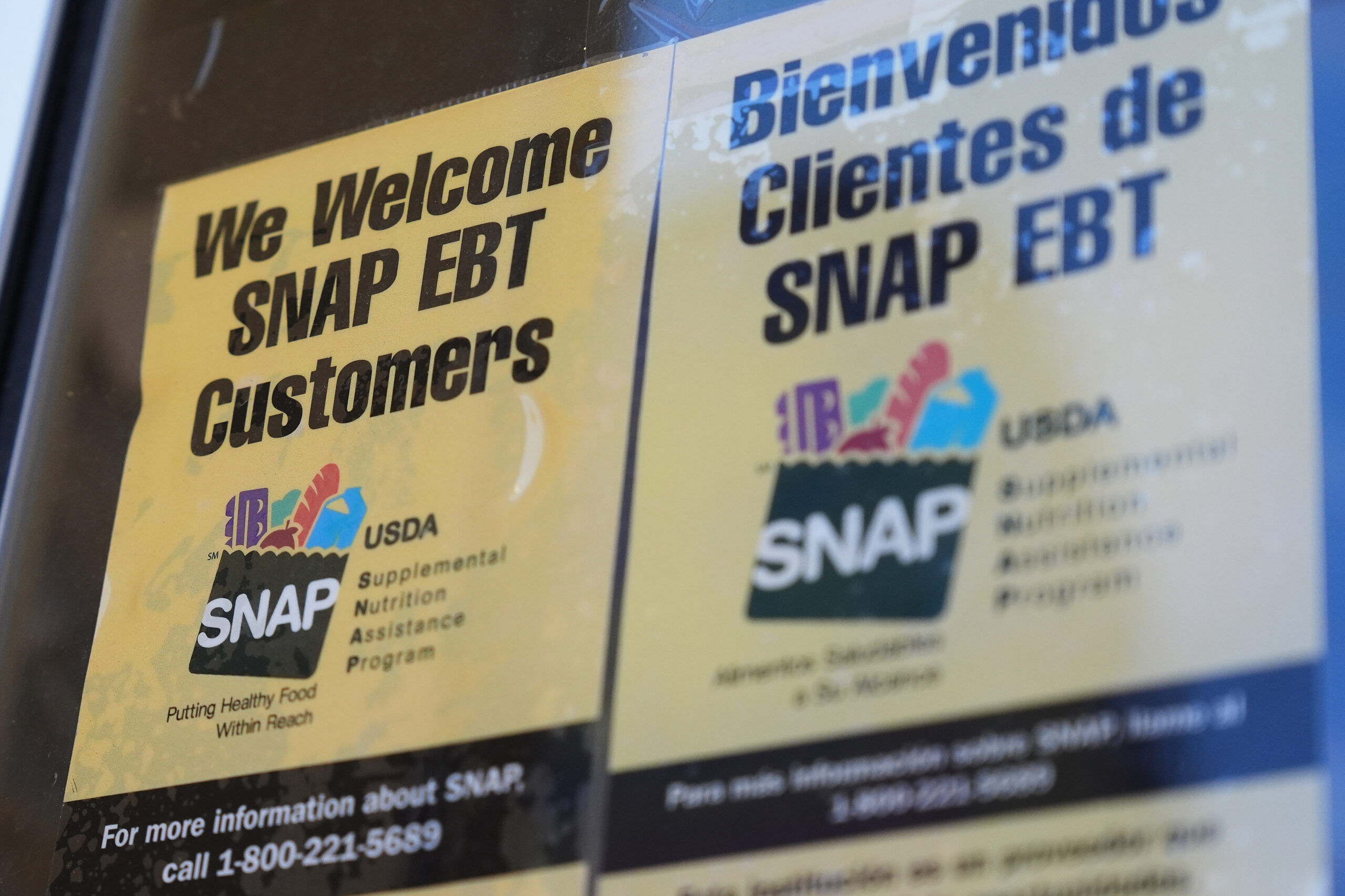
Colorado’s food relief organizations said they fear Supplemental Nutrition Assistance Program funding would be withheld from the states, including Colorado, amid a dispute between the Trump administration and states that refuse to hand over certain data.
The groups said food banks and similar groups won’t be able to survive with only state funding.
At a cabinet meeting a few weeks ago, U.S. Department of Agriculture Secretary Brooke Rollins said the agency will stop moving federal funds into those states “until they comply and they tell us and allow us to partner with them to root out this fraud and to protect the American taxpayer.”
The federal government is seeking personal information, such as full names and immigration statuses, of benefit applicants and recipients.
The goal is to let the USDA partner with the states to “root out this fraud, to make sure that those who really need food stamps are getting them,” Rollins earlier said. In July, Rollins argued that “the generosity of the American taxpayer” has been abused by “faulty interpretations” of a 1996 law that tightened SNAP eligibility by imposing work requirements and restricting access for certain legal immigrants.
Immigrants illegally staying in the U.S. have never qualified to receive SNAP benefits. Under House Resolution 1, also known as the “One Big Beautiful Bill Act,” that prohibition now extends to refugees and asylum seekers.
Some 29 states have complied with the USDA’s data request. Twenty-two states, including Colorado, have filed a lawsuit against the agency, arguing that it is misinterpreting the congressional budget’s SNAP provisions.
Specifically, the states said their lawsuit focuses on food stamp eligibility for lawful permanent residents, regardless of the path they took before their immigration status was adjusted.
The states argued the USDA has excluded legal permanent residents and green card holders based on their previous status, including refugees, people granted asylum and parolees.
Many of the individuals who crossed American borders illegally have been “paroled” into the U.S. Often, they apply for an asylum once they are inside the United States. Many of the thousands who arrived in metro Denver over the past two years, for example, have sought an asylum. Once granted an asylum, they can apply to adjust their status to permanent residency within one year of living in the U.S.
Gov. Jared Polis told Colorado Politics that he has not received any notice from the federal government about plans to withhold funding.
“While it is unknown whether SNAP funds will be withheld from Colorado and the other 20 states that have so far refused to turn over data — and legal challenges would almost certainly arise if any such plans were to become more real — Colorado’s hunger relief providers see it as another blow after an extremely difficult past few months,” he said. “Hungry Americans, like everyone, deserve access to food.”
Brandon McKinley, who works for Metro Caring, a Denver-based organization that operates its own food market, said when the waitlist to enter the market began filling up a month in advance, the organization began distributing prepackaged food boxes for people who couldn’t wait that long.
“People were going online and booking them faster than they ever booked them before, so that was the first key indicator that people are worried,” he said.
Metro Caring set a goal to reach $150,000 in donations. McKinley said his group had surpassed that goal.
The state has set aside funds in anticipation of the funding freeze during the government shutdown. In October, the governor signed an executive order requesting the Joint Budget Committee’s approval of up to $10 million in General Fund revenue to support Colorado’s food banks and pantries. The JBC swiftly approved the request, and the funds were allocated to organizations like Metro Caring through the state’s Community Food Grant Assistance Program.
McKinley said Metro Caring was given credits that allow them to purchase food from the Food Bank of the Rockies – but only through the end of the year.
“It’s crazy, but that $10 million goes quick,” he said.
Marissa Cantrell, a SNAP recipient who works for a Lakewood-based nonprofit that provides housing for people at risk of homelessness, said she and her partner started a food bank there two years ago. While the food pantry is small, she said it has been invaluable to the immigrant community, many of whom don’t qualify for SNAP benefits.
Unfortunately, Cantrell said, they’ve had to limit the number of people the pantry can serve each day due to growing demand.
“If people were like, ‘Hey, my buddy needs some food, can we get a care box for them?’ We were like, ‘Sure, of course.’ But now, it’s becoming more and more, ‘Hey, we can only help people who are part of this community right now,'” she said.
The SNAP freeze “showed a lot of gaps” within the state’s food relief infrastructure, Cantrell said.
“It’s the government’s responsibility to make sure people have access to food, and it’s their obligation to make sure we have our right to food,” McKinley added.
Colorado’s food organizations are concerned that funding may be left solely to the state, noting the latter’s budgetary challenges in recent years.
“I just don’t know that we have the resources or the ability to cover in full SNAP benefits because it’s such a hugely effective program – that to be able to replace it overnight with something is just, I think, outside the realm of possibility,” McKinley said.
Brace Gibson, policy director at Provecho Collective, a nonprofit working in the state’s food system, argued for increasing taxes to generate new revenue.
“We need to, as a state, consider a graduated income tax to generate additional revenue,” she said. “I truly think that we are in a time where we have to get creative, given all of the issues that we’re facing — not just food security, but also the rising health care costs and just affordability in general.”
Gibson is referring to a proposed initiative for the 2026 ballot that would change the state’s flat 4.1% income tax rate to a graduated income tax, under which individuals with incomes up to $500,000 would receive a small tax cut while those who earn more would see an increase – by hundreds of thousands of dollars for the highest brackets.
Cantrell, who works with several other organizations, said the last few months have taken their toll not only on SNAP recipients but also people helping them.
“Our helpers, they’re all experiencing a lot of burnout since this happened,” she said. “The stress that is caused from having to scramble – we’re going to do it, we’re going to feed people, but it’s taken a lot of emotional toll, and I just want to make sure that that gets recognized.”


14th wolf dies in northwest Colorado
Marianne Goodland
marianne-goodland@denvergazette.com
Updated 10 hours ago
The 14th wolf to die in Colorado since their reintroduction about two years ago took place during a “collaring” operation in the northwestern region of the state last week. Colorado Parks and Wildlife said the wolf, identified as #2305 —...

Marianne Goodland
Reporter
Immigration resolution ignites hours of debate in Colorado House
Marissa Ventrelli
marissa-ventrelli@denvergazette.com
Updated 8 hours ago
A joint resolution affirming lawmakers’ “commitment to Coloradans navigating the complex United States immigration system” sparked more than three hours of debate on the House Floor on Tuesday morning, reflecting the tension rising between Colorado and the Trump administration, which...
Marissa Ventrelli
Reporter
Specter of litigation looms as Colorado River basin governors head to DC
Marianne Goodland
marianne-goodland@denvergazette.com
Updated 14 hours ago
Feb. 14. That’s the next deadline for the seven states of the Colorado River to reach an agreement on how to manage the river after the current operating guidelines expire. The U.S. Bureau of Reclamation would like the next guidelines...
Marianne Goodland
Reporter
Colorado legislators advance proposal allowing lawsuits against federal immigration agents
Marianne Goodland
marianne-goodland@denvergazette.com
Updated 16 hours ago
A divided panel of Colorado legislators on Monday advanced a proposal to give individuals injured during an immigration enforcement operation the ability to sue federal agents in state court. The measure comes amid speculation that Colorado could be next on...
Marianne Goodland
Reporter

TABOR Derangement Syndrome — Colorado’s ‘TDS’ — is real | Jon Caldara
Jon Caldara
jon-caldara@denvergazette.com
Updated 5 days ago
In Colorado, TDS doesn’t stand for “Trump Derangement Syndrome.” It stands for “TABOR Derangement Syndrome.” You can spot its sufferers easily. They break into hives at the mere mention of the Taxpayer’s Bill of Rights. In fact, they can’t even...

Jon Caldara
Reporter
More people are now leaving Colorado than moving here from other states | Vince Bzdek
Vince Bzdek
vince-bzdek@denvergazette.com
Updated 4 days ago
By Vince Bzdek It’s finally happened. Buried in all the self-congratulatory reports about Colorado reaching the 6 million mark in population last year was news that should be keeping our political leaders up at night. For the first time in...

Vince Bzdek
Reporter
Colorado House launches ethics review of Rep. Ron Weinberg filed by fellow GOP legislator
Marianne Goodland
marianne-goodland@denvergazette.com
Updated 2 days ago
The Colorado House will convene an ethics committee to review a complaint filed by Rep. Brandi Bradley, R-Roxborough Park, against fellow Republican Rep. Ron Weinberg, R-Loveland. It will be the first time since 2012 that the House has formed an...
Marianne Goodland
Reporter

Colorado lawmakers reverse course, OKs $2.4M funding for additional prison beds
Marissa Ventrelli
marissa-ventrelli@denvergazette.com
Updated 4 days ago
The Colorado legislature’s budget panel changed course on Wednesday, reversing its previous decision to deny the Department of Corrections $2.4 million request to pay for additional prison beds. Last week, JBC members voted, 4-2, to deny the department’s request, with...
Marissa Ventrelli
Reporter

Party-line vote sends ‘red flag’ law expansion to Colorado Senate
Marissa Ventrelli
marissa-ventrelli@denvergazette.com
Updated 4 days ago
A panel of Colorado state senators voted along party lines Tuesday to advance a bill that would further expand who can ask a judge to temporarily restrict a person’s access to firearms under Colorado’s extreme risk protection order law. The...
Marissa Ventrelli
Reporter

Colorado lawmakers roll out bipartisan plan aimed at lowering home insurance risk
Marianne Goodland
marianne-goodland@denvergazette.com
Updated 5 days ago
Rising homeowners’ insurance rates prompted a group of lawmakers to introduce a bill Wednesday aimed at reducing damage from hail and wildfire. The measure would encourage homeowners and homeowner associations to take additional mitigation steps and, in turn, could allow...
Marianne Goodland
Reporter
PREV
PREVIOUS

Colorado officials react as Trump weighs reclassifying marijuana
Colorado policymakers and advocacy groups are responding to reports that the federal government could begin loosening restrictions on marijuana, according to insiders in Washington. According to the Washington Post, President Trump is expected to sign an executive order directing federal agencies to pursue reclassification of marijuana from a Schedule I controlled substance to Schedule III, […]

U.S. House votes along party lines to begin debate on delisting gray wolves
The U.S. House on Tuesday voted along party lines on a resolution that will start the process for approval of legislation to delist gray wolves from the Endangered Species Act. The resolution sets up the rules for debate for six bills, including H.R. 845, which requires the Interior secretary “to reissue regulations removing the gray […]