







Mastering a combination of ranching and conservation

A small portion of the awards and photos in the Anschutz-Rodgers downtown office.
Sue Anschutz Rodgers sat in her downtown Denver office, far from her beloved Crystal River Ranch, but surrounded by photos of the ranch and a wall of plaques and photos and newspaper clippings evidencing her long support of young people in agriculture and the National Western Stock Show. She is all class in winter white, a swipe of red lipstick, and tennis bracelets. But, she likes to talk cows. She’s my kind of lady.
Anschutz grew up the daughter of oil and gas in Hays, Kansas, and later moved to Wichita when she was 14 or so.
“I thought I had hit the Big Apple,” she said. “But, I would not trade growing up in rural America for anything. The values that I learned, not only from my parents, but from others. The whole environment, and I mean that in the broadest sense, of rural America with the values and the traditions are so important to me.”
Her genes run generations deep in agriculture on both sides of her family. The family left Wichita in pursuit of oil and that brought them to Colorado in the 1960s. Prior to that, though, the family had spent summers in Rocky Mountain National Park, and she said she knew her love of the state ran deep.
The first ranch her father purchased was in South Park in the 1950s. He bought the ranch on the Western Slope, known today as the Crystal River Ranch, in 1966.
He continued to purchase property in the South Park area, adding to that ranch and creating a large operation. In 1975, much to her chagrin, he sold it.
“I was really upset with him, but it was his ranch,” she said. “I really loved that ranch.”
She purchased what was left of the 74 Ranch in South Park in 2008. It had been homesteaded in 1874 and that’s the year the water rights were filed, giving it the name. At the time, she didn’t need the ranch.
“Then I got to thinking about it,” she said. “It was more of an emotional thing. He was asking next to nothing for it, but the sad part was that it had been about 18,000 acres when we sold it and it was down to 380 acres.”
It was a fraction of the ranch her father had sold and nearly all the water rights had been sold to the City of Aurora. But, the price was low.
“I thought, what the heck,” she said. “So, I made an offer and he took it.”
She purchased some of the land around the headquarters and put back together about 2,000 acres of the original 74 Ranch. She doesn’t run cattle there – one of, she said, the smartest things she’s done – but leases the grass out in the summer. Her ranch manager, who was raised nearby in Fairplay, has worked on the ranch since he was a teenager.
“It’s great grass and the hay is excellent, if you have water,” she said. “It has a beauty of its own, but you’ve got to be tough.”
She grew up hearing her dad tell her to treat the land well, because “they’re not making any more of it,” a lesson that stuck with her. When she took over the Crystal River Ranch, it was during a time when conservation was a fighting word for most ranchers.
“You would mention conservation to a rancher, and they would just as soon shoot you as look at you,” she said.
She is one of the founding members of the Colorado Cattlemen’s Agricultural Land Trust board. In speaking to other ranchers, she attributes their hesitancy, in part, to a notion that the land would be taken over by the government.
“That was the big, bad word – government,” she said. “Actually, I think maybe it still is to a certain degree.”
She predicts that land under conservation easements and, thereby protected from development, will be much higher in value and sought after in the coming years and decades. Perhaps, she said, the misunderstanding that a ranch under a conservation easement can’t operate as a ranch is still held.
“It definitely operates as a ranch and that’s what’s keeping a ranch a ranch and not having developers snooping around,” she said. “That’s the sad thing. I’ve watched development around Carbondale, and I’ve watched what’s happened in certain areas that turned one of two big ranches into cities.”
She admits ranching isn’t always profitable. She said sometimes she feels like she’s operating a non-profit. Then, she laughs and says, sometimes she is running a non-profit. She said there’s a difference between conservation and preservation. She likes both, she said, but she’s a country girl so conservation, ranching, and the land always win.
Rachel Gabel writes about agriculture and rural issues. She is assistant editor of The Fence Post Magazine, the region’s preeminent agriculture publication.


Colorado’s Jason Crow misfires over Iran | Jimmy Sengenberger
Jimmy Sengenberger
jimmy-sengenberger@denvergazette.com
Updated 3 days ago
Over the weekend, President Donald Trump ordered Operation Epic Fury — a bold strike on Iran, conducted in tandem with the Israeli Defense Force. Some 40 members of Iran’s most senior political and military leadership were taken out in short order — including brutal...

Jimmy Sengenberger
Reporter
GUEST COLUMN: Another attempt at a fur ban? Still a ‘no’
Luke Wiedel
lwiedel@gmail.com
Updated 3 days ago
The Colorado Parks and Wildlife Commission (CPWC) will consider a petition to impose a statewide ban on the sale of fur at their March 4-5 or May 6-7 meetings. If you’re a Denver voter hearing about this petition for the...

Luke Wiedel
Reporter
Legislation on poison, poultry and prostitution dominate | Rachel Gabel
Rachel Gabel
rachel-gabel@denvergazette.com
Updated 3 days ago
Many weeks, my search history is odd but the past two weeks might worry our county sheriff if he didn’t know me as well as he does. This week has been the week of poison, poultry, and prostitution. Not to...
Rachel Gabel
Reporter
PERSPECTIVE: Jailbreak — Legislative Dems look to empty Colorado’s prisons
George Brauchler
george-brauchler@denvergazette.com
Updated 3 days ago
Colorado Democrats are working feverishly this legislative session to increase the rate at which convicted felons are released from our prisons back onto our streets. They claim they must, because of overcrowding and cost. Do not fall for that lie. ...

George Brauchler
Reporter

Are Colorado businesses leaving or evacuating? | Jon Caldara
Jon Caldara
jon-caldara@denvergazette.com
Updated 7 days ago
At this point, if you hear beeping downtown, it’s not a construction crew. It’s a company backing out. And look, I get it. Businesses relocate for all sorts of reasons: taxes, regulations, labor costs, office space, crime, commute times, the...

Jon Caldara
Reporter

GUEST OPINION: Generosity has defined Colorado for 150 years
Kyle Hybl
khybl1@gazette.com
Updated 6 days ago
What does it look like when a state takes care of its own? It looks like neighbors opening their homes to families displaced by wildfire. Volunteers standing shoulder to shoulder, offering food, clothing, and hope to people they have never...

Kyle Hybl
Reporter

Additional thoughts on State of the Union address/rally | Cronin and Loevy
Tom Cronin Bob Loevy
tom-cronin-bob-loevy@gazette.com
Updated 5 days ago
The U.S. Constitution’s Article II states that “He (the president) shall from time to time give to the Congress Information of the State of the Union, and recommend to their Consideration such Measures as he shall judge necessary and expedient...

Tom Cronin Bob Loevy
Reporter

What is the state legislature trying to hide?| Vince Bzdek
Vince Bzdek
vince-bzdek@denvergazette.com
Updated 5 days ago
What is it that the State Legislature is trying to hide? A bill that passed out of committee last week lets governments squirrel away important public notices on their own websites rather than publishing them in newspapers and other news...

Vince Bzdek
Reporter
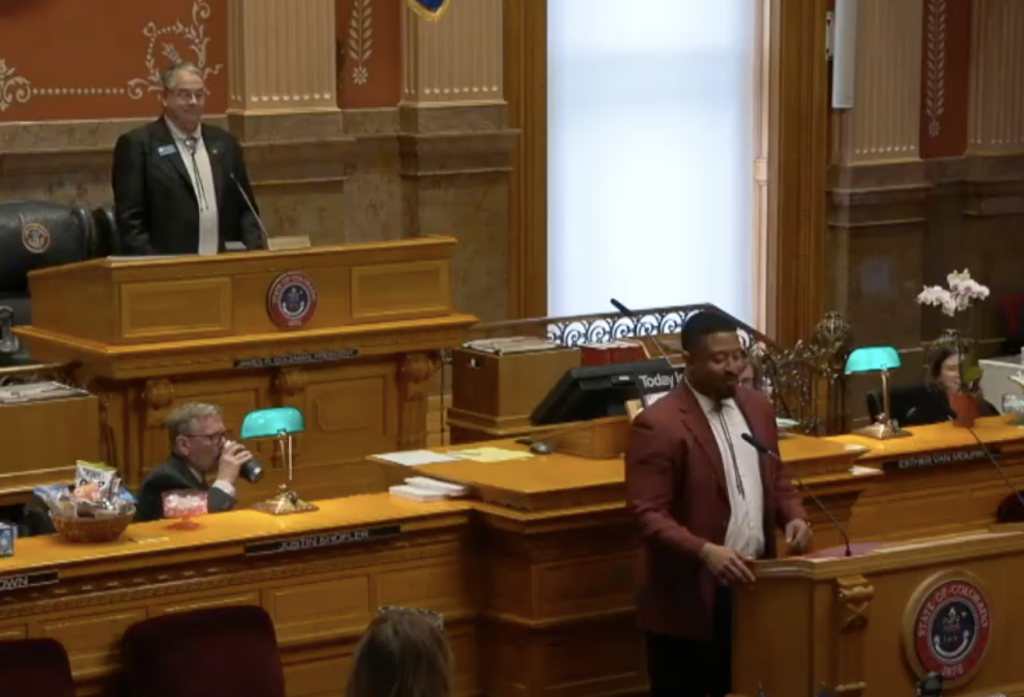
Cute puppy overload and an audition of a different kind: Capitol M | Week of Feb. 28, 2026
Marianne Goodland
marianne-goodland@denvergazette.com
Updated 7 days ago
The lighter side of the Capitol, and most days, you ought to be really grateful for it. There’s a rumor (jk) floating around that an amendment is coming for the bill to legalize prostitution. The amendment would ban condoms made...

Marianne Goodland
Reporter

Union kills safeguards for Colorado schoolkids | Jimmy Sengenberger
Jimmy Sengenberger
jimmy-sengenberger@denvergazette.com
Updated 7 days ago
Without giving it a second thought, Democrats on the state Senate’s “kill committee” shot down a bill to keep dangerous public school employees from quietly moving between districts — even as supporters and critics alike urged amendments to make it work. Republican Sen. Mark Baisley, whose legislative...
Jimmy Sengenberger
Reporter
PREV
PREVIOUS

Suddenly, Colorado has a private school choice program │ Vince Bzdek
By Vince Bzdek When I was a kid going to St. John’s Catholic grade school in Denver, I remember asking my mom if she and dad minded paying taxes for public schools since all her kids attended Catholic ones. We don’t mind, she told me. It’s our choice to send you to St. John’s for […]

Irrelevant Hickenlooper draws a challenger | Dick Wadhams
State Sen. Julie Gonzales should be ashamed of herself. Doesn’t Gonzales understand that U.S. Sen. John Hickenlooper is entitled to the Democratic nomination for Senate? Doesn’t Gonzales know that, just like in 2020, Hickenlooper “needs his sleep” and cannot be bothered with some pesky, young state senator who actually knows why she is running? And […]